Support

Ciputat

About

Ciputat is a dynamic and densely populated district located in the city of South Tangerang on the island of Java. As an integral part of the Greater Jakarta metropolis in Indonesia, this city is a classic example of a bustling suburb where the modern pace of life is closely intertwined with traditional ways. It is home to more than 220,000 people, creating a unique atmosphere of constant movement and energy.

Geographically, the city covers an area of about 21 square kilometers and is characterized by dense development. In the history of Ciputat, its transformation from an agrarian territory into a major educational and residential center played a significant role. Today, it is known primarily as a hub for higher education institutions, including prestigious Islamic universities, which attract thousands of students from all over the country.
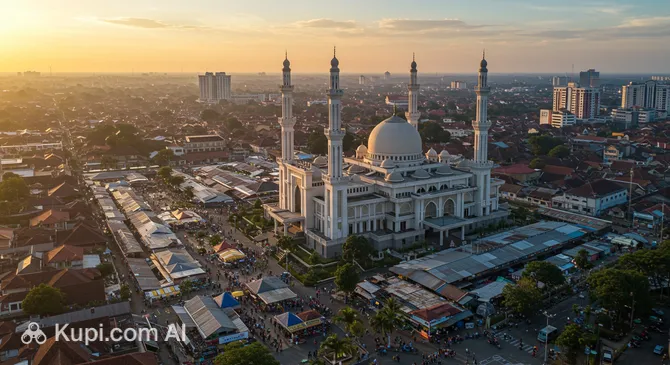
Ciputat. Illustration.
Source: Kupi.com AI

Although the city is often perceived as a "bedroom suburb" of the capital, it possesses its own special charm. Narrow streets with local markets, the aromas of street food, and numerous shopping areas make it interesting for those who want to see the real, non-touristy life of the Indonesian agglomeration. Here, you can feel the authentic flavor of Javanese everyday life, far from the glitz of Jakarta's central districts.

A visit to Ciputat is an excellent choice for travelers seeking deep immersion into local culture and daily life. We invite you to explore this energetic corner of Banten province, meet its friendly residents, and enjoy the authentic hospitality of suburban Indonesia.

Weather Overview

The climate in Ciputat is typically tropical, which means warmth and high humidity throughout the year. The average daytime temperature usually ranges between 27–32°C. Weather conditions here are largely determined by the proximity to the equator and the ocean, so significant temperature drops should not be expected.

The year is divided into two main seasons: wet and dry. The period from November to March is characterized by heavy rainfall and frequent thunderstorms, while drier weather sets in from April to October. You can study the city's climate in more detail to choose the optimal time for your trip.

The months from July to September are considered the most comfortable for travelers, as rain occurs least frequently. Nevertheless, even in the dry season, air humidity remains quite high, so light cotton clothing and a supply of drinking water will be your best companions during walks around the city.

Average monthly temperature

Average monthly precipitation

Interesting Facts

  • The city's name has Sundanese roots: the prefix "Ci" translates to "river" or "water," and the word "Putat" refers to the local Planchonella obovata tree, which once grew in abundance along the riverbanks.

  • Ciputat is recognized as one of the most important centers for Islamic education in the country—it is home to the campuses of several major universities that shape the intellectual character of the district.

  • Previously, this territory was part of the Tangerang Regency, but it later became part of a new administrative entity—South Tangerang—which accelerated the development of urban infrastructure.

  • The city is a vital transport hub: key exits to toll roads pass through it, connecting the southern outskirts with the center of the vast capital agglomeration.

  • East Ciputat (Ciputat Timur) is considered a separate but inextricably linked district, also characterized by high population density and active commercial activity.

How to Get There

Getting to Ciputat from the capital or neighboring regions is quite simple thanks to a developed road network. The city is located in close proximity to Jakarta, and a trip by car or taxi will take between 45 and 90 minutes, depending on traffic intensity. Major transport arteries include the Jakarta Outer Ring Road 2 (Pamulang exit) and the expressway through Bintaro.

For travelers arriving from afar, the capital's airports will be the main gateway. Detailed information about flights and terminals can be found by exploring the ways to get there. Direct connections are provided by numerous bus routes and microbuses (angkots) linking the district with the metropolis's key transport hubs.

AirportPassenger trafficDistance
Tangerang (Budiarto)16 km
Halim Perdanakusuma Airport3.8 mln20 km
Soekarno-Hatta International Airport51.0 mln21 km
Husein Sastranegara Airport3.8 mln116 km
Kertajati International Airport413 240164 km

Rail service is represented by the KRL Commuterline suburban trains. The nearest stations are located in neighboring districts such as Bintaro or Sudimara, from where you can reach the center by local transport or taxi. This is a great way to avoid the traffic jams that often occur during peak hours on major highways.

Ridesharing services remain a popular and convenient option for getting around. A car trip from Soekarno-Hatta International Airport to the city's residential quarters takes about an hour and a half. If you plan to use public transport, keep in mind that buses can be overcrowded during peak times, so for comfort, it is better to choose morning or afternoon hours.

Main Attractions

Ciputat is not a typical tourist center with world-famous landmarks; however, its value lies in its authenticity and everyday local flavor. For a traveler, the most interesting aspect here is the atmosphere of a busy Indonesian suburb, where life revolves around large educational clusters and local marketplaces.

One of the key features of the district is its leading university campuses. These university grounds are like "cities within a city," featuring their own infrastructure and green zones that serve as major landmarks for navigation. A walk through these areas allows you to see the intellectual and modern side of Indonesian youth.

The city's central markets and shopping rows are also worth attention. These are places where you can observe traditional trade, buy fresh tropical fruits, and try dishes prepared right before your eyes. Despite the absence of historical monuments, it is here that the true character of Java and its people is revealed.

For those seeking more familiar leisure, modern commercial zones with cafes and restaurants are available, providing a place to rest after walking through the noisy streets. For larger-scale entertainment, residents usually head to neighboring Bintaro or Jakarta itself, making the city a convenient base for day trips around the surrounding areas.

Local Cuisine

The culinary scene in Ciputat is a real feast for lovers of authentic Asian cuisine. The menus of local establishments are based on traditional Indonesian dishes, known for their rich flavors and aromas. Be sure to try Pempek—savory fish cakes served with a special sweet and sour sauce—as well as Mie Aceh—spicy and thick noodles with seafood or meat.

Street food enthusiasts should look out for Martabak—thick pancakes with various fillings, ranging from chocolate and nuts to minced meat with egg. The city's gastronomic landscape is complemented by numerous coffee shops and food courts in shopping centers where, alongside Indonesian classics, you can find familiar international fast food like Pizza Hut. The general character of the cuisine here leans toward halal standards due to the region's cultural characteristics.

To immerse yourself in the local food culture, it is best to head to evening markets or small "warung" restaurants. There, you can enjoy freshly squeezed tropical fruit juices and authentic Javanese coffee. The food in such places is not only incredibly tasty but also very affordable, making the city a great place for gastronomic exploration without breaking the bank.

Travel Tips

Visiting Ciputat will be an interesting experience of immersion into the life of real Indonesia. These practical tips will help you make your trip comfortable and avoid minor difficulties along the way.

  1. Clothing and Dress Code: Choose light clothing made of natural fabrics, as it is always hot and humid in the city. Since the district has strong Islamic traditions, it is better to choose a modest outfit that covers shoulders and knees when visiting universities and residential quarters. Don't forget comfortable walking shoes.
  2. Transport: The best way to get around is using the Grab or Gojek apps. Motorcycle taxis (o-jek) are the ideal solution for quickly navigating through the famous suburban traffic jams.
  3. Finances: The official currency is the Indonesian Rupiah. Always carry cash for paying in angkots and at markets. Cards are accepted in large shopping centers, but international systems may experience issues in smaller shops.
  4. Health and Safety: The city is generally safe, but be mindful of your personal belongings in crowded places. Always drink only bottled water and use sunscreen. Pharmacies are easy to find along main roads.
  5. Communication: The primary language is Indonesian. English is understood mainly by students and staff at large chain establishments. We recommend learning basic phrases: "Terima kasih" (thank you) and "Berapa?" (how much does this cost?).
  6. Local Etiquette: Greet people with a slight nod or a handshake. It is important to remember: use only your right hand for giving money or food, as the left hand is considered unclean.
  7. What to Avoid: Try not to plan important meetings or trips during peak hours (7 to 9 AM and 5 to 7 PM)—traffic at this time practically grinds to a halt.
  8. Rainy Season: If your trip falls between November and March, always carry a folding umbrella or a light raincoat—downpours start suddenly.

May your introduction to this energetic district of South Tangerang be filled with bright discoveries and pleasant encounters!

Entertainment & Nightlife

Entertainment in Ciputat is predominantly quiet and family-oriented, reflecting its status as an academic and residential hub. You won't find loud nightclubs or Western-style bars here, as local life is closely tied to Islamic traditions and the student rhythm. Most evening activity is concentrated in cozy cafes and the food courts of large shopping areas.

The crowd in local establishments consists mainly of students and young families, so the atmosphere is friendly and relaxed. Popular forms of leisure include "third-wave coffee shops" serving excellent Indonesian coffee and local restaurants that stay open until late evening. For those craving vibrant nightlife, the best solution is a trip to neighboring Bintaro or the central districts of Jakarta, which are easily accessible by taxi.

Daytime leisure in the city is most often associated with visiting shopping centers, which feature cinemas and children's play areas. Safety in the central commercial blocks is good, and for night travel, it is recommended to use official taxi apps like Grab or Gojek, which guarantee comfort and fixed pricing.

Parks & Museums

Given that Ciputat is a modern and densely built-up residential area, there is a shortage of classic park zones and museums. The city grew very quickly, and the main focus was on residential and educational infrastructure. Nevertheless, the role of "green lungs" is often played by the open territories and well-kept alleys within major university campuses, where students and locals like to spend time in the fresh air.

For cultural recreation, city residents usually choose trips to neighboring districts of South Tangerang or to Jakarta. There, you can find modern art galleries and historical museums. In the city itself, the emphasis is on functionality: public spaces are most often integrated into shopping centers or leisure zones at educational institutions.

Those seeking a full nature retreat are recommended to visit the parks in the neighboring Bintaro district, where excellent conditions have been created for jogging and family walks. Despite the urbanization of Ciputat itself, the proximity to greener suburbs makes it easy to compensate for the lack of park spaces with a short trip.

Getting Around

The transport system of Ciputat reflects the dynamic nature of a metropolitan suburb. The main form of public transport here is angkot—brightly colored microbuses that run on fixed routes. This is the cheapest, though not always the most comfortable, way to get around the district. Bus routes also pass through the city, linking it to the TransJakarta network, which allows for an economical way to reach the capital's center.

For long-distance travel, locals often use the KRL Commuterline suburban train system. The nearest stations provide a fast connection to Jakarta's business center, bypassing traffic jams. Payment on trains and network buses is made using contactless cards, which can be purchased and topped up at stations or at network mini-markets.

The most popular and convenient option for tourists remains taxi and motorcycle taxi apps—Grab and Gojek. They allow you to call transport to any point in the city, see the fare in advance, and track the route. Keep in mind that during peak hours (morning and evening), serious traffic congestion occurs on the roads, so plan your trips in advance or choose a motorcycle taxi to save time.

Accommodation

The hotel sector in Ciputat is primarily oriented toward students, their families, and business travelers, so budget and mid-range accommodation options prevail here. Tourists can find cozy guesthouses and modern apartment hotels offering necessary amenities at very affordable prices. Luxury five-star hotels are rare in the district itself, but a wide selection is available in neighboring Bintaro or central Jakarta.

The most convenient areas to stay are residential complexes in the central part of the district, near large shopping centers and university campuses. This location ensures easy access to dining spots and transport hubs. If you are planning a long-term stay, it is worth considering renting apartments in modern condominiums, which are often equipped with swimming pools and gyms.

It is recommended to book accommodation in advance, especially if your trip coincides with entrance exams or graduation periods at local universities, when demand for rooms increases sharply. Major online booking systems work reliably in this region, allowing you to choose a suitable option based on reviews from other travelers. When choosing a place, always check for air conditioning, as the climate here is tropical and humid.

Nearby Cities

Ciputat serves as an excellent base for exploring the southern outskirts of the capital region and Banten province. Thanks to its proximity to expressways, you can easily take interesting day trips to neighboring cities, each with its own unique atmosphere and attractions.

Just a few kilometers away is modern Pondok Aren, famous for its giant shopping complexes and the developed infrastructure of the Bintaro district. Another interesting destination is Pondok Cabe, home to a local airport and picturesque residential quarters. If you are looking for more greenery and tranquility, it is worth heading to Cinere—a prestigious suburb with beautiful landscapes and cozy cafes.

CityPopulationDistance
Pondok Aren294 9966 km
Pondok Cabe7 km
Cinere144 0388 km
Cisauk90 84610 km
Sawangan165 63112 km

Exploring the city's surroundings will allow you to see the multifaceted nature of life on Java: from ultra-modern shopping hubs to traditional settlements. Each of these destinations is accessible via a short taxi or suburban train ride, making your stay rich and varied.

Shopping & Souvenirs

Shopping in Ciputat is primarily about practicality and local flavor. The city does not claim to be a fashion capital but offers excellent opportunities for purchasing everyday goods, electronics, and authentic Indonesian products. The main shopping zones are concentrated along major transport arteries and around university campuses, where life does not quiet down until late evening.

The main points of attraction for shoppers are the modern malls. In them, you can find both local brands and international cafe and shop chains. For those looking for real treasures, traditional markets are ideal—this is where you should buy spices, local fabrics, and tropical fruits. Prices at markets are significantly lower than in the capital, and the bargaining process is an integral part of the local culture.

Common souvenirs from this area include high-quality local handicrafts or traditional Indonesian snacks. Shops usually operate from morning until 9-10 PM, and payment at large shopping centers is accepted by cards. However, for visiting markets and small shops, be sure to stock up on cash Rupiah—international cards are rarely accepted there.

Reached the end of the page?

That means the route is fully explored