Support

Pasarkemis

About

Pasarkemis is a dynamically developing district in the Banten province, located on the picturesque island of Java in Indonesia. Part of the Tangerang Regency, this city serves as a vivid example of suburban life in Greater Jakarta, where traditional Indonesian lifestyle harmoniously intertwines with the rhythm of a modern metropolis. With a population of over 270,000 people, the city attracts visitors with its authenticity and the opportunity to witness the daily life of Indonesians far from the beaten tourist paths.

Geographically, the city covers an area of about 30.73 km² and is characterized by predominantly flat terrain. For those interested in the region's heritage, it is worth exploring the history of this district's development, which gradually transformed from a rural settlement into an important residential and commercial hub. The atmosphere here is typical of peripheral areas: bustling markets, cozy rural villages (desa), and modern urban neighborhoods (kelurahan) create a unique flavor.
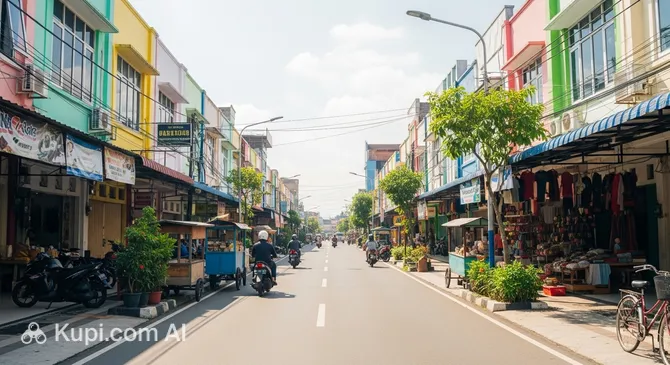
Pasarkemis. Illustration.
Source: Kupi.com AI

One of the city's key features is its role as a link between industrial zones and residential areas. Tourists may be drawn to the local market, where life bustles from early morning, and the hospitality of the locals, who are always ready to offer directions or treat you to traditional delicacies. Pasarkemis is a place for those seeking the real Indonesia, unembellished for glossy guidebooks.

We invite you to visit this district to experience its unique rhythm, try the street food, and see how modern Java lives. It is an excellent opportunity for travelers who value immersion in the local environment and sincere human emotions.

Weather Overview

A typical tropical monsoon climate prevails in Pasarkemis, characteristic of all West Java. Throughout the year, air temperatures remain consistently high, usually ranging from 25°C to 32°C. The heat often feels more intense due to high humidity, so travelers should be prepared for a "sauna-like effect," especially during midday hours.

The year is clearly divided into two seasons. The rainy season lasts from November to March: during this time, there is heavy rainfall, often accompanied by thunderstorms. It is important to note that due to the terrain, the area is prone to flooding, so you should check the current weather forecast for Pasarkemis before traveling in the winter months. The dry season occurs between June and September, when rain becomes rare and the sky is clearer.

The most comfortable time for a visit is considered to be July and August, when rainfall is minimal and the average daily temperature is about 27.6°C. However, even during this time, it is worth carrying a light raincoat. Air quality in the area can change depending on the wind direction from the industrial zones of Tangerang, but overall it remains acceptable for short visits.

Average monthly temperature

Average monthly precipitation

Interesting Facts

  • Pasarkemis is one of the most densely populated districts in the Tangerang Regency, and its population continues to grow, reflecting the general urbanization trend on the island of Java.

  • Administratively, the city is divided into 9 parts: 4 urban neighborhoods (kelurahan) and 5 rural villages (desa), all of which share a single postal code — 15560.

  • Due to its low-lying location and proximity to rivers, the area has historically faced seasonal flooding, which has shaped a specific drainage system and the construction style of local houses.

  • The city's name is directly related to trade: the word "Pasar" means "market" in Indonesian, emphasizing the historical role of this place as a commercial hub for surrounding settlements.

How to Get There

Pasarkemis is conveniently located northwest of Tangerang, making it easily accessible for travelers arriving on the island of Java. The primary way to get here is by road — via private cars, taxis, or the popular Indonesian services Grab and Gojek. Detailed information about routes and travel times can be found in the section on how to get to Pasarkemis.

For air travelers, the closest and most important hub is Soekarno-Hatta International Airport (CGK). It is located only 20–30 kilometers from the city. A taxi ride from the airport will take between 40 to 90 minutes, depending on traffic density at the exits from Jakarta. This is one of the largest aviation hubs in Southeast Asia, offering many flights both within the country and worldwide.

AirportPassenger trafficDistance
Soekarno-Hatta International Airport51.0 mln10 km
Tangerang (Budiarto)15 km
Halim Perdanakusuma Airport3.8 mln38 km
Husein Sastranegara Airport3.8 mln138 km
Kertajati International Airport413 240184 km

As for rail connections, there are no stations directly in the Pasarkemis district itself. The nearest train stations are located in Tangerang, from where you can continue your journey by angkot (local minibuses) or taxi. The railway connects the region with the central districts of Jakarta, providing an alternative way to travel that avoids some of the peak-hour road congestion.

For getting around within the district and traveling from neighboring cities, angkots are frequently used — bright minibuses that run on fixed routes. This is the most budget-friendly, though not always the fastest, way to experience the local flavor and reach your destination within the city.

Main Attractions

Although Pasarkemis is considered primarily a residential area, there are several local spots that allow you to feel the spirit of West Java. The main center of attraction for any visitor is the Pasarkemis Market. This is the heart of city life, where you can not only purchase fresh tropical fruits and spices but also find local handicrafts, unique textiles, and traditional Indonesian souvenirs.

For lovers of architecture and spiritual culture, the local mosque, located in one of the central districts, will be of interest. It stands out with its traditional architecture and calm atmosphere, providing an opportunity to take a break from the city noise and observe the religious life of the locals. Such places help to better understand the cultural code of the region and the respect Indonesians have for their traditions.

It is also worth looking into the small art shops scattered around the Sukamantri and Kuta Baru districts. Here, artisans offer handmade wood and fabric products. While Pasarkemis does not possess world-famous UNESCO monuments, the true charm of provincial Indonesia lies in these details, free from crowds of tourists and excessive commercialization.

Local Cuisine

A gastronomic journey through Pasarkemis is, first and foremost, an introduction to authentic Indonesian street food. Local cuisine is represented in numerous warungs, serving fragrant nasi goreng (fried rice) and juicy sate (small skewers with peanut sauce). Be sure to try gado-gado — a vegetable salad with a savory dressing, which is a signature dish of the regional cuisine.

Soups like soto, prepared with a rich broth, noodles, and spices, add a special character to the local culinary scene. The food culture here is inextricably linked to the Pasarkemis Market, around which the best spots for authentic dishes at very affordable prices are concentrated. This is where locals mostly eat, which guarantees the freshness of the products and adherence to traditional recipes.

Among drinks, the favorites are es teh (sweet iced tea), which is a lifesaver on a hot afternoon, and kopi tubruk — traditional coarse-ground Indonesian coffee brewed right in the cup. You can also frequently find street vendors selling fresh juices made from exotic fruits like avocado or mango. The absence of fine dining in Pasarkemis is more than compensated for by the honest and rich flavor of home-cooked food.

Travel Tips

Visiting Pasarkemis is an opportunity to see the real Indonesia, and to ensure your trip is as comfortable and safe as possible, we have prepared a few practical tips.

  1. Clothing and Items: Choose light clothing made of natural fabrics, as it is hot and humid year-round. Don't forget comfortable shoes for walking through markets and sunglasses. When visiting mosques, be sure to follow the dress code: shoulders and knees must be covered.
  2. Transport: The most reliable and convenient way to get around is using the Grab or Gojek apps. This will save you from having to bargain with drivers and ensure a fixed price.
  3. Finance: The main currency is the Indonesian rupiah (IDR). Always carry cash in small denominations for payments at markets and in warungs. Cards are only accepted in large stores, of which there are few here.
  4. Health and Safety: Drink only bottled water and avoid ice in street drinks. During the rainy season (November–March), be prepared for potential flooding and choose routes that bypass low-lying areas.
  5. Communication: The primary language is Indonesian. English is not widely spoken, so learn a few basic phrases: "Terima kasih" (thank you) and "Berapa?" (how much?). For internet access, it's better to buy a local SIM card (e.g., Telkomsel) right upon arrival at the airport.
  6. Local Etiquette: Indonesians are very friendly. Always greet people with a smile. When handing over money or items, use only your right hand, as the left is considered unclean.
  7. What to Avoid: It is not recommended to walk alone in poorly lit outskirts late at night. Also, avoid public displays of anger — local culture values calmness and politeness.
  8. Extra Tip: If you plan a trip to Jakarta or Tangerang, try to leave early in the morning to avoid spending several hours in the famous Javanese traffic jams.

May your introduction to this colorful district be filled only with pleasant discoveries and bright impressions!

Entertainment & Nightlife

Nightlife in Pasarkemis is quiet and local in character, which is typical for Indonesian residential suburbs. You won't find noisy nightclubs or huge concert halls here, but you can immerse yourself in the evening social atmosphere of the locals. The main places for evening leisure are the traditional warungs and street cafes in the market area, where life doesn't quiet down until late in the evening.

For those looking for more active entertainment, such as karaoke bars or modern shopping malls with cinemas, it is usually recommended to head to neighboring Tangerang. The trip takes between 30 to 60 minutes depending on traffic, and that is where the bulk of the region's youth spots and entertainment venues are concentrated. In Pasarkemis itself, popular activities include walking through the lively streets in the evening when the heat subsides and numerous street food stalls open up.

Safety at night generally meets the standards of Jakarta's suburbs, however, tourists are advised to use official taxis or apps like Grab and Gojek for moving between neighborhoods. This is not only more reliable but also more comfortable, given the specifics of local lighting and street layouts. Daytime entertainment primarily consists of visiting markets and walking through colorful neighborhoods like Sindangsari.

Parks & Museums

Because Pasarkemis is an intensively developing residential area, there are few classic museums or huge landscape parks here. Cultural life and outdoor recreation here have a more intimate character. The main green zones are small squares at local mosques and open spaces in rural villages (desa) such as Gelam Jaya or Pangadegan, where remnants of the region's agricultural past are preserved.

If you are looking for full museum exhibitions telling the history of Indonesia or art, the best solution would be to take a short trip to neighboring Tangerang. There, you will find cultural centers and galleries that will complement your impression of the trip. In Pasarkemis itself, the local market acts as a cultural museum, where through everyday items, traditional clothing, and crafts, you can study the living history and traditions of the Javanese people.

Nevertheless, walking through residential neighborhoods with their dense development and unexpected islands of greenery can be interesting for those fond of urbanism and the ecology of modern cities. The lack of large parks is compensated by the abundance of greenery in the yards of local residents, which creates a specific cozy microclimate in some parts of the district.

Getting Around

The public transport system in Pasarkemis is fully adapted to the needs of local residents and is mainly represented by angkots. These small minibuses are the main way to travel between different neighborhoods (kelurahan) and villages (desa). A ride on an angkot is very inexpensive, but keep in mind that they can be overcrowded during peak hours, and movement slows down due to heavy traffic on the main roads.

For more comfortable and faster trips, tourists most often choose mobile apps like Grab or Gojek. Through them, you can call both a standard taxi and a motorcycle taxi (ojek), which is an ideal solution for bypassing traffic jams. Payment in such services is possible both in cash and via a linked card, which is very convenient for travelers.

Cars and motorcycles dominate the city, and due to the dense development, walking long distances can be tiring, especially in tropical heat conditions. Bicycle rentals are not common here, so to explore remote corners of the district, it is best to rent a scooter or rely on online taxi services. Remember that traffic in Indonesia is left-hand and quite chaotic, so driving yourself requires a certain level of skill.

Accommodation

Accommodation options in Pasarkemis are primarily geared towards those who value budget-friendliness and want to immerse themselves in the local environment. Guesthouses and small hotels predominate here, along with apartments that are often rented out for long-term stays. The main concentration of such properties is in the Sukamantri area and near the central market, which is convenient for quick access to food and transport.

The price range in the city is very democratic: the standard cost for a night varies from 200,000 to 500,000 Indonesian rupiahs. For this price, you will get basic amenities, often complemented by the sincere hospitality of the owners. If you are accustomed to high-class hotel chains or luxury resorts, you should consider staying in neighboring Tangerang, where the choice of hotels is significantly wider, and getting to Pasarkemis is easy.

When planning your trip, it is recommended to book accommodation in advance through popular online services, especially if your visit coincides with local holidays or vacation seasons. This will ensure you have the best choice and a guaranteed place to rest after a busy day exploring the colorful streets of this Javanese district.

Nearby Cities

The city of Pasarkemis is an excellent starting point for exploring the northern part of the Banten province and neighboring areas. Thanks to its location, it allows for easy planning of day trips to places with more developed tourist infrastructure or unique natural sites.

Just 7 kilometers away is Tangerang — a major metropolis that offers modern shopping malls, museums, and extensive entertainment opportunities. It is also worth noting Sepatan and Cikupa, which can be quickly reached by taxi or local transport to see other facets of suburban Jakarta life. For those who want to change the urban setting for a quieter one, a trip to Teluknaga, located closer to the coast, is ideal.

CityPopulationDistance
Sepatan92 3534 km
Tangerang2 237 0067 km
Cikupa224 67810 km
Teluknaga138 33013 km
Tigaraksa155 55716 km

We sincerely recommend not limiting yourself to just one district and exploring the surrounding areas. Each of the neighboring towns has its own unique character, whether it's the administrative center of Tigaraksa or the developing commercial zones of Cikupa. Such a journey will allow you to form a complete picture of life in West Java.

Shopping & Souvenirs

Shopping in Pasarkemis is primarily an immersion into the atmosphere of traditional Indonesian bazaars. The main commercial hub of the district is the Pasarkemis Market. There is no glitz of boutiques here, but there is an incredible variety of goods: from the freshest spices, whose aroma carries for hundreds of meters, to high-quality local textiles and traditional batik clothing.

To find handmade souvenirs, it is worth walking through the streets of the Sukamantri neighborhood. There, you can find small workshops offering woodwork, woven baskets, and ceramics. Prices at such markets are significantly lower than in Jakarta's tourist centers, and the opportunity to haggle with friendly vendors will add some excitement to your shopping experience.

If your needs go beyond traditional goods and you require modern brands or electronics, locals usually head to the large shopping centers in Tangerang. In Pasarkemis itself, shops operate on a standard schedule, usually from early morning until 8–9 PM. Payment at most market stalls is made in cash in the local currency (Indonesian rupiah), so it is wise to prepare small bills in advance.

Reached the end of the page?

That means the route is fully explored