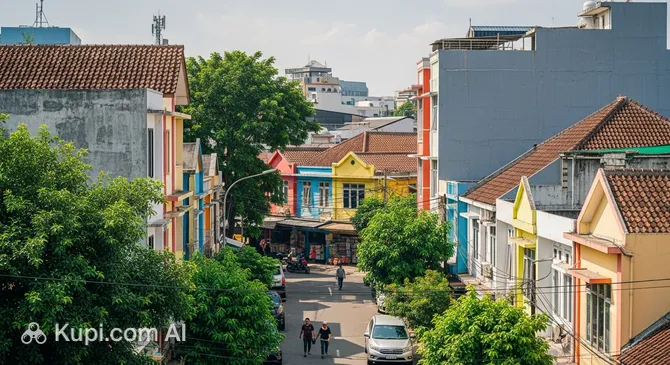
Welcome to Beji — a dynamic and rapidly growing district of Depok, located in the West Java province of Indonesia. While it may not be a traditional tourist hub, it boasts a unique atmosphere as a university town and an important administrative center. Beji serves as the northern gateway to Depok, bordering Jakarta directly, making it a strategically significant zone for the economic and social interaction between the two metropolises.
Geographically, Beji covers an area of about 14.56 km² and is characterized by a high population density of over 222,000 people. The name of the district is believed to originate from the word "pabeji," which means "place of a water source." Historically, this area was indeed rich in water resources, and today, the history of Beji is inextricably linked to the transformation of private estates into one of the region's primary educational centers.
Beji. Illustration.
Source: Kupi.com AI
The main highlight of Beji is the presence of the prestigious University of Indonesia (UI) campus and other major universities, which give the district its youthful and intellectual drive. Beyond education, the area attracts visitors with modern shopping complexes like Margo City Mall. Visiting Beji is a great opportunity to witness modern Indonesian suburban life, where traditions sit side-by-side with the energy of a big city.
Weather Overview
The weather in Beji is defined by the tropical climate typical of West Java. Eternal summer reigns here with high humidity, and air temperatures stay within the range of 23–32°C throughout the year. There are two main seasons: the wet season, when rains bring long-awaited freshness, and the dry season, characterized by plenty of sun and hotter days.
Expect warm days with periodic downpours from November to April, when rainfall reaches its peak (up to 300–350 mm per month). July and August are considered the driest and most comfortable months for walking. Before your trip, be sure to check the current city climate to choose the right wardrobe and plan your outdoor sightseeing accordingly.
High humidity and the district's dense development can intensify the feeling of heat, especially during peak hours. Air quality is sometimes affected by urban traffic, so morning and evening walks in green zones, such as the University of Indonesia campus, will be the most pleasant. Regardless of the season, it is always worth carrying a light raincoat or an umbrella.
Average monthly temperature
Average monthly precipitation
Interesting Facts
Beji is a district with an interesting past and unique features that make it an important part of the metropolitan region.
Until 1933, the entire territory of Beji was private land under the control of the Pondok Cina estate, only later gaining the status of a separate administrative district.
The district's name has historical roots related to water: it supposedly comes from the word "pabecekan," meaning a place for bathing or a water source.
Beji is the "intellectual heart" of the region: several of the largest universities are located here, including the famous University of Indonesia and Gunadarma University.
The district is divided into six unique sub-districts (kelurahan): Beji, East Beji, Kemiri Muka, Kukusan, Pondok Cina, and Tanah Baru.
The Ciliwung River, an important waterway that historically served as the main transport and resource artery for this part of Java, flows through Beji.
How to Get There
Beji's transport accessibility is one of its main advantages, as the district is located at the intersection of Depok and Jakarta. For tourists, the most convenient way to get here is by using the well-developed railway network or bus services. You can always learn more about how to get to Beji by checking current public transport routes.
The primary link to the capital's center is the KRL Commuter Line. There are two important stations in the district: Universitas Indonesia and Pondok Cina. Trains run frequently, reaching central Jakarta or the city of Bogor in about 30-50 minutes. This is the most reliable way to avoid the famous Javanese traffic jams, although the carriages can be very crowded during peak hours.
Station
Passenger traffic
Distance
Lebak Bulus Bank Syariah Indonesia MRT station
6
10 km
Pasar Minggu railway station
7
10 km
Blok M BCA MRT station
6
14 km
Halim railway station
6
16 km
Manggarai railway station
9
18 km
The Transjakarta bus network also serves this area, offering routes 4B, D11, and D21, which connect Beji with various parts of the metropolis. If you prefer comfort, you can use taxis or ride-hailing apps (Grab, Gojek). A car trip from central Jakarta can take anywhere from 45 minutes to 2 hours depending on traffic, so plan your departure in advance.
Beji is primarily a residential and educational district of Depok, so there aren't many classical tourist attractions. However, its main pride and architectural landmark is the vast campus of the University of Indonesia (Universitas Indonesia). The campus is impressive with its green spaces and modern faculty buildings, serving as a magnet for youth from all over the country.
Fans of modern urban life should check out Margo City Mall and Depok Town Square (Detos). These shopping centers are more than just places to shop; they are the district's main entertainment hubs, hosting cultural events, cinemas, and numerous cafes. They serve as the primary landmarks for meeting up and local leisure.
Those interested in the region's past will find the Pondok Cina neighborhood intriguing. While there are no large museums here, the atmosphere of this historical site—which was once a private estate—preserves the memory of the region's development before it became part of modern Depok. A walk along the Ciliwung River, which serves as a natural border with Jakarta, allows you to see the natural landscape around which the lives of the first settlers were built.
Local Cuisine
Beji's culinary scene is a true paradise for lovers of street food and authentic West Javanese flavors. Thanks to the massive student population, the area is overflowing with affordable "warungs" (traditional cafes) where you can try classic Indonesian dishes. Be sure to order Nasi Goreng (fried rice) or Mie Ayam (chicken noodles), which are prepared here with a special local touch.
Since Beji is located in the West Java province, Sundanese cuisine is widely represented. Its hallmark is an abundance of fresh greens (lalapan) and spicy sambal sauces. Try Sayur Asem — a refreshing sour vegetable soup that helps cope with the tropical heat. Locals prefer to wash down their meal with cold sweet tea or freshly squeezed tropical fruit juices.
For those who prefer a more familiar setting, food courts in Margo City Mall and Depok Town Square offer international cuisine. You can find everything here, from Japanese sushi to American burgers. However, it is the small street stalls along the roads that offer the most honest taste of Indonesia, attracting foodies with the aromas of spices and freshly grilled food.
Travel Tips
Planning a visit to Beji? These practical tips will help you feel confident in this lively Indonesian student district.
Clothing and essentials: Choose lightweight clothing made of natural fabrics — the climate here is hot and humid. Don't forget sunglasses and a compact umbrella in case of a tropical downpour. When visiting universities or official institutions, try to dress neatly (shoulders and knees covered).
Transport: The best way to avoid traffic is the KRL commuter trains. For short trips within the district, use motorcycle taxis via the Grab or Gojek apps — they are fast and inexpensive.
Finances: The main currency is the Indonesian Rupiah. Cards are accepted in shopping malls, but always keep cash on hand for street food and small purchases. ATMs are found at every turn, especially near the universities.
Health and Safety: Drink only bottled water and avoid ice in street stalls. Pharmacies (Apotek) are easy to find in shopping centers. Generally, the district is safe, but keep an eye on your bags and gadgets in crowded places.
Communication: The official language is Indonesian. English is quite common among youth and students, but a few phrases like "Terima kasih" (thank you) will always earn a smile and local goodwill.
Local Etiquette: Greet people with a slight nod of the head. Remember that in Indonesia, it is customary to pass items or money only with your right hand.
What to Avoid: Do not plan car trips during peak hours (7:00–9:00 and 17:00–19:00). Traffic can be extremely congested, and you risk spending several hours in a jam.
Extra Tip: Be sure to visit the food courts near the campuses — this is where you'll find the most delicious and affordable food, loved by local students.
May your introduction to Beji be bright and comfortable, opening up new facets of life in modern Indonesia!
Entertainment & Nightlife
Nightlife in Beji is quiet and local in character, due to its status as a student and residential district. Most evening activity is concentrated around major shopping centers like Margo City Mall. Here you can find modern cinemas, bowling alleys, and cozy restaurants that stay open until late, attracting both students and families.
For those seeking bars or loud nightclubs, Beji may seem a bit quiet. Young people often spend their evenings in the numerous "kopitiams" and coffee shops, where it is common to socialize over a cup of coffee until midnight. If you are looking to go dancing or attend a large-scale concert, the best option is to head to neighboring Jakarta, which is easily accessible by taxi or commuter train.
Daytime entertainment in the district is closely tied to the university environment. The University of Indonesia campus frequently hosts open lectures, exhibitions, and student festivals. Safety in the area is generally good; however, for nighttime travel, it is recommended to use reputable taxi services like Blue Bird or Grab for maximum comfort.
Parks & Museums
Beji is a densely built-up area, so there aren't as many large public parks as in central Jakarta. Nevertheless, the main "green lung" of the district is the University of Indonesia campus. It is a vast space with forest-park zones and lakes where locals and students enjoy walking, jogging, or simply relaxing in the shade of the trees to escape the city heat.
There are no specialized state museums in Beji itself, but history buffs can find much of interest in the archives and teaching museums within the universities. Temporary exhibitions dedicated to Javanese culture and scientific achievements are sometimes held here. It is also worth noting the banks of the Ciliwung River — although the park infrastructure there is still developing, the river remains an important natural site reflecting the region's ecology.
For cultural leisure, Beji residents often head to neighboring districts of Depok or to Jakarta, where major galleries and historical monuments are concentrated. Nonetheless, the spirit of Beji as an educational hub encourages visits to local libraries and student art spaces, which are often hidden deep within the university quarters and offer a unique look at modern Indonesian culture.
Getting Around
The public transport system in Beji is geared toward connecting with Jakarta and moving the massive flow of students. The key element is the KRL Commuter Line. "Pondok Cina" and "Universitas Indonesia" stations are the main transport hubs. Fares are paid using contactless cards (Multi Trip or local bank electronic money), which can be purchased and topped up right at the station.
Transjakarta buses also play an important role, offering comfortable rides in dedicated lanes. Electronic cards are also strictly required for fare payment here. Besides large buses, angkots (microbuses) are popular in Beji, running through the district's inner streets. This is the cheapest way to get around, but it requires knowledge of the routes and the ability to communicate with the driver in Indonesian.
For maximum comfort, we recommend using the Grab or Gojek mobile apps. You can call both a standard taxi and a motorcycle taxi (ojek), which is the best way to beat traffic during peak hours. Keep in mind that traffic in Beji can be extremely heavy from 7 to 9 AM and from 5 to 7 PM, so the train will always be the faster option during these times.
Accommodation
The choice of accommodation in Beji is primarily geared toward students and business travelers, so modern residential complexes and apartments predominate. Many tourists prefer to rent studios in high-rise condominiums near the University of Indonesia, which provides access to developed infrastructure: swimming pools, gyms, and lounge areas.
For short-term stays, you can find small, cozy mid-range hotels and guest houses in the area. Most of them are concentrated near the main transport arteries and the Margo City shopping center. If you are looking for a budget option, look into hostels, which are popular with university applicants and backpackers.
During peak seasons—such as university entrance exams or major city holidays—it is better to book accommodation in advance through international services or local platforms. If you require luxury five-star hotels, you should consider options in neighboring districts of Jakarta, from where Beji can be reached quickly by commuter train or taxi.
Nearby Cities
Beji is an excellent starting point for exploring the surroundings, as it is located in the heart of a densely populated region. Just a few kilometers away is the center of Depok, where you can find even more shopping venues and walking areas. Cinere is also ideal for a day trip, known for its residential neighborhoods and modern complexes.
If you want to trade the city bustle for cool air and greenery, head south toward Bogor. The train ride takes about an hour and offers the chance to visit the famous Botanical Gardens. It is also worth checking out neighboring areas like Pondok Cabe or Sawangan, which are gradually turning into important leisure centers with golf courses and parks.
Don't forget the proximity to the great capital. Just a 30-40 minute journey, and you'll find yourself in the center of Jakarta with its skyscrapers, museums, and the historic Kota Tua district. This proximity makes Beji a convenient place for those who want to combine exploring provincial Java with a visit to one of the world's largest metropolises.
Shopping & Souvenirs
Shopping in Beji is a fascinating blend of modern retail giants and colorful local markets. The main attraction for all shopping enthusiasts is Margo City Mall. It is one of the largest and most modern shopping centers in the region, featuring international clothing and electronics brands alongside popular Indonesian names. It also houses many cafes and relaxation zones, making shopping a comfortable all-day activity.
Located directly opposite is Depok Town Square (Detos), which offers more budget-friendly options. Here you can find affordable clothing, gadgets, and accessories, as well as browse traditional textile stalls. If you are looking for something truly authentic, head to the district's small street markets, where fresh tropical fruits, vegetables, and everyday goods are sold at very attractive prices.
There are few typical souvenirs unique exclusively to Beji, but in the local shopping centers, you can buy batik items, traditional Indonesian sweets, or Javanese coffee. Shops usually operate from 10:00 to 22:00, and bank cards are accepted at all major outlets. However, for trips to the markets or when using local transport, it is always worth having cash in Indonesian Rupiah with you.