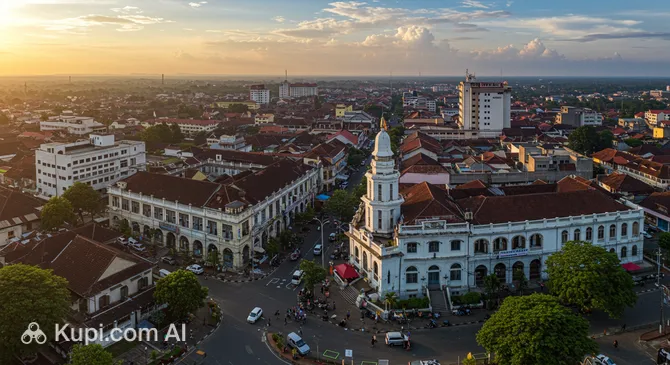
Pematangsiantar is a dynamic and bustling city in the North Sumatra province, serving as a vital link between the regional capital, Medan, and the famous Lake Toba. Nestled in the heart of Indonesia's lush plantations, it charms visitors with its practicality and authentic atmosphere, where modern commerce is closely interwoven with a rich colonial past. With a population of approximately 278,000 people, the city is rightfully considered the second most important economic center in the province.
Pematangsiantar. Illustration.
Source: Kupi.com AI
The city's development is inextricably linked to the processing of agricultural raw materials such as tea, rubber, and oil palms. The deep historical heritage of Pematangsiantar dates back to the era of the ancient Simalungun Batak kingdom of Siantar. The spirit of bygone eras can still be felt here, especially in the architecture of administrative buildings preserved from the days of Dutch rule.
For the traveler, this city reveals itself as a place of surprising contrasts: here you can see unique monuments, visit majestic temples, or simply observe the daily life of an Indonesian trading hub. Although many view it as a transit point, Pematangsiantar deserves a stop to experience the true rhythm of Sumatran life and enjoy its hospitality.
Weather Overview
Pematangsiantar enjoys a classic tropical climate, typical of the northern part of Sumatra. High humidity persists year-round, and air temperatures consistently fluctuate between +25°C and +32°C. The city's terrain is predominantly flat, which, combined with dense building development, creates a feeling of constant warmth, occasionally broken by refreshing downpours.
Heavy rainfall is typical for the region and can occur throughout the year; however, autumn is considered the rainiest period. If you are planning a trip, be sure to check the current weather in Pematangsiantar to be prepared for potential monsoons. The driest months usually fall in February and March, when the number of wet days slightly decreases.
Despite frequent rains, Pematangsiantar remains accessible for visiting at any time. Light clothing and having an umbrella or raincoat will help you comfortably explore the city. It is worth remembering that due to high humidity and industrial zones, the air may feel heavier than in the mountains, so it is better to choose morning or evening hours for long walks.
Average monthly temperature
Average monthly precipitation
Interesting Facts
Heritage of the Siantar Kingdom: The city originated on the site of the capital of the ancient Simalungun Batak kingdom, which was ruled by the Damanik dynasty for centuries until the beginning of the 20th century.
City of Rarities: Pematangsiantar is famous for its antique Birmingham Small Arms (BSA) motorcycles, which are still used as public transport.
Tea Capital: The region is surrounded by some of the largest tea plantations in Indonesia, making the city an important center for the production of this beverage.
Fifth in the Province: In terms of population, Pematangsiantar ranks fifth in North Sumatra, while remaining a cozy place that is not overloaded with tourists.
How to Get There
Pematangsiantar is a key transport hub in North Sumatra, though its accessibility largely depends on road connections. Most travelers arrive here from Medan, which is about 130 kilometers to the north. A trip by bus or taxi takes between 3 to 4 hours, though one should consider the specific nature of local roads and possible congestion on the busy Jalan Raya Medan.
The nearest major air gateway is located in the vicinity of Medan. If you are planning a flight, we recommend researching routes to Pematangsiantar from international hubs in advance. There is currently no direct air service to the city itself, so a transfer from Kualanamu Airport by private car or scheduled minivan remains the most popular option.
Regarding rail transport, regular passenger service to the city is limited, and most lines are used for industrial purposes. The main flow of tourists and locals relies on a developed network of intercity buses and small microbuses (angkots) that run between provincial towns from early morning until late evening.
Station
Passenger traffic
Distance
Medan railway station
7
81 km
Tanjungbalai railway station
6
82 km
Port Klang Komuter station
8
259 km
Rawang railway station
9
282 km
Kelana Jaya LRT station
9
283 km
Main Attractions
Despite its reputation as an industrial center, Pematangsiantar hides several surprising sites that are definitely worth seeing. One of the city's main gems is the majestic Avalokitesvara Vihara. This Buddhist complex impresses with its architecture and tranquility, becoming a true oasis of silence amidst the urban noise.
Within the temple complex stands the grand Avalokitesvara Statue, which is considered one of the tallest in Southeast Asia. Its scale and detailed craftsmanship attract not only pilgrims but also art lovers from around the world. The majestic image of the Goddess of Mercy towers over the city, giving a sense of peace to all visitors.
Another unusual attraction that has become a true symbol of the city is the BSA Motorcycle with Sidecar Monument. These classic British motorcycles from the World War II era have become an integral part of the local landscape. Even today, working examples of BSA motorcycles used as taxis can be found on the streets of Pematangsiantar, turning the city into a kind of "living museum" of mid-20th-century machinery.
Local Cuisine
The culinary scene in Pematangsiantar is a vibrant kaleidoscope of flavors, dominated by Batak traditions and classic Indonesian recipes. The local cuisine is based on rice dishes, freshwater fish caught in Lake Toba, and spicy sauces. Be sure to try Batak specialties, such as spicy soups with unique local seasonings or meat with fermented additives (daring-daring), which possess a unique aroma.
For lovers of hearty and familiar food, the city has excellent modern establishments. For example, at Super Bakso Indonesia, you can taste the famous "bakso" meatballs—one of the most beloved dishes among Indonesians. If you prefer spicy noodles in a youthful atmosphere, stop by Mie Gacoan, which serves popular variations of "mie" with various spice levels.
Street food culture thrives in markets and small shops called warungs. Here, it's worth trying "nasi gelong" or fragrant satay cooked over charcoal. As a drink, a cup of famous Sumatran coffee or freshly brewed tea grown on nearby plantations makes the perfect accompaniment. Thanks to significant Chinese influence, it is also easy to find high-quality halal variations of Chinese dishes in the city.
Travel Tips
Planning a visit to Pematangsiantar? These practical tips will help make your trip comfortable and avoid minor inconveniences in this hospitable Indonesian city.
Clothing and Dress Code: Choose clothing made from light, natural fabrics, as the city is hot and humid. When visiting temples, such as Buddhist viharas, be sure to cover your shoulders and knees—this is a sign of respect for local traditions.
Transport and Logistics: To get around the city, it is best to use the Grab app. This guarantees a fixed price and eliminates the need to haggle with taxi drivers.
Finances: Always carry a sufficient supply of cash in Indonesian Rupiah. Cards are only accepted in large shopping centers and hotels, while paper money is needed in small shops and markets.
Health: Drink only bottled water and avoid ice in street cafes. It is advisable to have standard vaccinations relevant for tropical regions of Southeast Asia before your trip.
Communication: The main language is Indonesian. English is understood in tourist spots and hotels, but knowing a few simple phrases in the local language ("Terima kasih" — thank you) always brings a smile to the locals.
Local Etiquette: In Indonesia, it is customary to pass items and food only with the right hand. The left hand is considered "unclean." Also, try not to point at people or objects with your index finger.
Safety: The city is generally safe, but after dark, it is better to avoid walking in deserted outskirts and industrial zones. Keep valuables in the hotel safe.
Mobile Connection: Buy a local SIM card (e.g., Telkomsel) immediately upon arrival at the airport or at one of the city's communication offices—this will provide you with stable internet for navigation.
By following these simple rules, you will be able to fully immerse yourself in the atmosphere of Pematangsiantar and enjoy all the facets of this amazing corner of Sumatra.
Entertainment & Nightlife
Entertainment in Pematangsiantar is primarily quiet and local in nature. You won't find loud mega-clubs like those in Bali, but instead, you can enjoy the cozy atmosphere of local establishments. The city's evening life is centered around cafes and restaurants where residents gather to discuss business over a cup of excellent Sumatran coffee or share a meal to the sound of live music.
One of the popular spots for evening relaxation is Eldivo Restobar. This establishment offers a modern leisure format, combining a bar menu with a full dining experience. It is a great place to meet local youth and expats in a relaxed setting. Generally, evenings here are quite peaceful, and the crowd is very friendly.
Daytime leisure can be diversified with a visit to the Pematang Siantar Zoo, which is a popular spot for family walks. On weekends, improvised concerts are often held in central markets and squares. For those seeking a more vibrant nightlife or large-scale entertainment, the best option would be a trip to Medan, located a few hours' drive away.
Parks & Museums
As a major industrial and commercial center, Pematangsiantar does not have extensive park areas; however, there are places in the city where you can take a break from the hustle and bustle. The city's main green space is considered to be the Pematang Siantar Zoo. Although small in size, this zoo serves as the primary recreational area for locals and tourists, offering a chance to encounter the island's flora and fauna within the city limits.
While there are few specialized historical museums in the city, their role is often filled by architectural ensembles and religious sites. Visiting Buddhist temples and exploring colonial buildings in the city center provides an understanding of the region's history just as well as museum halls. Unique monuments, such as those dedicated to machinery, also tell their own chapter in the city's annals.
For full relaxation in nature, residents and guests often travel outside the city limits. The surroundings of Pematangsiantar are rich in natural attractions: waterfalls like Bah Biak and the Sidamanik tea plantations are in close proximity, offering the walking trails and fresh air that are sometimes lacking in the densely built-up center.
Getting Around
The transport system of Pematangsiantar is typical of a mid-sized Indonesian city and requires some time to get used to. The main form of public transport here is the angkot—brightly colored microbuses running on fixed routes. Fares are very cheap, but there is no schedule, and movement can be chaotic due to traffic jams, especially during rush hours on main thoroughfares.
For more comfortable travel, tourists often choose ojek (motorcycle taxi) services or use mobile taxi-hailing apps like Grab. This is the fastest way to get to your destination in the city, bypassing the complications of angkot routes. Bicycles and car rentals are less popular here due to heavy traffic and heat, but experienced travelers sometimes rent scooters for trips to the surrounding areas.
The famous vintage BSA motorcycles with sidecars add a special charm to the city's transport. Although they are becoming fewer, they still serve as exotic taxis. Payment in public transport is made primarily in cash, so always keep small bills with you. Walking in the center is possible, but one should consider the lack of sidewalks in many areas and the high humidity.
Accommodation
Accommodation options in Pematangsiantar are primarily geared toward transit travelers heading to Lake Toba or business travelers. Middle-class hotels and budget guesthouses offering a standard set of amenities predominate here. There are practically no luxury five-star resorts within the city limits, but high-quality accommodation with good service is quite possible to find.
Most hotels are concentrated along the main highway, Jalan Raya Medan, and in the central part of the city, which is convenient for a quick departure toward the region's natural attractions. A popular choice among guests is the four-star Manna Hotel, known for its hospitality and convenient location. Many hotels here follow a halal-friendly concept, reflecting the cultural characteristics of the region.
If you plan to visit during holidays or weekends when the flow of local tourists increases, it is better to book accommodation in advance. Standard international services are suitable for searching and booking, and prices in the city remain very affordable compared to Indonesia's more famous tourist destinations.
Nearby Cities
Pematangsiantar is an ideal base for exploring the central part of Sumatra, offering convenient access to the region's picturesque corners. From here, you can easily set off to small towns, each with its own unique character and natural beauty.
Just 42 kilometers away is the small town of Sibisa, which attracts travelers with its views and proximity to mountain ranges. It is also worth paying attention to the city of Tebing Tinggi, located on the way to the coast; it is known for its developed trade and is a great place for a short stop to get acquainted with life in provincial Sumatra.
City
Population
Distance
Sibisa
—
42 km
Tebing Tinggi
169 786
42 km
Pangururan
34 209
54 km
Kisaran
141 915
63 km
Merdei
—
67 km
For those seeking a deeper immersion into Batak culture, we recommend heading to Lake Toba toward the town of Parapat, and also visiting Pangururan, located on Samosir Island. Exploring the surroundings of Pematangsiantar will allow you to see Indonesia beyond the usual tourist routes, discovering authentic villages and the majestic landscapes of North Sumatra.
Shopping & Souvenirs
Shopping in Pematangsiantar is primarily an introduction to traditional markets and local goods. The city is not overloaded with massive malls but offers everything needed for comfortable shopping. Most commercial activity buzzes in the central markets and streets adjacent to Jalan Raya Medan, where you can find fresh produce, spices, and handmade textiles.
If you are looking for a modern shopping format, it is worth visiting the Ramayana Siantar Department Store. It offers a wide selection of clothing, shoes, and household goods from popular brands. Another important shopping destination is Suzuya Pematangsiantar, where you can not only shop but also find departments with souvenirs and local delicacies.
The most common souvenirs brought from Pematangsiantar are the famous Sumatran fabrics—batik and ulos—which feature unique Batak patterns. Also, don't forget to buy a package of local tea or coffee straight from the plantations. Most stores are open from morning until late evening, and it is better to always have cash Indonesian Rupiah for market purchases, as cards are mainly accepted in large shopping centers.