Support

Semnan

About

Semnan is a vibrant city in the north of the country, located in a unique geographical zone: it is here that the green foothills of the Alborz range meet the arid expanses of the Dasht-e Kavir desert. A trip to Iran will offer you a wealth of impressions if you include this stop in your itinerary. As the administrative center of the province of the same name with a population of about 185,000, Semnan is famous for its calm pace of life and strategic location on the ancient Silk Road.

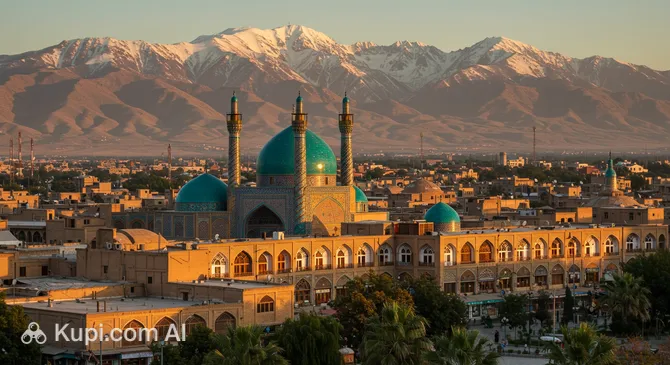
Semnan. Illustration.
Source: Kupi.com AI

The rich history of Semnan is felt in its architectural style, where old mud-brick buildings stand alongside modern structures. The climate here has a distinct desert character with hot summers and cool winters, though the proximity of the mountains softens the heat and provides the city with pleasant evenings. Local residents are known for their hospitality and a unique dialect that linguists study with particular interest.

Among the main attractions worth staying in the city for, the majestic Arg Gate (Darvaze-ye Arg) stands out—a magnificent example of Qajar architecture with exquisite mosaics and paintings that once served as the entrance to the government citadel. No less impressive is the Friday Mosque (Jameh), one of the region's oldest Islamic monuments, whose minaret has towered over the old center for almost a thousand years. Tourists will also enjoy visiting the traditional covered bazaar, where local sweets and handicrafts can be purchased.

Semnan is not just a transit point, but a place with its own soul and atmosphere. Be sure to stop here to enjoy the architectural masterpieces of the past and see the incredibly starry sky characteristic of cities on the edge of the desert.

Weather Overview

Semnan's climate is shaped by the proximity of the desert and mountain ranges, creating a notable contrast between seasons. Summers here are generally sunny and dry, while winter months can be quite harsh. It is worth checking the forecast before your trip so that the weather in Semnan does not catch you by surprise.

The peak of the heat occurs in July, when the average temperature reaches 25.8°C, and daytime maximums often exceed 31°C. There is practically no precipitation in summer. Winter, conversely, requires warm clothing: in January, the average temperature is only 0.9°C, and nighttime frosts down to -3.2°C are possible. Spring arrives gradually, with May standing out as the month with the most cloudy or rainy days (about 11), although the total precipitation remains low.

Expect hot, rainless summers and cool winters with occasional precipitation and possible night frosts.

Average monthly temperature

Average monthly precipitation

Interesting Facts

Semnan is a city with a thousand-year history, hiding many secrets behind its mud-brick walls. Beyond its famous monuments, there are surprising features that not all travelers know about.

  • An Island of Dialects. Semnan is often called a linguistic phenomenon of Iran. The local language—Semnani—is so distinctive and different from modern Persian that residents from other regions of the country often struggle to understand the native population. This dialect is believed to have preserved roots of the ancient Parthian language.

  • The Legend of "Three Breads". There is a popular urban legend about the origin of the city's name. Some locals believe it stems from the phrase "Se Nan," which translates to "three breads," or "Sim Nan"—"silver bread," symbolizing the region's historical fertility and hospitality.

  • Ancient Water Distribution System. The city operates a unique historical water division system known as "Ab-Pakhsh." For centuries, this engineering solution allowed for the fair distribution of precious water from mountain springs between the city's gardens and residential quarters, which was vital on the edge of the desert.

  • Sweet Signature. Semnan is famous for a special pastry—shirmal. This is a traditional sweet bread made with milk, cardamom, and saffron. Travelers often buy it as a delicious souvenir, as the Semnan recipe is considered one of the best in the country.

How to Get There

Semnan occupies a strategically important position between the capital and the eastern regions of the country, making it easy to reach. The city sits on busy highways, and you can study all the ways to get to the city in advance to plan the optimal route. Logistics here are excellent, offering travelers a choice between road, rail, and bus connections.

Semnan does not have its own major international airport, so most foreign tourists arrive via Tehran. The country's main gateway is Imam Khomeini International Airport (IATA: IKA). It is located about 204 km from Semnan. Thanks to the high quality of the expressway, a trip by car or taxi from there takes only 2.5–3 hours. For domestic flights, the capital's Mehrabad Airport (IATA: THR) is often used, located 189 km from the city; travel time from it is also about 2.5 hours.

An alternative for those traveling from the north is Dashte Naz Airport (IATA: SRY) in the city of Sari. Geographically, this is the closest airport (about 119 km), but keep in mind that the road passes through mountain passes, so the transfer time may be less predictable than a trip on the flat highway from the capital.

Below is information about the main airports convenient for building a route to Semnan:

AirportPassenger trafficDistance
Dashte Naz Airport325 763119 km
Gorgan Airport305 000173 km
Mehrabad International Airport13.8 mln189 km
Imam Khomeini International Airport8.6 mln204 km
Nowshahr Airport335 377211 km

In addition to cars, Semnan boasts excellent rail accessibility. The city is one of the key stations on the main line connecting Tehran and Mashhad. Trains run regularly, providing safe and comfortable travel. Intercity buses are also popular: modern VIP buses with wide seats and air conditioning depart from the capital and neighboring provinces several times a day.

Main Attractions

Semnan, located on the historical Silk Road, preserves unique monuments reflecting a rich Persian heritage. Walking through its streets, you can see how eras intertwine harmoniously—from ancient Seljuk minarets to refined Qajar facades. Here are the main places that will help you get to know this city better.

Arg Gate (Darvaze-ye Arg)
This landmark is rightfully considered the symbol of Semnan. The majestic gates are the only surviving part of the old government citadel. Built during the Qajar dynasty, they capture the imagination with their magnificent brickwork and detailed tile mosaics. Of particular interest is the painting above the main opening depicting the legendary battle of the hero Rostam with the White Div from the epic "Shahnameh." This place is a must-visit for all history and architecture enthusiasts.

Friday Mosque (Masjid-e Jameh)
One of the city's most valuable religious monuments, hidden within the labyrinths of the old streets. The main pride of the complex is the tall brick minaret, built during the Seljuk era (11th century). It is decorated with complex relief brickwork and Kufic inscriptions. Remarkably, thanks to its special flexible construction, this minaret has survived numerous earthquakes over a thousand years. The courtyard with its spacious iwans provides a feeling of coolness and tranquility even on a hot day.

Pahne Bath (Anthropology Museum)
The historical Pahne Bath (or Hazrat), located between the mosque and the bazaar, has been carefully restored and turned into a fascinating museum. The building attracts attention with its traditional architecture featuring domes and beautiful tile decor over the entrance. Inside, you can not only see how ancient baths functioned but also explore an ethnographic collection: household items, jewelry, and tools that tell the story of the life and culture of the region's residents over the centuries.

Historical Bazaar of Semnan
To feel the lively pulse of the city, head to the old covered market. Its architecture, with high vaulted ceilings and light vents, was designed specifically to protect against the desert heat. A walk through the cool galleries of the bazaar is a journey through time, where you can watch artisans at work, inhale the aroma of spices, and purchase traditional local sweets.

Local Cuisine

Semnan's cuisine is a wonderful combination of hearty dishes necessary for life on the edge of the desert and refined Persian aromas. The region's gastronomic traditions are largely determined by local ingredients: magnificent pomegranates, pistachios, and melons are grown here, often becoming the basis for sauces and garnishes. A trip to Iran would be incomplete without experiencing these unique flavors.

The main culinary pride of the city is Tahchin-e Semnani. Unlike the classic Iranian tahchin, which resembles a rice cake with saffron, the local version is prepared differently. This is a hearty dish where marinated raw meat (usually lamb) is placed in the middle of a layer of rice with vegetables and slow-cooked for a long time. As a result, the meat becomes incredibly tender, infusing the rice with rich juice and aroma.

Another dish worth trying is Mani Polo. Originally from neighboring Damghan, it has become an integral part of the table in Semnan province. This is a colorful and festive rice dish with split peas (lapeh), barberries, raisins, and meat pieces. Thanks to the combination of sweet and sour flavors, it offers a completely new gastronomic experience.

As for drinks, black tea reigns supreme here as it does throughout the country. It is drunk strong, often with a piece of sugar or local dates. On hot days, traditional sherbets are a salvation—refreshing drinks based on fruit syrups, basil seeds, or a combination of vinegar and honey (sekanjabin), often with added grated cucumber for freshness. Alcohol in Semnan, as in the entire country, is strictly prohibited.

The food culture in the city is diverse. For a quick snack, stalls at the historical bazaar are excellent, where you can always buy fresh shirmal bread or samsa. If you want a full meal, look for traditional restaurants (sofre-khaneh). In such establishments, it is customary to sit on wide platforms (takhts) covered with carpets, enjoying food in a leisurely and hospitable atmosphere.

Travel Tips

A journey to Semnan is an immersion into the atmosphere of the ancient Silk Road on the border of desert and mountains. To ensure your trip is as comfortable as possible and leaves only pleasant memories, we have prepared several important practical recommendations to help you easily navigate local specifics.

  1. Clothing and Dress Code. In Iran, there are special clothing rules that apply to Semnan as well. Women must wear a headscarf (rusari) and loose clothing that covers the hips (manteau), while men should avoid shorts and sleeveless shirts. Given the climate, choose light natural fabrics (cotton, linen) in summer, and be sure to bring a warm jacket in winter, as desert nights can be very cold.

  2. Transport and Navigation. Semnan is a compact city, and its historical center is pleasant to explore on foot. Public transport consists of buses, but understanding the routes without knowing the language can be difficult. The most convenient option is a taxi. We recommend installing the Snapp app (local Uber): this will save you from having to bargain and explain the address to the driver with gestures.

  3. Finance and Currency. International Visa and Mastercard do not work here, so bring cash (dollars or euros) and change them at official exchange offices (Sarafi). The main nuance: the official currency is the rial, but in daily life, prices are almost always quoted in tumans (1 tuman = 10 rials). Always clarify which unit the price is in to avoid confusion.

  4. Health and Safety. Semnan is a safe city with a low crime rate. However, you should not drink tap water; it is better to buy bottled water. Pharmacies (Daru-khaneh) are common and work according to a standard schedule, but if you need specific medications, it is better to bring them with you.

  5. Communication and Internet. Not everyone in Semnan knows English, so download an offline Persian (Farsi) translator. For internet access, buy a local SIM card (e.g., Irancell) immediately upon arrival. Note that many common social networks and messengers may be blocked, so tourists often install VPN services in advance.

  6. Local Etiquette. Iranians are famous for their hospitality and the "taarof" system of politeness. If something is offered to you for free (food, a ride), it is customary to politely decline at first. Always remove your shoes when entering a home or mosque. Shaking hands with members of the opposite sex is not customary; a slight bow with your hand over your heart is sufficient.

  7. Things to Avoid. Refrain from public displays of affection (hugging and kissing) between men and women—this goes against social norms. It is also strictly forbidden to photograph government buildings, military sites, and police stations.

  8. Business Hours (Siesta). Keep in mind that in Semnan, as in many hot cities, life pauses in the middle of the day. Many shops, stalls at the bazaar, and offices close for a break from approximately 1:00 PM to 4:00 PM. Plan your active walks and shopping for the morning or evening when the heat subsides and the streets fill with people.

Semnan is an incredibly hospitable city ready to reveal its secrets to the attentive traveler. By following these simple tips, you can avoid awkward situations, show respect for local traditions, and fully enjoy the Oriental flavor and warmth of an Iranian welcome.

Entertainment & Nightlife

Nightlife and entertainment in Semnan have their own unique Oriental flavor, which differs greatly from what tourists are used to in Europe. In Iran, there is a strict ban on alcohol and disco-style nightclubs, so the concept of "nightlife" here transforms into cozy evening gatherings, gastronomic discoveries, and long walks under the starry sky.

Atmosphere and Evening Culture
As the sun sets and the desert heat fades, the city comes alive. Local residents head out with their entire families. The centers of attraction are not bars, but traditional tea houses (chaikhanehs) and "sofre-khaneh" style restaurants. The atmosphere here is as relaxed and friendly as possible: people drink strong black tea with nabat (rock sugar), smoke water pipes (called "qalyan" here), and socialize. The dress code remains the same as during the day: modest clothing covering arms and legs, and a headscarf for women.

Where to Walk and What to Visit in the Evening
Main evening activities concentrate around green zones and shopping streets. One of the most popular places for an evening promenade is Simorgh Park. This is a vast green area where locals set up picnics right on the grass, grill kebabs, and play badminton until late at night. For tourists, it is safe and interesting to observe real Iranian life here.

Shopping enthusiasts and those seeking local color should visit the old Semnan Bazaar in the evening hours (until 8:00 PM–9:00 PM). In the light of the lanterns, the ancient brick vaults look particularly mysterious, and the spice and souvenir stalls fill the air with spicy aromas.

Recommended Venues
To taste local life, be sure to visit authentic restaurants located in historical buildings. Here are a few popular places:

Emarat-e Badgir (Windcatcher Mansion)
This is not just a restaurant, but a true architectural landmark. The establishment is located in a restored historical house with a traditional windcatcher (badgir) used for cooling the air. In the evening, the courtyard is beautifully illuminated, creating a romantic atmosphere. They serve classic provincial dishes, including the famous tahchin.

Darband Traditional Restaurant
A popular spot among locals, known for its cozy setting. The interior is decorated in classic Persian style with carpets and wooden elements. It is an excellent place to try local kebabs and dizi (a hearty meat stew) in a calm environment after a busy day.

Daytime Entertainment
During daylight hours, leisure in Semnan is more educational. Besides visiting historical mosques and gates, you can visit city museums or head to small amusement parks, mainly oriented toward children and families. Nature lovers should venture outside the city to see unique desert landscapes that are striking in their colors under the daylight.

Practical Tips and Safety
Semnan is a very safe city, and night walks here pose no threat. The streets are well-lit, and locals are always ready to help.

  • Transport: Public transport stops running quite early (around 9:00 PM–10:00 PM). To get around at night, it is best to use a taxi. The most convenient way is to call a car via the Snapp app (the local equivalent of Uber), which guarantees a fixed price and safety.
  • Opening Hours: Restaurants and cafes are usually open until 11:00 PM or midnight. If you plan a late dinner, it is better to arrive no later than 10:00 PM.
  • Prices: Dinner at a good restaurant will cost significantly less than in Europe. An average bill for two will be about 5–10 dollars, including drinks and appetizers.
Parks & Museums

Semnan might seem like a harsh city on the edge of the desert, but once you delve into its streets, you will discover wonderful green oases and cultural treasures. Thanks to ancient gardening traditions and a rich heritage, there are places where you can rest from the heat and learn about the lives of local residents in past eras.

Garden Alleys (Kuche-Bagh)
The most unique natural attraction of Semnan is not a single park, but an entire system of city gardens permeated by narrow mud-brick alleys called "Kuche-Bagh." These are the city's true "green lungs," where pomegranate, pistachio, and walnut trees are hidden behind high walls. A walk through these shaded alleys, especially near the old irrigation system, provides a sense of complete tranquility and allows you to see how the city survived for centuries in an arid climate.

Simorgh Park
If you are looking for a more traditional place to relax, head to this spacious modern park. It is a popular meeting spot for family picnics, especially in the evenings. There are artificial ponds, playgrounds, and convenient walking paths. For tourists, it's a great opportunity to observe modern life in Iran and socialize with hospitable locals in an informal setting.

Anthropology Museum (Pahne Bath)
Located in a historical bathhouse building, this museum is considered the city's main cultural site. The exhibition is small but very atmospheric. Wax figures demonstrating traditional costumes and scenes from the region's daily life are displayed in halls with beautiful vaults and tiles. You can also see a collection of ancient ceramics, jewelry, and household items found during excavations around Semnan.

Semnan Coin Museum
Located near the Friday Mosque, this small museum will interest history and numismatics enthusiasts. Its collection includes coins from various dynasties that ruled Persia—from the Parthians and Sassanids to the Islamic period. The exhibits clearly illustrate Semnan's role as an important trade hub on the Silk Road, where merchants from different countries met for centuries.

For those seeking a truly authentic experience, we recommend finding a place called Ab-Pakhsh (Water Divide). This is a historical hydraulic structure where the water flow from mountain springs is divided into several channels to irrigate city gardens. The place is not a museum in the classic sense, but it is a living monument to engineering thought, with a pleasant square built around it—an ideal spot for a short break in the shade of the trees.

Getting Around

The public transport system in Semnan is quite simple and straightforward, which is typical for medium-sized Iranian cities. There is no metro or complex tram network, so the main load falls on buses and various types of taxis. The city is fairly compact, and many attractions in the center are within walking distance of each other, but for trips to outlying districts or the railway station, you will definitely need transport.

City buses are the most budget-friendly way to get around. The route network covers the main streets and connects key squares. It is important to remember a local cultural feature: buses have a strict cabin division into male and female sections (usually men occupy the front part and women the back, but it's best to observe the current setup). Fares are often paid with local transport cards, but drivers are generally loyal to tourists and accept cash. The cost of travel remains symbolic.

The most popular and convenient mode of transport for travelers remains the taxi. In Semnan, they are divided into two main types: "darbast" (private taxi) and "savari" (shared route taxi). Savaris run along fixed routes between main intersections; you only pay for your seat and share the car with other passengers. This is very cheap, fast, and allows you to immerse yourself in the local atmosphere. To stop such a car, just stand by the roadside and loudly tell the driver your destination.

A real lifesaver for tourists who do not speak Persian are mobile taxi apps, the main one being Snapp (the local equivalent of Uber). The app has an English interface, shows a fixed trip cost in advance, and eliminates the need to bargain or explain an address with gestures. This is the most reliable way to get to the right place without overpaying. You can pay for the trip in the app with cash to the driver by selecting the appropriate option when ordering.

As for practical tips on payment, always have small cash with you, as international bank cards do not work in transport. When settling accounts, be careful: prices are often quoted in "tumans" (one tuman equals 10 rials), so always clarify the currency to avoid confusion. Buses usually finish their work around 8:30 PM–9:00 PM, while taxis are available around the clock, although waiting times may increase at night.

Accommodation

In Semnan, the choice of accommodation may not be as wide as in Iran's main tourist centers, but travelers will easily find a comfortable place to rest. The hotel stock primarily consists of mid-range hotels and state-run tourist inns that offer a basic set of amenities, cleanliness, and hearty breakfasts. In recent years, traditional guesthouses (ecolodges) have gained popularity—restored old mansions with cozy courtyards where you can immerse yourself in the authentic atmosphere of Oriental life and rest from the city's hustle and bustle.

The most convenient area to stay is the historical city center. By choosing a hotel within walking distance of Arg Square, the Friday Mosque, or the old bazaar, you will save time on transport and can enjoy evening walks through colorful streets. The central quarters are also convenient due to their proximity to shops, exchange offices, and restaurants, which is important for independent travelers.

Booking Tip: Semnan is often used as a transit point on the way to Mashhad, so finding a room on regular days is easy. However, during the Iranian New Year (Nowruz, late March) and major religious holidays, demand rises sharply, and the city fills with domestic tourists. For these dates, it is highly recommended to book accommodation several weeks before your trip.

The price range in the city can be described as budget and mid-range; prices here are noticeably lower than in the capital. It is important to remember that standard international booking systems do not work in the country. It is better to search for and book accommodation through local Iranian online platforms or travel agencies. Payment at hotels is almost always made in cash in the local currency upon arrival, as international cards are not accepted.

Nearby Cities

For those who want to explore the surroundings, Semnan serves as an excellent starting point for day trips to several interesting nearby places. Its unique geographical position allows travelers to cross the Alborz mountain range and, in just a couple of hours, change arid desert landscapes for the subtropical greenery of Mazandaran province.

Sari, the administrative center of the neighboring region, deserves special attention. This city attracts visitors with its mild climate, proximity to forest massifs, and a completely different gastronomic culture. History buffs should head to Behshahr, where magnificent gardens from the Safavid era are preserved, including the famous Abbas-Abad complex, a UNESCO World Heritage site. Also interesting is the ancient city of Amol, famous for its historical bridges and proximity to the majestic Damavand volcano.

CityPopulationDistance
Sorkheh9 95121 km
Shahmirzad11 19123 km
Pole Sefid8 79467 km
Sari271 46797 km
Garmsar48 672104 km

These nearby destinations provide a glimpse into the region's diverse culture and landscapes.

Shopping & Souvenirs

Shopping in Semnan is a fascinating immersion into a world of Oriental traditions, where the buying process is inextricably linked to communication and cultural exchange. The city does not claim to be a fashion capital, so you won't find luxury global brand boutiques here. However, Semnan is famous for its handicrafts, high-quality local products, and an authentic atmosphere that cannot be faked.

The heart of city trade beats on the central streets, the main one traditionally being Imam Khomeini Street and the surrounding blocks. Many shops for clothing, footwear, and household goods are concentrated here. Walking through this area, you can find both modern storefronts and small stalls selling everything necessary. In the evening, these streets become the main place for a promenade for locals combining walks with shopping.

For those who prefer a modern shopping format, the Ghoghnos Tower Shopping Center operates in the city. This is perhaps the most famous and largest complex in Semnan. The multi-story building houses shops with clothing, cosmetics, and electronics, as well as a food court. It is a great place to escape the heat in air-conditioned rooms and buy goods at fixed prices.

The main gem for a tourist is the Historical Bazaar of Semnan. This covered market with its vaulted ceilings and brickwork is not just a trading place, but a living architectural monument. An unmistakable aroma of spices and fresh pastries reigns here. At the bazaar, you can buy the best dried fruits, nuts, and traditional fabrics, and watch masters at work. It is an ideal place to find colorful photos and authentic Iranian goods.

You should definitely bring home gastronomic souvenirs from Semnan. Primarily, this is the famous sweet shirmal bread with saffron and cardamom, sold in bakeries throughout the city. The region is also famous for its pistachios (neighboring Damghan is considered the country's pistachio capital) and walnuts. Craft lovers will enjoy local ceramics, traditional patterned "qalamkar" fabric, or handmade "kilim" rugs, which will serve as great reminders of your trip to Iran.

When planning your shopping trip, keep in mind the traditional siesta break: many stalls close around 1:00 PM and resume work only after 4:00 PM, staying open until late evening (9:00 PM–10:00 PM). Large shopping centers often work without a break. Only cash (rials) or local bank cards are accepted; international Visa and Mastercard do not work here. Don't forget that prices are often quoted in "tumans" (1 tuman = 10 rials), so always clarify the currency before paying.

A Tax-Free refund system for tourists in Semnan, as in most of the country, is not currently functioning. Expect that the price you paid (or bargained for) is final.

Reached the end of the page?

That means the route is fully explored