Support

Shahrood

About

Shahrud is an amazing oasis city located at the crossroads of two elements: majestic mountains and the boundless desert. Situated in Semnan Province in the north of the country, this city offers travelers a unique opportunity to see the real Iran, far from noisy and overcrowded tourist routes. Here, modern life harmoniously intertwines with ancient traditions, creating a special atmosphere of comfort and tranquility.

The city's geographical location is truly unique. It stretches across the southern slopes of the Alborz mountain range at an altitude of about 1,380 meters above sea level. This is where cool mountain winds meet the hot breath of the Kavir Desert, shaping the region's distinctive climate. With a population of about 150,000, Shahrud is an important transport hub and administrative center, yet it lacks the hustle and bustle of a major metropolis.
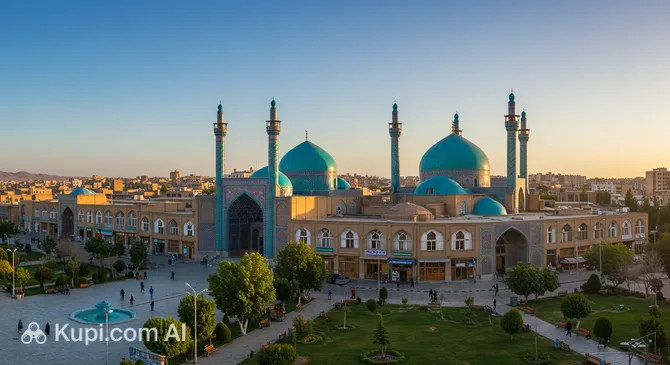
Shahrood. Illustration.
Source: Kupi.com AI

Strolling through the city's streets, it's easy to feel the breath of time. The Great Silk Road once passed through these lands, and the rich history of Shahrud is reflected in the local architecture and culture. Travelers can expect ancient mosques, aged mausoleums, and colorful bazaars where they can immerse themselves in the authentic environment of the East. After sightseeing, it's worth stopping by one of the cozy tea houses to relax and enjoy the local hospitality.

Shahrud is the ideal starting point for those who want to combine the study of cultural heritage with natural adventures. This place is worth visiting for the sincerity of the locals, the impressive contrasting landscapes, and the chance to experience life at the crossroads of civilizations.

Weather Overview

The climate of Shahrud is characterized by a pronounced seasonality due to its unique location between the mountains and the desert. Summers here are warm and sunny, but not exhaustingly hot: in July, the warmest month, the average temperature is about 24.0°C, and daytime highs rarely exceed 30°C. This time of year is characterized by minimal precipitation, so you are unlikely to need an umbrella.

Winter brings a noticeable cooling. In January, the average temperature drops to 0.7°C, and at night frosts down to -3.1°C are possible. Spring is the most dynamic time of year: the temperature gradually rises from 7°C in March to 16.5°C in May. Interestingly, it is the spring months that see the highest number of wet days (up to 17 days in May), although the rains themselves are usually short-lived. When planning a trip in the off-season, be sure to check the current weather in Shahrud to be prepared for changes.

Overall, expect a warm and fairly dry summer, as well as a cool winter with temperatures periodically dropping below freezing, and a wetter spring.

Average monthly temperature

Average monthly precipitation

Interesting Facts

Beyond its main attractions, Shahrud holds many fascinating secrets and unique features that make a visit here unforgettable.

  • Silk Road Heritage. Historically, the city served as an important stopover for merchants traveling from China to Europe. Caravans with silk and spices passed through these lands, and today, traces of ancient caravanserais where travelers once rested can still be found in the surroundings.

  • Architectural Wisdom. Shahrud's famous covered bazaar, built during the Qajar dynasty, is impressive not only for its variety of goods but also for its engineering. Its high vaults are designed to protect visitors from the scorching sun and maintain a comfortable coolness within the trading rows.

  • River Landscapes. The namesake river flows through the city, creating a striking contrast with the arid landscapes. The riverbed is full of rapids, small waterfalls, and deep natural pools, while its green banks have become a popular recreational area for picnics.

  • Land of Turquoise. High-quality turquoise is mined in the vicinity of Shahrud. This stone is considered a symbol of prosperity here, and local artisans craft exquisite jewelry from it, which is famous throughout Iran and highly valued by collectors.

How to Get There

Planning logistics is an important part of traveling to this region of Iran. Since the city is located at the intersection of vital routes, you can get here in various ways, combining flights and ground transport. To explore all available routes and schedules, we recommend looking further into how to get to Shahrud on our dedicated page.

If you prefer flying, it should be noted that the city of Shahrud itself does not have a large passenger airport accepting regular international flights. Travelers usually fly into the airports of neighboring cities and cover the remaining part of the journey by car.

The most convenient option is Gorgan Airport (IATA: GBT). Please note that it is located in the city of Gorgan, which is about 75 km from Shahrud. The trip from the terminal to your destination will take about 2 hours and 15 minutes by taxi or transfer, passing through picturesque landscapes. This is a regional transport hub with average passenger traffic, accepting domestic flights.

Another possible option is Dashte Naz Airport (IATA: SRY), located in the city of Sari. The distance from there to Shahrud is about 161 km. In this case, the ground transfer will be longer, taking approximately 4 hours and 20 minutes. This airport also serves a sufficient number of passengers and may be convenient if you plan to visit the Caspian Sea coast before heading to the mountains.

For convenience, here is a summary of the main nearby airports:

AirportPassenger trafficDistance
Gorgan Airport305 00074 km
Dashte Naz Airport325 763161 km

In addition to air travel, Shahrud has excellent ground transport accessibility. The city is an important station on the country's main railway line, connecting the capital Tehran and the holy city of Mashhad. Trains in Iran are a comfortable, safe, and inexpensive way to travel. You can also use intercity buses, which run regularly on the excellent roads of Semnan Province.

Main Attractions

Shahrud and its surroundings offer travelers a wonderful combination of natural wonders and deep historical heritage. Here, on the border of mountains and desert, you can walk literally above the clouds in the morning and touch ancient Sufi wisdom in the afternoon. Here are a few places you should definitely include in your itinerary when visiting this region.

Cloud Forest (Jangal-e Abr) is perhaps the most famous natural attraction in the region, located about 45 kilometers from the city. This ancient Hyrcanian forest is a unique place where cold air currents from the mountains meet warm air from the lowlands, forming a thick blanket of clouds. Tourists come here for the surreal landscapes: clouds are often right under your feet, creating the sensation of walking through the sky. It is an ideal spot for trekking and photography.

The Historical Complex in Bastam is located just a few minutes' drive from Shahrud. This small town is famous for the mausoleum of the renowned Persian Sufi Bayazid Bastami. The architectural ensemble of the complex is impressive in its refinement: here you can see an ancient mosque, minarets with intricate brickwork, and the Kashaneh Tower. The atmosphere of this place is steeped in peace and spirituality, attracting pilgrims and admirers of Oriental architecture from all over the world.

Shahrud Museum is an excellent stop for those who want to better understand the history of the region. The museum houses a rich collection of artifacts found during excavations at the ancient mound of Tepe Hissar, dating back several millennia. The exhibition includes ceramics, tools, and jewelry that tell the story of civilizations that flourished here long before our era. There is also an ethnographic department introducing the traditions of the local residents.

The Mausoleum of Sheikh Abolhassan Kharaqani is located in the village of Qaleh Now-e Kharaqan, near Shahrud. This is the tomb of another great Sufi mystic, surrounded by a beautiful garden. The site is known for its peaceful energy and simple yet elegant architectural style. At the entrance, you can read the Sheikh's famous saying on hospitality, which has become a motto for many residents of the region: "Whoever enters this house, feed them and do not ask of their faith."

Local Cuisine

Shahrud's gastronomic scene is a vivid reflection of its unique location between mountain peaks and the arid desert. Local cuisine is famous for the exceptional freshness of its ingredients and the generous use of aromatic spices. If you want to understand the true taste of the region, you must try abgoosht. This thick, hearty soup made of meat, chickpeas, and vegetables is prepared here according to old family recipes, turning a simple lunch into a real ritual that warms you up on cool evenings.

Meat lovers will appreciate the local lamb. It is often cooked over an open fire or baked in traditional tandoors, making the meat incredibly tender and giving it a smoky aroma. The perfect addition to any meal is fresh flatbread, baked right in the bazaars in wood-fired ovens. For dessert, be sure to pick up local sweets based on dates, nuts, and honey—they create a harmonious duo with a cup of strong and aromatic Iranian tea, which is enjoyed here at any time of day.

The food culture in Shahrud is closely intertwined with city markets and street trading. Strolling through the streets, you will encounter stalls with juicy kebabs, seasonal berries, and famous local pickles. A stroke of luck would be to catch one of the gastronomic festivals. During such holidays, the city turns into a large fair with delicacy tastings and culinary workshops, allowing tourists to not just try the food but also touch the secrets of its preparation.

Travel Tips

A journey to Shahrud promises to be an unforgettable adventure, combining the majesty of the desert and the freshness of mountain forests. To make your trip as comfortable as possible and without surprises, we have prepared a list of useful recommendations considering local specifics and cultural features.

  1. Clothing and Dress Code. Since Iran is an Islamic republic, following the dress code is mandatory. Women need to wear a headscarf (rusari) covering the hair and loose clothing (manto or tunic) covering the hips and arms to the elbows. Men should not wear shorts or sleeveless shirts. Given Shahrud's climate, where desert heat gives way to mountain coolness, dress in layers. Comfortable shoes are a must for walks in the "Cloud Forest."

  2. Transport and Movement. There is no metro in Shahrud itself; the main means of transport are taxis. The most convenient way for a tourist is to install the Snapp app (the local Uber equivalent), which works in many cities across the country. This will save you from having to haggle and explain the address in Farsi. There are also shared taxis ("savari"), but understanding their routes without knowing the language can be difficult.

  3. Financial Matters. International Visa and Mastercard cards do not work here. You need to bring cash (dollars or euros) and exchange them at official exchange offices ("Sarrafi"). Be careful with the currency: official calculations are in Rials, but in speech and on price tags, locals often use "Tomans" (1 Toman = 10 Rials). Always clarify which unit the price is quoted in to avoid confusion.

  4. Communication and Internet. To access maps and translators, we recommend purchasing a local SIM card (operators Irancell or MCI) immediately upon arrival in the country or at city communication stores. Wi-Fi is available in many hotels and cafes, but the speed can be unstable. Note that many familiar social networks and messengers may be inaccessible without the use of special software, so download necessary offline maps in advance.

  5. Etiquette and Communication. Iranians are famous for their hospitality and the "taarof" system of politeness. If a taxi driver or seller refuses to take money, it's a gesture of politeness, not an offer of a free service—you must insist on paying. When entering a home or a mosque, be sure to remove your shoes. Shaking hands with members of the opposite sex is not customary unless they take the initiative; a slight bow and a hand pressed to the heart is sufficient.

  6. Health and Safety. Shahrud is a quiet and safe city. Pharmacies ("Darukhaneh") are easy to find by their signs, and many basic medicines are available without a prescription. Tap water in the city is generally purified, but tourists are better off buying bottled water for drinking to avoid stomach acclimatization. The main danger on the streets is chaotic traffic; cross the road extremely carefully, even at a zebra crossing.

  7. Important Restrictions. The country has a strict "dry law": the import and consumption of alcohol are prohibited. Also, avoid public displays of affection (kissing and hugging) between couples on the street. It is categorically not recommended to photograph government buildings, military sites, and police—this can lead to serious trouble with the authorities.

  8. Opening Hours ("Siesta"). When planning shopping or visiting local shops, remember that in the afternoon, from about 1:00 PM to 4:00 PM, many shops and bazaars close for a lunch break. Life in the city boils over again closer to evening when the heat subsides, so evening walks are often the most atmospheric.

By following these simple rules, you can easily find common ground with local residents and enjoy true oriental hospitality. Shahrud is open to those who respect its traditions and is ready to give warm memories and unique impressions in return.

Entertainment & Nightlife

Entertainment and nightlife in Shahrud have a special, unique character that differs significantly from the typical European format. It is important to note right away: Iran has a dry law, so you won't find nightclubs, discos, or bars serving alcohol here. However, this doesn't mean the city goes to sleep at sunset. On the contrary, it is in the evening, when the daytime heat subsides, that the streets fill with life, families, and young people, and the atmosphere becomes incredibly cozy and lively.

The center of attraction in the evening is Abshar Park (Waterfall Park). This is the main place for locals to meet, stroll, and relax. The park is located on an elevation, and its terraces offer a magnificent panoramic view of the night city glowing with lights. An atmosphere of eternal celebration reigns here: people have picnics right on the grass, children play on playgrounds, and the sound of artificial waterfalls creates a pleasant background. If you want to see the real local "social scene," this is the place to be.

The gastronomic part of nightlife is concentrated in traditional tea houses ("chaikhaneh") and restaurants. Instead of a bar counter, it is customary here to sit on wide platforms (takhts) covered with carpets and pillows. Order saffron tea, a set of local sweets, or a hookah (qalyan), which is smoked everywhere here. Many establishments stay open late, until 11:00 PM or midnight, especially on weekends (Thursday and Friday). Popular cafes and snack bars can be found along central streets such as Imam Street and 22 Bahman Street.

For shopping enthusiasts and those who enjoy colorful walks, an evening visit to the City Bazaar is a great option. The historical trading rows look particularly mysterious under the lantern light in the evening. You can take a leisurely stroll, buy souvenirs and spices, or just watch craftsmen at work. Unlike the daytime hustle, evening trading is more paced, encouraging conversation with the sellers.

Practical tips for evening walks:

  • Safety: Shahrud is a very safe city. You can comfortably walk through lit streets and parks even late at night. Local residents are friendly and often approach tourists themselves for a chat.
  • Transport: Public transport stops running quite early, so it's better to use a taxi for getting around at night. The most reliable way is to call a car via the Snapp app or ask restaurant staff to call an official taxi ("ajans") for you.
  • Dress Code: Clothing rules (hijab for women, long trousers for men) apply 24/7 in all public places, including parks and restaurants.

Regarding daytime entertainment, Shahrud offers more relaxed leisure activities. In addition to the historical sites already mentioned, the city has several well-kept green areas, such as Bluvar Park, perfect for morning jogs or reading a book in the shade of trees. You can also visit small local cinemas during the day, which show Iranian films (usually without translation, but it's an interesting cultural experience), or head to small amusement parks for children that start operating in the late afternoon.

Parks & Museums

Despite its location on the border of the arid desert, Shahrud often surprises guests with its abundance of greenery and careful attitude toward its cultural heritage. The city and its surroundings offer travelers a harmonious blend of well-kept urban parks, wild nature reserves, and museums that preserve the memory of the region's millennial history.

The main green artery and a favorite holiday spot for citizens is Abshar Park (Waterfall Park). The name reflects the concept of the place: the park is decorated with artificial cascades, fountains, and stone pools that provide much-needed coolness on hot days. Located on a slope, it serves as an excellent observation deck. Tourists should come here closer to sunset to admire the city panorama in the golden rays of the sun and enjoy a peaceful walk among shady trees.

For wildlife lovers, a trip to Khar Turan National Park, located southeast of the city, will be a real discovery. This is the largest biosphere reserve in the country, often called the "Iranian Africa." Unique desert ecosystems are protected here, and rare animal species live here, including the Asiatic cheetah and the Persian onager. Visiting this natural area is a unique chance to see the harsh but beautiful nature of the region in its original form.

You can dive into the rich past of the region at the Shahrud Museum. It occupies a beautiful historical building of the former city administration, built in a traditional style. The museum's exhibition is divided into two parts: archaeological and ethnographic. Of particular interest are findings from the ancient mound of Tepe Hissar, which are over 4,000 years old. Here you can see elegant ceramics, tools, and jewelry that speak to the high level of development of the civilizations that existed here long before our era.

Another important cultural site is the Water Museum, located in the historical Tekiyeh Berenji complex. For a city on the edge of the desert, water has always had a sacred meaning. The exhibition is dedicated to the ancient system of qanats (underground channels) and technologies that allowed local residents to survive and farm in the arid climate. This informative place helps visitors understand the engineering genius of ancestors and the value of every drop of water in this region.

When walking around the city, pay attention to the historical architecture of the old quarters. Traditional brick houses with inner courtyards and high walls create the unique look of old Shahrud. Many of these buildings have preserved elements characteristic of desert architecture designed for the natural cooling of premises.

Insider Tip: Don't limit yourself only to the large parks. Be sure to walk along Ferdowsi Street or other central alleys where century-old plane trees (chenars) grow. These giant trees, forming green tunnels over the roads, are living symbols of the city and create an incredibly cozy atmosphere for walking, especially in the early morning.

Getting Around

The public transport system in Shahrud is quite simple and clear, which is typical for Iranian cities of this size. There are no metros, trams, or trolleybuses like those found in metropolises like Tehran. The main burden of passenger transport falls on buses and an extensive network of taxis. The city is fairly compact, so many distances in the center are easily covered on foot; however, for trips to remote attractions or new areas, you will still need transport.

City buses run along the main streets and avenues, connecting the center with residential quarters and the university. This is the most budget-friendly way to get around. It is important to remember a cultural feature: in buses, it is customary to divide the cabin into male and female halves (usually men occupy the front part, and women the back). Fares are most often paid in cash to the driver upon exit or using special local transport cards if you plan to stay in the city for a long time.

The most popular and convenient form of transport for tourists is taxis. In Shahrud, they come in two types: "dar-bast" (closed door) and "savari" (shared taxi). "Dar-bast" is a classic taxi that takes only you to a specific address; the price is negotiable and higher than average. "Savari" are shared taxis (usually yellow or green) that run along specific streets. You just stand by the road, call out your direction, and if the driver is going that way, he will pick you up. There may be other passengers in the car, and the cost of such a trip is fixed and very low.

For those accustomed to modern technology, the mobile app Snapp (the local equivalent of Uber) will be a real lifesaver. The service works perfectly in Shahrud: it allows you to call a car without knowing the language, see the exact cost of the trip in advance, and track the route. This eliminates the need to haggle with drivers and explain the address with gestures. You can pay for the ride in the app with cash to the driver by selecting the appropriate option when ordering.

The payment system in public transport and taxis has its nuances. International cards do not work here, so always have cash in local currency with you. Try to keep small bills for paying fares in buses and shared taxis, as drivers often do not have change for large banknotes. Remember the difference between Rials (the official currency) and Tomans (the common unit of account, equal to 10 Rials), so as not to overpay by 10 times.

Alternative forms of transport, such as car-sharing or organized bike rentals, are not yet developed in Shahrud. You can rent a bicycle privately in some sports shops or hotels if you want to explore the city's green alleys on your own. However, given the chaotic driving style in the country, walking or taking a taxi remains the safest and most comfortable options for city guests.

Accommodation

The choice of accommodation in Shahrud, like in many non-capital Iranian cities, is modest but offers comfortable enough conditions for travelers. You won't find luxury international chain hotels or huge resort complexes here. The hospitality sector mainly consists of mid-range hotels (2-3 star level), state-run guesthouses ("mehman-sara"), and cozy private apartments. In recent years, traditional eco-lodges ("boomgardi") have been gaining popularity, offering an authentic experience of staying in houses with national flavor.

When choosing an area, you should consider the purpose of your visit. If urban infrastructure, proximity to markets, and transport accessibility are important to you, it's best to look for accommodation in the city center, near Imam Street or 22 Bahman Street. From here, it's easy to reach the main parks and the historical bazaar. If you came for natural beauty, such as the "Cloud Forest," it makes sense to consider accommodation options in the surrounding villages. There, you can stay in guesthouses surrounded by gardens and enjoy the peace far from the city noise.

Booking specifics and prices:

Travelers should remember an important nuance: popular international booking services do not work in Iran. You can find and book a hotel through specialized Iranian travel websites or by contacting the hotel directly via phone or messaging apps. The price range in Shahrud can be described as budget to mid-range. Staying here will cost significantly less than in Tehran or Isfahan. Note that in the vast majority of cases, payment is accepted only in cash in the local currency.

It is strongly recommended to book accommodation in advance if your trip falls during the spring period, especially during the Iranian New Year (Nowruz, late March). At this time, the city fills with domestic tourists, and finding a vacant room upon arrival can be problematic.

Nearby Cities

For those who want to explore the surroundings, Shahrud serves as an excellent starting point for day trips to several interesting nearby locations:

Just an hour's drive away is ancient Damghan—a city with a rich history rooted in deep antiquity. This is a must-visit for archeology and architecture buffs: it is home to the Tarikhaneh Mosque, one of the oldest surviving mosques in Iran, built back in the 8th century. Additionally, Damghan is famous for its pistachios, which are considered among the best in the world.

If you want to swap desert landscapes for lush greenery, head to Gorgan. The path there lies through picturesque mountain passes, after which you find yourself in a completely different climate. Gorgan is the gateway to the Caspian forests, where you can enjoy fresh humid air and walks through the famous Nahar Khoran Forest Park. The contrast in nature between Shahrud and Gorgan is mind-blowing.

A bit further is Gonbad-e Kavus, known for its unique attraction—the Gonbad-e Qabus tower. This 72-meter brick structure is a UNESCO World Heritage site and is considered the tallest brick tower in the world. Its austere geometry and monumentality attract travelers from all over the globe.

CityPopulationDistance
Aliabad Katoul52 83855 km
Damghan59 10664 km
Khan Bebin10 87866 km
Gorgan350 67667 km
Azadshahr43 76076 km

These nearby destinations provide an insight into the diverse culture and landscapes of the region, offering travelers a choice between historical monuments of ancient Persia and the natural beauty of the north.

Shopping & Souvenirs

Shopping in Shahrud is an opportunity to immerse yourself in the authentic atmosphere of the Iranian province, where trade traditions have been preserved for centuries. You shouldn't expect an abundance of glossy boutiques or huge malls with global brands here. The main value of local shopping lies in finding unique handicrafts, the freshest products, and interacting with friendly sellers. This is a city where the buying process is often accompanied by a smile and a cup of tea.

The city's main commercial life is concentrated on the central streets. The main artery for shopping enthusiasts is Imam Street. Here, in the shade of trees, are hundreds of small shops offering everything from clothing and shoes to household goods and electronics. A walk down this street allows you to feel the rhythm of modern city life. It's also worth looking into 22 Bahman Street, where you can find jewelry shops and stores with traditional sweets.

While Shahrud is more famous for traditional trade, the city also has modern shopping passages. These are small covered complexes where locals buy clothes, cosmetics, and accessories. Such centers are a good place to hide from the daytime heat and purchase items needed for travel at fixed prices if you don't like to haggle.

The heart of trade and the main attraction for tourists is, undoubtedly, the Historical Bazaar of Shahrud. This is a place where time seems to have stopped. Under ancient brick vaults, the scents of spices, dried herbs, and freshly baked bread waft through the air. The bazaar is divided into sections: one sells handmade carpets, another copperware, and a third—famous local products. It is customary to bargain here, and this process is seen as part of polite communication.

When choosing souvenirs, pay special attention to the region's gastronomic brands. Shahrud is famous for its dried fruits, especially dried apricots and "qaysi," which are considered among the best in the country. Be sure to buy local grapes or raisins. Among handicrafts, it's worth bringing back ceramics typical of Semnan Province, or jewelry with turquoise mined in nearby mines. "Jajim"—heavy handmade fabrics with geometric patterns—are also popular.

Shops in Shahrud usually open around 9:00 AM and work until late evening (9:00 PM–10:00 PM). However, it is important to remember the traditional rest break (siesta): from 1:00 PM to 4:00 PM, many shops, especially in the bazaar, close. Friday in Iran is the official day off, so most shops will be closed or will open only in the second half of the day.

As for payment, be prepared to use only cash (Rials). International Visa and Mastercard cards are not accepted here. Some large stores may have terminals for local bank cards, but this is not applicable to tourists. Always carry a supply of small bills for the bazaar and taxis. The Tax Free system (VAT refund) in Shahrud, as in most of the country's cities, does not apply to tourists, so you should not count on a tax refund upon departure.

Have you reached the end of the page?

So the route has been studied inside and out