Support

Inisheer

About

Inisheer (Inis Oírr) is the smallest and most easterly of the three famous Aran Islands, located in Galway Bay. It is a place where time seems to have slowed down, allowing guests to enjoy the peace, fresh Atlantic breeze, and a unique culture. The island is an extension of the famous Burren landscape: limestone plateaus and endless labyrinths of stone walls are visible everywhere, creating a unique pattern against the backdrop of green grass.
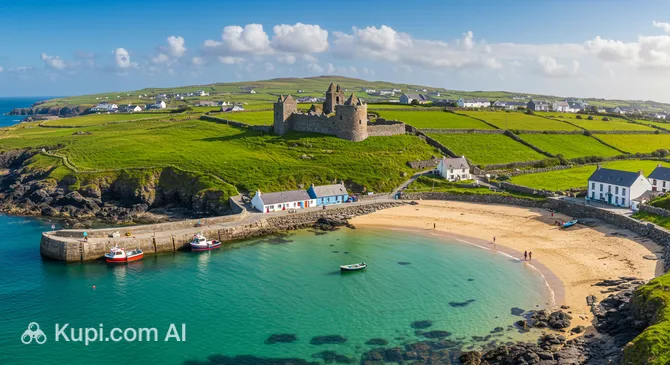
Inisheer. Illustration.
Source: Kupi.com AI

Geographically, the island is isolated, but that is exactly what gives it its special charm. Ireland reveals itself here from its most authentic side: Inisheer is part of the Gaeltacht—a region where the Irish language is used in everyday life alongside English. The island's population is only about 300 people, which creates an incredibly cozy, almost family-like atmosphere where every resident knows their neighbors and tourists are always welcome.

Despite its modest size, Inisheer's history is rich with events, as evidenced by numerous ancient monuments. One of the main landmarks of the island is O'Brien's Castle, built in the 14th century inside an even older stone fort. Its walls offer a breathtaking panoramic view of the ocean and neighboring islands.

Among other iconic attractions, St. Kevin's Church (Teampall Caomhán) stands out. This medieval building is known for being literally buried in the sands, and locals have to regularly clear the entrance. Another hallmark of Inisheer is the rusty hull of the cargo ship "Plassey," which was washed ashore on the rocky coast during a storm in 1960—a sight that is both somber and photogenic.

Inisheer is an ideal destination for a day trip or a quiet weekend. The island is compact enough to walk or cycle around in a few hours. Come here to take a break from the city bustle, listen to the sound of the waves, and experience true Irish traditions.

Weather Overview

Inisheer's climate is determined by its location in the Atlantic Ocean: mild but changeable weather prevails here year-round. Due to the influence of the sea, temperature fluctuations are insignificant, so severe frosts or exhausting heat are very rare here; however, the wind can be quite strong.

The warmest months are July and August, when the average temperature is around +15°C, with maximums reaching a comfortable +17°C. Winters here pass without severe cold: in January and February, the thermometer usually stays around +6...+7°C and rarely drops below +5°C. When planning your trip, be sure to check the current weather in Inisheer, as conditions can change rapidly throughout the day.

A characteristic feature of the local climate is high humidity. Precipitation falls regularly: the number of rainy days varies from 15 in April to 22 in August and October. Expect moderately warm summers with occasional rain and mild, wet winters, so a waterproof jacket and comfortable shoes will be indispensable on your trip.

Average monthly temperature

Average monthly precipitation

Interesting Facts

Beyond the main attractions, Inisheer holds many fascinating secrets and non-obvious details that reveal themselves only to the most curious guests. Here are a few facts that will help you look at this island in a new way:

  • TV Star: The rusty hull of the ship "Plassey," washed ashore in 1960, is known far beyond Ireland. It is this ship that is featured in the opening credits of the cult sitcom "Father Ted," making it a popular pilgrimage site for fans of the show.

  • Temple in the Sands: The ancient St. Kevin's Church (Teampall Caomhán) is located significantly below the level of the surrounding surface. This is not an architectural whim but the result of the constant movement of dunes: sand continuously buries the structure, and locals have to regularly dig out the entrance to maintain access to the shrine.

  • Special Patron: Although Saint Patrick is the country's main saint, Saint Kevin (Caomhán) holds a special place on Inisheer. According to local legend, he was the older brother of the famous Saint Kevin of Glendalough, and he is considered the true protector of the island.

  • Walls for the Soil: The endless stone walls that create the island's famous "checkered" pattern perform an important ecological function. They not only mark property boundaries but also protect the precious thin layer of soil from being blown away by strong Atlantic winds, creating a microclimate for grass to grow.

How to Get There

Since Inisheer is an island, it is impossible to reach it directly by car or train. The journey usually involves a flight to the mainland, followed by a transfer to a ferry or a small plane from a local airline. You can find out more about how to get to Inisheer, including ferry schedules, on a separate page, and below we will look at the main airports that welcome international travelers.

The nearest major air hub is Shannon Airport (IATA: SNN). There is no airport in the town of Inisheer itself, so you will need to fly into the city of Shannon, which is about 57 km from the island in a straight line (but the road trip to the ferry crossing in Doolin will take longer). This is an excellent choice for those who want to reduce overland travel time. A taxi or bus ride to the coast will take approximately 1 hour and 45 minutes.

The most popular option for most tourists remains Dublin Airport (IATA: DUB). This is the country's main gateway, located in the capital, Dublin, about 221 km from Inisheer. Most international flights arrive here. The journey from Dublin to the ferry ports in County Galway or Clare will take significantly longer—about 6 hours by bus or car.

You can also consider Ireland West Airport Knock (IATA: NOC), located in Knock. it is about 106 km from Inisheer. This is a convenient regional airport, and the journey from there to the coast by car will take about 3 hours. This is a good alternative if you are planning a trip along Ireland's west coast.

For clarity, here is summary information on the main airports:

AirportPassenger trafficDistance
Shannon Airport2.1 mln57 km
Kerry County Airport417 40998 km
Ireland West Airport Knock834 000106 km
Cork Airport3.1 mln153 km
Dublin Airport34.6 mln221 km

There is no direct rail connection to the island of Inisheer. The nearest major railway stations are in the cities of Galway and Limerick on the Irish mainland. From there, tourists need to transfer to a bus going to the ports of Rossaveal or Doolin, from where passenger ferries regularly depart for the Aran Islands.

Main Attractions

Despite its miniature size, Inisheer offers travelers a surprising concentration of historical and natural monuments. You can visit the main attractions on foot in a single day, but each of them deserves special attention, allowing you to touch the centuries-old history of this region.

O'Brien's Castle is not just ruins, but a majestic symbol of the island's medieval past. Built in the 14th century by the O'Brien clan, this three-story tower fortress stands on the highest point of Inisheer inside an even older stone fort. Tourists should climb up here not only to see the ancient masonry but also for the stunning views: on a clear day, a panorama of the entire island, Galway Bay, and the famous Cliffs of Moher in the distance opens up from here.

The Plassey Shipwreck makes a lasting impression with its monumentality and drama. The huge cargo vessel, washed ashore on the rocky Finnis coast by a storm in 1960, has become an integral part of the landscape. A walk to the ship along the coastal path allows you to feel the power of the Atlantic Ocean, while the rusty hull of the vessel against the grey stones and blue waves serves as an ideal location for atmospheric photos.

St. Kevin's Church (Teampall Caomhán) is a place where history literally struggles with nature. The ruins of the 10th-century church are located in a cemetery and are covered with sand every year, so they have to be regularly excavated. This site is revered by locals: every year on June 14, a mass is held here in honor of the island's patron saint. A visit to the church gives a sense of peace and involvement in the ancient spiritual traditions of Ireland.

Cnoc Raithní will be of interest to fans of ancient archaeology. This burial mound, dating back to the Bronze Age (around 1500 BC), was hidden underground until a severe storm in 1885 exposed the stonework. Burial urns and artifacts were found here, proving that people lived on Inisheer long before the arrival of Christianity. This is a unique monument that offers a glimpse into the prehistoric era of the region.

Áras Éanna Arts Centre is the modern heart of the island's cultural life, located in the restored building of a former weaving factory. Here, tourists can learn about traditional crafts, visit art exhibitions, theatrical performances, or traditional music concerts. It is a great place to learn more about the living culture of the Gaelic world and purchase unique handmade souvenirs.

Local Cuisine

Inisheer's cuisine is a hymn to freshness and simplicity, dictated by the harsh but generous Atlantic Ocean. Since the island is part of the Gaeltacht region, gastronomic traditions here are closely intertwined with the ancestral culture of Ireland. You won't find pretentious fine-dining restaurants here, but you can enjoy honest and hearty food prepared from products caught or grown literally a few steps from the table.

The island's main gastronomic asset is seafood. Be sure to try the local crab claws or fresh lobster, which are often served simply with melted butter so as not to overpower the natural taste. A hallmark of many establishments is thick and rich seafood chowder. This is a creamy soup with a mix of different fish and shellfish, which perfectly warms you up after a walk in the wind. It is traditionally eaten with traditional Irish soda bread, generously spread with salted butter.

The drinking culture on the island is centered around cozy pubs. Among alcoholic drinks, Guinness stout remains king—they say it tastes better in Ireland than anywhere else, and particularly so on the Aran Islands. For those who want to warm up, an Irish coffee with whiskey and cream is ideal. If you prefer non-alcoholic drinks, the local tea tradition will delight you: strong black tea is drunk here at any time of the day, often accompanied by fresh scones with jam and cream.

The centers of social life and dining on Inisheer are the pubs. These are not just places to eat, but true community clubs where locals and tourists sit at neighboring tables. During the day, they serve hearty lunches (the famous "pub grub"), and in the evening, the atmosphere changes: live traditional music is often played, and dinner flows seamlessly into friendly conversation. There are also small cafes and Tea Rooms on the island, offering homemade pastries and light snacks in a cozy, almost domestic setting.

Travel Tips

A trip to Inisheer is an immersion into an authentic atmosphere where nature dictates the rules and infrastructure differs from the usual urban setting. To make your visit to this small island as comfortable as possible and without surprises, we have prepared a list of important practical recommendations that will help you feel at home among the locals.

  1. Clothing and gear: The weather on the island changes rapidly, so the principle of layering is mandatory here. Even in summer, bring a high-quality windproof and waterproof jacket—Atlantic winds on the coast of Ireland can be piercing. Footwear should be as comfortable and durable as possible, and preferably waterproof, as you will have to walk on stony paths and grass. An umbrella is practically useless here due to the wind; it is better to choose a raincoat.

  2. Transport on the island: Inisheer is too small for car rentals, and tourists do not need cars here. The main ways to get around are walking, renting a bicycle (rental points are right by the pier), or taking a traditional horse-drawn carriage (Pony & Trap). Keep in mind that ferry communication depends on the weather: in case of a strong storm, sailings may be canceled, so always have a backup plan.

  3. Finances and cash: Although many pubs, cafes, and souvenir shops accept cards, having cash Euros is critically important. There is an ATM on the island (usually in the local shop), but it may not work, may be empty, or may be inaccessible after the shop closes. To avoid being left without funds for small expenses or tips, withdraw money in advance on the mainland.

  4. Health and safety: There is no 24-hour hospital or urban-type pharmacy on Inisheer. A nurse works here and there is a doctor on call, but serious assistance requires helicopter evacuation. Be sure to bring an individual first-aid kit with all necessary medications, especially if you get seasick. The island is very safe in terms of crime; the main threats are steep cliffs and slippery stones, so be careful near the edge.

  5. Communication: Inisheer is a Gaeltacht, a region where the Irish language is the primary tongue. However, all locals speak English fluently. You will show respect if you learn a couple of phrases, for example, "Dia duit" (Dee-ah gwitch)—"Hello." Mobile communication and 4G work, but the signal can drop in remote parts of the island. Wi-Fi is usually available in pubs and guest houses.

  6. Local etiquette: In a community where fewer than 300 people live, it is customary to greet people you meet on the road, even if you are not acquainted—a slight nod or a smile will suffice. Also, remember that gates in the fields are closed for a reason: if you opened a gate to pass through, be sure to close it behind you so that livestock do not wander off.

  7. What to avoid: Under no circumstances should you climb on stone walls or pull stones out of them. These dry stone walls are built without cement and are held together only by balance; they are very fragile, are private property, and are an important part of the island's ecosystem. Destroying a wall is a sure way to upset the locals.

  8. Time planning: If you are here for a day trip, keep a close eye on the departure time of the last ferry. Being late can be an expensive mistake, as there may simply be no free beds during the season, and private water taxis are not cheap. It is better to arrive at the pier 20–30 minutes before departure.

By following these simple tips, you can avoid typical tourist mistakes and enjoy the unique pace of life on Inisheer. The island generously rewards those who respect its traditions and nature, giving incredible landscapes and warm hospitality in return.

Entertainment & Nightlife

Nightlife on Inisheer is a unique experience that has nothing in common with noisy nightclubs or the neon signs of big cities. Here, on the edge of Europe, evening entertainment is centered around warm human connection, live music, and the coziness of traditional Irish pubs. After sunset, island life moves to several key establishments where locals and tourists become one big group.

The local pubs serve as the center of attraction in the evening, playing the roles of living rooms, concert halls, and news centers simultaneously. The atmosphere is as democratic and relaxed as possible: there is no dress code, and you will feel comfortable even in hiking boots and a sweater. The main entertainment is the spontaneous "Trad Sessions," when local musicians gather at one table, bring out fiddles, bodhráns, and flutes, and the pub fills with the sounds of live Irish music.

A visit to Tigh Ned pub should be a mandatory part of your evening program. This family-run establishment is located near the pier and is famous for its hospitality. In the evening, you can try excellent craft beer brewed on the Aran Islands and enjoy the freshest seafood by the fireplace. In summer, it is especially pleasant to sit in their beer garden, watching the sunset over the Atlantic.

Another iconic spot is Tigh Ruairí pub, located closer to the campsite and beach. This establishment is known for its lively atmosphere and excellent cuisine. This is where you are most likely to hear the Irish language being spoken, as locals love to spend their evenings here. Musical evenings are held here regularly, and guests often witness genuine Irish fun ("craic") with singing and dancing.

For those looking for cultural entertainment beyond pubs, it is worth checking the schedule at the Áras Éanna Arts Centre. This is the cultural heart of the island, where theatrical performances, concerts of contemporary and traditional music, and film screenings are often held in the evenings. During the day, you can visit art exhibitions or workshops, and in the evening, immerse yourself in the world of Gaelic art.

When planning an evening on Inisheer, it is important to consider a few practical points. First, stock up on cash: although there are terminals, the connection on the island can be intermittent. Second, pub kitchens usually close around 8:00–9:00 PM, so it is better not to delay dinner, although drinks are served until late at night. Prices for a pint of beer or a glass of wine are comparable to the national average.

Safety on the island is simple: there is practically no crime, and night walks are perfectly safe. However, the main "threat" is the darkness. Street lighting on Inisheer is minimal and completely absent outside the village. If you plan to walk back to your hotel, be sure to bring a flashlight or a charged phone. There are no taxis on the island in the usual sense, but local minibus drivers can sometimes give late tourists a lift by prior arrangement.

Parks & Museums

Due to its miniature size and specific landscape, Inisheer does not have classic city parks with fountains or large-scale museum complexes. However, the entire island can be called a huge natural reserve and an open-air ethnographic museum, where every stone and turn of the path tells the story of Ireland.

An Trá Beach serves as the central city park for locals and tourists. It is a magnificent stretch of white sand and crystal-clear turquoise water, located right by the main pier. In summer, it is the main recreation spot: people have picnics here, walk with children, and enjoy views of the neighboring islands. The beach regularly receives the "Blue Flag" award for environmental cleanliness, and the surrounding dunes create natural protection from the wind, forming a cozy relaxation zone.

Loch Mór is a hidden natural gem of the island that not all tourists know about. A small freshwater lake surrounded by reeds and wild grasses, it is an important natural area for migratory birds. It is an ideal place for those seeking solitude and silence away from the main tourist paths. A walk to the lake will allow you to see another, greener and marshier side of Inisheer's landscape, contrasting with the harsh coastal cliffs.

The island's main cultural exhibition space is the Áras Éanna Arts Centre. Although it serves many functions, its gallery deserves separate attention as a museum venue. It regularly hosts exhibitions of contemporary Irish artists, photographers, and sculptors, many of whom are inspired by the rugged beauty of the Aran Islands. Works by local weavers are also often exhibited here, demonstrating the evolution of famous Aran patterns from utilitarian fishermen's clothing to works of art.

The landscape of stone walls itself represents a special category of "museum." These are not just agricultural fences, but a monumental monument to human labor created over centuries. If you were to lay all the stone walls of the Aran Islands in a single line, their length would exceed thousands of kilometers. Walking through the labyrinth of these walls feels like visiting a historical gallery, where the exhibits are the fields themselves, created by generations of islanders on bare rock from sand and seaweed.

For those seeking authentic experiences, we suggest paying attention to St. Enda's Holy Well (Tobar Éinne). This is not a museum in the direct sense of the word, but an ancient sacred place that locals have protected for centuries. It is believed that the water in the well has healing properties and never runs dry. Visiting this quiet corner gives a deep understanding of the island's spiritual culture, which is still alive here today.

Getting Around

Given the miniature size of the island and its population of less than 300 people, Inisheer completely lacks the public transport system familiar to residents of megacities. Here you won't find a metro, trams, trolleybuses, or a route network of scheduled buses with stops. The island's transport infrastructure is oriented exclusively towards tourists and operates in a relaxed mode, adjusting to the arrival of ferries.

The most popular and convenient "transport" on the island is the bicycle. Rental points (Bike Hire) are located right by the pier where ferry passengers disembark. The range includes mountain bikes, city models with baskets, children's bikes, and even e-bikes, which help to tackle hills more easily. Advance booking is usually not necessary; there are enough bicycles for everyone even in high season. The rental cost varies from 10 to 20 euros for the whole day, depending on the type of bike.

A unique feature of the local transport system is the traditional Pony & Trap. This is not just a way to get from point A to point B, but a full-fledged excursion. Local drivers (jarvies) act as guides, telling stories of the island and showing the main sights. The pony and trap stand is also located near the main pier. A trip usually costs a fixed amount per trap or per person (about 10–15 euros) and takes from 45 minutes to an hour.

As a motorized alternative, tourist minibuses operate on the island. This is the only type of motorized transport available to guests, as car rentals (car sharing) do not exist on Inisheer, and bringing your own car on the ferry is expensive and impractical due to the narrow roads. Minibus drivers offer island tours, which is especially convenient in rainy weather or for elderly travelers.

The payment system on the island is as simple and conservative as possible: there are no validators, transport cards like Leap Card, or mobile apps for buying tickets. Payment is made on the spot in cash to the driver or the bike rental staff. Although bike rental shops increasingly accept bank cards, it is strongly recommended to have small cash Euros with you to pay for a pony and trap or minibus ride.

There are no taxi services in the usual sense (like Uber or a metered city taxi) on the island. However, local minibus drivers often perform the function of a taxi by prior arrangement, for example, to take guests with luggage from the pier to a guest house. If you need such a service, it is best to arrange it immediately upon arrival at the pier or ask your accommodation host to book a transfer in advance.

It is important to remember the operating hours of local transport. Life on the island is cyclical and depends on the ferry schedule. Rental points and tour traps start working with the arrival of the first morning ferry (around 10:00–10:30 AM) and finish their activities after the departure of the last ferry to the mainland (usually around 4:30–5:00 PM). If you are staying on the island overnight, be prepared for the fact that in the evening you will have to get around exclusively on foot, which, however, will not be difficult as the distances here are very small.

Accommodation

Accommodation on Inisheer differs significantly from the usual hotel stock of large tourist centers. Here you won't find chain hotels, high-rise complexes, or luxury all-inclusive resorts. Instead, the island offers a cozy, home-like atmosphere where most accommodation options are family-run businesses. The main range of housing varies from traditional guest houses (Bed & Breakfasts) and the island's only full-fledged hotel to an organized campsite for nature lovers.

The most popular accommodation format is guest houses (B&Bs). This is the perfect way to immerse yourself in local life: often the owners are native islanders ready to share stories and tips. Staying in such a house usually includes a hearty Irish breakfast to fuel you for long walks. The level of comfort in B&Bs on Inisheer is high, with many offering en-suite rooms and Wi-Fi while maintaining the charm of a rural home.

The center of social life and the only classic hotel on the island is Óstán Inis Oírr (Inisheer Hotel). It is located very close to the pier and the beach, making it a convenient starting point for any route. The hotel offers not only comfortable rooms but is also a gathering spot in the evenings thanks to its pub and restaurant. For budget travelers and young people, a great option is the hostel located nearby, offering dormitory beds.

For those who want to be closer to nature, there is an official campsite and glamping area on the island. The site is located in the immediate vicinity of the main beach, An Trá. Here you can stay with your own tent or rent specially equipped "pods" (small wooden cabins) that provide protection from the wind and basic comfort. Falling asleep to the sound of Atlantic waves is a special pleasure available to camping guests.

Regarding neighborhoods to stay in, the concept of a "neighborhood" on Inisheer is quite relative due to its compactness. Most accommodation is concentrated in the main village (Baile an Lurgain), within walking distance of the ferry pier, shops, and pubs. This is the most convenient option for those who don't want to carry luggage far. However, there are also a few guest houses located further inland. They are suitable for those seeking absolute peace and privacy, but be prepared for a 15–20 minute walk to the center of civilization or the need to arrange a transfer.

The price range on the island can be described as average for Ireland, but prices can rise in high season due to limited supply. Camping is in the budget segment, while rooms in the hotel and popular B&Bs will cost more, especially in the summer months. Most properties can be booked through popular online platforms, but many guest houses also accept direct bookings by phone or email, which can sometimes result in better terms.

Top booking tip: plan your trip in advance. Inisheer is a very small island with a limited number of beds. In peak season (July-August) and during local festivals, finding a room "on the day" is practically impossible. It is recommended to book accommodation at least 2–3 months before your trip to guarantee a place to stay and not be dependent on the schedule of the last ferry.

Nearby Cities

For those who want to explore the surrounding area, Inisheer serves as an excellent starting point for day trips to several interesting nearby locations:

Galway is perhaps the most popular destination for travelers in this region, often called the "cultural heart" of Ireland. The city is known for its incredible bohemian atmosphere, vibrant festivals, and the famous Latin Quarter, where life is bustling around the clock. Here you can stroll along the promenade to the Spanish Arch, listen to street musicians, and enjoy the best seafood in local restaurants.

Ennis is a picturesque historic town in County Clare, attracting tourists with its narrow winding streets and ancient architecture. Ennis is considered one of the capitals of traditional Irish music, so visiting the local pubs will be a true cultural event. In addition, the town is located near the famous Cliffs of Moher, which are clearly visible from the shores of Inisheer.

Limerick is the country's third-largest city, situated on the banks of the majestic River Shannon. This is a place with a rich, albeit complex history, whose main feature is the imposing 13th-century King John's Castle. Art lovers will appreciate the collection at the Hunt Museum, while foodies will enjoy the lively Milk Market, one of the oldest in Ireland.

CityPopulationDistance
Inishmore84015 km
Spiddal1 50026 km
Galway79 50440 km
Ennis25 27643 km
Shannon9 22258 km

These nearby destinations provide insight into the region's diverse culture and landscapes, complementing the experience of a secluded island holiday.

Shopping & Souvenirs

Shopping on Inisheer is an experience completely unlike visiting the shopping districts of major European cities. Here you won't find multi-story malls, chain boutiques, or noisy sales. Trade on the island is intimate, seasonal, and very personal. Shops here are mostly small family-run stores or workshops, where the owner or the craftsperson themselves often stands behind the counter, ready to tell the story of each item and share island news.

All commercial life is concentrated in the main village (Baile an Lurgain), in the immediate vicinity of the ferry pier. It is here, in the small area where tourists arrive from the mainland, that the main souvenir shops and the island's only supermarket are located. You won't have to look for special shopping streets: just take a walk from the pier into the village, and you will pass most of the local shops, which are housed in traditional cottages.

There are no shopping centers on Inisheer, nor could there be, given the size of the island and its population. All the products necessary for life are sold in the single general store (An Siopa), which functions as a grocery supermarket, post office, and hardware department all at once. For tourists, this place is interesting for the chance to buy picnic supplies or small essentials you might have forgotten at home.

During the summer season, when the flow of tourists increases, the space by the pier and the beach comes alive with small street stalls. This is a kind of open-air mini-market where locals can sell homemade pastries, simple souvenirs, or handmade jewelry. While it's not a market in the traditional sense, the atmosphere is very warm, and you can find lovely trinkets as mementos of your trip.

The main goal of shopping on the Aran Islands is, of course, the famous Aran knitwear. Inisheer is a great place to buy a genuine Aran sweater, scarf, or hat. Unlike mass-produced items, here you can find pieces hand-knitted by local craftswomen, where each pattern has its own symbolic meaning. It's also worth looking for books about the islands' history in English and Irish, postcards of local landscapes, and ceramic items created by local artisans.

Opening hours of shops on the island are closely tied to ferry schedules and the tourist season. Main souvenir shops open around 10:00–11:00 AM, when the first guests arrive, and close after the departure of the last daytime ferry, around 5:00 PM. In winter, many shops may work reduced hours or close entirely. Regarding payment, despite the presence of terminals in many places, it is strongly recommended to have cash Euros with you. The connection with the bank can be interrupted by weather, and small stalls may not accept cards at all.

The Tax Free system (VAT refund) in Ireland is available for tourists living outside the European Union. If you make a large purchase (for example, an expensive handmade sweater) in a specialized shop, ask the seller about the possibility of issuing a tax refund form (Retail Export Scheme). However, keep in mind that on a small island, not all retail outlets may participate in this program, so it is best to clarify this before paying.

Reached the end of the page?

That means the route is fully explored