Support

Este Castle

About

In the heart of the charming city of Ferrara, Italy, stands one of its main symbols—the majestic Este Castle (Castello Estense). This monumental medieval fortress, also known as the Castle of Saint Michael, was the primary residence of the rulers of the House of Este and is a key tourist attraction in the region.
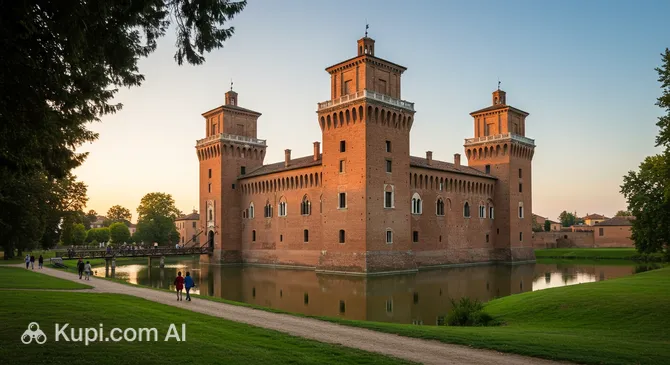
Este Castle. Illustration.
Source: Kupi.com AI

Traveller photos:

The castle is a massive defensive structure that makes an immediate, indelible impression. It is surrounded by a deep water-filled moat, with four powerful towers rising at the corners, emphasizing its impregnability and grandeur. Originally, the castle was connected to the Ducal Palace by a covered walkway, allowing the rulers to quickly take refuge in the fortress in case of danger.

Originally built in 1385 as a military citadel for protection against popular unrest, the castle eventually turned into a luxurious residence for the rulers of the House of Este, who governed Ferrara during the Middle Ages and the Renaissance. Today, it is not just a historical monument but an entire complex where visitors can explore the former ducal apartments, grim medieval prisons, and enjoy panoramic views from the towers.

Contacts

To plan your visit to Este Castle and get the most up-to-date information, such as exact opening hours, admission prices, and details about temporary exhibitions, it is highly recommended to consult official sources. The most reliable information can be found on the official tourism portal of Ferrara or on the castle's own website, which should be searched for just before your trip.

How to contactContact
AddressL.go Castello, 1, 44121 Ferrara FE, Italy
Phone+39 0532 419180
Websitewww.castelloestense.it

What to Do

A visit to Este Castle is a true immersion into the history and culture of the Renaissance. Guests can explore the grand halls and restored apartments where the powerful dukes of the Este dynasty once lived. A museum operates inside the castle, with exhibitions detailing the history of the ruling family and life in medieval Ferrara. Of particular interest are the art collections, which showcase the wealth and cultural influence of this noble house.

A journey through the castle is not limited to viewing the luxurious rooms. Visitors can stroll through the courtyards, walk along the ancient ramparts, see the former ducal kitchens, and even descend into the grim prisons located in the castle's dungeons. One of the most striking experiences is the climb up the Lion’s Tower (Torre dei Leoni), which offers a breathtaking panorama of the historic city center.

Este Castle is not just a monument frozen in time but a living cultural center. It regularly hosts temporary art exhibitions, classical music concerts, and other cultural events. This provides an opportunity not only to get acquainted with the historical heritage but also to become part of Ferrara's modern cultural life.

Getting There

Getting to Este Castle is very simple, as it is the main landmark and symbol of the city of Ferrara. The fortress is located in the very heart of the city, at Piazza Castello, and serves as the primary point of reference for all tourists. Thanks to its central location, most walking routes through the historic part of the city pass by the castle, making it easy to include in your stroll.

Ferrara itself is conveniently accessible by train from major neighboring cities in Italy. For instance, the trip from Bologna takes only about 30 minutes. From the Ferrara railway station, you can reach the castle on foot in 20–25 minutes while enjoying the city views along the way. Alternatively, you can take a city bus—for example, route No. 11 will take you from the station to the castle in just 5–7 minutes.

If you are traveling by car, there are parking lots near the historic center where you can leave your vehicle and continue on foot. The castle's central position makes it an ideal starting point for exploring other Ferrara attractions within walking distance.

Nearest city: Ferrara

History & Facts

The history of Este Castle is inextricably linked to dramatic events. Its construction began in 1385 as a direct response to a large-scale popular uprising. Driven to despair by high taxes and the consequences of a severe flood, the townspeople took to the streets demanding justice. To protect himself from future unrest, Marquis Niccolò II d’Este ordered the construction of an impregnable fortress. The project was entrusted to the renowned military architect Bartolino da Novara, and the first stone was symbolically laid on September 29—the feast day of St. Michael the Archangel, considered the patron saint of defensive structures.

Originally intended as a purely defensive citadel, the castle began to change its purpose as early as the 15th century. Duke Ercole I d’Este initiated its transformation into a luxurious residence worthy of one of the most influential families of the Renaissance. Within the formidable walls, exquisite palace apartments, spacious reception halls, and grand ballrooms began to appear. Thus, the austere fortress gradually took on the features of a magnificent palace, reflecting the wealth and cultural ambitions of its owners.

The transformation process continued into the 16th century under the reign of Alfonso I d’Este. He not only expanded the living quarters but also housed a rich collection of artworks in the castle, including paintings and sculptures. During this same period, elegant verandas and covered loggias were added to the tops of the once-threatening towers. This innovation allowed the castle's residents to enjoy magnificent views of the city, turning former defensive posts into places for relaxation and contemplation of beauty.

Time Needed

When planning a visit to Este Castle, you should allow between 1.5 and 3 hours for the tour. This time is generally sufficient to get a general overview of the fortress: walk through the courtyards, see the main halls and apartments, and explore the museum's key exhibits telling the story of the Este dynasty.

If you want to dive deeper into the history and leisurely explore every corner of the castle, it is better to set aside about 3 hours or even more. This will allow you to visit the temporary exhibitions often held within its walls without rushing, descend into the ancient dungeons, and climb the observation deck of one of the towers to enjoy a panoramic view of Ferrara. The length of your visit largely depends on your interest in details and museum displays.

Working Hours

Este Castle is typically open to visitors from 10:00 AM to 6:00 PM, with the ticket office closing 45 minutes before the end of the day. It is important to note that the castle is closed on Tuesdays and on December 25. As schedules can change depending on the season, holidays, or special events like "Pink Night," it is highly recommended to check the current information on the castle's official website before your visit.

Although the castle is open year-round, advance booking may be required for some events or tours. For example, it is recommended to reserve spots in advance for special evening openings or guided tours. Visiting the Torre dei Leoni for a panoramic view of the city may also have separate conditions and require an additional fee. Checking these details in advance will help you plan your visit in the best possible way.

DayOpening hours
Monday10:00 – 18:00
TuesdayClosed
Wednesday10:00 – 18:00
Thursday10:00 – 18:00
Friday10:00 – 18:00
Saturday10:00 – 18:00
Sunday10:00 – 18:00

Nearby

A visit to the majestic Este Castle is only the beginning of your acquaintance with Ferrara's rich history and culture. To truly feel the spirit of this Renaissance city, it is worth exploring its immediate surroundings. Most of Ferrara's key attractions are located within walking distance of the castle, allowing you to create a fascinating walking route and enrich your experience.

A stroll through the historic center, which is a UNESCO World Heritage site, will reveal picturesque streets, ancient palaces, and cozy squares. Each of the nearby landmarks complements the story of the powerful d'Este dynasty and Ferrara's Golden Age.

NameDistance
Foschini Rotunda0.1 km
Piazza del Municipio0.2 km
Ferrara Cathedral0.2 km
Cathedrals Museum0.3 km
Arci Bolognesi0.4 km
Palazzo dei Diamanti0.5 km
National Museum of Italian Judaism and the Shoah0.5 km

Reached the bottom of the page?

Looks like you know this route inside out