Support

Villa d'Este

Nearby interesting places

About

Villa d'Este is a premier monument of Renaissance architecture and garden design located in the picturesque town of Tivoli, Italy. This magnificent complex, recognized as a UNESCO World Heritage site, is a true masterpiece of human genius and one of the region's most impressive attractions.
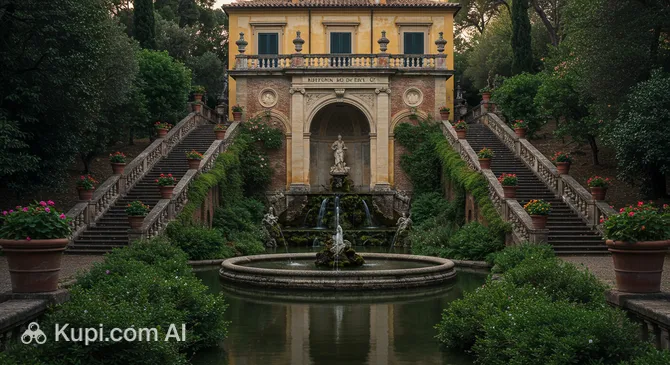
Villa d'Este. Illustration.
Source: Kupi.com AI

Traveler photos:

The heart of the villa is its unique terraced garden, which cascades down the hillside. It is world-renowned for its incredible number of fountains, grottos, water cascades, and elegant sculptures, creating an atmosphere of magic and harmony. A walk through the garden, which features over 500 water features, becomes an exciting journey where new breathtaking views open up around every corner.

In addition to the garden, the complex includes a luxurious palace that served as the residence of Cardinal Ippolito II d'Este. Villa d'Este is not just a beautiful place, but also an important cultural symbol that has had a profound influence on the development of landscape architecture in Europe. Its principles and design solutions served as inspiration for such famous parks as Versailles and the fountains of Peterhof.

Contacts

For the most up-to-date information on opening hours, ticket prices, and special events at Villa d'Este, it is recommended to consult the official tourist resources of the city of Tivoli or regional guidebooks.

How to contactContact
AddressP.za Trento, 5, 00019 Tivoli RM, Italy
Websitevillae.cultura.gov.it

What to Do

Visiting Villa d'Este is, first and foremost, an immersion into a world of water and greenery. The primary activity here is a leisurely stroll through the famous terraced gardens, where you can admire the complex and ingenious system of fountains, cascades, and canals. This entire aquatic extravaganza operates solely through natural pressure and gravity, without the use of pumps. Several masterpieces of hydraulic engineering deserve special attention: the majestic Fountain of Neptune, the musical Organ Fountain—which plays melodies using a water mechanism at certain hours—and the picturesque Avenue of the Hundred Fountains, which creates an impressive water corridor.

The walk is not limited to fountains alone. Explore the numerous grottos, decorative pools, and secluded corners of the garden, each possessing its own unique atmosphere. Furthermore, the villa's viewpoints offer stunning panoramic views of the Tivoli surroundings and the scenic Roman valley. It is the perfect place to take memorable photos and enjoy the harmony of architecture and nature.

After your walk through the gardens, be sure to visit the palace. Inside, visitors can tour the richly decorated halls, whose walls are covered with frescoes, tapestries, and 16th-century artworks. Although many interior items have been lost over time, the surviving ceiling and wall paintings are still breathtaking and serve as a reminder of the residence's former splendor. The villa also regularly serves as a venue for various cultural events, concerts, and temporary exhibitions, which can be a pleasant addition to your visit.

Getting There

Reaching Villa d'Este is quite straightforward, especially if you are traveling from Rome, for which a trip to Tivoli is a popular day-trip destination. The primary options are public transport, such as trains or buses, which run regularly between the capital of Italy and this picturesque town.

One of the most convenient options is taking a train. Trains depart from Rome's central Termini station to the Tivoli station. From the station in Tivoli, you can reach the villa on foot in about 15–20 minutes or take a local bus. Walking allows you to enjoy the atmosphere of the historic town center.

An alternative to the train is the Cotral intercity bus. It departs from the bus station located near the Ponte Mammolo metro station (Blue Line B) in Rome. Upon arrival in Tivoli, you will have a short walk through ancient streets to reach the villa entrance.

If you are traveling by car, there are parking lots near the attraction. However, keep in mind that finding a free spot can be difficult during the peak tourist season. Also, be aware that the villa is situated on a hill, so the final part of the path to the entrance goes through rather steep streets in the historic center.

Nearest city: Tivoli

History & Facts

The history of Villa d'Este is inextricably linked to the ambitions and refined taste of its creator, Cardinal Ippolito II d’Este. In 1550, having been appointed governor of the city of Tivoli, the Cardinal—the son of the famous Lucrezia Borgia—decided to create a residence that would eclipse all existing palaces of the time in luxury and beauty. For this grand task, he invited the prominent architect and archaeologist Pirro Ligorio, who drew inspiration from the nearby ancient Villa of Emperor Hadrian.

The project was truly massive in scale. Its realization required not only the demolition of old buildings but also the development of a highly complex hydraulic system that still feeds the garden's hundreds of fountains today. The finest artists of the day, including Girolamo Muziano, Livio Agresti, and Federico Zuccari, worked on the palace's interior decoration, adorning the halls with magnificent frescoes. The Cardinal's vision was for the villa to be not just a retreat, but a true cultural center where poets, musicians, and artists could gather.

Over the centuries, the villa experienced periods of prosperity and decline, yet its cultural significance remained unchanged. In the 20th century, particularly after damage sustained during World War II, extensive restoration work was carried out to preserve this unique heritage for future generations. Recognition of its exceptional value came with its inclusion on the UNESCO World Heritage List in 2001. In 2007, the villa's gardens received the prestigious "Most Beautiful Park in Europe" award, further confirming its status as one of the greatest masterpieces of garden art in Italy and the world.

Time Needed

To fully experience Villa d'Este, it is recommended to set aside at least 2–3 hours. This is generally enough time to leisurely stroll along the main garden alleys, admire the most famous fountains—such as the Organ Fountain and the Avenue of the Hundred Fountains—and take photos against the picturesque backdrops.

If you are a connoisseur of landscape design, Renaissance architecture, or simply wish to explore every corner of this amazing place without rushing, you should plan for more time—perhaps up to half a day. This will allow you not only to walk through the entire park but also to carefully examine the frescoes and halls of the palace itself, discover secluded grottos, and soak in the atmosphere of this masterpiece of garden art.

Working Hours

Villa d'Este is generally open to visitors year-round, except for certain holidays and Mondays. Opening hours may change depending on the season. Typically, the villa opens at 8:30 AM, while the closing time varies: in the summer months (May to August), it stays open until 7:30 PM or 7:45 PM, whereas during the autumn and winter period, it closes earlier in accordance with daylight hours. Last entry is usually permitted an hour to an hour and a half before the complex closes. As the schedule is subject to change, it is highly recommended to check the official villa website for the latest information immediately before planning your visit.

While mandatory reservations are not always required, purchasing tickets online in advance is a good idea, especially during the peak tourist season. This will help you avoid long queues and guarantee entry at your preferred time. Various ticket options are available, including combined offers that allow you to visit other Tivoli attractions, such as Hadrian's Villa.

DayOpening hours
Monday2:00 – 19:45
Tuesday8:45 – 19:45
Wednesday8:45 – 19:45
Thursday8:45 – 19:45
Friday8:45 – 19:45
Saturday8:45 – 19:45
Sunday8:45 – 19:45

Nearby

Visiting Villa d'Este is just one part of what the charming town of Tivoli has to offer. To truly experience its atmosphere and rich history, it is worth taking the time to explore the surroundings. Within walking distance of the famous villa, you will find other unique sites, from ancient ruins to cozy restaurants, that will make your trip to Italy even more fulfilling and memorable.

A stroll through the town's picturesque streets will allow you to discover many interesting corners. Near Villa d'Este, there are both world-famous landmarks and lesser-known but equally attractive establishments where you can relax and enjoy local cuisine. Below is a list of some of them, including their distance.

NameDistance
Avenue of the Hundred Fountains0.1 km
Oval Fountain0.1 km
Taverna di Dracula0.2 km
The Public House Whisky Bar0.4 km
Villa Gregoriana0.5 km
Sibilla Restaurant0.5 km
La Celestiale Pastry Shop0.7 km

Have you reached the end of the page?

So the route has been studied inside and out