Support

St. Peter's Basilica

About

St. Peter's Basilica is not just the Vatican's main attraction, but the heart of the entire Catholic world, located in the eternal city of Rome. This grand cathedral in Italy is the ceremonial center of the Roman Catholic Church and one of the four Major Papal Basilicas. Its history and grandeur attract millions of pilgrims and tourists from all over the world, seeking to touch centuries of history and spiritual heritage.

The dimensions of the cathedral are staggering: it is the second-largest Christian church in the world by area and can accommodate up to 15,000 people inside, with another 60,000 in the adjacent St. Peter's Square. According to tradition, the basilica is built over the burial site of the Apostle Peter, one of Christ's disciples, giving this place a special sanctity. Today, the Apostle's tomb is the primary relic and is located in the underground necropolis beneath the cathedral.
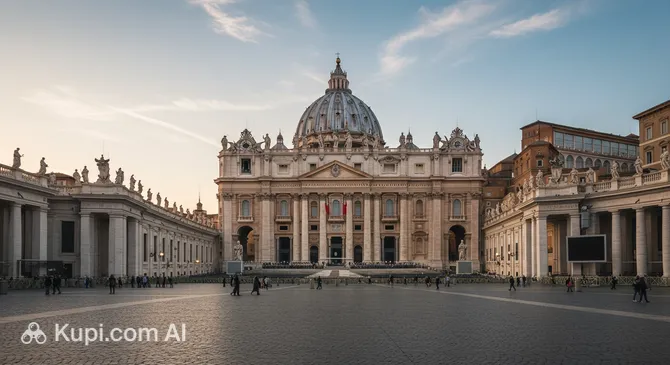
St. Peter's Basilica. Illustration.
Source: Kupi.com AI

Traveler photos:

The greatest masters of the Renaissance and Baroque periods worked on creating this architectural masterpiece. Geniuses such as Donato Bramante, Raphael, Carlo Maderno, and Gian Lorenzo Bernini all contributed to its design. The majestic dome, which has become one of Rome's most recognizable symbols, was designed by Michelangelo Buonarroti himself. Inside, the cathedral is decorated with numerous statues, altars, mosaics, and tombs, most notably the famous "Pietà" sculpture by Michelangelo.

Contacts

For the most up-to-date information on opening hours, special events, or to contact the St. Peter's Basilica administration, it is recommended to use the official contact details. It is always a good idea to check the official website before your visit to plan everything in the best possible way, especially if you intend to visit the dome or the necropolis.

How to contactContact
AddressPiazza San Pietro, 00120 Città del Vaticano, Vatican City
Phone number+39 06 6988 3462
Websitewww.basilicasanpietro.va

What to Do

A visit to St. Peter's Basilica is an opportunity to experience some of the greatest treasures of world art and spirituality. Inside the cathedral, a splendor of sculptures, mosaics, and frescoes awaits you. The famous "Pietà" sculpture group, created by the genius Michelangelo at the age of just 24, leaves an indelible impression. This poignant depiction of the Virgin Mary holding the body of Christ on her lap is located to the right of the entrance and is the only work signed by the master. At the very heart of the basilica lies the main altar, which, according to tradition, is situated directly above the burial site of the Apostle Peter.

One of the most exciting activities for visitors is climbing the majestic dome of the cathedral, designed by Michelangelo. After conquering the steps, you will be rewarded with a truly unforgettable panoramic view of the eternal city of Rome and St. Peter's Square. From here, a stunning perspective opens up over Bernini's famous colonnade and the ancient Egyptian obelisk standing in the center of the square. This scene will long remain one of the most vivid memories of a trip to Italy.

St. Peter's Basilica is not just a museum, but the living heart of the Catholic world. Many tourists and pilgrims come here not only for sightseeing but also for prayer or to participate in services. Important ceremonies regularly take place here, including papal masses and major religious holidays that gather the faithful from all over the world. It is a unique opportunity to feel the spiritual atmosphere of this holy place and encounter the centuries-old history of Christianity.

Getting There

St. Peter's Basilica is located within the Vatican City, in the western part of Rome. One of the most convenient and popular ways to get here is by using the Rome Metro. You will need Line A (red). The nearest stations are Ottaviano and Cipro. From either station, a leisurely walk to St. Peter's Square takes about 10 minutes.

In addition to the metro, numerous city buses and trams run to the Vatican, with routes passing in the immediate vicinity of St. Peter's Square. For example, bus numbers 40 and 64 are popular routes coming from the city center. For tourists who prefer maximum comfort and flexibility, hop-on hop-off tour buses are an ideal choice, as they stop right by the Vatican. Of course, you can always use a taxi to reach your destination quickly and directly.

When planning your visit, remember that entry to St. Peter's Square itself is free; however, to visit the basilica, you must pass through a security checkpoint, which can result in long queues. It is also crucial to observe the dress code: your clothing must cover your shoulders and knees, or you may be denied entry to this sacred site.

Nearest city: Rome

History & Facts

The history of St. Peter's Basilica dates back to ancient times. The first basilica on this site was founded in the 4th century by order of Emperor Constantine I. Construction began between 318 and 322 AD. The site was not chosen by chance: the altar was positioned over the spot revered since the 2nd century as the burial site of the Apostle Peter, who was martyred in Nero's circus. For twelve centuries, this original basilica served as the primary center of pilgrimage in Rome and the site of papal coronations. It was here, on Christmas Night in 800 AD, that Charlemagne was crowned emperor, highlighting its exceptional status.

By the beginning of the 16th century, the ancient basilica had fallen into decline, and in 1506, Pope Julius II made the ambitious decision to completely rebuild it. This marked the beginning of a grand new chapter in the cathedral's history, bringing together the talents of the greatest masters of the Renaissance. Donato Bramante was appointed as the first architect, and after his death, the work was continued by geniuses such as Raphael and Michelangelo. Construction spanned more than a century, and each architect contributed to the appearance of this monumental structure, turning it into a true architectural masterpiece.

The cathedral acquired its modern appearance, familiar to millions worldwide, by the 17th century. But the story of its transformation would be incomplete without mentioning one remarkable fact. In 1586, even before all the work was finished, an ancient Egyptian obelisk was erected in the square in front of the cathedral, based on a design by architect Domenico Fontana. This pink granite monolith was brought to Rome in 37 AD by Emperor Caligula. The complex engineering operation to move it was a major event of its time and added the final touch to the majestic ensemble of one of Italy's main shrines.

Time Needed

When planning a visit to St. Peter's Basilica, it is worth setting aside different amounts of time depending on your interests. For a general introduction to the cathedral, viewing its main nave and masterpieces such as Michelangelo's "Pietà" and the Papal Altar, it is recommended to allocate at least 2–3 hours. This will be enough time to feel the grandeur and spiritual atmosphere of the place, though keep in mind that this does not include the time spent waiting in the security line at the entrance, which can be significant.

If you want a more complete experience, it is better to plan for 4 to 5 hours. This extra time will allow you to make the unforgettable climb to the top of the dome, which offers breathtaking panoramic views of Rome and St. Peter's Square. You will also be able to visit the Vatican Grottoes with the papal tombs or the Basilica Treasury Museum, which houses precious religious artifacts, without rushing.

Thus, the duration of your visit depends directly on how deeply you wish to explore. A couple of hours might suffice for a quick tour, but for a full exploration of all the treasures of St. Peter's Basilica, it is better to set aside half a day. To avoid long lines and make the most of your time, many experienced travelers suggest arriving at the cathedral early in the morning, right at opening time.

Working Hours

St. Peter's Basilica is open to visitors year-round, though opening hours may vary slightly depending on the season. Typically, from April 1 to September 30, the cathedral is open from 7:00 AM to 7:00 PM, and during the winter period, from October 1 to March 31, from 7:00 AM to 6:30 PM. It is important to remember that this is an active religious center, so schedules may change on days of papal audiences, major church holidays, and other special events. It is highly recommended to check the current information on the official Vatican website before your visit.

Entry to the basilica itself is free, but be prepared for long security lines, especially during the peak tourist season. To save time, you can arrive at opening time or consider purchasing tickets for a guided tour, which often include a skip-the-line option. If you plan to climb the dome, visit the necropolis, or the Vatican Grottoes, a separate ticket is required, which is best booked online in advance as spots are limited.

7:00 – 19:10

Nearby

Visiting St. Peter's Basilica is just one part of a grand journey through the Vatican and its surroundings. This area is packed with historical and cultural treasures, many of which are just steps away from the famous cathedral. Exploring the nearby sites will allow you to dive deeper into the atmosphere of the Eternal City and see other masterpieces created by the great masters.

Exploring the surrounding area will enrich your experience, as world-famous museums, picturesque squares, and monumental structures are all located near the basilica. By setting aside time to get to know these attractions, you can form a more complete picture of the grandeur of Rome and its unique heritage, which has been shaped over millennia.

NameDistance
Sistine Chapel0.1 km
Vatican Obelisk0.3 km
Vatican Museums0.5 km
Castel Sant'Angelo1 km
Piazza Navona1.6 km
Trapizzino Trastevere1.8 km
Pantheon1.9 km

Have you reached the end of the page?

So the route has been studied inside and out