Support

Pantheon

About

The Pantheon is an outstanding monument of ancient architecture located in the heart of Rome, Italy. Originally built as a temple dedicated to all the gods of Ancient Rome, it is one of the best-preserved structures from that era. Its name, derived from the Greek words "pan" (all) and "theos" (god), literally translates to "Temple of all gods."
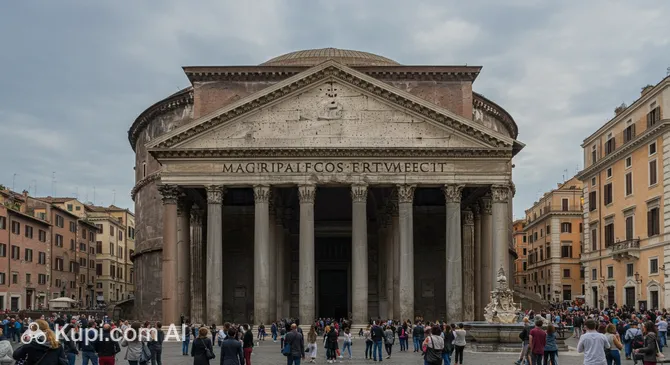
Pantheon. Illustration.
Source: Kupi.com AI

Traveler photos:

The architectural grandeur of the Pantheon is truly awe-inspiring. The building consists of two key elements: a traditional portico with massive columns and a magnificent rotunda topped by a giant dome. This design showcases the pinnacle of Ancient Roman engineering, where strict geometric forms—the cylinder and the hemisphere—merge in perfect harmony. To this day, its dome remains the largest in the world among those built from unreinforced concrete.

The central element of the dome is the famous "Oculus"—a single opening about 9 meters in diameter through which light enters. This "eye of the Pantheon" creates a unique atmosphere and symbolizes the connection between the earthly and the divine. Since the Renaissance, the Pantheon has served as the final resting place for eminent figures, including the artist Raphael and Italian kings. Visiting this unique historic site leaves an indelible impression and allows you to touch the centuries-old history of the Eternal City.

Contacts

To plan your visit to the Pantheon, verify current opening hours, ticket prices, or visitation rules, it is recommended to consult official sources. All necessary visitor information is typically available on the attraction's website. Below are the primary contact details.

How to contactContact
AddressPiazza della Rotonda, 00186 Roma RM, Italy
Phone number+39 06 6830 0230
Websitedirezionemuseiroma.cultura.gov.it

What to Do

Stepping inside the Pantheon, visitors find themselves in a space where the grandeur of ancient architecture is felt in full. The main feature that catches the eye is undoubtedly the famous dome with a circular opening in the center, known as the Oculus. Through it, a powerful beam of light enters the temple, slowly moving across the interior throughout the day, creating a stunning and ever-changing atmosphere. It is also worth taking time for the details: examine the well-preserved marble floors and walls that hold the memory of a millennium of history.

The Pantheon is not only an architectural masterpiece but also a burial vault for Italy's greatest figures. Exploring the niches and chapels, you will discover the tombs of prominent individuals, including the first kings of the unified country, Victor Emmanuel II and Umberto I. However, the most famous burial, attracting pilgrims from all over the world, belongs to the Renaissance genius—the artist Raphael. Finding his modest yet revered tomb is one of the primary goals for many art lovers visiting Rome.

During your visit, pay attention to the brilliant engineering mind embodied in the building's construction. The mathematical precision of the Pantheon is striking: the internal diameter of the dome is exactly equal to the height from the floor to the Oculus, meaning a perfect sphere could fit inside the rotunda. This perfection of proportions creates a sense of incredible harmony and makes a visit to the Pantheon not just a sightseeing trip, but a real lesson in history, art, and science.

Getting There

Reaching the Pantheon is quite simple, as it is located in the very heart of Rome's historic center. Thanks to this central location, it can be reached on foot from many other famous landmarks, such as the Trevi Fountain or Piazza Navona. A stroll through the narrow cobbled streets is a fascinating part of the journey in its own right, allowing you to soak up the atmosphere of the Eternal City.

If you prefer public transport, many bus routes are at your service. The nearest major stop, Largo di Torre Argentina, is just a few minutes' walk away. Buses 30, 40, 62, 64, 81, 87, and 492 stop there. You can also take tram 8. These routes connect the center with various parts of the city, including Termini Station, making it convenient from almost anywhere in Rome.

The closest metro station is Barberini on Line A. From the station, it's about a 15-minute walk to the Pantheon, but the path leads through scenic Roman streets. Taking a taxi is also a convenient option, especially if you value comfort and speed; however, keep in mind that traffic in the city center can be heavy, and access for private cars is limited due to ZTL (Limited Traffic Zones).

Nearest city: Rome

History & Facts

The history of the Pantheon in Rome is as complex and multilayered as the Eternal City itself. The building we see today is not the first structure on this site. The original temple was built between 27 and 25 BC by order of Marcus Agrippa, son-in-law and associate of Emperor Octavian Augustus. This is evidenced by the famous inscription on the pediment: "M. AGRIPPA L. F. COS. TERTIUM FECIT," which translates to "Marcus Agrippa, son of Lucius, in his third consulate, built this." That first Pantheon was dedicated to the primary gods of the Roman pantheon, especially Mars and Venus. However, the original structure was destroyed by fires.

The Pantheon acquired its modern appearance much later, during the reign of Emperor Hadrian, roughly between 118 and 125 AD. Construction likely began under his predecessor Trajan and was completed under Hadrian, who, out of respect for the creator of the first temple, kept Agrippa's historical inscription on the facade. The authorship of the project is still a subject of debate: some historians attribute it to the outstanding architect Apollodorus of Damascus, while others believe that Emperor Hadrian himself, known for his passion for architecture, participated in the design.

A key moment in the Pantheon's history that ensured its remarkable preservation was its conversion into a Christian church. In 609 AD, Byzantine Emperor Phocas presented the building to Pope Boniface IV, who consecrated it as the Basilica of St. Mary and the Martyrs (Santa Maria ad Martyres). This step saved this masterpiece of ancient engineering from the destruction that befell many other pagan temples. Since the Renaissance, the Pantheon has become an honorary burial site for great figures of Italy, further cementing its status as one of the country's most important monuments.

Time Needed

Exploring the Pantheon in Rome typically takes between 30 and 60 minutes. This is enough time to unhurriedly walk through the entire interior, admire the grandeur of the famous dome with its Oculus, through which light enters, and view the tombs of prominent figures, including the artist Raphael and the first kings of Italy. Unlike massive complexes such as the Colosseum or the Vatican Museums, the Pantheon is more compact, making its visit relatively quick yet no less impressive.

The duration of your visit may vary depending on your interests and travel style. If you are short on time, a quick walk-through for a general impression will take only 15–20 minutes. However, if you are passionate about history, architecture, or art, it is worth dedicating more time. With an audio guide that details the engineering features of the building, the exploration could take about an hour or even longer. Also, don't forget to account for potential waiting time in the entrance queue, especially during the peak tourist season or on weekends.

Working Hours

The Pantheon in Rome is open to visitors year-round, except for a few public holidays such as January 1, August 15, and December 25. Standard operating hours are daily from 9:00 AM to 7:00 PM; however, the last entry is usually permitted 15–30 minutes before closing. On Sundays, the schedule may vary slightly, so it is worth checking the latest information before your visit. Also, keep in mind that hours may change due to religious services or special events.

Recently, an entry ticket has been required to visit the Pantheon. To avoid long queues, especially during peak tourist season, on weekends, and holidays, pre-booking tickets in advance is highly recommended. This can be done online through the official Musei Italiani portal or directly at the ticket offices on-site. Advance booking will help you plan your visit and save time. For the most accurate information on schedules, pricing, and ticket purchases, it is always best to refer to the attraction's official website.

9:00 – 19:00

Nearby

Visiting the Pantheon is an immersion into the grandeur of Ancient Rome, but the true charm of the Eternal City reveals itself when you begin exploring its surroundings. The historic center of Rome is so densely packed with sights that every turn of a corner promises new discoveries. A walk through the cobbled streets around the Pantheon is not just a way to pass the time, but an opportunity to feel the living pulse of a city where ancient ruins harmoniously coexist with Renaissance palaces and Baroque churches.

Just a few minutes' walk from the Pantheon, world-famous squares, fountains, and temples await, each with its own unique history and atmosphere. Exploring these sites will give you a more complete picture of the cultural and historical wealth of Italy. Below is a list of nearby attractions that will make your stroll through this area even more fascinating.

NameDistance
Piazza Navona0.3 km
Scholars Lounge0.4 km
Piazza Venezia0.5 km
Pane e Salame0.5 km
Trevi Fountain0.6 km
Altare della Patria0.7 km
Capitoline Museums0.8 km

Have you reached the end of the page?

So the route has been studied inside and out