Support

Villa Comunale Karol Wojtyła

About

Amidst the cozy streets of Foggia lies a true gem of landscape art—Villa Comunale Karol Wojtyła. This magnificent public park, spanning 5 hectares, is the second-largest municipal park in the entire country. Italy is famous for its gardens, and this park, named after Pope John Paul II, is no exception, offering guests a harmonious blend of nature and classical architecture.
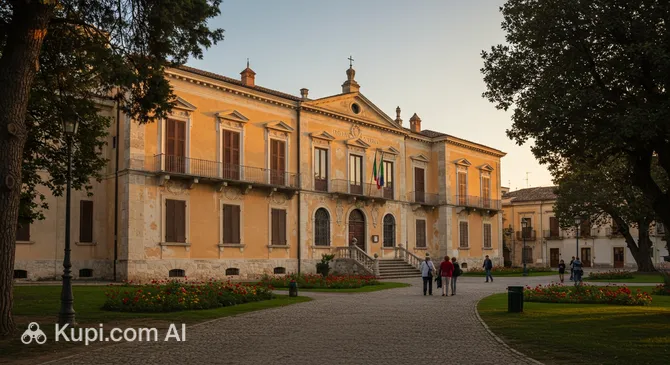
Karol Wojtyła Municipal Villa
Karol Wojtyła Municipal Villa. Иллюстрация. Источник: Kupi.com AI

The park has a unique elongated shape, reaching a kilometer in length, which creates ideal conditions for long promenades. One of the most striking features of the territory is "Boschetto"—the historical part of the garden, designed back in 1822. The main entrance is adorned with a majestic pronaos, or colonnade, which instantly transports visitors into an atmosphere of neoclassical tranquility.

Today, this place serves not just as the city's "green lungs" but also as a genuine open-air botanical museum. More than 500 plant species grow here, including centuries-old plane trees and exotic eucalyptus, while well-kept paths lead to elegant fountains and statues, making every walk both educational and aesthetically pleasing.

Contacts

For more information on events or visiting rules, you can use the following contact details:

How to contactContact
AddressPiazza Camillo Benso Cavour, 71121 Foggia FG, Italy

What to Do

A visit to the Villa Comunale is primarily an opportunity to slow down and enjoy the silence. You can walk along wide alleys lined with palms and flowering shrubs, or find seclusion in the botanical garden, which houses an impressive collection of local and exotic flora. The central fountain and cozy benches in the shade of ancient plane trees are perfect for reading or quiet contemplation of the architectural ensembles of Piazza Cavour.

For photography enthusiasts, the park offers many picturesque locations: from the classical columned portico at the entrance to ancient statues hidden in the greenery of "Boschetto." Children will also find plenty to do—the grounds are equipped with modern playgrounds where young travelers can spend active time in the fresh air.

In the evening, the atmosphere of the park changes: soft lighting and cool air make it a popular spot for romantic dates. Local residents often use the villa's paths for yoga or morning jogs, so you can easily feel like a part of the daily life of this Italian town. In summer, cultural events and open-air evening concerts are frequently held here.

Getting There

Reaching this green oasis is easy, as the park is located in the heart of the city at Piazza Camillo Benso Cavour. If you arrive by train, the walk from the central train station (Stazione Ferroviaria Foggia) takes only 10–15 minutes. For those who prefer public transport, the city buses operated by AMAT Foggia stop right at Piazza Cavour.

For tourists traveling from other regions via Bari Karol Wojtyła Airport, it is most convenient to take a train or an intercity bus—the journey to the city takes about 1.5–2 hours. Within Foggia itself, the park is easily accessible by taxi or rented bicycle, and parking areas are available for motorists in the immediate vicinity of the square.

Ближайший город: Foggia

History & Facts

The history of the park dates back to the early 19th century. Construction began in January 1820 on the initiative of Superintendent Nicola Intonti and was completed in record time—just four months. However, the villa acquired its final architectural appearance as we see it today a bit later, thanks to the work of Neapolitan gardener Felice Giordano and architects Luigi Oberti and Camilo De Tommazo.

In 1827, the ensemble was complemented by a majestic pronaos with 28 columns, which became the hallmark of the site. Unfortunately, during World War II, the area suffered significant damage, losing some of its statues and precious plants. Nevertheless, some old mulberry trees survived, serving as a reminder of the garden's original look.

In the post-war years, specifically in the 1950s, the park underwent a large-scale reconstruction: new eucalyptus and plane trees were planted, returning the "green heart" to the city. Its modern name, Villa Comunale, was given in honor of Pope John Paul II (Karol Wojtyła), highlighting the deep respect the residents have for him.

Time Needed

To enjoy a leisurely stroll along the shaded alleys, examine the statues, and enjoy the coolness of the fountains, usually takes about 1–2 hours. This is sufficient time to see the main landscape areas and the botanical garden.

If you plan to combine your visit with a tour of the neighboring Piazza Cavour, relaxing on a bench with a book, or a small picnic, it is better to set aside 2–3 hours. The park serves as an excellent place for a break between exploring the historical buildings in the city center.

Working Hours

The park operates on a split schedule, which should be considered when planning your visit. From Monday to Saturday, the gates are open from 7:00 to 14:00 and after the siesta from 17:00 to 21:00. On Sunday, the schedule changes slightly: the morning session lasts from 8:00 to 15:00, and the evening session is from 16:00 to 20:00.

Entrance to the Villa Comunale is free of charge, making it accessible for daily walks.

DayWorking hours
Понедельник7:00 – 14:00, 5:00 – 21:00
Вторник7:00 – 14:00, 5:00 – 21:00
Среда7:00 – 14:00, 5:00 – 21:00
Четверг7:00 – 14:00, 5:00 – 21:00
Пятница7:00 – 14:00, 5:00 – 21:00
Суббота7:00 – 14:00, 5:00 – 21:00
Воскресенье8:00 – 15:00, 4:00 – 20:00

Nearby

A stroll through the park can be a great start to a broader exploration of the city. Since the Villa Comunale is located in the historical center, many significant architectural monuments and squares are just a few steps away, allowing you to create a rich walking itinerary.

NameDistance
Fountain of the Sele0.4 km
Casablanca0.4 km
Ambasciata Orsarese0.7 km
Rosati Market Foggia0.8 km
MezzoPieno0.9 km
Palazzo Dogana1 km
Church of Saint Francis Xavier1 km

Reached the end of the page?

That means the route is fully explored