Support

Vatican Museums

About

The Vatican Museums are not just a museum, but a whole city of art located in the heart of Rome, within the territory of the Vatican City State. This grand architectural complex, one of the largest and most visited in the world, includes over fifty galleries, halls, and courtyards. Every year, millions of travelers from all over the world come here to experience the greatest treasures collected by the Roman Catholic Church over many centuries.
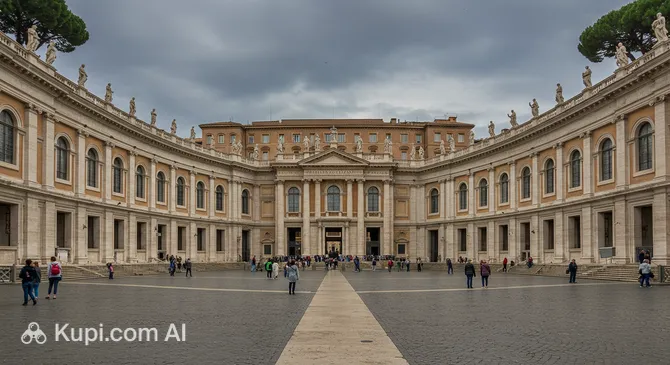
Vatican Museums. Illustration.
Source: Kupi.com AI

Traveler photos:

The crown jewels of the collection are the Sistine Chapel with Michelangelo's legendary frescoes, including the famous ceiling and "The Last Judgment," as well as the Raphael Rooms — four rooms painted by the great master and his pupils. These Renaissance masterpieces are the highlight of the visit for many and leave a lasting impression.

A journey through the museums is a true immersion into the history of world art. Here you will find everything: from ancient sculptures in the Pio-Clementine Museum, such as "Laocoön and His Sons," to ancient Egyptian artifacts, Etruscan antiquities, and works by modern masters. The Gallery of Maps, the Gallery of Tapestries, and the famous spiral staircase by Giuseppe Momo complete the picture of this unique place, making a visit to Italy truly unforgettable.

Contacts

To plan your visit, check the current schedule, or ask other questions, it is recommended to use the official communication channels. This is the most reliable way to get accurate and up-to-date information directly from the museum complex administration.

How to contactContact
Address00120, Vatican City
Phone number+39 06 6988 3145
Websitewww.museivaticani.va

What to Do

Visiting the Vatican Museums is a real test of endurance and planning skills. To ensure your visit leaves only positive impressions rather than fatigue from huge crowds and long distances, it's worth thinking through your route in advance. Instead of just following the flow of visitors to the main attractions, try to build your own path, including more than just the world-famous masterpieces.

If you want to avoid the busiest routes, start your tour at the Pinacoteca — an art gallery that often remains off the main tourist track. Here, across 18 rooms, masterpieces of Italian painting from Giotto to Caravaggio are presented chronologically, including Leonardo da Vinci's only work in the Vatican. Another interesting but less obvious route is a visit to the Gregorian Etruscan Museum, where you can immerse yourself in the mysterious world of the pre-Roman civilization through a collection of bronzes, ceramics, and gold jewelry.

For those seeking peace, a walk through the Vatican Gardens would be an excellent addition to your visit. It's important to remember that visiting them requires a separate ticket and, usually, a guided tour as part of a group by minibus or on foot. This will allow you to see fountains, sculptures, and rare plants in a calm setting. And, of course, don't forget the final chord of your museum journey — the famous double spiral staircase by Giuseppe Momo. It serves as the museum exit and is the perfect spot for a striking photo to remember your visit to this treasure-city.

Getting There

Getting to the Vatican Museums is easy, as they are located in the heart of Rome and are well-connected to the city by an extensive public transport network. Most travelers prefer the metro — it is the fastest and most convenient way to avoid traffic jams and accurately plan your travel time.

The nearest metro station to the museum entrance is Ottaviano on Line A. From there, it is a pleasant 7 to 10-minute walk to the main entrance of the museum complex. You can also take a bus: for example, route No. 49 stops right across from the entrance. Other convenient routes passing nearby include No. 32, 81, 492, and 990.

For those who value comfort or are traveling with family, a taxi is a great option. Licensed taxi stands can be found near most central metro stations, or you can call a car via an app or at your hotel reception. Additionally, you can take tram No. 19, which stops at Piazza del Risorgimento, a 7-minute walk from the museums.

Nearest city: Rome

History & Facts

The history of the Vatican Museums dates back to the High Renaissance in the early 16th century. The starting point was a landmark event: in 1506, the famous ancient sculpture "Laocoön and His Sons" was discovered in a vineyard in Rome. Pope Julius II, a well-known art connoisseur, immediately purchased the masterpiece and put it on public display in the Vatican Belvedere, thus laying the foundation for the grand collection.

The collection grew steadily, but the next major step in its history was taken in the 18th century. That was when Popes Clement XIV and Pius VI decided to make the papal treasures accessible to the general public. They founded the Pio-Clementine Museum, named in their honor, which transformed the private collection into one of the world's first public museums and set the stage for its future expansion.

Since then, the complex has evolved tirelessly into one of the largest and most visited in the world. Today, the Vatican Museums are a true city of art in the heart of Italy, with galleries and halls stretching for many kilometers. The constant addition of works from different eras, from Egyptian antiquities to modern religious art, makes every visit here truly unforgettable.

Time Needed

When planning a visit to the Vatican Museums, it is important to allocate enough time to make the most of this grand complex. For a quick look at the main masterpieces, it is recommended to set aside at least 4–5 hours. This is usually enough to see the world-famous Sistine Chapel, the renowned Raphael Rooms, and get a general impression of the collection's scale without turning the visit into an exhausting marathon.

However, for those who wish to dive deeper into the world of art and explore all the exhibitions without rushing, it may take a whole day. This approach will allow you not only to enjoy the main sights but also to look into lesser-known but equally fascinating halls, such as the Gregorian Egyptian Museum or the Pinacoteca. Remember that the total length of the exhibition path is about 7 kilometers, so comfortable shoes and a leisurely pace are the keys to a successful visit to this unique corner of Rome.

Regardless of the chosen strategy, the key to a successful visit is planning. Given the massive size of the museum and the number of exhibits, it's almost impossible to see everything in one go. Therefore, it's better to decide on your priority halls and routes in advance so that your encounter with the treasures of the Vatican becomes one of the brightest memories of your trip to Italy.

Working Hours

The Vatican Museums are open to visitors year-round, but opening hours may vary. The standard schedule is Monday to Saturday, from 9:00 AM to 6:00 PM, with the last entry at 4:00 PM. The museums are closed on Sundays, with one pleasant exception: every last Sunday of the month, entry is free, and the hours are reduced — from 9:00 AM to 2:00 PM (last entry at 12:30 PM). Keep in mind that this rule does not apply if Sunday falls on major holidays like Easter or Christmas.

Given the massive popularity of the museums, it is highly recommended to book tickets online in advance. This will help you avoid hours-long queues, especially during peak season. On free entry days, the number of people wishing to enter the museums increases significantly, so it's worth arriving by opening time. Since the schedule can change, it's always best to check the information on the official website before your visit to ensure your trip to this treasury of world art goes perfectly.

DayOpening hours
Monday8:00 – 20:00
Tuesday8:00 – 20:00
Wednesday8:00 – 20:00
Thursday8:00 – 20:00
Friday8:00 – 20:00
Saturday8:00 – 20:00
SundayClosed

Nearby

Visiting the Vatican Museums is the highlight of any trip to Rome, but exploring this area shouldn't be limited to the museum walls. The surroundings of the Vatican are a treasure trove of history, art, and architecture in their own right. A stroll through the nearby streets and squares will allow you to immerse yourself deeper in the atmosphere of the Eternal City and see how spiritual life harmoniously intertwines with the daily hustle of the capital of Italy.

Exploring the neighborhood will enrich your experience and help you get a more complete picture of this unique place. Just a few steps from the museums, you will find equally significant attractions, each with its own unique history. Below is a list of interesting sites located within walking distance.

NameDistance
Sistine Chapel0.4 km
Vatican Obelisk0.6 km
Castel Sant'Angelo1.1 km
Piazza Navona1.8 km
Piazza del Popolo1.9 km
Pantheon2.1 km
Trapizzino Trastevere2.1 km

Have you reached the end of the page?

So the route has been studied inside and out