Support

City Museum

About

The Rimini City Museum (Museo della Città) invites you to immerse yourself in the multi-century history of the Adriatic coast—the main treasury of the cultural heritage of this famous Italian resort. Located in a grand 18th-century former Jesuit monastery, the museum serves as a true bridge between the era of antiquity and the present day.

Here, beneath the vaults designed by architect Alfonso Torregiani, the past of ancient Ariminum comes to life. The exhibition is organized chronologically, allowing visitors to trace the development of Rimini from the first settlements to modern times. The museum is an important part of the cultural landscape that Italy presents in all its diversity.
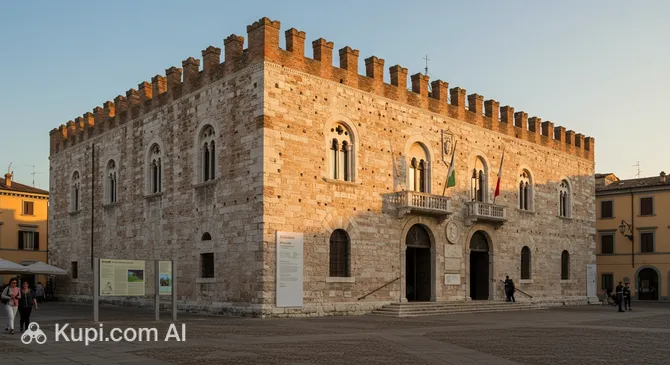
Rimini City Museum
Rimini City Museum. Иллюстрация. Источник: Kupi.com AI

The museum complex is situated in the very center of the city, adjacent to the unique archaeological monument Domus del Chirurgo. The museum's collection includes rare archaeological finds, masterpieces of medieval painting, and artifacts telling the stories of the city's most prominent figures, making it a must-visit for any curious traveler.

Contacts

For more information about special exhibitions or group tours, you can contact the museum administration directly.

How to contactContact
AddressVia Luigi Tonini, 1, 47921 Rimini RN, Italy
Phone+39 0541 793851
Websitewww.museicomunalirimini.it

What to Do

A tour of the museum should begin with the Roman Lapidarium, located in the picturesque inner courtyard. It houses about a hundred stone slabs with inscriptions from the 1st–4th centuries, which reveal glimpses of the daily life of ancient Romans: their family values, religious rites, and social structures. The garden dedicated to the memory of archaeologist Khaled al-Asaad offers a special sense of tranquility.

Archaeology enthusiasts should definitely head down to the basement levels. There, an impressive collection of items from the Surgeon’s House is presented, including a unique set of medical instruments, ancient coins, elegant bronze figurines, and magnificent mosaics from the Diotallevi Palace. These artifacts are considered among the most significant finds from the Roman period in the region.

Art historians and lovers of painting will find the Pinacoteca on the upper floors. Its halls house masterpieces from the 14th–20th centuries, most notably the monumental fresco "The Last Judgment" by Giovanni da Rimini and the touching "Pietà" by Giovanni Bellini. Don't forget to visit the section dedicated to Rimini’s modern genius, Federico Fellini, which displays his famous "Book of Dreams," filled with the surreal images and fantasies of the great director.

Getting There

Located in the heart of the historical center, the Rimini City Museum is easily accessible for tourists who enjoy walking. From iconic landmarks like the Arch of Augustus or the Tiberius Bridge, the walk takes no more than 10–15 minutes through charming Italian streets.

If you are arriving at the Rimini Stazione railway station, you can use public transport. Buses No. 11 or No. 4 will quickly take you to the city center (a journey of about 10 minutes), after which it is only a 5–7 minute walk to the museum entrance at Via Luigi Tonini, 1.

For travelers arriving at Federico Fellini Airport, the most convenient option is a taxi (about 15–20 km, taking approximately 30 minutes) or bus No. 9. For those who have rented a car, there are city parking lots near the museum complex, though please keep in mind that this is a limited traffic zone.

Ближайший город: Rimini

History & Facts

The building that houses these priceless collections today has a rich and storied history. Constructed in the mid-18th century (1746–1755) based on a design by architect Alfonso Torregiani, it originally served as a Jesuit monastery and seminary. After the order was suppressed, the premises passed to the Dominicans, and by the end of the 18th century, it was converted into a military hospital.

For over a century and a half—until 1977—the building functioned as the city hospital. In 1990, after extensive restoration work, the former monastery reopened its doors as the City Museum.

The museum is named after Luigi Tonini, a prominent historian and bibliographer who laid the foundations of museum studies in the city during the 19th century. The founder's name was officially bestowed upon the institution in 2015 to celebrate its 25th anniversary. In the same year, the museum’s peaceful inner garden was dedicated to the memory of the archaeologist Khaled al-Asaad.

Time Needed

To leisurely explore all floors of the museum, including the archaeological department, the art gallery, and temporary exhibitions, usually takes between 1.5 to 2.5 hours. This is the optimal time to give attention to both Roman antiquities and Renaissance art.

If you plan to combine your museum visit with a tour of the adjacent archaeological site, the Domus del Chirurgo (Surgeon's House), it is better to set aside half a day. This will allow you to immerse yourself in the city's multi-century history without rushing and relax in the quiet museum courtyard.

Working Hours

When planning your visit, keep in mind that the museum follows a schedule traditional for Italian cultural institutions, including an afternoon break. From Tuesday to Sunday, the doors are open to visitors from 10:00 to 13:00 and, after the siesta, from 16:00 to 19:00.

Please note that Monday is a day off. It is recommended to arrive at least an hour before the end of the morning or evening session to have enough time to explore the main exhibition halls comfortably.

DayWorking hours
ПонедельникЗакрыто
Вторник10:00 – 13:00, 4:00 – 19:00
Среда10:00 – 13:00, 4:00 – 19:00
Четверг10:00 – 13:00, 4:00 – 19:00
Пятница10:00 – 13:00, 4:00 – 19:00
Суббота10:00 – 13:00, 4:00 – 19:00
Воскресенье10:00 – 13:00, 4:00 – 19:00

Nearby

A visit to the Rimini City Museum is just one part of a cultural itinerary. Exploring the surrounding area will allow you to dive deeper into the atmosphere of the Adriatic coast and find entertainment for every taste, from historical monuments to modern water parks.

NameDistance
Sismondo Castle0.4 km
Fellini Museum0.4 km
Tempio Malatestiano0.4 km
Birrodromo Rimini0.6 km
Arch of Augustus0.7 km
Federico Fellini Park1.2 km
Imperiale Bar1.3 km

Reached the end of the page?

That means the route is fully explored