Support

Castel Sant'Angelo

About

Castel Sant'Angelo, also known as the Mausoleum of Hadrian, is an outstanding architectural monument in Rome and one of the symbols of the Eternal City. This majestic cylindrical building, with a history spanning nearly two thousand years, is located in the Parco Adriano on the scenic banks of the Tiber River. Its monumental appearance and rich history, dating back to the Roman Empire, attract travelers from all over the world who wish to touch the past of great Italy.
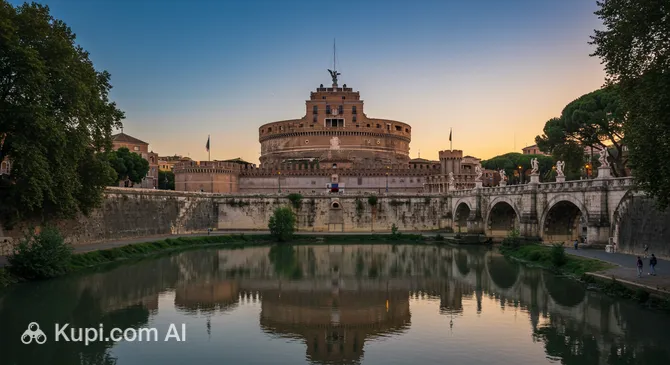
Castel Sant'Angelo. Illustration.
Source: Kupi.com AI

Traveler photos:

Originally built as a tomb for Emperor Hadrian, the castle evolved over time into a powerful fortress, a papal residence, and even a prison. This centuries-long transformation is reflected in its unique architecture, which harmoniously blends Roman and Medieval styles. Today, visitors can explore its halls, former Papal apartments, and courtyards, where every corner holds its own secrets.

One of the main reasons to visit Castel Sant'Angelo is the stunning panoramic views from its upper terrace. From here, you can enjoy an unforgettable picture of Rome, seeing St. Peter's Basilica in the Vatican and the scenic curves of the Tiber. A walk across the famous St. Angelo Bridge, which leads to the castle and is decorated with statues of angels by Bernini's students, is the perfect addition to your visit, leaving bright and unforgettable memories.

Contacts

To plan your visit, check current opening hours, find information about special events, or ticket prices, it is recommended to use the official contact details of the museum. Below are the main ways to get in touch with the Castel Sant'Angelo administration.

How to contactContact
AddressLungotevere Castello, 50, 00193 Roma RM, Italy
Phone number+39 06 681 9111
Websitecastelsantangelo.beniculturali.it

What to Do

A visit to Castel Sant'Angelo is a true journey back in time. You can walk through its multi-level structure, exploring halls, rooms, and corridors that reflect different eras of its existence. Your path begins with the spiral ramps leading from the base of the former mausoleum and continues through the fortified halls of the fortress, somber prison cells, and the luxurious Papal Apartments. Each level reveals a new chapter of history: from an imperial tomb to an impregnable fort and the residence of popes.

Inside the castle, many discoveries await. You will see halls decorated with rich frescoes, such as the Sala Paolina, the Sala di Apollo, and the Hall of Clement VII, where important decisions were once made and grand receptions were held. Of particular interest is the Treasure Room, which once housed the papal treasury and state archives, as well as a collection of ancient weapons. The castle's cultural significance is further enhanced by the fact that the third act of Giacomo Puccini's famous opera "Tosca" takes place on its roof, adding a touch of theatricality to your visit.

The highlight of the visit is undoubtedly stepping out onto the Terrace of the Angel at the very top of the castle. From here, one of the most breathtaking panoramic perspectives of Rome unfolds, with the Eternal City spread out before you. It's the perfect spot for photos, where you can see the dome of St. Peter's Basilica in the Vatican, the curves of the Tiber River, and the endless rooftops of the historic center. This magnificent view is a fitting conclusion to your walk through one of Italy's most iconic monuments.

Getting There

Getting to Castel Sant'Angelo is quite simple since it is located in the heart of Rome, within walking distance of many iconic landmarks. Many travelers prefer to walk there, turning the journey into a pleasant stroll through the Eternal City. For example, the walk from the Vatican takes only a few minutes. The walk across the famous St. Angelo Bridge, adorned with statues of angels and leading directly to the castle entrance, is particularly scenic.

For those who prefer public transport, there are many options. There are several bus stops near the castle, such as Piazza Pia. Numerous routes pass through here, including No. 23, 40, 62, 280, and 982. The express bus No. 40 is especially convenient, as it quickly takes you from the Termini central station. It’s a great way to see the city while you head to your destination.

Another convenient way to reach the castle is by using the Rome Metro. The nearest stations are Lepanto and Ottaviano, both on Line A. From either of these stations, it is about a 10–15 minute walk to the castle. Of course, you can always choose a taxi—it is the fastest and most comfortable, though more expensive, way to reach the attraction, especially if you have limited time.

Nearest city: Rome

History & Facts

The fascinating history of Castel Sant'Angelo began in 130 AD, when the Roman Emperor Hadrian commissioned a grand mausoleum for himself and his descendants. Construction was completed after his death, in 139 AD, and for decades, the tomb served as the final resting place for the emperors of the Antonine dynasty. Originally, the structure stood outside the city limits of Rome, on the banks of the Tiber, and was connected to the Campus Martius by the specially built Aelian Bridge, known today worldwide as the Bridge of the Holy Angel (Ponte Sant'Angelo).

The mausoleum's peaceful purpose was short-lived. By the 3rd century, under Emperor Aurelian, it was integrated into the city's fortification system, becoming a powerful bastion within the Aurelian Walls. In the 6th century, during the Gothic Wars, it was used as a full-fledged fortress for the first time. A tragic chapter in the castle's history occurred in 410 AD, when the Visigoths sacked it and scattered the ashes of the great emperors to the wind, forever ending its original function as a tomb.

The castle received its current name in 590 AD, which is tied to a beautiful legend. During a plague raging in Rome, Pope Gregory the Great had a vision: Archangel Michael appeared at the top of the fortress, sheathing his sword as a sign that the epidemic was over. Since then, the castle has been inextricably linked to the history of the Papacy. It served as a secure fortress and refuge for popes, becoming a symbol of the Holy See's power in Italy and a witness to many key events in the history of the Eternal City.

Time Needed

When planning a visit to Castel Sant'Angelo, it is worth allowing 2–3 hours for a thorough and unhurried tour. This is generally enough time to walk through all levels of this multifaceted structure: from the base of the former mausoleum and the spiral ramps to the former prison cells, the luxurious Papal apartments, and, of course, the famous upper terrace. This timeframe allows you not only to view the exhibits but also to fully enjoy the stunning panoramic views of Rome and the Vatican, taking unforgettable photos without rushing.

Of course, the duration of your visit can vary depending on your interests. If you have limited time, you can focus on the main highlights and finish in about 1.5–2 hours, giving priority to the Papal Apartments and the Terrace of the Angel. For history buffs who want to study every hall and exhibit in detail, or for those who want to relax in the cozy café at the top of the castle, the visit may take more than three hours. In any case, a visit to this unique monument in Italy will leave a lasting impression.

Working Hours

Castel Sant'Angelo is open to visitors almost year-round, making it a must-see on any Rome travel itinerary. The museum's standard opening hours are Tuesday to Sunday, from 9:00 AM to 7:30 PM. It is important to remember that the ticket office closes an hour earlier, at 6:30 PM, so it's better to plan your visit with a bit of extra time. The castle is closed on Mondays, as well as on public holidays: January 1, May 1, and December 25.

Given the immense popularity of this Italy landmark, it is highly recommended to buy tickets online in advance. This will help you avoid long queues, especially during peak tourist season, and save precious time for exploring the castle itself. Pre-booking is particularly important for weekends and holidays. For the most accurate information on opening hours, potential schedule changes, or special events, always check the official website before your visit.

DayOpening hours
MondayClosed
Tuesday9:00 – 19:30
Wednesday9:00 – 19:30
Thursday9:00 – 19:30
Friday9:00 – 19:30
Saturday9:00 – 19:30
Sunday9:00 – 19:30

Nearby

A visit to Castel Sant'Angelo is just the starting point for exploring one of the most historically rich districts of Rome. The castle's location makes it an ideal hub for walking tours, with many of the Eternal City's other iconic landmarks in the immediate vicinity. Exploring the surrounding area will allow you to dive deeper into the atmosphere of Italy and gain a fuller understanding of its cultural and historical heritage.

A walk from the castle in any direction will reveal new and wonderful places—from grand squares and cathedrals to world-famous museums. To help you plan your route, we have put together a list of interesting sites located very nearby. This will allow you to make the most of your time and enrich your trip with new experiences.

NameDistance
Piazza Navona0.7 km
Vatican Obelisk0.8 km
Pantheon1 km
Sistine Chapel1 km
Vatican Museums1.1 km
Piazza del Popolo1.2 km
Trapizzino Trastevere1.3 km

Have you reached the end of the page?

So the route has been studied inside and out