Support

Museo dell'Ottocento Fondazione di Persio-Pallotta

About

An immersion into the ottocento era awaits everyone who chooses to visit the Museum of the 19th Century – Fondazione Di Persio-Pallotta. This unique cultural space is located in the coastal city of Pescara and features a private collection dedicated to Italian and French art from the century before last.
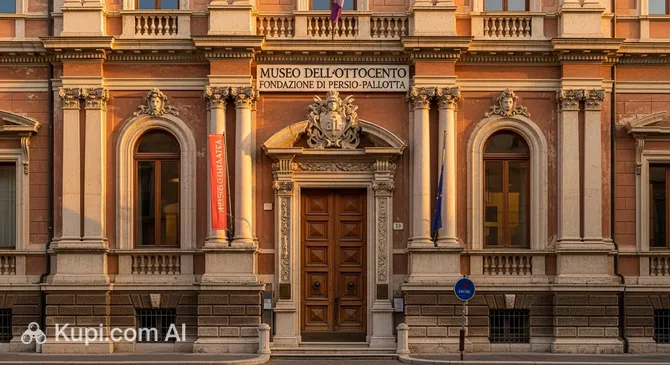
19th Century Museum Persio-Pallotta Foundation
19th Century Museum Persio-Pallotta Foundation. Иллюстрация. Источник: Kupi.com AI

The museum is housed in a majestic early 20th-century building that formerly belonged to the Bank of Italy. Today, instead of financial documents, priceless canvases are kept here. The collection features works by outstanding masters, such as Michele Pietro Cammarano, whose famous painting "The Witch" (1865) invariably draws the gaze of guests.

The exhibition of the Di Persio-Pallotta Foundation is more than just a gallery; it is a true cultural center. Here, the historical architecture of the villa and the sophistication of Romantic painting blend harmoniously, creating a peaceful and inspiring atmosphere for all lovers of beauty.

Contacts

To plan your visit to the Museum of the 19th Century – Fondazione Di Persio-Pallotta, please use the following contact information. The museum is open to everyone interested in exploring the artistic heritage of the Abruzzo region and Europe as a whole.

How to contactContact
AddressViale Gabriele D'Annunzio, 128, 65127 Pescara PE, Италия
Phone+39 334 703 3738
Websitemuseodellottocento.eu

What to Do

A visit to the museum is, above all, a visual treat and an intellectual retreat. The main activity here is a detailed study of the painting collection. You can trace how styles and techniques changed throughout the century by examining the finest details of portraits, large-scale landscapes, and lively genre scenes by Italian and French masters.

Don't forget to pay attention to the architectural appearance of the building itself. A walk through the halls of the former bank with its eclectic elements creates a special "time travel" atmosphere. It is an ideal place for slow contemplation, where you can quietly feel the spirit of the ottocento era and appreciate the skill of early last century's decorators.

For those interested in local history, it will be useful to look at the works of the Abruzzo school. The museum allows you to discover names that played an important role in Italy's cultural renaissance but are rarely found in mainstream guidebooks. Quiet photography (without flash) is also permitted, allowing you to capture memories of your favorite masterpieces.

Getting There

Finding the museum is quite simple: it is located at Viale Gabriele D'Annunzio, 128, which is very close to the historical center, the Pescara Vecchia district. It takes just 5–10 minutes to walk there from the city center (it is about 500 meters from the Museum of the Peoples of Abruzzo).

If you are coming from further away, it is most convenient to use public transport. Several bus routes pass through Viale Gabriele D'Annunzio. From the main railway station, Pescara Centrale, a taxi ride will take about 5–10 minutes, while walking takes about half an hour.

For those traveling by car, parking spaces can usually be found in the surrounding residential areas. Thanks to its convenient location, a visit to the gallery can easily be combined with a stroll along the promenade or a visit to the city's parks.

Ближайший город: Pescara

History & Facts

The history of this cultural space is inextricably linked to private initiative and a passion for collecting. The Museum of the 19th Century – Fondazione Di Persio-Pallotta was established to present to the public a unique collection of works from the ottocento era, which the Di Persio-Pallotta family gathered over many years.

The building that houses the museum halls today is a historical landmark in its own right. It was built in the early 20th century and for a long time served as the headquarters of the Bank of Italy in Pescara. The architectural austerity and elegance of the former bank building provide the perfect backdrop for displaying classical paintings.

The collection covers a vital period in the country's history — the time of Italian Romanticism and Realism, which coincided with the national unification (Risorgimento). One of the foundation's gems is Michele Pietro Cammarano’s painting "The Witch," painted in 1865, which vividly illustrates the artistic pursuits of that time.

The museum has become an important part of the region's cultural landscape, complementing the exhibitions of other local galleries, such as the Cascella Museum, and allowing visitors to trace the evolution of Italian art from the 19th century to the present day.

Time Needed

To fully appreciate the refinement of the paintings and the building's architecture, a typical visitor will need 1 to 2 hours. This is quite enough time for a leisurely walk through all the halls and to get acquainted with the key masterpieces of the collection.

If you are a deep connoisseur of 19th-century painting and plan to study the technique of each master in detail or use an audio guide, we recommend setting aside about 2.5 hours. The museum's atmosphere encourages thoughtful contemplation, so there is no need to rush here.

Working Hours

When planning your itinerary, keep in mind that the museum follows a classic Italian schedule with a midday break. Please note: Monday is a closing day.

From Tuesday to Sunday, the halls are open in two intervals: the morning session from 10:00 to 13:00 and the evening session from 16:00 to 19:30. To avoid any issues, it is recommended to check the museum's official website before your visit, as the schedule may change during public holidays.

DayWorking hours
понедельникЗакрыто
вторник10:00–13:00, 16:00–19:30
среда10:00–13:00, 16:00–19:30
четверг10:00–13:00, 16:00–19:30
пятница10:00–13:00, 16:00–19:30
суббота10:00–13:00, 16:00–19:30
воскресенье10:00–13:00, 16:00–19:30

Nearby

Exploring the surroundings of the Persio-Pallotta Foundation allows you to dive deeper into the city's atmosphere and see Pescara from different perspectives. Within walking distance of the museum, you will find both administrative architectural masterpieces and cozy squares filled with local flavor.

A stroll through the nearby streets will reveal historical monuments and modern art objects that harmoniously complement the impressions from the museum's art collection.

NameDistance
Cathedral of Saint Cetteus0.3 km
Gabriele D'Annunzio Birthplace Museum0.4 km
Museum of the People of Abruzzo0.4 km
Villa De Riseis Park1.1 km
Madonnina of the Port1.2 km
AICS Hadria Pescara Arena1.2 km
Già Sai Bar Club Risto Beach1.3 km

Reached the end of the page?

That means the route is fully explored