Support

Hiroshima City Museum of Contemporary Art

About

In the heart of the lush Hijiyama Park lies an amazing place—the Hiroshima City Museum of Contemporary Art. This unique space became the first public museum in Japan to specialize exclusively in contemporary art. Opened in 1989, it immediately became a key point on the cultural map of Hiroshima.
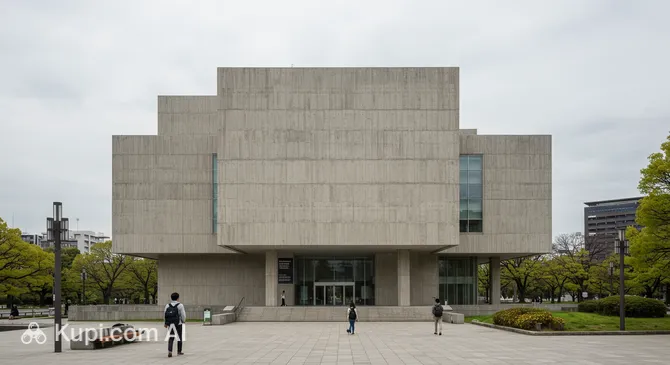
Hiroshima City Museum of Contemporary Art
Hiroshima City Museum of Contemporary Art. Иллюстрация. Источник: Kupi.com AI

The museum building, designed by the legendary architect Kisho Kurokawa, is worthy of close attention in its own right. Its design blends traditional Japanese aesthetics with modernist elements, and the materials used—ranging from natural stone to aluminum—symbolize humanity's journey from the past into the future. The roof of the building is symbolically oriented towards the hypocenter of the atomic bombing, emphasizing the museum's mission as a place for reflection on peace.

Visiting the museum is more than just looking at paintings and sculptures; it is a deep dive into the philosophy of humanity and resilience. Its hilltop location offers guests stunning panoramic views, making a visit here an ideal blend of aesthetic pleasure and peaceful relaxation in nature.

Contacts

For those planning a visit to this iconic site, it's important to check the official contact details in advance. Below is the up-to-date contact information to help you clarify details about current exhibitions or special events. You can also use the coordinates to plot a route in your navigator.

How to contactContact
Address1-1 Hijiyamakōen, Minami Ward, Hiroshima, 732-0815, Япония
Phone+81 82-264-1121
Websitehiroshima-moca.jp

What to Do

In the museum halls, you will find a rich collection featuring approximately 1,700 works of art created after 1945. It showcases works from iconic Japanese movements like Gutai and Mono-ha, whose experiments with form and material revolutionized classical concepts of creativity. Visitors can see not only traditional paintings but also complex installations, video art, and photography.

The exhibition brings together talents from around the world: masterpieces by global pop art and minimalism stars, including works by Andy Warhol and Frank Stella, stand alongside pieces by Japanese masters. Art objects dedicated to the theme of Hiroshima hold a special place. Infused with ideas of peace and memory, these works allow visitors to experience the city's history through the prism of artistic perception and empathy.

Getting There

The museum is nestled on a hilltop in Hijiyama Park, located in the Minami Ward of Hiroshima. This scenic spot is an attraction in itself, offering visitors not only a cultural program but also the chance to enjoy nature and panoramic views of the city's neighborhoods.

Getting here is quite simple: it is most convenient to use local public transport, such as a tram to the Hijiyama-shita stop, followed by a short walk through the park. If you prefer comfort and want to save time, a taxi from the city center will take you directly to the museum entrance in just a few minutes.

Ближайший город: Hiroshima

History & Facts

Founded in 1989, this museum was the first public institution in the country dedicated entirely to contemporary art. Its opening was a major milestone for the region's cultural landscape, highlighting the city's status as a center for global dialogue and rebirth. Hijiyama Park, chosen for the museum's site, was historically envisioned as "Peace Hill"—a green zone where art and history coexist in harmony.

The architectural project was developed by the renowned master Kisho Kurokawa. He embedded deep symbolism into the design: the museum's roof is oriented toward the atomic blast's hypocenter, turning the entire structure into a silent prayer for peace. The building's structure itself metaphorically reflects the development of civilization, using various materials—from rough stone at the base to aluminum at the top.

The museum's collection began forming around works created after 1945, inextricably linking it to post-war history. Many exhibits were created specifically for Hiroshima, reflecting themes of human resilience and hope for a better future. Today, the museum continues to play a key role in shaping contemporary art discourse in Asia.

Time Needed

To leisurely explore the main exhibition and appreciate the building's architectural concept, most guests need 1 to 2 hours. This is sufficient time to get acquainted with key works by Japanese and international masters and to walk along the outdoor terraces.

If you are a true connoisseur of contemporary art and plan to carefully study every installation or temporary exhibition, you should allow a bit more time. Don't forget to set aside half an hour for a walk through Hijiyama Park, which is especially beautiful during the cherry blossom season.

Working Hours

The museum doors are usually open to visitors from Tuesday to Sunday. Guests are welcomed from 10:00 to 17:00, though it's worth noting that Monday is the official day off.

Please note that the schedule may change on holidays or during exhibition changeovers. Before planning your trip, it is highly recommended to check the official museum website for current information to ensure your visit is as comfortable as possible.

DayWorking hours
понедельникЗакрыто
вторник10:00–17:00
среда10:00–17:00
четверг10:00–17:00
пятница10:00–17:00
суббота10:00–17:00
воскресенье10:00–17:00

Nearby

After immersing yourself in the world of avant-garde and contemporary art, it is worth taking the time to explore other interesting locations nearby. The area around Hijiyama Park is rich in historical monuments and picturesque gardens that will complement your trip experience.

Many iconic spots are within a short ride or even a walk away, allowing you to create a full day's itinerary. Check the list of nearby attractions below:

NameDistance
CLUB L2 Hiroshima1 km
Lagoon Hiroshima1 km
Okonomimura1.2 km
Hiroshima Prefectural Art Museum1.6 km
Shukkeien Garden1.7 km
Hiroshima Atomic Bomb Hypocenter1.9 km
Hiroshima Peace Memorial Museum1.9 km

Reached the end of the page?

That means the route is fully explored