Support

Hyuga

About

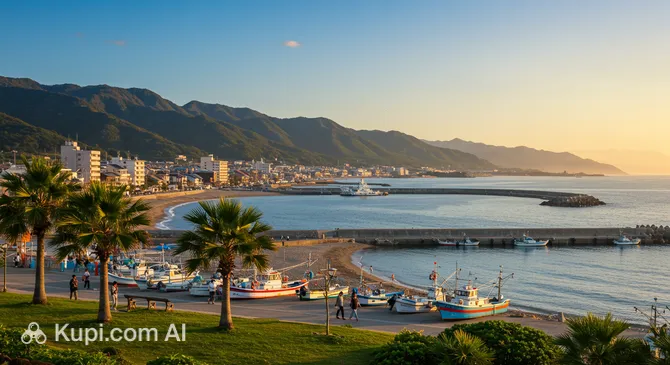
Hyuga is a charming city nestled in the northern part of Miyazaki Prefecture on the island of Kyushu in Japan. Its unique geographical position, roughly halfway between the cities of Miyazaki and Takachiho, makes it an attractive destination for travelers looking to enjoy serene, untouched nature and immerse themselves in the authentic atmosphere of the Japanese countryside.

Hyuga. Illustration.
Source: Kupi.com AI

Hyuga has a population of about 59,276 people, contributing to its welcoming and friendly environment. The city is famous for its stunning coastal landscapes, including the picturesque Cape Hyuga and part of the Nippo-Kaigan Quasi-National Park. These locations offer breathtaking views of rocky formations and secluded coves, attracting photographers and nature lovers alike.

One of Hyuga's hallmarks is its thriving surfing culture. Okuragahama and Kanegahama beaches are renowned for excellent waves suitable for surfers of all levels. Local and international competitions are regularly held here, and numerous surf schools offer equipment rentals and lessons. Beyond outdoor activities, Hyuga also draws visitors with its history: the historic trading port of Mimitsu and the Omi-jinja Shrine, dedicated to the sun goddess Amaterasu, tell the story of the region's rich past.

Hyuga is a wonderful place for those seeking a harmonious blend of natural beauty, active recreation, and cultural enrichment. Visit this amazing corner of Japan to discover its unique charm.

You can find more interesting facts on the history of Hyuga page.

Weather Overview

The weather in Hyuga is characterized by distinct seasonal changes. Summer, especially in July and August, is warm here, with average temperatures reaching 25-27°C and a significant amount of rainfall—up to 11-12 mm per month, with more than 20 rainy days possible. Winters, from December to February, are quite mild, with an average temperature of around 6-8°C and minimal precipitation (about 2-4 mm).

Spring and autumn are transitional periods with comfortable temperatures. In March-May, the temperature gradually rises from 11°C to 18°C, and in September-November, it drops from 24°C to 13°C. Rainfall during these periods is moderate. In general, expect a warm and humid summer with frequent rain and cool, drier winters. To get a more detailed idea of the weather conditions, you can explore the climate of Hyuga.

Average monthly temperature

Average monthly precipitation

Interesting Facts

Beyond its scenic landscapes and welcoming atmosphere, Hyuga holds many surprising details and stories that make this city truly special. Here are a few lesser-known facts that will help you see Hyuga from a new perspective:

  • Hyuga is closely linked to ancient Shinto myths. While the neighboring town of Takachiho is considered the primary setting for many legends about the descent of gods to Earth and the birth of the Japanese imperial dynasty, the cultural heritage of these myths is also felt in Hyuga, giving the region extra depth.

  • A unique natural attraction in Hyuga is Cape Umagase, known for having the largest columnar rock formations in Japan. Their peculiar shape and color resemble a horse's back, which gave the place its name ("Umagase" translates as "horse's back"). This is a true natural wonder that attracts geologists and photographers.

  • Hyuga is part of a region with a rich history and distinct traditions. Shinto festivals reflecting the unique cultural fabric of this part of Japan are still widely celebrated in the city and its surroundings.

How to Get There

Getting to Hyuga is most convenient by air via regional airports, as the city does not have its own. After arriving at one of the nearest airports, the journey to Hyuga continues by ground transport—car, taxi, or bus.

One of the most convenient options is Miyazaki Airport (KMI). It is located in the city of Miyazaki, approximately 63 km from Hyuga. This is a relatively large airport, and the journey from there to Hyuga will take roughly 1 hour 30 minutes to 2 hours. Miyazaki Airport primarily handles domestic flights, connecting the region with major Japanese cities.

Another significant airport is Kumamoto Airport (KMJ), located in Kumamoto, about 86 km from Hyuga. Travel time from Kumamoto Airport to Hyuga is approximately 2 to 2.5 hours. This airport is also an important transport hub with high passenger traffic.

It is also worth considering Kagoshima Airport (KOJ), located in Kagoshima. It is a bit further away—about 110 km from Hyuga—which means a drive of roughly 2.5 to 3 hours. However, Kagoshima Airport is very large and serves not only many domestic but also some international destinations, which may be convenient for some travelers.

For convenience, here is a summary of the main airports used to reach Hyuga:

AirportPassenger trafficDistance
Miyazaki Airport3.3 mln63 km
Kumamoto Airport2.9 mln86 km
Kagoshima Airport5.5 mln110 km
Oita Airport1.9 mln118 km
Amakusa73 065138 km

When planning a trip to Hyuga by rail, keep in mind that the city is not a major railway hub with direct long-distance train services. Travelers usually reach larger transport centers in Miyazaki Prefecture or neighboring regions (e.g., Miyazaki, Kumamoto, Oita) via high-speed trains like the Shinkansen (if the line passes nearby) or other express trains, and then transfer to local trains or buses heading to Hyuga. It is best to check the latest route and schedule information on the official websites of Japanese railway companies, such as JR Kyushu.

The provided data includes information about one railway station, but it is located outside of Japan at a significant distance and is therefore not a relevant option for traveling to Hyuga. For completeness, information about it is provided in the table below.

StationPassenger trafficDistance
Sønderborg Station148 km

Thus, for a train trip to Hyuga, you should focus on domestic Japanese routes and railway stations within Miyazaki Prefecture or its immediate surrounding regions.

Main Attractions

The city of Hyuga, located on the picturesque coast of Miyazaki Prefecture in Japan, is famous for its natural beauty and unique geological formations. Travelers are drawn here by breathtaking landscapes and the opportunity to connect with the ancient history and culture of the region.

One of Hyuga's main jewels is Cape Hyuga (Hyuga Misaki), which juts out into the Pacific Ocean. Part of the Nippo Kaigan National Park, this cape offers visitors stunning views. Of particular note is the Umagase rock formation—a narrow, high cliff resembling a horse's back, with sheer walls plunging into the crashing waves. A walk along the paths by these cliffs provides unforgettable experiences and magnificent photos.

Not far from Umagase lies another iconic spot—the Sea Cross (Kurusu no Umi). This is an amazing natural phenomenon where rocks eroded by waves have formed a shape resembling a cross. It is believed that this place brings good luck to couples, making it a very popular romantic lookout point. The view of the ocean breaking through the rocky "cross" is especially beautiful at sunset.

For those interested in the spiritual side of Japan, a visit to Omi Shrine (Omi Jinja) is a must. This ancient Shinto shrine is situated right by the ocean and is closely tied to Japanese mythology, specifically the legend of the descent of the gods to earth. The shrine is known for its scenic views—the sunrise over the ocean is particularly impressive—as well as the unique Ryugu (Dragon Palace) rock located in a cave on the shrine grounds.

Local Cuisine

The gastronomy of Hyuga, located in Miyazaki Prefecture, is famous for its fresh seafood and unique local dishes that reflect the region's rich culinary traditions. Travelers will find a blend of authentic flavors and quality ingredients here, making every meal unforgettable.

A must-try is chicken nanban—fried chicken in a special sauce, a dish that originated in Miyazaki Prefecture and has become its signature. Tonkatsu—a juicy breaded pork cutlet fried to a crispy crust—is also popular. Thanks to its coastal location, Hyuga offers a superb selection of the freshest seafood. Don't miss the chance to enjoy sashimi and sushi prepared from the day's catch.

As for drinks, traditional options are popular in Hyuga, as they are throughout Japan. For alcoholic beverages, look out for local sake and shochu, especially the sweet potato variety for which Miyazaki Prefecture is famous. Of course, Japanese beer is always available. Among non-alcoholic drinks, green tea in all its variations, from refreshing sencha to rich matcha, remains eternally popular.

Locals and tourists in Hyuga enjoy their meals at a variety of establishments. Numerous restaurants specialize in fresh seafood and traditional Japanese cuisine. Additionally, street food and local markets are an essential part of the gastronomic culture, where you can sample authentic snacks and discover local products. This is a great opportunity to immerse yourself in the city's atmosphere and taste something truly local.

Travel Tips

Planning a trip to the charming coastal city of Hyuga? Wonderful! To ensure your journey through this corner of Miyazaki Prefecture goes smoothly and leaves only pleasant impressions, we have prepared some practical tips.

  1. Clothing and Essentials: Hyuga's climate is subtropical and humid. In summer (June-August), it is quite hot and humid, so pack light, breathable clothing. Spring and autumn offer comfortable temperatures, but don't forget a light jacket or sweater. Winters in Hyuga are mild, but warm clothes will still come in handy. Be sure to bring comfortable shoes for walking in the scenic surroundings, sunscreen, a hat, and a power adapter (Type A is used in Japan). An umbrella or raincoat will be very useful, as rainfall is possible year-round. When visiting temples and shrines, choose modest clothing that covers shoulders and knees, and be prepared to remove your shoes when entering certain areas.

  2. Getting Around the City: The main form of public transport in Hyuga is the bus. Schedules can be checked at bus stops or at local tourist information centers. Taxis are also available but can be an expensive luxury, especially for long trips. If you plan to actively explore the Miyazaki coast and the region's many natural beauties, consider renting a car. Remember that Japan has left-hand traffic, and you will need an international driving permit with an official Japanese translation. For leisurely rides around the city itself and its immediate vicinity, you can rent a bicycle.

  3. Financial Matters: The official currency is the Japanese Yen (JPY, ¥). You can exchange currency at banks, but it is recommended to have some cash on hand immediately upon arrival. Credit and debit cards are accepted at most hotels, large stores, and restaurants, but small establishments, markets, and some temples often prefer cash. Note that not all ATMs accept international cards; the most reliable options are ATMs in post offices (Japan Post Bank) or 7-Eleven convenience stores (Seven Bank). Tipping is not practiced in Japan—it is considered that quality service is already included in the bill.

  4. Health and Safety: Pharmacies (look for the sign with the character '薬' - kusuri) are available in the city, but not all of them are open 24 hours. Basic medicines are generally available over the counter. Japan is overall a very safe country, and Hyuga is no exception. The crime rate is low. Nevertheless, do not forget standard precautions: watch your belongings and do not leave them unattended. Be sure to get travel medical insurance before your trip. Given the city's coastal location, pay attention to tsunami evacuation signs.

  5. Communication and Connectivity: The primary language is Japanese. In tourist areas, hotels, and stations, staff may speak English, but do not count on it being spoken everywhere, especially in smaller establishments. It will be helpful to learn a few basic phrases: 'Konnichiwa' (Hello/Good day), 'Arigato' (Thank you), 'Sumimasen' (Excuse me/I'm sorry). For stable internet access, we recommend purchasing a tourist SIM card or renting a pocket Wi-Fi. Free Wi-Fi is often available in hotels, some cafes, and tourist information centers. Apps like Google Maps (for navigation) and HyperDia (for train schedules) will be very useful.

  6. Local Etiquette and Traditions: Japanese people are very polite and value respect. A slight bow (o-jigi) is a common form of greeting. In public places, especially on transport, try to speak quietly and avoid disturbing others. It is customary to remove your shoes before entering homes, some temples, traditional restaurants, and inns (ryokans). Avoid eating while walking on the street unless it is a designated area (e.g., at festivals). Show patience and respect for local customs and culture.

  7. What to Avoid: To avoid offending locals and awkward situations, never stick your chopsticks vertically into a bowl of rice—this action is strongly associated with funeral rituals and is considered extremely poor manners. It is also considered impolite to blow your nose loudly in public; if necessary, it is better to do it in a private place, such as a restroom.

  8. Special Tip for Hyuga: The city of Hyuga and its surroundings are famous for their stunning coastal landscapes and unique natural formations. Be sure to set aside time to visit the famous Umagase cliffs, which offer breathtaking views, and the mysterious Kurusu-no-Umi (Sea Cross). The best time for photographing these natural wonders is at sunrise or sunset. And, of course, don't miss the chance to try the freshest local seafood—it's the real pride of the region!

We hope these tips help you better prepare for your trip and fully enjoy the beauty and hospitality of Hyuga. We wish you an unforgettable journey through this amazing Japanese city!

Entertainment & Nightlife

While Hyuga, a charming city in Miyazaki Prefecture, may not be known for boisterous metropolitan parties, it offers its own cozy and authentic ways to spend an evening. The nightlife here is more geared towards relaxing, socializing with locals, and immersing yourself in the Japanese culture of hospitality rather than loud club marathons.

Evening entertainment in Hyuga is primarily centered around traditional Japanese pubs—izakayas—where you can enjoy local drinks like sake or shochu and a variety of snacks. You will also find small bars with a relaxed atmosphere where you can chat with the bartender or other patrons. Some restaurants stay open until late evening, offering dinner in a quiet setting. Large nightclubs in the European sense are likely few and far between; the emphasis is on more intimate venues. The atmosphere is generally friendly and welcoming, with a mix of locals and the occasional tourist.

Main evening activity points are usually concentrated near Hyugashi Railway Station or along the city's central shopping streets. Most establishments come to life towards evening, especially on Fridays and Saturdays. It is best to arrive after 7:00 PM or 8:00 PM. The dress code in most places is quite casual; neat, everyday clothing is perfectly appropriate.

In Hyuga, you will find many traditional izakayas and small bars that are the heart of the local nightlife. It is particularly lively around Hyugashi Station and the adjacent central streets. While specific "star" venues might not appear in international guides, it is in these non-touristy places that you can feel the true atmosphere of the city. Look for signs saying 居酒屋 (izakaya) and バー (bar)—these are your keys to an authentic evening. Locals or your hotel staff can also suggest currently popular spots.

Prices in local bars and izakayas are usually moderate. You can get around the city center on foot at night if your accommodation is nearby. For longer trips, using a taxi is recommended. Make sure you have your hotel address written in Japanese to make communication with the driver easier. You can ask for a taxi at the venue you are visiting or find a taxi stand at the station.

Hyuga, like most cities in Japan, is considered a very safe place. Night walks along lit central streets generally do not cause concern. Nevertheless, it is always worth taking basic precautions: keep an eye on your belongings and do not leave drinks unattended.

During the day, Hyuga also offers interesting leisure options. You can visit local temples and shrines, stroll through the picturesque surroundings, explore the coastline, or learn more about the region's culture in small museums. While the city does not abound in large theme parks or world-famous theaters, its charm lies in its peaceful atmosphere and natural beauty.

Parks & Museums

The city of Hyuga offers its guests wonderful opportunities both for enjoying natural beauty and for immersing themselves in local culture and history. Here you will find peaceful green areas and informative cultural sites that will make your trip unforgettable.

Among the city's natural gems, Cape Hyuga (Hyuga Misaki) stands out, known for its majestic cliffs such as Umagase with its impressive basalt columns, and the unique Sea Cross (Kurusu-no-umi). This is an excellent place for walking and enjoying panoramic views of the Pacific Ocean. For lovers of beach holidays and water sports, Okuragahama Beach is perfect, famous for its surfing conditions and long stretch of sand.

You can immerse yourself in the region's literary heritage at the Wakayama Bokusui Memorial Museum of Literature. The museum is dedicated to the life and work of the famous Japanese tanka poet, who was born in these parts. The exhibition showcases his works and personal belongings, offering a deep dive into the world of Japanese poetry.

For a deeper acquaintance with the history and lifestyle of Hyuga, it is worth visiting the Hyuga City Historical and Folk Museum. Here, artifacts telling the story of the region's past are gathered, from ancient times to the recent past, including household items, tools, and materials highlighting local traditions and crafts. This is a wonderful opportunity to learn more about the formation of culture and life in this part of Japan.

An important historical and spiritual center is Omi Shrine (Omi Jinja). This ancient Shinto shrine, located by the sea, is not only a place of worship but also a significant historical site steeped in legends related to Japanese mythology. Its picturesque location and peaceful atmosphere attract those interested in the ancient history and culture of Japan.

For a more authentic Hyuga experience, check out the local markets, where you can find fresh seafood and unique handmade items. Also, don't be afraid to explore the lesser-known trails around Cape Hyuga—there you can discover secluded lookout points and enjoy the silence of nature away from the main tourist routes.

Getting Around

Hyuga, being a relatively small city, offers its guests a simple and clear public transport system without any unique features like a historic metro or an extensive tram network. The basis of the transport system consists of buses and trains, which allow for fairly convenient travel both within the city and for exploring the picturesque surroundings of Miyazaki Prefecture.

The main form of city transport in Hyuga is the bus. They run on various routes, linking the center with outlying areas and key sites. The payment system on buses is usually as follows: upon entering (often through the back or middle door), you take a ticket with your stop number (整理券 - seiriken), and upon exiting through the front door, you pay the driver the fare in cash. The amount due, corresponding to your ticket number, is displayed on an electronic board above the driver. It is recommended to have small change, as drivers cannot always provide change for large bills. Although some regional buses in Japan are starting to accept IC cards, in smaller cities like Hyuga, it is safer to rely on cash. Bus schedules can be found at stops or on the websites of local transport companies.

Railway communication plays an important role, especially for trips to other cities and across the prefecture. The main station is Hyugashi Station, served by the JR Kyushu company. Both local and some express trains stop here, connecting Hyuga with major transport hubs. Train tickets can be purchased at the station's ticket offices or from special vending machines. If you plan to travel a lot on JR trains, consider purchasing a regional or nationwide JR Pass if it covers your routes.

For paying train fares in Hyuga and throughout Japan, rechargeable IC transport cards such as Suica, Pasmo, or ICOCA are very convenient. They can be used for quick passage through turnstiles at stations. Single-trip tickets can also be bought at vending machines or ticket offices. For buses, as a rule, the main method of payment is cash to the driver, as described above. The cost of train and bus travel depends on the distance; for buses, this is usually a zoned system displayed on the board.

Here are some practical tips for tourists: purchase train tickets in advance at stations, especially if you plan to take an express. For buses, always have cash with you, preferably small coins and bills. Note that public transport in Hyuga, as in many small Japanese cities, may stop running much earlier than in metropolises, especially on weekdays and on less popular routes. Always check the schedule and plan your evening travel in advance.

In addition to public transport, other modes of travel are available in Hyuga. Taxis can be found at the station and other key points in the city, though this is a more expensive option compared to buses and trains. For more freedom and flexibility when exploring the picturesque coasts and natural beauty of Miyazaki Prefecture, many tourists prefer to rent a car. Also, bicycle rentals may be available in some areas of the city, which is perfect for leisurely rides and seeing local attractions over short distances.
Accommodation

When planning a trip to Hyuga, you will find a variety of accommodation options to suit different preferences and budgets. The city offers traditional Japanese inns such as ryokans and minshuku, as well as more familiar hotels and guest houses. Generally, you can expect options ranging from budget to mid-range, with the possibility of finding more comfortable offerings, especially if you are looking for accommodation with a scenic view, such as along the coast.

For tourists, the most convenient areas may be those near the coast, which offer beautiful views, or in the central part of the city, where shops and restaurants are concentrated. It is also worth considering accommodation near transport hubs if you plan to actively explore the surroundings and natural beauty of Miyazaki Prefecture. Many local hotels and guest houses offer a good balance between price and quality.

While Hyuga may not have as many large international hotel chains as major metropolises, the city offers many cozy ryokans, minshuku (family-run guest houses), and small private hotels. These options often allow for a deeper immersion into local culture and the experience of Japanese hospitality. If specific popular hotels are listed in the data for the city, they will serve as excellent guides for your choice.

It is highly recommended to book accommodation in Hyuga in advance, especially if your trip coincides with peak tourist season (e.g., spring cherry blossom season, summer months, or autumn holidays). This not only guarantees availability but often allows you to secure better rates. The price range varies from economical options to mid-range and higher-class offers. Booking can be easily done through popular international and Japanese online platforms, as well as directly on hotel websites.

Nearby Cities

For those looking to explore the surrounding area, Hyuga serves as an excellent starting point for day trips to several interesting nearby locations.

Among them, for example, is Nobeoka, located just 18 km away. This city is known for its historical attractions, including castle ruins and beautiful coastal views. You might also consider a trip to Miyazaki (about 60 km), the prefectural capital, which offers a rich cultural program: from visiting the famous Miyazaki Shrine and Heiwadai Park to walking on the picturesque Aoshima Island. These cities offer a variety of experiences for short trips.

CityPopulationDistance
Kadogawa17 3416 km
Nobeoka117 71118 km
Tsuno9 97219 km
Kisanuki14 11420 km
Kawaminami15 15127 km

These nearby destinations provide insight into the diverse culture and landscapes of the region, complementing the experience of staying in Hyuga.

Shopping & Souvenirs

Shopping in Hyuga offers tourists a chance to immerse themselves in the local atmosphere and find unique items characteristic of Miyazaki Prefecture and coastal Japan. The city is not famous for massive shopping malls like big metropolises, but here you can find high-quality local products, handicrafts, and souvenirs that reflect the region's culture. Focus on small shops, local markets, and stalls selling goods from local producers.

Main shopping areas in Hyuga are usually concentrated around the railway station and on the city's central streets. Here you can find a variety of shops: from grocery stalls offering local delicacies to clothing and home goods stores. Walking through these areas will allow you to feel the rhythm of local life and discover interesting little shops with a unique assortment.

In Hyuga, you are unlikely to find large multi-story shopping centers. Shopping here is more oriented towards small local department stores, specialized shops, and family-run stalls. This creates a special, more authentic shopping atmosphere. If you need a wider selection of famous brands, it might be worth considering a trip to larger cities in the prefecture.

Tourists should pay special attention to local markets if any are held during your visit. In a coastal city like Hyuga, there is always a chance to find markets with the freshest seafood. Seasonal fruits, vegetables, and other Miyazaki Prefecture products may also be for sale. Visiting such a market is not just about shopping but also about getting to know the local gastronomic culture.

As souvenirs from Hyuga, consider items that reflect the region's specialties. Look for products made from hamaguri clam shells, which are traditionally used to make "go-ishi"—stones for the game of Go—considered some of the best in Japan and a source of pride for Hyuga. Local products like "hyuganatsu" citrus and items made from them (jams, juices, sweets) and local shochu are also popular. You can also find traditional Japanese souvenirs—ceramics, textiles, as well as goods related to the sea and surfing, which is popular in this region.

Most shops in Hyuga are usually open from 10:00 AM or 11:00 AM until 7:00 PM or 8:00 PM. Small private shops may have their own schedules and a day off (often once a week). Regarding payment, while credit cards are becoming more common, especially in hotels and some restaurants, it is preferable to carry cash (Japanese yen) in small shops and markets. It is recommended to clarify payment methods before making a purchase.

For foreign tourists in Japan, a Tax-Free system is in place. When purchasing goods worth over 5,000 yen (excluding tax) at participating stores (look for the "Tax-Free Shop" logo), you can receive a consumption tax refund. You will need to present your passport for this. Usually, the process is handled right in the store at the time of purchase.

Reached the end of the page?

That means the route is fully explored