Support

Taketa

About

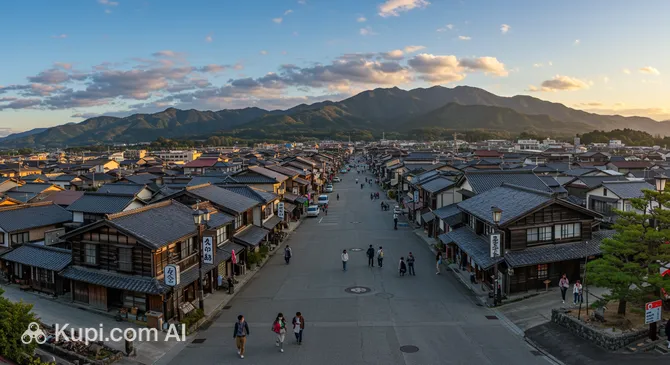
Taketa is a charming city often called a true corner of untouched Japan. It is nestled in Oita Prefecture on the island of Kyushu, surrounded by picturesque hills and green valleys, and is famous for its clean mountain air. Thanks to its prime location between volcanic massifs and thermal springs, Taketa seems perfectly designed for leisurely strolls and immersing oneself in an atmosphere of peace and tranquility.

Taketa. Illustration.
Source: Kupi.com AI

With a population of about 19,700 people, Taketa retains the charm of a small town where every corner breathes history and nature. The city plays an important role in the region as a cultural and tourist center, attracting travelers seeking authentic experiences away from bustling metropolises. A special atmosphere reigns here: ancient streets, traditional Japanese houses, well-tended gardens, and the majestic ruins of Oka Castle create a sense of traveling back in time.

The key attractions of Taketa are its rich history, reflected in the ruins of Oka Castle—one of the country's most famous mountain castles—and numerous hot springs (onsens) offering relaxation and rejuvenation. Additionally, the city is known for its festivals, such as the Taketa Bamboo Festival (Chikuraku), when the streets are lit by thousands of bamboo lanterns, creating a magical atmosphere.

Taketa is an ideal destination for those who want to get acquainted with authentic Japanese culture, enjoy the healing waters of onsens, explore historical landmarks, and discover true Japanese hospitality. A visit to this city will provide you with unforgettable impressions and allow you to see a different, more secluded and traditional side of the Land of the Rising Sun.

You can find more interesting facts on the history of Taketa page.

Weather Overview

In Taketa, you can expect warm and humid summers, with peak temperatures in July and August reaching 28-29°C, and minimums around 21-22°C. Winters here are cool: maximum temperatures in December to February are usually in the 7-9°C range, and night frosts with temperatures around 0°C or lower are not uncommon, especially in January (average minimum -0.4°C). Summer, especially June and July, is the rainiest period, with the highest amount of precipitation (up to 10mm in July) and rainy days (up to 21 days in July). Winter months, conversely, are characterized by significantly less precipitation (around 2mm in December and January). To learn more about seasonal weather changes, visit the Taketa Climate page.

Average monthly temperature

Average monthly precipitation

Interesting Facts

In addition to picturesque landscapes and a rich history, Taketa holds many surprising details that make this city truly special. Here are a few interesting facts that will help you look at it from a new perspective:

  • The famous Oka Castle, a symbol of Taketa, is known not only for its rich history but is also considered one of Japan's most romantic castle ruins. In spring, its slopes are covered with a delicate carpet of blooming cherry blossoms, turning the ancient stones into a truly fairytale sight.

  • One of the country's oldest onsens, Nagayu Onsen, is located in the vicinity of Taketa. Its waters are unique for their high carbon dioxide content, and locals believe that bathing in them grants longevity and vitality. According to legend, it is not just a hot spring but a true elixir of health.

  • Every November, Taketa is transformed by the "Taketa Chikuraku" bamboo lantern festival. Thousands of flickering lights made of bamboo illuminate the city streets, creating a magical and unforgettable atmosphere that attracts guests from all over the country and abroad.

  • The city and its surroundings are steeped in legends of ancient clans, brave samurai, and inspired poets. Numerous old temples and shrines scattered across the hills are not just architectural monuments, but silent guardians of these mysterious stories and traces of bygone eras.

How to Get There

When planning a trip to the picturesque city of Taketa in Oita Prefecture, it is wise to think about your route in advance. You can get here in several ways, the most common being a flight followed by a transfer or a rail journey.

Although Taketa itself does not have its own airport, several regional airports are within a reasonable distance. One of the most convenient options is Kumamoto Airport (KMJ), located in Kumamoto, about 53 km from Taketa. This is a major airport, and the journey from there to Taketa by taxi or bus takes approximately 1 hour and 40 minutes. Another significant option is Oita Airport (OIT), located in the city of Oita at a distance of about 64 km. This is a medium-sized airport, and the trip to Taketa from here takes about 1 hour and 55 minutes. You can also consider Kitakyushu Airport (KKJ) in the city of Kitakyushu, which is a major transport hub and is located 102.5 km from Taketa; the journey from there takes about 2 hours and 55 minutes.

For clarity, here is summary information on the main airports from which you can reach Taketa:

AirportPassenger trafficDistance
Kumamoto Airport2.9 mln53 km
Oita Airport1.9 mln64 km
Kitakyushu Airport1.6 mln102 km
Saga Airport600 582104 km
Yamaguchi Ube Airport1.3 mln107 km

You can also reach Taketa by rail. Although there are no major railway stations in the city itself, it is connected to the regional network. Travelers usually need to transfer to local lines from stations in larger cities, such as Oita, the prefecture's administrative center. From there, Taketa can be reached by train or bus while enjoying views of the Japanese countryside.

In the provided information on railway stations, Sønderborg Station appears, located in the city of Sønderborg at a distance of 104.2 km. It is important to note that this city is in Denmark and, therefore, this station is not relevant to traveling to Taketa in Japan. We recommend relying on Japanese railway services to plan your route within the country, for example, using a Japan Rail Pass and checking schedules at Oita or Kumamoto stations for further travel to Taketa.

Below is information about railway stations according to the provided data:

StationPassenger trafficDistance
Sønderborg Station104 km

In addition, you can always consider renting a car for greater flexibility in moving around the Kyushu region and Oita Prefecture, allowing you to explore not only Taketa but also the surrounding natural beauty and hot springs.

Main Attractions

Taketa, a charming city in Oita Prefecture, offers travelers a unique blend of history, culture, and natural beauty. Here, everyone will find something for themselves, from ancient ruins to healing springs.

One of the city's main gems is the Oka Castle Ruins. Once one of Japan's most impregnable fortresses, today its picturesque ruins, perched on a high hill, attract visitors with their rich history and stunning views, which are especially beautiful during the cherry blossom season. A walk through the castle grounds is a true immersion into the past.

For those seeking relaxation and wellness, Taketa offers a visit to the Nagayu Onsen hot springs. This area is famous for its unique carbonated springs, where the water is naturally saturated with CO2. It is believed that bathing in such springs has a beneficial effect on blood circulation and overall well-being. This is a wonderful opportunity to rest and recharge.

You can immerse yourself in the atmosphere of feudal Japan by walking through the Bungo-Taketa Samurai Residences quarter. Ancient warriors' houses have been preserved here, allowing you to imagine how samurai lived several centuries ago. Some of the houses are open to the public, offering a glimpse inside to learn more about the daily life and traditions of that time.

Not far from the city lies the magnificent Kuju Flower Park. Although it requires a short trip, this place is definitely worth a visit, especially from spring to autumn. Millions of seasonal flowers bloom across the park's vast territory, creating incredibly beautiful landscapes against the backdrop of the majestic Kuju Mountains. It is an ideal spot for nature lovers and photography enthusiasts.

Local Cuisine

The gastronomy of Taketa is a true reflection of its natural wealth and culinary traditions. Local dishes are based on the freshest mountain vegetables, fish from crystal-clear rivers, and delicacies prepared using the famous local mineral water. One highlight you must try is yuzu kosho—a unique, spicy paste made from yuzu citrus and chili peppers. This condiment perfectly complements both meat and fish dishes, giving them a unique aroma and flavor.

Among the signature dishes to sample in Taketa, shoyu-katsu stands out—a delicious cutlet marinated and cooked in soy sauce, boasting a rich flavor. Don't miss the chance to enjoy fresh trout, skillfully grilled until it literally melts in your mouth. We also recommend trying various versions of traditional Japanese soups with seasonal vegetables and dishes made from wild mushrooms, which are gathered here with great care and expertise.

The food culture in Taketa is diverse and welcoming. Locals and tourists can enjoy a meal in cozy restaurants offering both traditional and modern Japanese dishes. Be sure to stop by small cafes and family shops to try authentic Japanese sweets, such as delicate mochi filled with sweet red azuki bean paste. During certain seasons, the city comes alive with street food festivals where you can discover many local delicacies in a festive atmosphere. For those seeking the freshest and most unusual products, Taketa's farmers' markets offer rare varieties of vegetables, fresh herbs, and homemade preserves from local producers.

As for drinks, after a busy day of exploration and gastronomic discoveries, it is especially pleasant to relax with a cup of fragrant tea prepared according to the ancient recipes of local masters. Of course, in Taketa, you can also get acquainted with other traditional Japanese beverages. Various types of green tea are widely available, and connoisseurs of stronger drinks can try local sake or shochu, which will perfectly complement your gastronomic impressions of this charming city.

Travel Tips

Planning a trip to the charming city of Taketa? These practical tips will help you better prepare and get the most out of your visit to this historical corner of Japan.

  1. Clothing for the season and useful items: The climate in Taketa is temperate, with four distinct seasons. In summer (June-August), it is hot and humid, so choose light, breathable clothing. Spring and autumn offer comfortable temperatures, ideal for layering. In winter, it can be cool, so don't forget a warm jacket and sweater. Be sure to bring comfortable shoes for walking through historical streets and castle ruins, as well as a raincoat or umbrella, as precipitation is possible any time of year. Don't forget an adapter for electrical appliances: Japan uses type A and B sockets and a voltage of 100V. When visiting temples and shrines, modest clothing covering the shoulders and knees is recommended.
  2. Getting around the city: Taketa is a relatively small city, and its central part, including historical landmarks, can easily be explored on foot. For longer trips within the city or for excursions to the picturesque surroundings of Oita Prefecture, you can use local buses (check the schedule in advance) or taxis. If you plan to travel extensively around the region, consider renting a car; an international driving permit will be required for this.
  3. Money and payments: The official currency of Japan is the Japanese Yen (JPY, ¥). We recommend exchanging some cash in advance or upon arrival at major airports. In Taketa, credit cards are accepted in hotels, some restaurants, and large stores, but cash remains the preferred method of payment in many small establishments, at local markets, and for certain types of transport. ATMs that accept international cards are most commonly found in post offices (Japan Post Bank) and 7-Eleven convenience stores (Seven Bank ATMs). Tipping is not customary in Japan; good service is considered the norm.
  4. Health and safety: Japan in general, and Taketa in particular, is considered a very safe place for tourists. The crime rate is low. Nevertheless, standard precautions, such as keeping an eye on personal belongings, are still wise. Pharmacies (薬, kusuri) are available, but pharmacists do not always speak English, so it is better to have a basic first-aid kit with you. It is highly recommended to take out travel medical insurance before your trip. In emergencies, call numbers: police – 110, ambulance and fire service – 119.
  5. Language and communication: The official language is Japanese. In Taketa, as in many small towns in Japan, the level of English proficiency among the local population may be limited. Staff at tourist information centers and some hotels may speak English. Learn a few basic Japanese phrases: "konnichiwa" (hello/good day), "arigato" (thank you), "sumimasen" (excuse me/sorry)—this will greatly help in communication and will be appreciated by the locals. For convenience with navigation and communication, consider purchasing a tourist SIM card or renting a pocket Wi-Fi device upon arrival in Japan.
  6. Local etiquette and traditions: Japanese people are very polite and value respect for their culture. When greeting, it is customary to bow slightly (o-jigi). In public places, especially on transport, avoid loud phone conversations. An important custom is to remove your shoes before entering Japanese homes, traditional restaurants (where you sit on tatami), some temples, and ryokan inns. When using chopsticks (o-hashi), do not stick them vertically into rice and do not pass food from chopsticks to chopsticks.
  7. Things to avoid: Try not to point at people or objects with one finger—it is considered impolite; use an open palm instead. Also, avoid eating and drinking while walking on the street (except for drinks from vending machines or food at festivals). Loudly blowing your nose in public is considered bad manners; it's better to go to a restroom.
  8. Taketa's specialty: The city is known for its samurai traditions and the majestic Oka Castle ruins, which offer stunning views, especially during the cherry blossom season in spring or the changing leaves in autumn. Don't miss the chance to visit this historical monument. Taketa is also famous for its pure water and sake production. If possible, try local dishes from Oita Prefecture to fully experience the region's flavor.

We hope these tips make your stay in Taketa even more comfortable and full of impressions. We wish you an unforgettable journey through this unique corner of Japan!

Entertainment & Nightlife

Evening and nightlife in Taketa offers travelers an immersion into the calm and authentic atmosphere of the Japanese countryside, far from the noise of big cities. Here, you won't find massive nightclubs or districts entirely dedicated to entertainment until dawn, but you can enjoy the coziness of local establishments and the hospitality of the residents.

Most evening activity in Taketa is centered around small restaurants, traditional Japanese pubs known as izakayas, and perhaps a few karaoke bars. These establishments are usually located in the central part of the city, near historical streets or around the railway station. The atmosphere in such places is typically very homey and friendly. Locals come here to relax after work, socialize, and enjoy delicious food and drinks. The dress code in most places is casual; formalities are unnecessary.

In Taketa, you can discover the charm of traditional izakayas, serving a variety of local snacks, sake, and shochu. This is a great opportunity to try regional dishes in an informal setting. Karaoke bars are also popular—an essential part of Japanese leisure culture, where you can have fun with friends singing your favorite songs. Some restaurants specializing in local cuisine may also stay open during evening hours, offering a more peaceful dinner.

When planning your evening leisure in Taketa, keep in mind that most establishments close earlier than in large cities. The best time to visit is early evening. Prices are generally moderate. You can get around the central part of Taketa on foot in the evening. For longer trips, taxis are available and can be called by phone or found at taxi stands. The city of Taketa, like most of Japan, is considered a very safe place, so evening walks here are pleasant and worry-free, though one should always follow standard precautions.

While the focus of this story is on nightlife, Taketa also offers plenty of daytime entertainment. Be sure to visit the majestic Oka Castle ruins, stroll through the Bukeyashiki historical samurai residence district, explore local temples, and enjoy the beautiful nature of Oita Prefecture. The city may also have small museums dedicated to local history and culture that will complement your experience.

Thus, evening in Taketa is an opportunity to take a break from the hustle and bustle, enjoy local flavor, delicious food, and drinks in a calm and safe environment, which will be a pleasant addition to your journey through Japan.

Parks & Museums

The city of Taketa invites travelers to enjoy a harmonious blend of scenic natural spots and rich cultural heritage reflected in its museums and historical sites. Everyone will find something to their liking here, whether it's a walk through ancient ruins or getting to know the work of prominent figures.

Among Taketa's green areas, a special place is held by the Oka Castle ruins (Okajōseki). This is not just a historical monument, but a vast territory with impressive stone walls offering breathtaking views. The castle is known throughout Japan thanks to the famous song "Kojo no Tsuki" ("The Moon over the Ruined Castle"), written under the impression of its majestic ruins. A walk here is an immersion into history and an opportunity to enjoy the beauty of nature. Nearby, in the Kuju foothills, is the Kuju Flower Park, which captures the imagination with seasonal floral displays across a massive area, offering vibrant colors and peaceful landscapes.

Taketa's cultural life is concentrated in its unique museums. One of the main ones is the Taki Rentarō Memorial Hall (Taki Rentarō Kinenkan), dedicated to the life and work of this outstanding Meiji-era composer who spent his childhood in Taketa and drew inspiration here. Art lovers will be interested in the Tanomura Chikuden Memorial Museum of Art, which features works by this famous Nanga school artist born in Taketa. To gain a deeper understanding of the region's history and Oka Castle itself, it is worth visiting the Oka Castle History Museum, which offers detailed exhibits on the past of this significant fortress.

In addition to the castle ruins, Taketa's historical character is preserved in its ancient quarters. A walk through the samurai residence district (Bukeyashiki) allows you to feel the atmosphere of feudal Japan and see how warriors of the past lived. These well-preserved streets and houses are a true gem for history and architecture buffs.

For a complete impression of Taketa, don't limit yourself to the main attractions. Peek into small local temples or take a stroll along the Ono River to feel the slow pace of life in this charming city and perhaps find your own, less known but no less beautiful corners.

Getting Around

The foundation of public transport in Taketa consists of local trains and buses. Railway services, specifically the JR Kyudai Main Line, connect Taketa with other cities in Oita Prefecture and the Kyushu region. Buses provide transportation both within the city and to more remote areas not reached by trains, and they are an important means for exploring the locality.

For train travel, tickets are usually purchased from vending machines at stations. The fare depends on the distance; for example, a train ride on the Kyudai line to a neighboring settlement might cost 200-800 yen, with longer trips costing more. A bus ticket within the city or to the immediate surroundings usually costs around 150-300 yen. In Japan, IC cards (such as SUGOCA, PASMO, or Suica) are widely used and may be accepted on local lines, but it is recommended to always carry cash for ticket machines, especially in small towns. On buses, payment is most often made in cash directly to the driver upon boarding or exiting; it is advisable to have small change, as change may be limited. Sometimes you can find out about day passes for buses at tourist information centers or bus terminals if offered by local companies.

Train tickets can be purchased at Taketa station from special vending machines. We recommend checking train and bus schedules in advance, as transport in small towns may run less frequently than in metropolises, especially in the evenings and on weekends. Schedule information can be found at stations or, if possible, on transport company websites. For buses, entry is usually through the back or middle door (where, depending on the system, you may take a ticket with a zone number), and exit is through the front, paying the driver.

In addition to public transport, you can use taxi services in Taketa. Taxi stands are usually located at the railway station. This is a convenient, albeit more expensive, way to get around, especially if you are traveling with luggage or in a small group. For more flexible exploration of the surroundings and scenic spots of Oita Prefecture, renting a car is an excellent option. In the city itself, for leisurely strolls and visiting nearby attractions, you can consider renting a bicycle if such a service is available.

Traveling by train on the Kyudai line can be a pleasant experience in itself, as the route passes through scenic countryside, offering beautiful views of the region's nature. When planning your trips, keep in mind that public transport here is not just a way to get from point A to point B, but an opportunity to enjoy the landscapes of rural Japan.

Accommodation

In the city of Taketa, travelers will find various accommodation options to suit different preferences and budgets. The main focus here is on traditional Japanese hospitality, so ryokans (traditional inns) and minshuku (family-style guesthouses) are particularly popular for immersing oneself in local culture. More standard hotels offering modern amenities are also available.

Ryokans and hotels located in the Nagayu Onsen area, known for its unique carbonated hot springs, are especially popular with tourists. This is a great opportunity to combine your stay with wellness treatments. Another convenient option is staying near Taketa's main attractions, such as the Oka Castle ruins, which makes it easy to explore the historical part of the city.

When planning a trip to Taketa, especially during high tourist season or local festivals, it is recommended to book accommodation in advance. This not only guarantees the availability of rooms in your preferred ryokan or hotel but often allows you to secure better prices. Many unique and popular accommodation spots are booked up quickly.

The price range for accommodation in Taketa varies: you can find budget options in small guesthouses as well as more luxurious rooms in high-end ryokans with meals included and access to onsens. You can book accommodation through popular international online travel platforms, as well as directly on the websites of hotels or ryokans, if available.

Nearby Cities

For those who want to explore the surrounding area, Taketa serves as an excellent starting point for day trips to several interesting nearby locations:

CityPopulationDistance
Yufu32 69823 km
Aso24 82026 km
Takamori12 65030 km
Beppu115 99236 km
Oita477 18636 km

Each of these cities offers something unique for the traveler:

A trip to Oita, the prefectural capital, will allow you to explore the ruins of Funai Castle, visit the Oita Prefectural Art Museum, or relax in one of the many onsens (hot springs) for which the city is famous. Oita is also a major transport hub and offers good opportunities for shopping and experiencing modern urban life.

Beppu is a world-renowned resort city that attracts tourists with its unique "Hells of Beppu" (Jigoku Meguri)—impressive geothermal springs of various colors and properties, intended for viewing. In addition, Beppu has many traditional Japanese onsen baths where you can relax and rejuvenate.

The city of Hita, often called the "Little Kyoto of Kyushu," will charm you with its beautifully preserved Edo-period atmosphere. Here, you can stroll through the historical streets of Mameda-machi, visit traditional sake breweries, and workshops producing the famous Onta pottery.

These nearby destinations provide insight into the diverse culture and landscapes of the Japan region. A trip to any of these cities will enrich your journey with new impressions and discoveries.

Shopping & Souvenirs

Taketa, being a charming historical city, offers a cozy and authentic shopping experience rather than the hustle and bustle of major metropolises. Here you won't find giant shopping centers, but you can immerse yourself in the atmosphere of local shops selling unique handmade crafts, traditional goods, and fresh regional produce. The city may be known for its craft traditions, so look out for ceramics, textiles, and wooden products if they are characteristic of the area.

The main shopping spots in Taketa are likely concentrated along the city's central streets and in the old castle town (jokamachi) area, where historical buildings have been preserved. Strolling through these streets, you will find small shops, souvenir stalls, and perhaps the workshops of local artisans. Don't be afraid to turn into the back alleys—that's where the most interesting finds and unique goods might be hidden.

In Taketa, as a small town with a population of about 20,000, there are no large modern shopping centers in the conventional sense. Instead, you can find small local department stores or shopping arcades offering a range of daily necessities, clothing, and some souvenirs. The main focus of shopping here shifts toward specialty stores and craft shops where you can purchase something truly special.

While information about permanent large markets in Taketa may be limited, it is worth asking locals or at the tourist information center about the possibility of visiting temporary farmers' markets or fairs. At such markets, you can buy fresh local products, seasonal delicacies, and unique handmade items directly from the producers. This is a great opportunity to taste the authentic flavors of the Oita region and support local farmers and artisans.

From Taketa, it is worth bringing back souvenirs reflecting the local flavor and culture of Japan. Pay attention to:

  • Local handicrafts: Look for Oita-style ceramics, bamboo products (if the region is famous for them), textiles, or traditional toys.
  • Food products: Local sweets (for example, manju with unique fillings or wagashi), pickles (tsukemono), locally produced sake, and products made from kabosu citrus, which is a specialty of Oita Prefecture.
  • Themed souvenirs: Items related to samurai history and Oka Castle, the city's main attraction. These could be miniatures, postcards, or books.
  • Traditional Japanese goods: Fans, chopsticks, and small home decor items that will remind you of your trip.

Most shops in Taketa, as in other small towns in Japan, are usually open from 10:00 or 11:00 AM until 6:00 or 7:00 PM. Small family-run shops may have more flexible hours or a day off during the week (often Wednesday or Thursday). Larger shops and supermarkets, if available, may stay open longer. Regarding payment, while credit cards are becoming more common, especially in tourist-oriented establishments, having cash (yen) is highly recommended. This is especially true when visiting small shops, markets, and craft workshops. ATMs accepting international cards can be found in post offices (Japan Post Bank) and some convenience stores (konbini) like 7-Eleven.

Tourists in Japan can take advantage of the consumption tax refund system (Tax Free). This is usually possible when purchasing goods (except for consumables, for which there may be separate conditions) worth over 5,000 yen (excluding tax) in one store on a single day. Look for stores with the "Japan Tax-Free Shop" logo. To process the tax refund, you will need to present your passport with a valid tourist visa. The procedure usually takes place directly in the store at the time of purchase. Check the conditions at specific outlets, as not all stores, especially small ones, participate in this program.
Reached the end of the page?

That means the route is fully explored