Support

Kushimoto

About

Kushimoto is a stunning corner where the endless blue of the Pacific Ocean meets the picturesque green hills of the Kii Peninsula. Located in Wakayama Prefecture, this town proudly holds the title of the southernmost point of Honshu Island. Thanks to its unique geographical position, it seems to open a gateway to a world of untouched nature, offering travelers an atmosphere of seclusion and tranquility that is so rare for modern metropolises.

The town's population is about 14,661 people, giving it a cozy, almost family-like character. There is no hustle and bustle of big cities here; instead, a steady rhythm of life prevails, allowing you to completely dissolve into the surrounding beauty. The climate in Kushimoto is mild and maritime, making it an attractive destination almost year-round. It is an ideal place to discover the authentic side of Japan, where ancient traditions harmoniously intertwine with modern comfort.
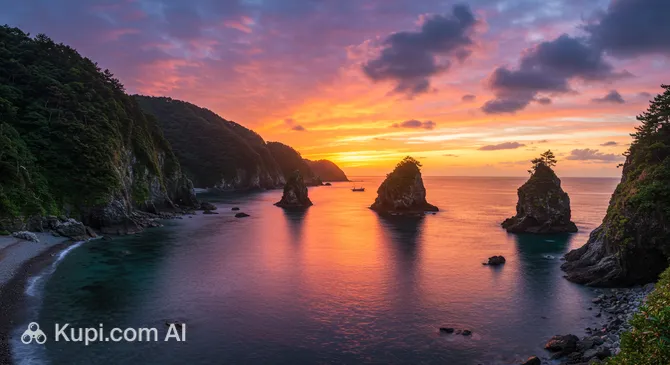
Kushimoto. Illustration.
Source: Kupi.com AI

Maritime heritage plays a key role in the life of the region. The fascinating history of Kushimoto is closely linked to fishing and seafaring, as well as dramatic events of the past that strengthened the town's international ties. Travelers are drawn here not only by cultural monuments but also by breathtaking natural attractions. Among them, the famous Hashiguiiwa Rocks, resembling bridge pillars, and Cape Shionomisaki with its historical lighthouse and spectacular ocean panoramas, particularly stand out.

Kushimoto is a destination for those seeking inspiration and silence away from noisy tourist routes. Come here to witness an unforgettable sunrise over the ocean, enjoy the freshest seafood, and feel the genuine hospitality of the locals.
Weather Overview

The climate in Kushimoto can be described as humid subtropical, which is not surprising for the southernmost point of Honshu Island. Winters here are mild and are the driest time of year. In January and February, the average temperature stays in the range of 7.7°C — 8.5°C, and nightly minimums rarely drop below 5°C. There is little precipitation at this time, only 2–4 mm, which makes the winter months quite suitable for walking if you dress warmly.

Spring brings rapid warming: already in March, the air warms up to an average of 12.0°C, and by May, the temperature reaches a comfortable 18.9°C. Summer here is hot and humid. June marks the beginning of the rainy season: the number of days with precipitation increases to 17, and the temperature rises to 22.1°C. The peak of heat occurs in August, when average figures are 27.2°C and maximums reach 29.0°C. Expect a warm, humid summer with frequent rains and cool but comfortable dry winters.

Autumn begins with a warm September (about 24.9°C), which, however, remains a very rainy month with 21 days of precipitation. By November, the heat subsides to 15.2°C, and the rains stop, bringing back clear weather. When planning your trip, be sure to study the detailed weather in Kushimoto to choose the ideal season for exploring this picturesque region.

Average monthly temperature

Average monthly precipitation

Interesting Facts

In addition to its famous landscapes and status as the southernmost point of Honshu, Kushimoto holds many fascinating stories linking ancient traditions with natural beauty. This town reveals itself to travelers not just as a resort, but as a keeper of a unique cultural code.

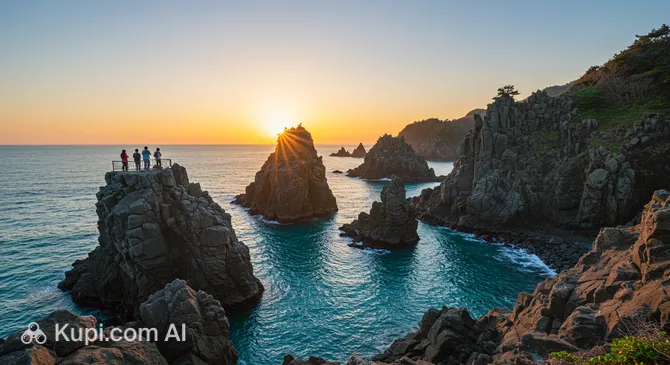
Hashiguiiwa Rocks. Illustration.
Source: Kupi.com AI

Traveler photos:

  • Sacred Start. Kushimoto is known as one of the key starting points of the legendary Kumano Kodo pilgrimage route. This is a rare case where the road itself is recognized as a UNESCO World Heritage site. Trails passing through majestic forests with thousand-year-old cryptomeria trees have served as a path for spiritual purification for pilgrims from all over the world for centuries.

  • Stone Guardian of the 19th Century. The town is proud of its maritime past, symbolized by the Kushimoto Oshima Lighthouse. It is one of the oldest stone lighthouses in Japan, built back in the 19th century. Its snow-white tower not only helps sailors but is also considered one of the most photogenic spots in the region.

  • Geological Mysteries. The town's coastline is a literal open-air museum. Here you can see the famous Hashiguiiwa Rocks, which look like the supports of a giant unfinished bridge. Additionally, the coast is famous for its whimsical sand dunes and proximity to natural phenomena such as the Sandanbeki Cliffs.

  • Tribute to the Ocean. Unique traditions related to the veneration of the sea have been preserved in Kushimoto. Every year, locals hold colorful festivals culminating in spectacular boat races — a tribute to the element that has fed this region for centuries.

How to Get There

When planning a trip to the far south of the Kii Peninsula, it's worth thinking through your route in advance, as this picturesque corner is somewhat distant from the main metropolises. You can find all the details and more on how to get to Kushimoto in our special guide, and below we look at the main air and ground gateways to this region.

There is no airport in the town of Kushimoto itself, so travelers have to use the air gateways of neighboring cities. The closest and most convenient for domestic flights is Shirahama Airport (SHM), located in the city of Shirahama. It is just 44 km from Kushimoto. This is a small regional hub receiving flights mainly from Tokyo (Haneda). The journey from here to Kushimoto by rental car or taxi will take about an hour; you can also use the rail link, which is quite comfortable and fast.

For most foreign tourists, the main gateway is Kansai International Airport (KIX), located in the city of Osaka. This is a major international hub with a huge passenger flow, receiving flights from all over the world. It is located about 117 km from Kushimoto. You can head straight from the airport on a train or rent a car; the trip by car will take about 2.5–3 hours. Also operating in the Osaka region is Itami Airport (ITM), serving mainly domestic lines, but it is a bit further away — 149 km from the destination.

For clarity, here is a summary of the main airports through which you can reach the resort:

AirportPassenger trafficDistance
Shirahama Airport438 41344 km
Kansai International Airport30.6 mln117 km
Tokushima Awaodori Airport2.3 mln131 km
Kobe Airport3.6 mln139 km
Itami Airport14.8 mln149 km

The main way to reach the town by land is the railway. The town's main station, Kushimoto, is located on the JR Kisei Main Line (also known as the Kinokuni Line). "Kuroshio" limited express trains regularly arrive here from Osaka (from Shin-Osaka and Tennoji stations) and Kyoto. Taking the train is not only convenient but also beautiful, as the route runs along the picturesque ocean coast. The travel time from Osaka is approximately 2.5–3 hours. The station is located in the town center, from where it is easy to reach hotels and attractions by taxi or local bus.

Main Attractions

Kushimoto's main attractions are inextricably linked to its unique nature and maritime history. As the southernmost point of Honshu Island, this town offers travelers breathtaking landscapes, geological wonders, and monuments symbolizing international friendship. Here is a list of places that are definitely worth including in your itinerary when visiting this picturesque corner of Wakayama Prefecture.

The absolute symbol of the town is the famous Hashiguiiwa Rocks. This natural formation is a row of more than 40 pointed rocks lined up in a straight line for 850 meters. The name translates as "bridge-post rocks," and according to legend, they were created by the revered monk Kobo Daishi in an attempt to build a bridge to Oshima Island in a single night. This place is incredibly photogenic, especially at sunrise when the dark silhouettes of the stones contrast with the golden waters of the ocean.

Hashiguiiwa Rocks. Illustration.
Source: Kupi.com AI

Traveler photos:

Another important geographical and tourist point is Cape Shionomisaki. It is worth visiting just to stand on the southernmost tip of Japan's main island, Honshu. Here lies the snow-white Shionomisaki Lighthouse, built in 1873, which is included in the list of the "50 Lighthouses of Japan." After climbing to its observation deck, you can enjoy a panoramic view of the endless Pacific Ocean and feel the power of the sea washing the shores of the Kii Peninsula.

Fans of the underwater world will be interested in Kushimoto Marine Park. This is the first marine park in Japan, created to protect unique coral communities that are the northernmost in the world. The waters here are so clean and rich in life that the area was included in the list of wetlands of international importance (Ramsar Convention). Tourists can visit the aquarium, take a glass-bottom boat ride, or descend into the underwater observatory to watch tropical fish in their natural habitat.

On Oshima Island, connected to the town by a bridge, you will find the Turkish Memorial and Museum. This complex is dedicated to the memory of the sailors from the Ottoman frigate "Ertuğrul," which was wrecked off the local coast in 1890. The rescue of survivors by Kushimoto residents marked the beginning of a strong friendship between Japan and Turkey. The site features a calm atmosphere and beautiful views of the rocky coastline, while the memorial itself serves as a reminder of humanity and mutual assistance.

Local Cuisine

Kushimoto's cuisine is a true paradise for gourmets, especially those who cannot imagine life without gifts from the sea. Thanks to its location at the southernmost tip of Honshu Island, local gastronomy is based on the freshest catch, which fishermen deliver directly to markets and restaurant kitchens. The main delicacies for which travelers come here are tender tuna, sea urchin (uni), and spiny lobsters. Be sure to order a sashimi platter: the fish slices here are incredibly fresh and literally melt in your mouth.

The food culture in the town is imbued with homey comfort and simplicity. Locals and tourists often start the day with a traditional Japanese breakfast, including rice, hot miso soup, and fish. At lunchtime, grilled fish with local spices and seaweed is popular — this cooking method allows the natural flavor of the seafood to be fully revealed. To appreciate the skill of local chefs in a calm setting, we recommend checking out Ryori Banko restaurant, which serves excellent dishes from seasonal ingredients.

For a quick snack, street food found at small markets is perfect. They sell fried fish balls, a variety of dried seafood, and sweet rice-based treats. As for drinks, it is customary to accompany a meal with local sake, which perfectly complements the flavor of the fish. Additionally, since Wakayama Prefecture is famous for its fruits, be sure to try "umeshu" — a fragrant plum wine, or non-alcoholic juices from local citrus fruits.

Travel Tips

Kushimoto is a place where nature dictates its own rules, and the pace of life pleasantly slows down. To ensure your journey to the southernmost tip of Honshu Island goes perfectly and leaves only warm memories, we have prepared a list of important practical recommendations to help you avoid surprises in this cozy coastal town.

  1. Clothing and Footwear. The climate here is maritime and windy, so even in summer, a light windbreaker won't be out of place for evening walks by the ocean. Be sure to bring comfortable, non-slip shoes (sneakers or trekking sandals), as exploring the Hashiguiiwa Rocks and Cape Shionomisaki involves walking on rocky and uneven surfaces. Don't forget sunglasses and a hat — the sun on the open coast is very active.

  2. Transport Strategy. Public transport in Kushimoto runs infrequently, sometimes with an interval of an hour or more. For total freedom of movement, car rental is highly recommended. If you don't have an international license, a great alternative would be bicycles (including electric ones) that can be rented near the train station: the terrain is hilly in places, but the distances to the main attractions are quite manageable.

  3. Finances and Cash. Kushimoto is provincial Japan, where cash only culture is still strong. Many small family restaurants, souvenir shops, and buses accept only cash yen. Be sure to withdraw money in advance or use ATMs in 24-hour convenience stores (konbini) like 7-Eleven or Lawson. Cards are accepted in large hotels and supermarkets, but relying only on them is risky.

  4. Safety and Health. The town is very safe, but being a coastal area, it is subject to the risk of natural disasters. Pay attention to Tsunami Evacuation Route signs located throughout the town — just know where the high ground is. Pharmacies usually close by 8:00 PM – 9:00 PM, and there are no 24-hour pharmaceutical outlets, so it's better to pack a basic first-aid kit at home.

  5. Communication and Language. English is not understood everywhere, so download an offline Japanese language pack in your translator in advance. Free Wi-Fi is available at the station and in tourist centers, but your own SIM card or pocket router is necessary for navigating the surroundings. Important: buy a SIM card at your arrival airport (Osaka or Tokyo), as finding them for sale in Kushimoto itself is extremely difficult.

  6. Local Etiquette. In Kushimoto, silence and tranquility are valued. Greet locals with a slight bow; it's a universal gesture of respect. When entering traditional guesthouses (ryokans) or some restaurants with tatami, be sure to remove your shoes. Tipping is not customary in Japan: attempting to leave extra money might embarrass the staff; it's better to just say a sincere "Arigato gozaimasu."

  7. What to Avoid. Don't count on a late dinner by "luck." Most restaurants close early (around 8:00 PM – 9:00 PM), and you risk staying hungry if you don't dine in advance. Also, avoid walking on coral reefs during low tide in non-designated areas — this is not only dangerous for you but also harms the unique ecosystem of the marine park.

  8. Tide Lifehack. To see the famous Hashiguiiwa Rocks in all their glory, check the tide schedule. During a strong low tide, you can walk very close to the stone pillars on the exposed seafloor and take unique photos, while at high tide they look like mystical islands floating in the water.

By following these simple tips, you can feel confident and comfortable at the southernmost point of Honshu Island. Let Kushimoto be remembered not for everyday chores, but for the sound of the ocean, incredible sunrises, and the sincere hospitality of the locals!

Entertainment & Nightlife

Nightlife in Kushimoto has its own unique, calm rhythm, significantly different from the neon glow of metropolises like Tokyo or Osaka. You won't find noisy nightclubs with DJs or large-scale discos here. Evening entertainment in this coastal town is intimate and authentic, offering tourists the chance to immerse themselves in a real Japanese provincial atmosphere.

Main activity after sunset is concentrated around Kushimoto Station and its adjacent central streets. This is where traditional Japanese bars — izakayas — are located. They are the heart of the local evening life: small establishments with red lanterns at the entrance where locals gather after work to drink sake or beer and discuss the news. The atmosphere here is always friendly and informal, there is no dress code, and foreigners are treated with curiosity and hospitality.

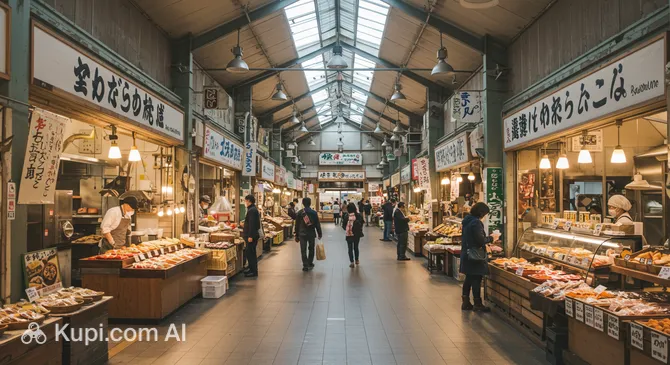
For a pleasant dinner and an introduction to local gastronomic culture, we recommend visiting Ryori Banko restaurant. This establishment is great for evening relaxation: here you can leisurely enjoy the freshest seafood and try local drinks. Such places usually operate until 10:00 PM – 11:00 PM, so it's better to plan your visit for the early evening.

Ryouri Bankou. Illustration.
Source: Kupi.com AI

Traveler photos:

If you prefer a more contemplative vacation, Kushimoto at night offers unique natural "shows." The famous Hashiguiiwa Rocks are transformed after dark. In clear weather, this place becomes an ideal spot for stargazing: far from city light pollution, the Milky Way is particularly bright, and the sound of the ocean creates a meditative atmosphere. Sometimes the rocks are illuminated, creating a mystical landscape.

Practical tips and safety:

  • Opening hours: Most establishments close quite early, around 10:00 PM. "Night owls" should take care of their plans or snacks in advance.
  • Transport: Public transport practically doesn't run at night. If your hotel is far from the station, arrange for a taxi in advance or ask the restaurant staff to call a car for you.
  • Safety: Kushimoto is an exceptionally safe town. Evening walks carry no risks, although you should be careful on unlit sections of the coast.

As for daytime entertainment, it is inextricably linked with nature and history in Kushimoto. Guests can visit the Marine Park with its aquarium and underwater observatory to see coral reefs, or head to the Turkish Memorial and Museum on Oshima Island to learn about the touching history of friendship between two nations. These places provide a rich cultural program before evening falls.

Parks & Museums

The cultural and natural landscape of Kushimoto is inextricably linked to the ocean, offering tourists a unique combination of picturesque green zones and museums that tell the story of the region's international ties and maritime history. Here, on the southern tip of the Kii Peninsula, you can stroll through national parks with breathtaking views and visit exhibitions dedicated to international friendship and past maritime tragedies.

Kushimoto's natural areas are part of the vast Yoshino-Kumano National Park. One of the main gems of this park is the Cape Shionomisaki area. Here stretches a wide green lawn called "The Lawn of Hope" (Bokyo-no-Shiba), offering a panoramic view of the Pacific Ocean. This is an ideal place for leisurely walks and picnics in the fresh air, where you can feel the power of the elements and the vastness of the horizon. Another important natural object is the famous Hashiguiiwa Rocks. The coastline around this ridge of stones is equipped with walking areas, allowing you to approach the water during low tide and see the whimsical geological formations up close.

To experience the underwater world without diving, it is worth visiting Kushimoto Marine Park. Although technically an aquarium and research center, its territory includes Japan's first area protected by the Ramsar Convention due to its unique coral reefs. Visitors can walk through an underwater observatory, watching tropical fish in their natural habitat, making this place a true "underwater park."

Among the museums, a special place is held by the Turkish Memorial and Museum on Oshima Island. The exhibition is dedicated to the tragic sinking of the Ottoman frigate "Ertuğrul" in 1890 and the heroic efforts of local residents to save the crew. The museum displays sailors' personal belongings, ship models, and documents testifying to the beginning of a long friendship between Japan and Turkey. Nearby is the Japan-US Friendship Memorial Museum. This small museum marks the historical visit of the American merchant ships "Lady Washington" and "Grace" in 1791 — the first documented visit to Japan by Americans, which occurred right here in Kushimoto.

Significant historical and architectural sites include Kashinozaki Lighthouse, located on the eastern tip of Oshima Island. This is the oldest stone lighthouse in Japan, built in 1870 according to a design by British engineer Richard Henry Brunton. Climbing its spiral staircase, you can enjoy a magnificent view and examine the preserved lighthouse keeper's residence, which is an important architectural monument of the Meiji era.

Insider tip: if you have time, stroll along the paths around the Kashinozaki Lighthouse in spring. During this period, daffodils bloom here, covering the slopes in a white carpet and filling the air with a sweet scent, creating an incredibly romantic atmosphere away from the main tourist crowds.

Getting Around

The transport system in Kushimoto is significantly different from metropolises like Tokyo or Osaka. Since it is a small coastal town, there are no subways or trams here. The main ways for tourists to get around are municipal buses, taxis, as well as renting cars and bicycles, which often proves to be the most convenient option for exploring the picturesque surroundings.

The main link of public transport is the municipal buses (Community Bus). They connect Kushimoto Station with key tourist locations such as Cape Shionomisaki, Oshima Island, and the Hashiguiiwa Rocks. Buses run on a schedule, which may not be very frequent (sometimes once an hour or less), so it is highly recommended to check departure times in advance at the tourist information center at the station or at the bus stops.

For trips along the coast and to neighboring cities, it is convenient to use the railway (JR Kisei Main Line). Kushimoto Station receives both local trains and express trains. This is a reliable way to get to other resorts on the Kii Peninsula, however, the train is not very suitable for moving within the town itself, as the stations are located far apart.

The fare payment system has its own peculiarities. At the railway station, you can use popular IC transport cards (ICOCA, Suica, PASMO) or buy a paper ticket at a machine. In municipal buses, payment is most often made in cash when exiting. The procedure is as follows: when entering (usually through the rear door), you take a slip with the stop number, and when exiting, you pay the amount indicated on the driver's display by dropping coins and the slip into a special machine. It's better to change large denomination bills in advance, although buses often have change machines for 1000 yen notes.

Given the spread-out nature of the attractions, many travelers choose alternative ways to get around. Car rental is perhaps the most comfortable option, giving complete freedom of movement. Rental offices are located near the station. Bicycle rental is also very popular: the terrain along the coastline is hilly in places, but the views are worth it. Electric bikes can be rented directly at the tourist association near the station. Taxis can always be found at the stand in front of the station, but for long trips, this will be a fairly expensive pleasure.

Accommodation

Где остановиться:

Accommodation options in Kushimoto reflect the calm and leisurely character of this coastal town. You won't find skyscrapers of international hotel chains here, but you can immerse yourself in the authentic atmosphere of the Japanese province. Travelers have access to a wide range of housing: from large resort hotels with hot springs (onsens) to cozy family guesthouses (minshuku) and traditional inns (ryokans).

When choosing a place to stay, you should be guided by your mode of travel. If you are traveling by train, the most convenient area would be the vicinity of Kushimoto Railway Station. Budget business hotels and small inns are concentrated here, from where it is easy to reach shops and restaurants on foot. For those renting a car, more opportunities open up: you can choose picturesque resort hotels located along the coast, near the famous Hashiguiiwa Rocks or on the heights of Cape Shionomisaki, offering breathtaking views of the ocean sunrise.

Hotels with hot springs are particularly popular in this region. Many large complexes offer guests not only comfortable rooms (both Western and Japanese style) but also the opportunity to relax in open-air baths with views of the Pacific Ocean. This is a great way to recover after walking along pilgrimage trails or the rocky shore.

Booking tips and prices:

  • Seasonality: Kushimoto is a popular destination for summer vacations and diving. In July and August, as well as during "Golden Week" (early May), housing demand rises sharply. It is highly recommended to book rooms 2–3 months before the trip.
  • Meals: When booking traditional ryokans or resort hotels, look for "half-board" plans (dinner and breakfast included). In Kushimoto, this is often the best and tastiest option, as restaurants in town may close early, and hotel dinners are famous for the freshest local seafood.
  • Price Range:
    • Budget (minshuku, hostels): from 4,000 to 7,000 yen per night.
    • Mid-range (business hotels): from 7,000 to 12,000 yen.
    • High-end (resorts with onsens and meals): from 15,000 yen and up per person.
  • Booking Methods: Large hotels are easily found on international booking platforms. However, for small family inns, you may need help from a tourist center or Japanese language skills for a direct call.

Nearby Cities

For those wanting to explore the surroundings, Kushimoto serves as an excellent starting point for day trips to several interesting nearby places. Located on the southern tip of the Kii Peninsula, the town is surrounded by picturesque landscapes and cultural attractions that are easily accessible by public transport or car.

One of the most popular destinations is the city of Tanabe, located about 47 km away. It is known as the gateway to the ancient Kumano Kodo pilgrimage trails, listed as a UNESCO World Heritage site. This is an ideal place for history lovers and hikers. A bit further, at a distance of about 100 km, is Wakayama, the capital of the prefecture of the same name. Here you can visit the majestic Wakayama Castle, which offers a stunning view of the city, and stroll through the picturesque Momijiyama Garden.

CityPopulationDistance
Nachikatsuura13 93023 km
Shingu33 01734 km
Kiho10 40436 km
Kamitonda15 04041 km
Shirahama19 97646 km

These nearby destinations provide a more complete understanding of the diverse culture and scenic landscapes of the region, complementing the experience of a trip to Japan.

Shopping & Souvenirs

General Overview

Shopping in Kushimoto is significantly different from what large Japanese metropolises offer. Here you won't find multi-story department stores with luxury brands or noisy shopping districts. Instead, the town offers a cozy atmosphere of provincial commerce, where the main focus is on the freshest seafood, local delicacies, and unique craft items. This is an ideal place for those who want to bring home a piece of real, non-tourist Japan.

Main Shopping Areas and Streets

The town's shopping life is mainly concentrated along the main transport artery — National Highway Route 42, which runs along the coast. Also, several small shops and stalls can be found in the immediate vicinity of Kushimoto Station. Walking through these areas will allow you to look into family shops selling everything you need, from fishing tackle to traditional sweets.

Shopping Centers

There are no large malls in the usual sense in Kushimoto. The role of main shopping points is played by large supermarkets such as Okuwa and A-Coop. For tourists, they can be interesting for their wide selection of Japanese snacks, sauces, tea, and alcoholic beverages at affordable prices. This is a great opportunity to buy gastronomic souvenirs that locals purchase for themselves.

Markets and Souvenir Shops

The main attraction for those wishing to make purchases is the tourist complex and roadside station (Michi-no-Eki), located right across from the famous natural landmark — Hashiguiiwa Rocks. Here you'll find a large souvenir shop and a market for local products. Visitors can purchase fresh vegetables, fruits, and seafood delivered straight from the port. This is the best place in town to find a concentrated collection of all the region's specialties under one roof.

Souvenirs

From Kushimoto, it is worth bringing goods that reflect its maritime soul and warm climate. First and foremost, pay attention to tuna products and dried fish (himono), for which Wakayama Prefecture is famous. The region is also known for its citrus fruits, especially ponkan and kinkan — you can buy fresh fruit as well as jams, juices, or jellies based on them. Given the town's historical connection with Turkey, souvenir shops often feature Turkish-themed goods, such as ceramics or evil eye amulets, alongside traditional Japanese talismans.

Opening Hours and Payment

Shops in Kushimoto usually open around 9:00 AM or 10:00 AM. Souvenir shops and small stores typically finish work quite early — at 5:00 PM or 6:00 PM. Supermarkets may stay open until 9:00 PM or 10:00 PM. As for payment, despite the widespread introduction of technology, Kushimoto remains a town where cash (yen) is still the most reliable means of payment, especially in small shops. Credit cards are accepted in supermarkets and the large center by the Hashiguiiwa Rocks, but having a supply of banknotes is highly recommended.

Tax Free

The tax-free refund system is poorly developed in Kushimoto due to the small number of foreign tourists compared to major centers. You can generally use this service only in large drugstores or big supermarkets if there is a corresponding sticker at the entrance. In small souvenir shops, you should not count on a tax refund.

Reached the end of the page?

That means the route is fully explored