Support

Nachikatsuura

About

Nachikatsuura is a charming town nestled on the southern coast of Honshu Island, in Wakayama Prefecture. It is located right on the shores of the Pacific Ocean, where picturesque rocky bays meet emerald mountains and dense cedar forests reach down to the water's edge. This unique geographical position makes Nachikatsuura a true gem for nature lovers and those seeking a peaceful getaway.
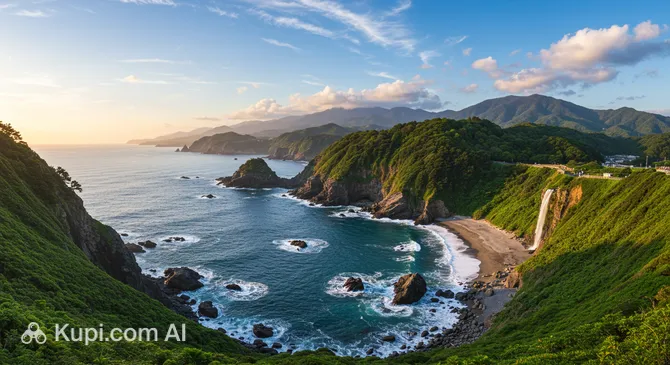
Nachikatsuura. Illustration.
Source: Kupi.com AI

With a population of about 13,930 people, Nachikatsuura maintains the atmosphere of a small, traditional Japanese town where life flows at a measured and harmonious pace. This place is part of the amazing country of Japan, and every corner of it is permeated with the spirit of ancient traditions and sincere hospitality. The main atmosphere of Nachikatsuura is one of union with nature and a sense of tranquility.

The town attracts tourists not only with its landscapes but also with its cultural heritage. Nachikatsuura is an important point on the ancient Kumano Kodo pilgrimage route, which is included in the UNESCO World Heritage List. Additionally, here you can visit ancient temples and enjoy healing hot springs (onsens), which offer relaxation and restoration. The sound of the surf, the scent of pine needles, and the majesty of the shrines create ideal conditions for a reset.

Come to Nachikatsuura to immerse yourself in a world where the past and present weave into a unique cultural pattern, and experience the magic of this amazing corner of Japan. This journey will bring you inspiration and unforgettable impressions.

You can find more interesting facts on the Nachikatsuura city history page.

Weather Overview

In Nachikatsuura, the climate is characterized by clearly defined seasons. In summer, especially from June to September, it is warm and quite humid. The average monthly air temperature during this period ranges from 21.5°C (June) to 26.8°C (August), with maximum daytime temperatures reaching up to 29°C. Summer is also the season with the most rainfall; for example, June sees about 12 mm, and the number of rainy days can reach 20-21 in July, August, and September.

Winters in Nachikatsuura, from December to February, are cool. The average air temperature during these months is about 6-8°C, while the minimum can drop to 3-4°C. The winter period is significantly drier than the summer, with rainfall of about 2-4 mm per month and 7-8 rainy days. Overall, expect warm summers with occasional rain and cool, drier winters. For more detailed information on weather conditions, including monthly data, we recommend visiting the Nachikatsuura climate page.

Average monthly temperature

Average monthly precipitation

Interesting Facts

In addition to its famous shrines and picturesque landscapes, Nachikatsuura hides many curious details that make this town even more attractive to travelers.

  • Nachikatsuura is home to Japan's tallest waterfall — Nachi-no-Taki, reaching a height of 133 meters. This waterfall is not just a natural wonder but also an important spiritual sanctuary; its waters are believed to bring good luck and promote longevity.

  • Opposite the majestic Nachi Falls stands the famous three-story Seiganto-ji pagoda. The bright orange pagoda against the backdrop of the powerful water flow has become one of the most recognizable and photographed views not only of Nachikatsuura but of all Japan.

  • Nachikatsuura is part of the ancient Kumano Kodo pilgrimage route. For many centuries, both Japanese emperors and ordinary pilgrims walked these paths in search of spiritual enlightenment. The route remains popular today among hiking and history enthusiasts.

  • The town is famous for its healing hot springs — onsens. Many of them are unique because they are located right on the coast or in the mountains, allowing you to enjoy not only mineral baths but also magnificent views, such as the sunrise over the ocean, without leaving the open-air bath.

How to Get There

You can reach the town of Nachikatsuura in Wakayama Prefecture in several ways, mainly by combining air travel with subsequent ground transportation, such as trains or buses. Since Nachikatsuura itself does not have its own airport, travelers should look toward the nearest major aviation hubs.

The main international airport convenient for reaching Nachikatsuura is Kansai International Airport (IATA: KIX). It is located in the city of Osaka, about 110 km from Nachikatsuura. This is a major international hub receiving flights from all over the world. A trip from Kansai Airport to Nachikatsuura by car or using a combination of train and bus will take approximately 3-4 hours. Another option is Nanki-Shirahama Airport (IATA: SHM), which is significantly closer, about 54 km away, in the town of Shirahama. This is a small regional airport primarily serving domestic flights. From here, you can reach Nachikatsuura in about 1.5-2 hours. You can also consider Itami Airport (IATA: ITM), located in Osaka, at a distance of about 137 km. It primarily serves domestic Japanese flights, and the journey to Nachikatsuura will take about 3.5-4 hours.

For clarity, here is a summary of the main airports through which you can reach Nachikatsuura:

AirportPassenger trafficDistance
Shirahama Airport438 41354 km
Kansai International Airport30.6 mln110 km
Kobe Airport3.6 mln130 km
Tokushima Awaodori Airport2.3 mln136 km
Itami Airport14.8 mln136 km

Rail travel plays a vital role in Japan's transportation system. The main railway station serving Nachikatsuura is Kii-Katsuura Station, located directly in the town. Trains on the JR Kisei Main Line pass through it, connecting the town with major regional transport hubs such as Osaka and Nagoya. While detailed information about this station is not provided in the data, it is the key arrival point for reaching Nachikatsuura by train.

Regarding more distant stations from the provided list, Fukai Station (QKV) can be noted. It is located in the city of Sakai, approximately 108 km from Nachikatsuura. This is a station with medium passenger traffic. If your route involves arriving or transferring in Sakai, an additional transfer from Fukai Station to Nachikatsuura will be required, most likely by a different train line or bus, taking several hours.

For clarity, here is a summary of the railway stations from the provided list:

In addition to air and rail travel, Nachikatsuura can be reached by intercity buses from major cities in the Kansai region. Also, if you are traveling by car, the town is accessible via the highway network.

Main Attractions

Nachikatsuura is a place where ancient traditions and stunning nature merge together, offering travelers unique experiences. The town and its surroundings are famous for UNESCO World Heritage sites associated with the Kumano Kodo pilgrimage trails.

One of the main jewels of the region is Nachi Falls (Nachi no Taki). This is one of the highest waterfalls in Japan, with its waters plunging from a height of 133 meters, creating a majestic and inspiring sight. The waterfall is revered as a sacred site, and its power and beauty attract pilgrims and tourists from all over the world. A special energy and peace can be felt near it.

Located near the waterfall is the Kumano Nachi Taisha Grand Shrine — one of the three main shrines of Kumano. This is an important Shinto shrine with a rich history, serving as a key point on the Kumano Kodo pilgrimage routes. The bright red buildings of the shrine contrast strikingly with the surrounding greenery, and the place itself is steeped in the spirit of antiquity and holiness. A visit to the shrine allows you to touch the spiritual traditions of Japan.

Next to Kumano Nachi Taisha is the Buddhist Seiganto-ji Temple. It is famous for its three-story pagoda, which offers a canonical view: the pagoda set against the majestic Nachi Falls. This view is one of the most photographed in Japan. The temple is also included in the UNESCO World Heritage List and is an important site for pilgrims, symbolizing the harmonious coexistence of Shintoism and Buddhism in Japan.

For those who want to dive deeper into the pilgrimage atmosphere, the Daimon-zaka Slope is a must-visit. This is a picturesque stone-paved path about 600 meters long, leading to the Kumano Nachi Taisha Shrine and Seiganto-ji Temple. The trail is lined with centuries-old cedars, creating a mysterious and peaceful atmosphere. Walking along Daimon-zaka is a true journey through time, allowing you to feel like part of centuries of pilgrimage history.

Local Cuisine

The gastronomic scene of Nachikatsuura is a true feast for seafood lovers. The main culinary pride of the town is undoubtedly tuna. Be sure to try tuna sashimi — it is prepared masterfully here, emphasizing the natural, clean taste of the fish. Product freshness is guaranteed, as tuna is caught here and often sold at auctions early in the morning.

Besides tuna, local restaurants and street stalls offer many other delicacies. Look out for dishes made from eel, sea bass, and crab. Of course, you cannot miss out on the variety of sushi. Grilled seafood is particularly popular – it has a unique aroma and a light hint of the ocean. Locals and tourists usually enjoy these dishes in cozy restaurants or try them as street food, especially near port areas.

Food culture in Nachikatsuura is closely linked to the sea and local products. At the fish markets, you can not only see the impressive catch but also taste the freshest seafood. The town's farmers' markets are also worth noting: seasonal vegetables, fruits, and traditional Japanese sweets are sold here year-round. If your trip takes place in spring or autumn, you might be lucky enough to catch one of the gastronomic festivals, where you can fully experience the richness of local cuisine.

As for drinks that perfectly complement a seafood meal, traditional rice sake stands out. Also, try the local fruit liqueurs, which offer unique flavor combinations. These drinks will help create an authentic atmosphere of a Japanese feast and better reveal the taste of the dishes.

Overall, the gastronomy of Nachikatsuura is a combination of freshness, tradition, and deep respect for nature's gifts. Immersing yourself in the local cuisine will be one of the most vivid impressions of a trip to this coastal town.

Travel Tips

Welcome to Nachikatsuura! To ensure your journey to this charming corner of Wakayama Prefecture goes smoothly and leaves only pleasant impressions, we have prepared some practical tips. They will help you better navigate and enjoy all the beauties of this place.

  1. Clothing and Essentials: The climate in Nachikatsuura is humid subtropical. It is hot and humid in summer, so choose light, breathable clothing. Spring and autumn weather is mild, but items for layering won't hurt. A warm jacket is useful in winter. A key element of your wardrobe is comfortable shoes, especially if you plan to explore the Kumano Kodo trails or temple complexes. Don't forget an umbrella or raincoat, as rain is possible at any time of year. For electronics, you'll need adapters (Japan uses Type A and B plugs, 100V voltage). When visiting temples like Nachi Taisha, show respect by choosing more modest clothing that covers shoulders and knees.

  2. Transport Nuances: Nachikatsuura is a relatively small town, and many of its parts, especially around Kii-Katsuura Station and the port, can be explored on foot. The main mode of public transport is local buses, which connect the station with major attractions, including Nachi-no-Otaki Falls and the Kumano Nachi Taisha Shrine. Please note that buses may not run very frequently, so check the schedule in advance. Taxis are available, especially at the station, but can be expensive. Renting a car can be useful for exploring the wider Kii Peninsula region, but is not strictly necessary for Nachikatsuura itself.

  3. Financial Matters: The local currency is the Japanese Yen (JPY, ¥), used throughout Japan. It's recommended to exchange some cash in advance or upon arrival at major airports, as currency exchange options directly in Nachikatsuura may be limited. Credit cards are accepted in many hotels, large restaurants, and shops; however, cash remains the preferred method of payment in small establishments, local markets, and when paying for bus fares. ATMs accepting international cards can be found in post offices (Yucho Bank) and 7-Eleven stores (Seven Bank). Tipping in Japan is generally not practiced, as a high level of service is considered standard.

  4. Health and Safety: Nachikatsuura, like most places in Japan, is a very safe city for tourists. Pharmacies (薬局 - yakkyoku) will offer basic over-the-counter medications, but staff may not always speak English. If you take specific medications, it's better to bring a supply with you. Having travel medical insurance is highly recommended. Observe standard precautions: keep an eye on your belongings, especially in crowded places or when hiking on nature trails.

  5. Communication and Connectivity: The official language is Japanese. English proficiency among the local population can be limited, especially in small establishments and among older people. However, staff at tourist information centers and large hotels can usually communicate in English. Learn a few basic phrases like "Konnichiwa" (Hello/Good day), "Arigato" (Thank you), "Sumimasen" (Excuse me/I'm sorry) – this is always appreciated. For stable internet access, consider buying a local SIM card or renting a pocket Wi-Fi router at the airport. Wi-Fi is available in many hotels and some cafes.

  6. Local Etiquette: Japanese people highly value politeness and respect for traditions. Greetings are usually accompanied by a slight bow. In public places, especially on transport, try to speak quietly and not disturb others. When visiting temples and shrines, behave discreetly, follow instructions (e.g., remove shoes where required), and do not take photos in prohibited areas. If you decide to visit local onsens (hot springs), be sure to familiarize yourself with the rules for visiting – this is an important part of Japanese culture.

  7. What to Avoid: To avoid offending locals and awkward situations, try not to stick your chopsticks vertically into a bowl of rice (this is associated with funeral rituals). Also avoid loud mobile phone conversations on public transport and in other enclosed public spaces. Do not point at people with your finger – if you need to indicate direction, use an open palm.

  8. Special Tip – A Taste of Nachikatsuura: The town is famous for its tuna. If given the chance, try to visit the morning tuna auction at Katsuura port (check in advance for tourist accessibility and timing) or simply enjoy the freshest sashimi and other tuna dishes in local restaurants. This is an unforgettable gastronomic experience and a true calling card of Nachikatsuura!

We hope these tips make your stay in Nachikatsuura even more comfortable and fulfilling. We wish you an amazing journey and bright discoveries in this beautiful corner of Japan!

Entertainment & Nightlife

Nachikatsuura offers its guests a quiet and authentic evening experience rather than the boisterous nightlife of large metropolises. Here you won't find districts with neon signs of clubs, but you can immerse yourself in the atmosphere of traditional Japan, enjoy exquisite local cuisine, and pleasant conversation.

Evening entertainment in Nachikatsuura is centered around gastronomy and cozy local establishments. The town is famous for its fresh seafood, especially tuna, so dinner at one of the restaurants is a great way to start the evening. Instead of searching for specific, world-famous nightclubs or bars, which are virtually non-existent in Nachikatsuura, it's worth tuning into the local flavor. The main points of attraction for evening leisure are the area around the Kii-Katsuura railway station and the port zone. This is where you will find izakayas — traditional Japanese pubs offering sake and local snacks, as well as small bars, often with karaoke, where locals gather. Nachikatsuura is oriented toward peaceful rest, and specific night venues with wide fame are absent here; evening leisure takes place in small local izakayas and bars, which are best chosen by atmosphere while strolling through these areas. Many ryokans (traditional Japanese inns) also offer their guests magnificent kaiseki-style dinners and the opportunity to relax in onsens (hot springs), which is a wonderful evening activity in itself.

As for bars and clubs in the conventional European sense, their selection in Nachikatsuura is very limited. You may encounter small local bars or so-called "snack bars" (スナックバー), often with karaoke, where mostly locals gather. The atmosphere in such places is usually very friendly and welcoming, and the dress code is casual. Most establishments operate until late evening but not into the late night as in major cities; many restaurants may close their kitchens around 21:00-22:00.

When planning your evening, keep in mind that it's best to arrive at restaurants and bars not too late. Average prices in Nachikatsuura's establishments are moderate. It is convenient to move around the central part of the city on foot in the evening. For longer trips or returning to the hotel late at night, you can use a taxi. It is recommended to have the number of a local taxi company handy or ask the hotel reception to call a car for you, as catching a taxi on the street late at night can be difficult.

Nachikatsuura is a very safe town, like most settlements in Japan. Evening walks here are pleasant and cause no concern. Nevertheless, it's always worth observing basic safety measures. The areas around the station and the port are well-lit and quite lively in the evening.

During the day, Nachikatsuura offers completely different experiences. It is the gateway to the famous Kumano Kodo shrines, including the majestic Nachi Falls — one of the highest in Japan — and the ancient shrines of Kumano Sanzan. It's also worth visiting the local fish market (if open to tourists) to see the variety of the catch and perhaps have a breakfast of the freshest sushi. There are few museums and large amusement parks here; the focus is on natural beauty and spiritual heritage.

Parks & Museums

Nachikatsuura is a place where majestic nature is harmoniously interwoven with a rich cultural and spiritual heritage, offering travelers unforgettable experiences. The town and its surroundings are famous for their shrines, picturesque landscapes, and opportunities for peaceful rest.

One of the main natural jewels of the region is undoubtedly Nachi-no-Taki. This is one of the highest waterfalls in Japan, with its waters plunging from a height of 133 meters, creating an impressive sight. The waterfall is considered sacred and is part of the Kumano Nachi Taisha shrine complex, attracting pilgrims and tourists with its power and beauty. The surrounding area is part of Yoshino-Kumano National Park, which offers many trails for walking among ancient forests and mountains, revealing breathtaking views of the Kii Peninsula coastline.

Speaking of cultural heritage, one cannot fail to mention the Kumano Nachi Taisha Shrine — one of the three great shrines of Kumano, a UNESCO World Heritage site. This iconic site of the Shinto religion, located on a mountainside overlooking the Pacific Ocean, is striking in its architecture and atmosphere. Nearby is the Buddhist Seiganto-ji temple, famous for its three-story pagoda, which looks spectacular against the backdrop of Nachi Falls. The ancient Daimon-zaka pilgrimage path, paved with stone and lined with tall cedars, leads to these shrines; walking it is an immersion into history itself.

While there may not be large traditional museums in the European sense in Nachikatsuura, the shrines and temples themselves often house valuable artifacts and relics that tell the story of their centuries-old history. For a more authentic look at local life, it's worth visiting the Katsuura Fish Market, especially early in the morning. Here you can see lively auctions for tuna and other seafood, which is an important part of the town's economy and culture. This vibrant and noisy place provides an insight into the daily lives of the locals.

For those looking for lesser-known but equally interesting experiences, we suggest exploring less popular sections of the Kumano Kodo pilgrimage trails around Nachikatsuura, where you can enjoy silence and union with nature. Additionally, the region is famous for its onsens (hot springs), many of which offer open-air baths with magnificent views, providing a perfect end to a day full of discoveries.

Getting Around

Public transport in Nachikatsuura is mainly represented by buses and trains that connect the town with the surrounding area and key tourist sites. Given the size of the town, there is no metro or tram system, but the existing system allows for relatively comfortable travel.

The main form of public transport for moving around the town and to nearby attractions, such as Nachi Falls and the Kumano Nachi Taisha Shrine, are local buses. Kii-Katsuura railway station is an important transport hub served by the JR Kisei Main Line, making it easy to reach Nachikatsuura from other cities in the Kansai region and beyond. Bus routes are usually clearly marked, and up-to-date schedules can be found at stops, at the Kii-Katsuura station itself, or at tourist information centers.

Payment for buses is most often made in cash upon exiting (pay-as-you-go depending on distance) or using prepaid transport IC cards (such as ICOCA, Suica, Pasmo, which are valid in many regions of Japan). Long-distance train tickets are purchased at the station at ticket offices or vending machines. Local bus fares depend on the route and distance; short trips around town or to major attractions usually cost between 170 and 500 yen. Special multi-day passes may be of interest to tourists if offered by local bus companies for sightseeing in the Kumano region.

When using the bus, you usually need to take a ticket with a zone number upon boarding (unless it's a flat-fare system) and pay the driver when exiting, checking the display for the fare corresponding to your zone. Buses and trains in Japan are famous for their punctuality. Public transport operating hours usually cover the daytime and evening, but the last trips may depart earlier than in large metropolises, so it's recommended to check the schedule in advance, especially if planning trips late in the evening.

As an alternative to public transport, taxis are available in Nachikatsuura and can be found at the railway station or called by phone. For exploring some scenic routes or for more flexibility, you might consider renting a bicycle if such a service is available at local rental points, especially for short trips around town and the immediate vicinity. Car rental is also possible, but keep in mind the parking specifics and narrow roads in some areas.

Accommodation

In the town of Nachikatsuura, travelers can find a variety of accommodation options to suit different preferences and budgets. There are traditional Japanese inns (ryokans), as well as more modern hotels, guest houses (minshuku), and hostels.

Many accommodation options are concentrated near the coast, offering picturesque ocean views, as well as near main transportation hubs like Kii-Katsuura Station, providing easy access to the region's attractions. Ryokans with onsens (hot springs) are particularly popular, where you can immerse yourself in Japanese hospitality culture.

The price range varies from budget options, such as hostels and simple minshuku, to mid-range hotels and more expensive ryokans with full board and spa services. It is recommended to book accommodation in advance, especially if your trip coincides with peak tourist season (such as the spring cherry blossom season or autumn holidays), as well as during local festivals. Popular online platforms or official hotel websites are convenient for booking. Some small family-run guest houses may accept bookings by phone or email.

Nearby Cities

For those who want to explore the surroundings, Nachikatsuura serves as an excellent starting point for day trips to several interesting nearby locations:

For example, you can visit Shingu, located just 12 km away. This city is an important part of the sacred Kumano region and home to one of the three great Kumano shrines — Kumano Hayatama Taisha — as well as the impressive Kamikura-jinja Shrine at the top of a mountain. Another interesting option is a trip to Tanabe (53 km), which is often called the "gateway" to the Kumano Kodo pilgrimage trails. Here you can not only start your journey along the ancient paths but also relax on Ogigahama Beach.

CityPopulationDistance
Shingu33 01712 km
Kiho10 40413 km
Kushimoto14 66123 km
Kumano22 76032 km
Kamitonda15 04048 km

These nearby destinations provide a glimpse into the diverse culture and landscapes of the region.

Shopping & Souvenirs

General Overview: Shopping in Nachikatsuura is significantly different from the hustle and bustle of major Japanese metropolises. Here you won't find huge shopping malls with luxury brands or endless rows of clothing boutiques. Instead, the town offers a cozy atmosphere where trade is concentrated on local crafts, unique food products, and souvenirs related to the region's rich history and nature. It's an ideal place to buy authentic goods that can't be found anywhere else in Japan, especially those associated with the Kumano Kodo pilgrimage and the sea trade.

Main Shopping Areas: The life of the city and its trade are primarily concentrated around the Kii-Katsuura railway station. Stepping out of the station, you'll find a network of small streets and shopping arcades (shotengai), home to family-run shops, sweet shops, and souvenir kiosks. Another important zone for tourists is the approach to Nachi Falls and the temple complex. Numerous shops are lined up along the pedestrian path, offering pilgrims and tourists everything they need, from ritual items to commemorative gifts.

Shopping Centers: Large shopping and entertainment malls of the usual format are absent in Nachikatsuura. For daily goods, groceries, or cosmetics, locals and tourists use supermarkets such as Okuwa or Evergreen. They can be useful for travelers wanting to buy Japanese snacks, drinks, or fresh fruit at regular prices, but they aren't shopping attractions in themselves.

Markets: The main shopping attraction for tourists is the Katsuura Gyoko Nigiwai Market, located right in the port. This is a covered market with a lively atmosphere. Here you can not only buy the freshest seafood, including the famous local tuna, but also find a wide range of processed products: canned goods, dried fish, and vacuum-packed delicacies. Local vegetables, fruits, and handicrafts are also sold at the market.

Souvenirs: The signature item of Nachikatsuura is Nachiguro stones. From this slate, people make not only inkstones for calligraphy and Go pieces but also the famous black candies Nachiguro-ame, which make an excellent sweet souvenir. Be sure to look at products made from tuna — from dried snacks to shaped keychains. As Wakayama Prefecture is famous for its plums, it's worth bringing home some umeboshi (salted plums) or a bottle of local plum wine, umeshu. Talismans depicting the three-legged crow Yatagarasu, a symbol of the sacred Kumano mountains, are also popular.

Hours and Payment: Most shops in Nachikatsuura, especially souvenir stalls, open around 9:00 or 10:00 AM and close quite early — usually at 5:00 or 6:00 PM. Supermarkets may stay open longer. Regarding payment, despite the gradual spread of cashless payments, cash (yen) remains the preferred, and sometimes only, way to pay in small shops, at the market, and in older stores. It is recommended to always carry a sufficient supply of banknotes.

Tax Free: The Tax-Free system is not as common in Nachikatsuura as in Tokyo or Osaka. The Tax-Free sign can mostly be seen in large souvenir shops at major hotels or at the Nigiwai Market, but it's better to check this possibility with the seller before purchasing.

Reached the end of the page?

That means the route is fully explored