Support

Chojaganaru Station

About

Choja-ga-naru Station is an active railway station located in the charming city of Matsuyama on Shikoku island, Japan. It serves as an important transport hub for locals and a starting point for many travelers wishing to explore this scenic region.
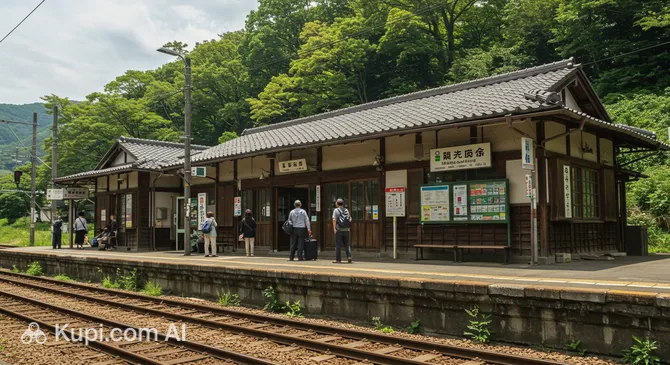
Chojaganaru Station. Illustration.
Source: Kupi.com AI

Traveler photos:

For tourists, Choja-ga-naru Station often provides the first impression of Matsuyama. While it is primarily a functional facility, the station acts as a convenient gateway to the city's many attractions and the surrounding area, making it easy to begin exploring local culture and history.

At the station, you will find everything you need for a comfortable trip. From here, you can easily reach famous Matsuyama sites, such as the renowned Matsuyama Castle or the historic Dogo Onsen. Thus, Choja-ga-naru Station plays a key role in the logistics of discovering this corner of Japan.

Contacts

For the latest information regarding Choja-ga-naru Station, such as train schedules, available services, and any operational changes, it is recommended to consult official sources. You can visit the websites of the railway companies serving Matsuyama, or use the information boards and services located directly at the station. Tourist information centers in the city can also provide useful details.

How to contactContact
AddressJapan, 〒790-0008 Ehime, Matsuyama, Marunouchi, 3-chōme−2−46 ロープウェイ・リフトのりば
Phone number+81 89-921-4873
Websitewww.matsuyamajo.jp

What to Do

At Choja-ga-naru Station, visitors can immerse themselves in the authentic atmosphere of the Japanese railway. Take some time to observe the seamless operation of the trains—their precise arrival and departure are a hallmark of Japan's transport system. This is a great chance to see how efficiently movement is organized and to feel the rhythm of daily life in Matsuyama by observing this busy hub.

Inside the station or in the surrounding area, you can often find small but interesting details. Keep an eye out for local shops or kiosks that sometimes sell regional snacks, drinks, or small souvenirs. Don't walk past the vending machines—their variety in Japan is amazing! Many stations also have cozy eateries or small cafes where you can grab a quick bite while watching passengers rush by or waiting for your train.

A visit to Choja-ga-naru Station is also a chance to observe the daily lives of the locals. Watch as students and office workers use the station, and families set off on short trips. Check out the information boards—they often feature not only schedules but also maps of the station's immediate surroundings or information about local events. It's a snapshot of Japanese reality available to every visitor.

Getting There

Getting to Choja-ga-naru Station, located in Matsuyama, is usually quite straightforward, as Japan's transport infrastructure is well-developed. Your choice of transport will depend on your starting point in the city and personal preferences.

One of the most convenient and budget-friendly ways to reach Choja-ga-naru Station is via Matsuyama's public transport. City bus routes likely serve the station or its immediate vicinity. Additionally, Matsuyama has a tram network with lines that may pass near the station. We recommend checking the latest route maps and schedules on the city's official transport portals or using mobile navigation apps to plan your journey.

If you prefer a faster and more comfortable option, especially if you have luggage or are traveling in a group, taxis are readily available. A taxi ride from downtown Matsuyama or your hotel to Choja-ga-naru Station shouldn't take long, though you should account for potential traffic. Also, if you are relatively close, a walk is a great way to get to know the city better.

Nearest city: Matsuyama

History & Facts

Choja-ga-naru Station, located in Matsuyama, Japan, is more than just another point on the railway map; its name carries interesting cultural and historical connotations. For a traveler seeking to understand the local character, such seemingly ordinary places can reveal much about the region.

One of the notable features often associated with stations named "Choja-ga-naru" in Japan is the meaning of the name itself. "Choja-ga-naru" (長者ヶ原) is often translated as "the wealthy man's plain" or "the elder's field." In Japanese culture, such names frequently indicate places that were historically associated with affluent families, influential figures, or held special community significance, perhaps as fertile lands or important meeting spots.

While the specific historical events directly linked to Choja-ga-naru Station in Matsuyama might be modest compared to major transport hubs, its existence and name are woven into the fabric of local life. Railway stations in Japan traditionally play a significant social role, serving not just as points of departure and arrival, but as hubs of activity around which daily life revolves.

For tourists interested in more than just major landmarks, Choja-ga-naru Station in Matsuyama offers a small glimpse into the authentic atmosphere of Japanese cities. Its name serves as a reminder of how deeply history and local lore can be integrated even into modern infrastructure, adding another layer to your exploration of Japan.

Time Needed

When planning a visit to Choja-ga-naru Station in Matsuyama, it’s important to remember that it is primarily a functional transport facility. If you are using the station for a transfer or as your starting/ending point, your time here will be determined by the schedule and navigation. However, if you want to set aside time specifically to look around the station, you will need a different timeframe.

To comfortably explore the architecture of Choja-ga-naru Station, observe its daily life, and perhaps grab a coffee or browse local shops (if available), most visitors will need about 30 minutes to 1 hour. This is usually enough time to get a feel for the station's layout and atmosphere and take some souvenir photos without feeling rushed.

If Choja-ga-naru Station is a large transport complex with numerous shops and restaurants, or features special exhibitions or art installations, a more detailed exploration could take longer, perhaps up to 1.5-2 hours. However, for most tourists considering the station as a brief stop, one hour is typically sufficient to satisfy their curiosity.

Working Hours

The exact working hours of Choja-ga-naru Station can vary, so it is recommended to check the current schedule on the official website or at local information centers before your trip. Generally, railway stations in Japan open early in the morning and close late at night to accommodate the first and last trains. However, the hours for ticket counters or tourist information points at the station may differ from the station's overall operating hours.

For travel from Choja-ga-naru Station, tickets can usually be purchased at ticket windows or vending machines right before departure. For popular routes or during peak seasons, it may be wise to buy tickets in advance, especially if you plan to travel on express trains or those requiring seat reservations. Stations in Japan operate year-round, but train schedules may change depending on the season or public holidays.

8:30 – 17:00

Nearby

When you find yourself at a transport hub like Choja-ga-naru Station, don't miss the chance to explore the surrounding area. Often, real gems are hidden within walking distance, making your trip even more rewarding and allowing you to dive deeper into the atmosphere of Matsuyama.

Exploring the neighborhood around Choja-ga-naru Station will help you better understand the character of Matsuyama and discover interesting spots that might otherwise go unnoticed. It’s a wonderful opportunity to complement your experience and gain a fuller picture of Japan's cultural and historical heritage. Below is a list of some nearby attractions.

NameDistance
Bansuiso Villa0.2 km
Matsuyama Castle0.3 km
Matsuyama Castle Keep0.3 km
Saka no Ue no Kumo Museum0.3 km
Motoyama0.3 km
Birthplace of the Akiyama Brothers0.4 km
Kuramotoya Ehime Sake Bar0.5 km

Have you reached the end of the page?

So the route has been studied inside and out