Support

Miyoshi

About

Miyoshi is a true gem of Shikoku Island, nestled among the picturesque mountain ranges and lush forests of Tokushima Prefecture. This city, home to about 63,000 people, is famous for its peaceful atmosphere and amazing harmony with nature. For travelers seeking to discover an authentic side of Asia, Japan appears here in all its provincial beauty, far from the hustle and bustle of major metropolises.
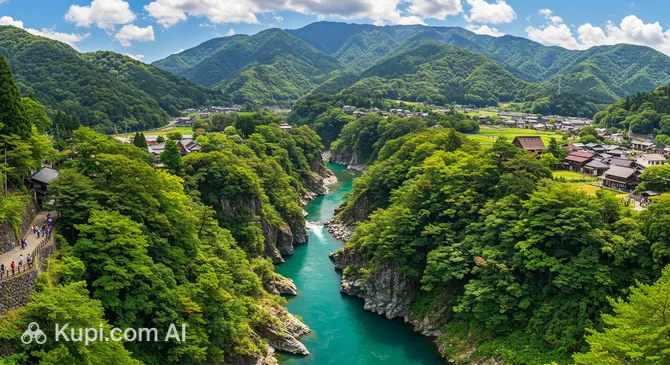
Miyoshi. Illustration.
Source: Kupi.com AI

The city stretches along the banks of the Yoshino River, which is considered one of the cleanest and most beautiful in the entire country. Its unique geographical location makes Miyoshi an excellent starting point for exploring the region's natural wonders: from deep gorges to healing thermal springs. The rich history of Miyoshi and its cultural traditions are carefully preserved by local residents, creating a unique atmosphere where ancient customs are seamlessly interwoven with modern life.

The main draw of the region lies in its incredible landscapes and opportunities for a relaxing getaway. Guests come here to enjoy leisurely strolls through narrow streets, visit ancient temples, and see views that look as if they stepped out of classic woodblock prints. It is the perfect place to forget about time and completely immerse oneself in the contemplation of nature.

Miyoshi is worth visiting for the sense of seclusion and the chance to touch deep Japanese culture without the usual crowds of tourists. Whether it's relaxing by the river, hiking in the mountains, or walking through blooming gardens, this cozy corner will provide you with plenty of inspiration and warm memories.

Weather Overview

The climate in Miyoshi is characterized by distinct seasonality, allowing you to enjoy the beauty of Japanese nature year-round, though it does require proper trip preparation. Summer here is truly warm: in August, the average temperature is about 27.0°C, and on the hottest days, the air warms up to nearly 30°C. However, travelers should note that the summer months, especially July, are characterized by high humidity and frequent rainfall—with up to 19 rainy days a month.

The winter period brings a noticeable chill. In January and February, average temperatures stay around 4–5°C, and at night, the mercury can drop to 1.6°C. Spring and autumn are transitional and the most comfortable seasons: for example, in May and October, the air warms to a pleasant 17°C, creating ideal conditions for sightseeing.

Expect a warm summer with occasional rain and cool, relatively dry winters. To choose the best dates for your trip and prepare a suitable wardrobe, we recommend checking the detailed weather in Miyoshi before your departure.

Average monthly temperature

Average monthly precipitation

Interesting Facts

Beyond its well-known natural beauties, Miyoshi holds many fascinating stories and legends that reveal this corner of the world from an unexpected side. This city is capable of surprising even experienced travelers with its secrets rooted in deep antiquity.
  • Telling names of the gorge. The picturesque Oboke-Koboke Gorge bears a name that serves as a warning from the past. The names translate as "big danger (fear)" and "small danger," pointing to the steep and slippery rocks that were risky to traverse with both large and small steps before the advent of modern roads.

  • Bridges for retreat. The unique vine bridges "Iya Kazurabashi" are not just an engineering marvel but a strategic military trick. According to legend, they were built by fleeing warriors and clan members so that in the event of a pursuit, they could cut the vines with a single sword stroke, destroying the crossing and stopping their pursuers.

  • Living traditions of craftsmen. Miyoshi remains one of the few places where the art of creating traditional Japanese paper lanterns and kites is carefully preserved. Local masters make them by hand using ancient techniques, and the culmination of this labor is the colorful festivals that paint the sky over the city.

  • The Spirit of the Samurai. The city's history is closely intertwined with the Sengoku period ("Warring States period"). In the vicinity of Miyoshi, ancient temples and shrines connected with powerful samurai clans still stand, where authentic rituals, unchanged for centuries, are still performed today.

How to Get There

When planning a trip to this picturesque corner of Tokushima Prefecture, it's worth thinking through the logistics in advance, as the city is located in a mountainous area deep on Shikoku Island. You can learn more about how to get to Miyoshi by considering all available options, but most often tourists choose a combined route: a flight to one of the regional airports followed by a trip on ground transport.

The most convenient and closest option for arrival is Takamatsu Airport (TAK). Please note that this aviation hub is not in Miyoshi itself, but in the city of Takamatsu, at a distance of approximately 28.4 km. It is an important transport hub for the region with high passenger traffic. The journey from here to central Miyoshi by taxi or bus will take about 1 hour, making it a priority choice for many travelers.

Another popular way is to use flights arriving at Tokushima Awaodori Airport (TKS). It is located in Tokushima City, approximately 74.7 km from Miyoshi. Although the distance is greater, a car trip via the expressway will take approximately 1 hour 15 minutes to 1 hour 30 minutes. This airport is also large and offers many connecting flights, which is convenient if you plan to visit the prefecture's capital as well.

For clarity, here is a summary of the main airports located relatively close to the city:

AirportPassenger trafficDistance
Takamatsu Airport2.5 mln28 km
Kochi Ryoma Airport1.6 mln55 km
Tokushima Awaodori Airport2.3 mln75 km
Okayama Airport1.4 mln81 km
Hiroshima Airport2.7 mln94 km

Regarding rail connections, a train journey is one of the most scenic ways to reach Miyoshi. Shikoku's railways run through beautiful gorges and along rivers, turning the transfer into a real excursion. We recommend checking the schedules of local expresses and regional trains that connect the city with major transport hubs in neighboring prefectures.

Main Attractions

Attractions:

Miyoshi is, first and foremost, a gateway to the wild and mysterious nature of Shikoku Island. The main points of interest here are connected to impressive mountain landscapes and ancient history that is literally etched into these rocks. A journey through the local attractions will give you a rare sense of discovery, as many of these places were hidden from prying eyes for centuries.

The absolute symbol of the region is Iya no Kazurabashi—a legendary suspension bridge made of mountain vines. Stretching 45 meters over a rushing river, it gives tourists an unforgettable dose of adrenaline: the distance between the wooden slats underfoot is large enough to see the water far below. This is not just a crossing, but a living historical monument recognized as an important cultural property of the country. Walking across it is a chance to test yourself and touch the legends of the Taira clan, who sought refuge here.

For a more contemplative experience, the Oboke Gorge is ideal. The best way to appreciate its grandeur is to take a sightseeing boat tour. A calm float along the emerald waters of the Yoshino River allows a close-up look at the whimsical rock formations that have been shaped over millions of years. Guides often say that the scenery here is especially beautiful in autumn, when the mountain slopes are painted in fiery red and gold tones, creating a stunning contrast with the turquoise water.

Ethnography and architecture enthusiasts should visit Ochiai Village. This settlement, located on a steep mountainside, is listed as an Important Preservation District for Groups of Traditional Buildings. Here you can see classic Japanese houses with thatched roofs, some of which date back to the Edo period. Walking along the village's winding paths allows you to see how people lived in harmony with the harsh mountain nature for centuries and enjoy panoramic views of the valley.

Among the most unusual and photographed spots is the statue of the Peeing Boy in the Iya Valley. Unlike his Brussels "colleague," this boy stands on the edge of a sheer cliff at a dizzying height. The monument was erected as a reminder of the bravery of local children and travelers who once tested their courage by standing on the edge of the abyss. Today, it is a popular observation deck offering some of the most breathtaking views of the river bends and forest-covered mountains.

Local Cuisine

The cuisine of Miyoshi is a true feast for gourmets, inextricably linked with the generous nature of Shikoku Island. The city's gastronomic map has been shaped over centuries by the purest rivers and fertile mountain soils. Here, food is not just about satisfying hunger, but a way to feel in harmony with the surrounding world, which is why this region is especially valued by lovers of organic products in Japan.

The main delicacy that every traveler must try is the river fish ayu. It is caught in the crystal waters of the Yoshino River and prepared using an ancient method—over charcoal, seasoned only with a light sprinkling of salt. Ayu is particularly delicious in the summer season: the fish has tender, sweetish meat and a unique aroma. It is best to taste it in specialized riverside restaurants or at local festivals.

Another pride of the region is buckwheat soba noodles. Unlike urban variations, local soba is often thicker and shorter, with a rich buckwheat flavor. It is served in a hot aromatic broth with the addition of seasonal mountain vegetables and wild herbs. The most authentic dishes can be found in small family establishments where the hostesses prepare the noodles by hand using recipes passed down through generations.

The food culture in Miyoshi is closely linked to seasonality. At farmers' markets, locals and tourists buy the freshest gifts of the forest: mushrooms, mountain herbs, and natural honey. These are great places to try homemade pickles and traditional Japanese sweets, which make a wonderful accompaniment to tea or a gastronomic souvenir.

Among drinks, local sake holds a special place. Thanks to high-quality rice and spring water, the rice wine here is surprisingly smooth. The city regularly hosts gastronomic festivals where you can not only sample different varieties of this drink but also find the perfect traditional snacks to go with it, immersing yourself in the atmosphere of true Japanese hospitality.

Travel Tips

A trip to Miyoshi is an immersion into wild nature and ancient legends, so preparing for a journey to this secluded corner requires special attention. To ensure your introduction to mountainous Japan goes as comfortably as possible and without surprises, we've gathered the most important practical recommendations.

  1. Comfortable shoes are the top priority. If you plan to cross the famous Iya no Kazurabashi vine bridge, forget about heels or flip-flops. The distance between the bridge's slats is quite wide (about 10 cm), so you need well-fitting shoes, like sneakers, that won't slip off your foot. Also, bring a windbreaker or raincoat: the weather in the mountains is unpredictable even in summer.

  2. Transport strategy. While main stations can be reached by train, to fully explore the Iya Valley and Oboke Gorge, it is strongly recommended to rent a car. Buses run infrequently (sometimes only a few times a day), and trying to stick to their schedule can be exhausting. If you don't drive, consider hiring a tourist taxi for a half-day.

  3. Cash (Yen). Miyoshi is rural Japan, where the culture of cashless payment is not as developed as in Tokyo. In small souvenir shops, local takeaway joints (noodle shops), and for entrance fees to some natural sites, only cash is accepted. Withdraw enough yen in advance, as ATMs may only be available in convenience stores (konbini) in the city center, but not in the mountains.

  4. Preparing for winding roads. The roads around Miyoshi, especially those leading deep into the Iya Valley, are very narrow and winding. If you get motion sickness, be sure to bring appropriate medication. Also, during the summer, it's a good idea to have insect repellent with you for forest walks.

  5. Connectivity and navigation. In deep gorges, mobile signal may drop out. Download offline maps of the area in advance and install a translation app (like Google Translate), as few people here speak English. For a stable connection, it's better to rent a portable Wi-Fi router at your arrival airport.

  6. Dining schedule. Keep in mind that restaurants and cafes in Miyoshi, especially outside the central part, close quite early—often around 17:00–18:00. If you haven't booked dinner at your hotel or ryokan, take care of food in advance so you don't go hungry in the evening.

  7. What to avoid: dangerous behavior on bridges. It is strictly not recommended to intentionally sway the vine suspension bridges. This not only scares other tourists but can also be unsafe given the construction and height. Also, avoid walking along the edges of cliffs for the sake of dramatic selfies—fencing is not everywhere.

  8. Onsen etiquette. Miyoshi is famous for its hot springs. Remember the golden rule: before soaking in a communal bath, you must wash thoroughly in the shower area. If you have tattoos, check with the hotel in advance if access to the public area is permitted, or book a private bath.

Following these simple rules will help you avoid minor inconveniences and focus entirely on contemplating the majestic landscapes of Miyoshi. Be prepared for a slow pace of life and enjoy every moment in this amazing land of mists and mountains.

Entertainment & Nightlife

Nightlife in Miyoshi isn't about noisy clubs with neon signs and dancing until dawn, but about soulfulness, comfort, and authentic Japanese hospitality. Since Miyoshi is a city surrounded by mountains and gorges, evening entertainment is intimate in nature. The hub for those who want to spend an evening with a glass of something and a delicious dinner is the area around Awa-Ikeda station. This is where, in a labyrinth of narrow streets and a covered shopping arcade, most of the local establishments are concentrated.

The atmosphere in Miyoshi's bars and restaurants is incredibly warm and "homely." The main crowd consists of local residents relaxing after work and the occasional tourist who has made it to the heart of Shikoku. There is no dress code here: people come to establishments in whatever they wore for hiking in the mountains or working in the office. Most places open around 18:00 and stay open until midnight, though some bars may welcome guests longer.

If you want to feel like part of the local community, be sure to drop by an izakaya (Japanese gastropub). It is customary here to order many small dishes "for the table"—from yakitori to the freshest fish—and accompany them with sake or beer. Especially popular are the so-called "snack bars"—small establishments with karaoke where you can sing your favorite songs in the company of locals. This is a unique cultural experience that allows you to see non-tourist Japan.

Although the choice of venues is not as large as in megacities, Miyoshi has several places worth noting:

  • Kakashi — a cozy izakaya just a couple of minutes' walk from Awa-Ikeda station. This place is famous for its relaxed atmosphere and delicious dishes made from local products, especially chicken skewers. The interior is simple but perfect for long conversations over clinking glasses.

  • Bar g — a stylish bar that makes for a great end to the evening. Here you will be offered a decent selection of cocktails and whiskey. The establishment stands out with its more modern setting and is suitable for those who want to simply enjoy a quality drink in a quiet atmosphere.

  • Heso Salon — a popular hybrid space that combines a cafe, guesthouse, and bar. In the evening, it often draws young people and travelers from all over the world, creating a lively and friendly environment for socializing.

Miyoshi is an exceptionally safe city, and night walks here carry no risks. However, keep logistics in mind: public transport stops running early. If your hotel is in the Iya Valley or far from the station, book a taxi in advance through the venue's staff, as catching a car on the street at night is almost impossible. The average bill in local bars is quite reasonable—around 3,000–4,000 yen for dinner with drinks.

During the day, the city offers more peaceful types of leisure. History buffs should visit the Awa-Ikeda Tobacco Museum, which tells the story of the region's industrial past, or stroll through historical quarters with preserved traditional houses. And for those seeking inspiration, the best "theater" will be the observation decks with views of the Oboke and Koboke gorges, which are especially beautiful in the rays of the setting sun.

Parks & Museums

Unlike megacities with their man-made parks, Miyoshi offers travelers something different—here, parks seamlessly flow into protected forests, and museums tell living legends of spirits and samurai rather than dry history. The cultural and natural heritage of this region is inextricably linked with the mysticism and majesty of the mountains, creating a unique space for exploration.

For lovers of panoramic views and active recreation, Mount Tsurugi is the main point of attraction. This is the second-highest peak on Shikoku Island and is part of a quasi-national park. The site is revered as sacred, and climbing to the summit is considered a spiritual practice. Tourists have access to convenient chairlifts and hiking trails passing through alpine meadows, which are covered with a carpet of rare flowers in summer. From the top, a breathtaking view of the "sea of clouds" enveloping neighboring ridges opens up.

If you are looking for a place for a peaceful stroll, check out Kenmi Park. Located on a hill, it serves as a magnificent observation deck overlooking the city and the Yoshino River. In spring, this park is transformed, becoming one of the best places in the region for cherry blossom viewing. Picnic areas and playgrounds are equipped here, making it ideal for family outdoor recreation.

The cultural program should start with the unique Yokai Museum (Lapis Oboke). Miyoshi is called the birthplace of Japanese legends about spirits and monsters, and this museum is dedicated specifically to them. The exhibition introduces visitors to local folklore through interactive installations and figures of mythical creatures. This place will be interesting not only for children but also for adults who want to understand the mystical side of Japanese culture and learn why local gorges inspired awe in travelers for centuries.

You can immerse yourself in the history of the samurai era at the Heike Folklore Museum (Heike Yashiki). This is a preserved old mansion turned into a museum, where artifacts, documents, and everyday items of the legendary Taira (Heike) clan are exhibited. According to legend, the remnants of the defeated clan hid in these mountains, and the museum carefully preserves the atmosphere of that era. Visitors can see ancient armor and tools, feeling the spirit of a secretive life in the wilderness.

Insider tip: If you find yourself in the Yamashiro area, pay attention to the small stone statues along the roads and paths. Locals say that it was these places and their legends that inspired the creators of many characters in modern anime about spirits, and a walk here turns into a real quest to find mythological prototypes.

Getting Around

Public transport in Miyoshi has its own characteristics typical of remote mountainous areas. There is no metro or tram system, and the primary links are JR rail lines and local bus routes. The main transport hub is Awa-Ikeda station, where trains arrive and from where most buses depart for tourist locations.

The railway (Dosan line) is convenient for moving between key points in the region, such as from the city center to Oboke station. However, for trips deep into the famous Iya Valley, you will need to use buses from the Shikoku Kotsu company. An interesting feature of the local transport system is the famous retro bus (Bonnet Bus). This vintage vehicle runs along the most scenic routes of the valley and is considered an attraction in itself, immersing passengers in the atmosphere of the mid-20th century.

The fare payment system here differs from that in the capital and requires attention. In local buses and at small stations, popular transport IC cards (Suica, Pasmo) are often not accepted. Payment is made primarily in cash. When entering the bus through the rear door, you must take a paper ticket with a number, and when exiting, pay the amount displayed on the board next to the driver by dropping the money and the ticket into the machine. The machine can also change a 1,000 yen note into coins, but it's better to change large bills in advance.

Tourists should consider that transport intervals can be very long. Buses to remote areas often run only a few times a day, and the last trips leave quite early—around 17:00–18:00. It is strongly recommended to photograph the schedule at stops in advance or check it at the tourist center at Awa-Ikeda station to avoid being stranded in the mountains overnight.

Given the sparse bus schedule, the best alternative for a comfortable trip is car rental. Rental points are located in the immediate vicinity of the train station. This will give you complete freedom of movement. Taxis are also available at stations, but long-distance trips along the winding mountain roads can be expensive. For short trips around the city center, you can use bicycle rentals, but keep the mountainous terrain in mind.

Accommodation

The choice of accommodation in Miyoshi directly depends on the goals of your trip: whether you are looking for a convenient base for active exploration or dream of complete seclusion in the mountains. The city offers an interesting range of options—from functional business hotels to luxurious traditional inns with hot springs that are attractions in their own right.

From a logistics standpoint, the most convenient area is around Awa-Ikeda railway station. Small hotels and guesthouses offering budget-friendly overnight stays are concentrated here. By staying here, you will be within walking distance of transport hubs, supermarkets, and those cozy izakayas where the city's evening life thrives. It is an ideal choice for those planning to use public transport and wake up early for excursions.

However, if you want to feel the true spirit of this region, it's worth heading deep into the Iya Valley or the Oboke Gorge area. This is where the famous ryokans—traditional Japanese inns—are located. Staying in such a place is a unique experience: tatami mats on the floor, open-air thermal water baths (onsens), and stunning views of misty mountains right from your room window. Especially popular are the restored old houses with thatched roofs ("kominka"), which can be rented in their entirety. This allows you to live as local residents did centuries ago, but with modern comfort.

Booking tip: Accommodation in the Iya Valley is in high demand, especially during "Golden Week" (May) and the red maple season (November). It is recommended to plan your trip and book rooms in popular ryokans 3–4 months in advance. Also, pay attention to the meal options: in secluded mountain hotels, there may be no restaurants or shops nearby, so it is highly recommended to book a stay with "half-board" (kaiseki dinner and breakfast) to enjoy exquisite local cuisine without leaving the hotel.

Prices in Miyoshi range from budget (about 5,000–8,000 yen per night in simple hotels near the station) to high (from 20,000 to 50,000 yen and up per person in luxury ryokans with meals). Booking is available through major international online platforms, though renting unique historical houses sometimes requires visiting specialized Japanese sites or the help of travel agents.

Nearby Cities

For those who want to explore the surrounding area, Miyoshi serves as an excellent starting point for day trips to several interesting nearby locations, allowing a deeper immersion into the culture of Shikoku Island.

One of the most popular destinations is Takamatsu, located on the coast of the Seto Inland Sea. This city is famous for the magnificent Ritsurin Garden, which is considered one of the masterpieces of Japanese landscape design, and is also known as the "udon kingdom"—some of the best noodles in the country are prepared here.

History buffs should head to Kochi, home to one of Japan's twelve remaining original castles. The city has a unique southern atmosphere, and its Sunday street market, which has existed for over 300 years, offers tourists fresh produce and local delicacies.

Also worth noting is the city of Marugame. Its main attraction is Marugame Castle, standing on impressive stone walls and offering panoramic views of the city and the sea. This is a great place for those who appreciate architecture and beautiful scenery.

CityPopulationDistance
Higashimiyoshi13 77612 km
Kanonji56 63918 km
Mitoyo61 83819 km
Manno17 32419 km
Zentsuji31 62023 km

These nearby destinations provide insight into the diverse culture and landscapes of the region, from coastal shores to historic castle towns.

Shopping & Souvenirs

Shopping in Miyoshi is radically different from what major megacities offer. Here you won't find multi-story department stores with global clothing brands; however, the city gives you a unique opportunity to purchase authentic goods that cannot be found in other regions. Trade here is geared toward tourists looking for local delicacies, traditional crafts, and souvenirs that reflect the rich culture and nature of Shikoku Island.

The heart of city commerce can be called the area around Awa-Ikeda railway station. The Ikeda Ginza Shopping Street is located here. This is a colorful covered arcade with a retro atmosphere, where small family-run shops that have existed for generations operate. A stroll here allows you to plunge into the nostalgic atmosphere of the Showa period and buy everyday goods, sweets, or local alcohol.

For tourists, the most convenient and interesting place for shopping is the RiverStation West-West commercial complex. Located in a picturesque spot by the river, it brings together several shops, including a large Montbell outdoor gear outlet, a souvenir shop, and a convenience store. If you need groceries or household items, visit the Frespo Awa Ikeda shopping center, which has a supermarket and a pharmacy.

A vital role in the region's shopping scene is played by "Michi-no-Eki"—roadside stations that function as markets and tourist centers. Especially noteworthy is the Michi-no-Eki Oboke station. It features a huge selection of local products, as well as a shop dedicated to the theme of yokai (Japanese spirits), where you can buy fun themed items. Another popular spot is Michi-no-Eki Nishi-Iya, located near the vine bridge, which sells fresh mountain vegetables, tea, and local craftsmen's products.

As souvenirs from Miyoshi, it is definitely worth bringing back the famous Iya soba (buckwheat noodles)—they are sold dried in beautiful packaging. The region is also famous for products made from the sudachi citrus: sauces, jams, and juices. For connoisseurs of alcohol, we recommend looking at local sake from the Miyoshikiku or Haga breweries, which is highly valued for its smooth taste. Fans of the mystical will appreciate yokai figurines and masks, which will serve as an original reminder of the legends of the Iya Valley.

Most shops, especially souvenir stands at attractions, are open from 9:00 to 17:00 or 18:00. Convenience stores (konbini) are only found in the central part of the city and major tourist hubs. Regarding payment, in rural Japan remains a country of cash. While large centers like RiverStation West-West accept cards, in small shops and markets you will definitely need cash yen.

The tax-free system is poorly developed in Miyoshi. The service may be available in large chain stores for outdoor equipment or major souvenir centers if they have the appropriate sign, but you shouldn't count on it everywhere. To process a refund, you must have your passport with you.

Reached the end of the page?

That means the route is fully explored