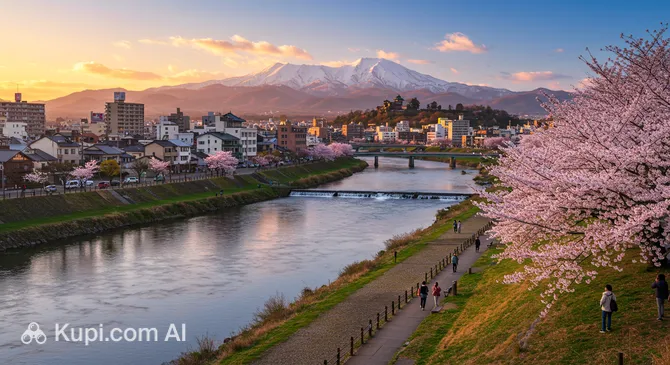
Located in the heart of Iwate Prefecture, Morioka is a striking blend of historical dignity and cozy provincial charm. Nestled in a picturesque valley at the confluence of three rivers under the shadow of the majestic Mount Iwate, this city has long remained a hidden gem of northern Japan. With a population of about 290,000, Morioka maintains a leisurely pace of life, offering guests an authentic Japanese experience without the hustle and bustle of megacities.
Founded as a castle town of the Nambu clan, this regional center is famous for its rich heritage, which is evident in the carefully preserved traditions of cast iron making and a unique gastronomic culture. In 2023, the New York Times included Morioka on its list of the most interesting places to visit, praising its calm atmosphere, historical parks, and exquisite crafts.
Morioka. Illustration.
Source: Kupi.com AI
Today, travelers are drawn here not only by the ruins of the ancient castle and historic temples but also by the opportunity to touch living art — from the famous Nanbu Tekki iron kettles to participating in massive drumming festivals. Morioka is a city for those who appreciate the aesthetics of everyday life, the skill of artisans, and the heartfelt hospitality of the north.
Weather Overview
The climate of Morioka is typical for the northern part of Honshu Island, characterized by distinct seasonality. Winters here are cold and often snowy: in January, the average temperature drops to -4.7°C, and night frosts can reach -8°C and lower. Heavy snowfalls turn the city into a fairytale space, but require travelers to have warm and waterproof clothing.
Summer in Morioka is much milder and fresher than in central Japan, making the city an excellent refuge from the exhausting Tokyo heat. The warmest months are July and August, with average daytime temperatures around +25°C. Precipitation is distributed fairly evenly throughout the year, although July is often the wettest month due to the rainy season. The city's weather in spring and autumn is perfect for long walks when the air is clear and nature is painted in the bright colors of cherry blossoms or autumn maples.
Average monthly temperature
Average monthly precipitation
Interesting Facts
Morioka is a city capable of surprising even the most seasoned traveler with its records and unique traditions. Here are some curious facts about this northern center:
Guinness World Record: The annual Sansa Odori summer festival is officially recognized as the largest taiko drum parade in the world — involving more than 10,000 people simultaneously.
Noodle Capital: The city is famous for its "Three Great Noodles" (Morioka Reimen, Morioka Jajamen, and Wanko Soba). The tradition of eating Wanko Soba has been turned into a real competition of speed and endurance.
World-Class Recognition: In 2023, the authoritative New York Times placed Morioka at a prestigious 2nd place on its list of 52 places in the world worth visiting, second only to London.
City of Iron: This is where the art of Nanbu Tekki originated — the production of famous Japanese cast iron kettles, valued worldwide for their durability and aesthetics.
Rock-Splitting Tree: One of the attractions is the "Rock-Splitting Cherry Tree" (Ishiwari-zakura), which is over 360 years old. It grows directly out of a crack in a huge granite boulder in front of the courthouse.
How to Get There
Thanks to its location on northern Honshu's main transport artery, Morioka boasts excellent accessibility. Most travelers arrive here by high-speed trains, making the city a convenient base for exploring the entire Tohoku region. Getting to the city from the capital takes just a few hours, while enjoying views of Japanese mountains and forests from the window of a comfortable express train.
Although Morioka itself does not have its own airport, the nearest air hub is Iwate-Hanamaki Airport (HNA). It handles regular domestic flights from cities such as Osaka, Sapporo, and Fukuoka. The journey from the airport to the city center by a special shuttle bus takes about 40–50 minutes. Many tourists also fly into Tokyo (Narita or Haneda airports) and transfer to a train.
The central Morioka Station is the main hub where the Tohoku and Akita Shinkansen lines intersect. A trip on the "Hayabusa" super-express from Tokyo takes approximately 2 hours and 10 minutes. The station is excellently equipped: it has a tourist information center, many souvenir shops, and restaurants where you can try the famous local noodles immediately upon arrival.
Station
Passenger traffic
Distance
Hanamaki Station
12
34 km
Miyako Station
8
68 km
Ōdate Station
9
83 km
Akita Station
15
88 km
Shichinohe-Towada Station
10
113 km
Main Attractions
One of the city's most iconic sites is Morioka Castle Site Park. Although the buildings themselves were dismantled in the 19th century, the surviving massive granite walls and well-maintained paths create a unique atmosphere. It is a favorite spot for walks, especially transforming during the cherry blossom season and autumn foliage, offering panoramic views of the surroundings.
For those seeking spiritual peace, the Hoon-ji Temple (500 Arhats) is a must-visit. It is famous for its unique collection of 499 wooden statues of Buddha's followers, created over 200 years ago. It is said that among the many faces with different expressions, every visitor can find one that reminds them of a loved one.
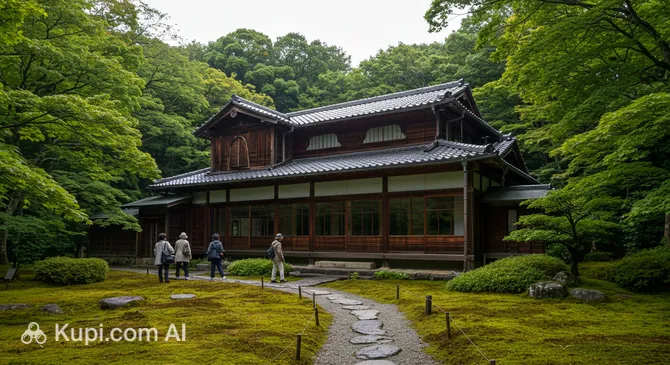
Another architectural treasure is the traditional Nansoso villa, built at the end of the 19th century. This house, with its magnificent Japanese garden, allows you to feel the refinement of daily life from a bygone era.
Nanshōsō. Illustration.
Source: Kupi.com AI
Traveler photos:
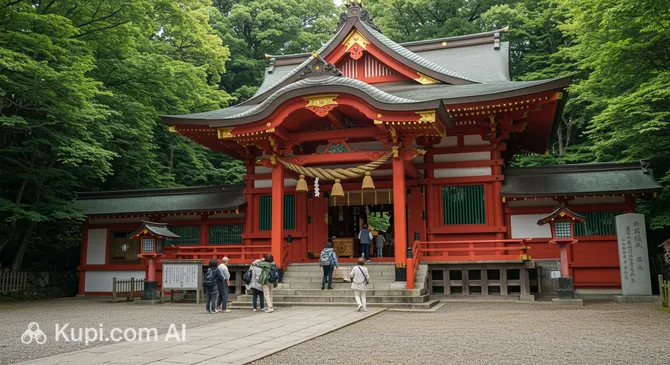
Equally impressive is the majestic Morioka Hachiman-gu Shrine. This is the city's central Shinto shrine, striking with its vibrant architecture and festive atmosphere. Major city rituals and festivals are held here, and the shrine grounds are filled with small altars, each serving its own purpose.
Morioka Hachimangu Shrine. Illustration.
Source: Kupi.com AI
Traveler photos:
Local Cuisine
A gastronomic journey to Morioka is impossible to imagine without getting to know its legendary "three types of noodles." First on this list is Wanko Soba — it is not just food, but a whole performance where servers dish out tiny portions of buckwheat noodles one after another until you close your bowl with a lid. Equally popular are Jajamen — noodles with a thick sauce made of black soybeans and meat, and Reimen — cold, chewy noodles in a spicy broth, which originated in Korean cuisine and was adapted to Japanese tastes.
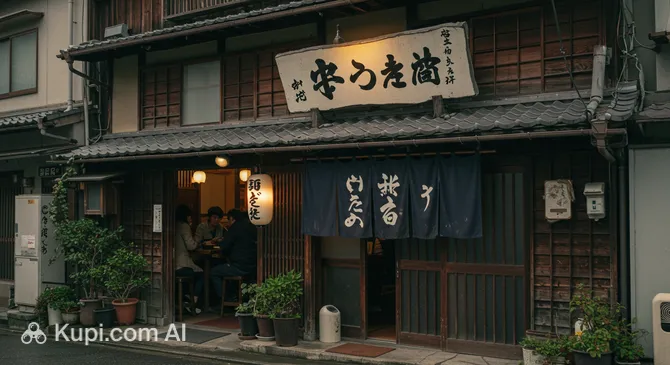
To experience the traditional cuisine of the Tohoku region in a cozy setting, it's worth visiting Momodori Ekimae Shokudo. This establishment is famous for its poultry dishes and homey atmosphere. If you want something more familiar but with local flavor, stop by Hamburger Restaurant Bell — an original spot that has become part of the city's culinary history.
Momodori Ekimae Shokudo. Illustration.
Source: Kupi.com AI
Traveler photos:
The city's food culture is closely tied to seasonality and farm products. Local residents are proud of the quality of meat and vegetables from surrounding farms, such as the famous Koiwai Farm. In the evening, the streets come alive thanks to numerous izakayas, where local sake or craft beer is served with traditional snacks that highlight the authentic character of northern cuisine.
Travel Tips
A visit to Morioka will give you many pleasant impressions if you consider a few practical nuances of life in northern Japan beforehand. These tips will help you feel confident and enjoy every moment of your trip.
Clothing and Seasonality: In summer, it is comfortable and not as hot as in Tokyo, but winters can be very snowy and frosty. Be sure to bring warm clothes and shoes with non-slip soles if you plan a visit from December to March.
Transport Cards: Use a Suica or Pasmo card to pay for buses and local trains. This will significantly simplify travel by eliminating the need to look for change.
Cash: Despite being high-tech, small craft shops and traditional "three noodle" restaurants often accept only cash. Always keep a supply of yen with you.
Language Barrier: English is less common in Morioka than in the capital. Download an offline translator in advance and have hotel addresses in Japanese with you.
Restaurant Etiquette: In establishments serving Wanko Soba, the eating process is a ritual. Don't hesitate to follow the staff's cues and remember that a closed bowl lid means the end of the meal.
Tipping Culture: As everywhere in Japan, tipping is not customary. The best thanks for service is a polite bow and the phrase "arigato gozaimasu."
Safety: The city is exceptionally safe, but when walking along rivers and in parks in the evening, be mindful of signs — nature is very close by here.
Connectivity: Wi-Fi is available in hotels and at the station, but for navigation, it's better to purchase a local SIM card or rent a pocket router at the arrival airport.
Morioka is a place where traditions live in harmony with modernity. Be open to new experiences, and this northern city will respond to you with sincere warmth and hospitality.
Entertainment & Nightlife
The entertainment scene in Morioka is characterized by a cozy and welcoming atmosphere, where the emphasis is on quality relaxation with friends and exploring local traditions. The main event of the year is the grand Sansa Odori festival, which takes place in early August. This vibrant parade featuring thousands of taiko drummers turns the city streets into a continuous festive stage and provides unforgettable emotions for all spectators.
Nightlife is concentrated in the central districts, where many small bars and izakayas are located. If you are looking for a place with an excellent selection of drinks and a relaxed atmosphere, check out Aeron Standard. This modern establishment is popular with both locals and visitors thanks to its stylish interior and quality service. Another notable spot is the Sundance bar, where you can spend an evening in a laid-back environment.
For daytime leisure lovers, the city offers walks along the picturesque Nakatsu and Kitakami riverfronts, visits to theaters, or workshops on traditional crafts. Safety in the city is at a very high level, so even late-night walks through central Morioka will be comfortable. For night-time travel, you can easily use taxis, which wait at the station and in busy spots around the city.
Parks & Museums
The main natural oasis in the city center is Morioka Castle Site Park. This multi-level space, built on the site of an old fortress, attracts visitors with its majestic stone walls and quiet paths. The park serves as the cultural heart of the city: in spring it is submerged in pink clouds of cherry blossoms, and in autumn it is painted in the blazing red and gold tones of momiji maples.
For family vacations and lovers of unusual experiences, the Ricky Owl Cafe is an interesting spot where you can get a closer look at these amazing birds in a comfortable environment. The city also takes pride in its museums dedicated to traditional crafts. Galleries showcasing the art of Nanbu Tekki deserve special attention — here you can not only see rare examples of cast iron products but also learn about the centuries-old technology of their creation.
History and architecture enthusiasts will find it interesting to visit the area adjacent to the Nakatsu River, where old merchant houses and early 20th-century buildings, such as the Bank of Iwate, have been preserved. These sites function as living museums, maintaining the atmosphere of the Meiji and Taisho eras. The combination of green zones and cultural spaces makes Morioka an ideal place for a leisurely and educational holiday.
Getting Around
Public transport in Morioka is organized with Japanese precision and convenience, making it easy to navigate even for first-time visitors. The main hub is Morioka Station, from which key routes diverge. The central part of the city is quite compact, so many attractions, such as the castle ruins or old temples, are within walking distance of each other.
For longer distances, it is most convenient to use the bus network. The "Denden-mushi" loop bus is particularly popular with tourists, running a circular route through all major cultural and shopping points in the center. The fare is fixed and very affordable, and tickets can be paid for with cash upon exiting or with transport cards (such as Suica or Pasmo), which are valid throughout Japan.
Taxis are available everywhere in Morioka; they are easy to find at special stands near the station or to hail with a wave of the hand. This is a reliable, though more expensive, way to get around, especially convenient in the evening. In the warmer months, bike rental becomes a great alternative: the city government supports bicycle rental initiatives, allowing you to explore the riverfronts and quiet residential neighborhoods at your own pace.
Accommodation
A wide range of accommodation options focused primarily on comfort and functionality is available for guests of Morioka. Most hotels are concentrated in two key areas: right by the railway station and in the historical Morioka Castle Site Park area. The station area is ideal for those planning day trips around the prefecture, while the neighborhoods near the park allow for a deeper immersion into the atmosphere of the old castle town.
Modern business hotels form the core of the accommodation stock, offering compact but perfectly clean rooms with all necessary amenities at quite reasonable prices. For those looking for a more traditional Japanese experience, small ryokans — traditional inns where guests are offered relaxation on tatami mats and homemade breakfasts made from local products — can be found on the outskirts and in the historical part of the city.
If your trip coincides with the cherry blossom period in April or the Sansa Odori festival in early August, it is highly recommended to book accommodation several months in advance, as the city attracts a huge number of domestic tourists. At other times of the year, finding a suitable option will not be difficult. The average budget for staying in a quality mid-range hotel in Morioka is usually lower than in Tokyo or Kyoto, making the city attractive for longer stays.
Nearby Cities
Due to its location in the center of Iwate Prefecture, Morioka serves as an excellent starting point for exploring northern Japan. A well-developed railway network makes it easy to plan day trips to neighboring cities, each possessing its own unique character and history.
Just a few minutes away is the city of Takizawa, known for its picturesque views of Mount Iwate and the Chagu Chagu Umakko horse festival. Also worth noting is Shizukuishi — this destination is perfect for nature lovers, hot springs (onsens), and active winter recreation. For those interested in history, a trip to Hiraizumi (located a bit further but easily accessible), which is home to UNESCO temples, is a must.
If you want to feel the atmosphere of larger centers, a high-speed train will take you to Sendai in an hour. Nevertheless, it is the small towns like Yahaba or Hachimantai that allow you to see the real, non-touristic Japan and enjoy the beauty of northern landscapes. The surroundings of Morioka are a land of mountains, clean rivers, and sincere hospitality.
Shopping & Souvenirs
Shopping in Morioka is primarily an opportunity to purchase unique folk craft products for which northern Japan is famous. The city's main treasures are Nanbu Tekki cast iron kettles and cookware. These items are distinguished not only by their exquisite design but also by their incredible durability; they are considered the perfect souvenir that will last for decades. The best specialty shops and workshops can be found in the historical center and near the castle park.
For those who prefer modern retail spaces, the main point of attraction is the Fesan complex, integrated into the Morioka Station building. It houses many clothing and cosmetics stores and a huge department of local delicacies where you can buy famous noodles in gift packaging, sweets made from Iwate Prefecture apples, and local sake. Another popular shopping district stretches from the station toward the center along Odori Street, where modern boutiques sit alongside small traditional shops.
Shops in the city usually operate from 10:00 to 20:00, while large shopping centers may close slightly later. International credit cards are accepted in most places, but cash may be required in small souvenir shops or at markets. A Tax Free service for foreign tourists is available in major department stores, making shopping even more pleasant. Don't forget to also look for local Joji-nuri lacquerware, which will be an elegant addition to any interior.