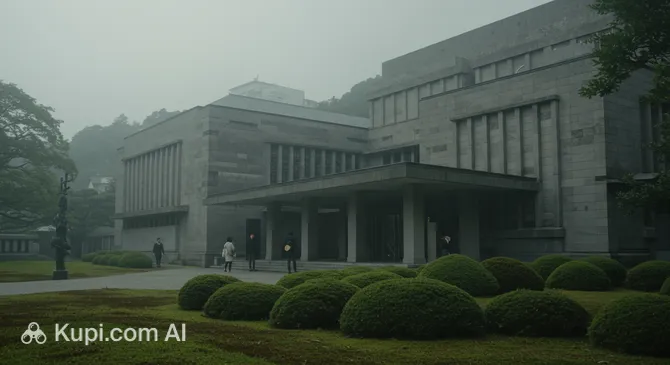
On Nishizaka Hill in the city of Nagasaki lies one of the most significant historical sites in Japan — the Twenty-Six Martyrs Museum and Monument. This memorial complex was built in 1962 to commemorate the centenary of the canonization of the saints who were executed here at the end of the 16th century.
Twenty-Six Martyrs Museum and Monument. Illustration.
Source: Kupi.com AI
Traveler photos:
The site is steeped in an atmosphere of deep faith and resilience. The museum, established by the Society of Jesus, carefully preserves the memory of early Christianity in Japanese lands. The park's main centerpiece is a large-scale bronze bas-relief, which took sculptor Yasutake Funakoshi four years to complete.
The interior of the museum resembles a quiet temple with bright stained-glass windows, making the exploration of the exhibits a peaceful and reflective process. The hill offers picturesque views of the modern city, creating a striking contrast between the dramatic past and the peaceful present.
Contacts
If you need to clarify visit details or ask the staff a question, you can use the official communication channels. Below is the up-to-date contact information for planning your route.
Visiting the complex offers a unique opportunity to explore the hidden chapters of history. Inside the museum halls, you will see original letters by Francis Xavier, as well as rare artifacts: rosaries, paintings, and documents from the time when Christianity was prohibited. Special attention should be given to the "fumi-e" — copper plates with images of saints that were used to test the faith of local residents.
It is fascinating to observe the statues of the Virgin Mary disguised as Buddhist deities, such as Kannon. It was before these figures that "hidden Christians" performed their rites to avoid persecution. Don't miss the magnificent frescoes by the artist Luca Hasegawa and the amulets that reflect a unique blend of two different cultural traditions.
In the outdoor area of the park, take note of the Martyrs' Altar. A plum blossom is depicted in its center — this symbol was chosen because the plum tree blooms in February, the month of the saints' martyrdom. Also, look for the red line on the square, which points exactly in the direction of the famous Oura Cathedral.
Getting There
The attraction is located in the very heart of the city, making it very easy to reach. Nishizaka Hill is just a five-minute walk from the central Nagasaki Station. The path goes slightly uphill, but the climb is not too steep and is accessible to most travelers.
If you prefer more comfort, you can take a taxi from anywhere in the city center. For those traveling by rental car, there is a small parking lot with 10 spaces at Nishizaka Park. It is a quiet area that is easy to reach on foot by following the city signs to the memorial.
Nearest city: Nagasaki
History & Facts
The history of this site dates back to the mid-16th century, when the Jesuit missionary Francis Xavier arrived on the islands to preach Christianity. The new religion quickly gained followers, but soon the ruler Toyotomi Hideyoshi saw the missionaries as a threat and imposed a strict ban on their activities.
The tragic climax occurred on February 5, 1597. Twenty-six Christians, including both Japanese citizens and foreign priests, were arrested and brought to Nagasaki for a public execution. Their journey took them through the snow, and the crucifixion on the hill was intended to intimidate the local population. According to legend, Saint Paul Miki continued to preach to the crowd even from his cross.
Following this event, the country entered a three-century period of severe persecution. Freedom of religion in the region was only officially recognized with the adoption of the Constitution of Japan in 1889. Today, the complex serves not only as a reminder of past suffering but also as a symbol of reconciliation and spiritual resilience.
Time Needed
To leisurely explore all the museum halls, study the details of the monument, and enjoy the panorama from the park, it is recommended to set aside 1.5 to 2 hours. This is sufficient time for a thoughtful viewing of the exhibition and immersion in the historical context.
If you plan to study every archival document in detail or spend a long time observing the architectural features of the complex, your visit may take a bit longer. In any case, this site deserves to be visited without haste to fully experience the special atmosphere of the hill.
Working Hours
The museum doors are open to visitors daily. The schedule is very convenient for travelers: from 9:00 AM to 5:00 PM, seven days a week. This makes it easy to fit a visit to the memorial into your walk through the historical quarters.
Please note that the ticket office closes shortly before the official end of the working day. It is recommended to arrive at least 45 minutes before closing to have enough time to view the main part of the collection at a relaxed pace and without rushing.
9:00 – 17:00
Nearby
Exploring the surroundings of Nishizaka Hill can significantly enrich your travel experience. Nagasaki is a city with a multifaceted destiny, where architectural monuments and iconic historical locations are found at every turn.
Many interesting sites are within walking distance or just a few transport stops away, allowing you to create a rich itinerary for the whole day. Consider visiting the following nearby attractions: