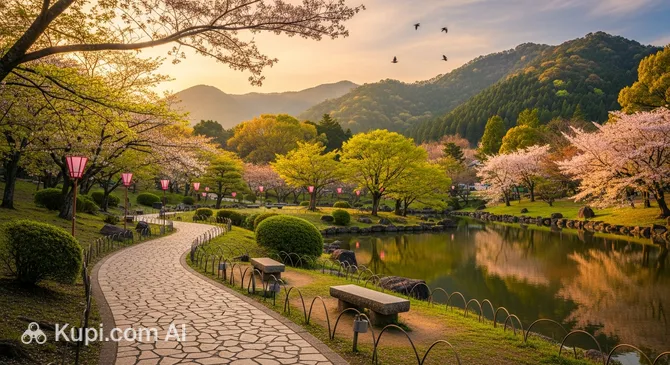
In the picturesque city of Masuda lies the wonderful Manyo Park—a place where nature meets high poetry. This cultural and landscape site is dedicated to the legendary Nara-period poet, Kakinomoto no Hitomaro, who is often called the "God of Poetry." Japan carefully preserves his memory, and this park is a vital link in maintaining the heritage of the "Man'yoshu"—the oldest anthology of Japanese poems.
Manyo Park. Illustration.
Source: Kupi.com AI
Traveler photos:
Located in the delta of the Takatsu and Masuda rivers, the park offers visitors not only aesthetic pleasure but also an immersion into the history of the Iwami region. Here, classic elements of a Japanese garden are combined with educational exhibits telling the story of Hitomaro's life and work, whose poems were inspired by these very coastal landscapes.
Thanks to its location near the Sea of Japan, the park features fertile soil and lush greenery. It is an ideal space for meditative walks and quiet relaxation. A rating of 4.2 confirms that both locals and tourists value this place for its harmonious atmosphere and deep connection to the country's cultural roots.
Contacts
To clarify travel details or plan a group visit, you can use the park administration's contact information.
The main activity in the park is, of course, taking leisurely strolls. Well-maintained paths lead past information boards where you can discover excerpts from the Man'yoshu anthology and learn interesting facts about poet Hitomaro's connection to this region. Many visitors come here to read the original poems in the very setting that gave birth to them.
For family recreation, the park offers spacious lawns perfect for picnics. It is an excellent place to observe the changing seasons: in summer, the park is bathed in vibrant greenery, and in autumn, it is painted in warm crimson tones. Scenic river views and the proximity of the sea create wonderful conditions for landscape photography.
A visit to Manyo Park often becomes part of a broader cultural route through the city. From here, it is convenient to head to the famous Sesshu Toyo gardens at the Iko-ji and Mampuku-ji temples. Such a combination allows you to see the best examples of Japanese garden art and touch the country's literary history in a single day.
Getting There
This scenic park is located in the Takatsucho district. The city's main transport hub is Masuda Station (JR West). From the station, you can reach the park entrance in 10–15 minutes by taxi or local bus. If you prefer active recreation, you can reach the site by rental bicycle while enjoying views of the coastal city.
Travelers from other regions will find it convenient to arrive by car. The journey from Hiroshima or Yamaguchi Prefecture takes approximately 2–3 hours via expressways. Navigator coordinates: 34.679295, 131.814065. On-site parking is provided for visitors.
For those who appreciate the aesthetics of old Japan, a trip from the neighboring towns of Tsuwano or Hagi is an excellent option. You can use regular buses or, during certain seasons, the famous SL Yamaguchi-go steam train to turn your journey into a true historical adventure.
Nearest city: Masuda
History & Facts
The history of this place is inextricably linked with the name of Kakinomoto no Hitomaro, the greatest 7th-century poet, revered in Japan as the "God of Poetry." Many of his works were included in the "Man'yoshu"—the oldest and most respected anthology of Japanese poetry. It is believed that the nature of these very lands inspired the master to create masterpieces that have become classics of national literature.
The city of Masuda itself has for centuries been an important cultural and political center of the Iwami region. It developed around Nanao Castle, which belonged to the influential Masuda clan. In the 15th century, the city became a sanctuary for artists, including the legendary monk-painter Sesshu Toyo. His presence here cemented the region's status as a place where spiritual practices and fine arts flourish.
The creation of the park was a tribute to this rich heritage. It serves as a kind of sanctuary where the atmosphere of the Manyo era is preserved. Walking here, visitors come into contact with centuries of history, where the knightly valor of local rulers and the delicate lyrics of ancient poets are harmoniously intertwined.
Time Needed
To stroll leisurely along the paths and soak up the poetic atmosphere of the park, most travelers need about 1–2 hours. This is plenty of time to explore the information boards dedicated to ancient poetry and enjoy the landscape design.
If you plan to have a picnic on one of the green lawns or intend to do some photography during the "golden hour," it is worth setting aside half a day. The quiet setting of the park encourages long, contemplative relaxation away from the hustle and bustle of major tourist routes.
Working Hours
Manyo Park warmly welcomes guests 24 hours a day, 7 days a week. You can plan your visit for any convenient time, whether it's early morning to catch the sunrise or a quiet evening hour.
Nevertheless, it is recommended to check the official website before your trip to ensure there are no special events or temporary restrictions related to grounds maintenance.
Open 24 hours
Nearby
The area surrounding the park holds many interesting sites that will help you feel the atmosphere of Shimane Prefecture more deeply. A stroll through these historical landmarks will complement your visit to the home of poetry.