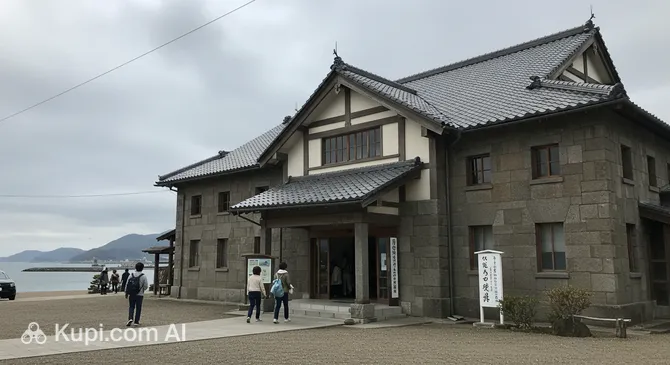
Located on a picturesque peninsula in the cozy city of Amakusa is a unique historical site — the Amakusa Christian Museum. This museum complex is dedicated to one of the most dramatic and fascinating chapters in the history of Japan — the era of the "Hidden Christians" (Kakure Kirishitan), who secretly maintained their faith for centuries despite strict prohibitions.
Amakusa Christian Museum. Illustration.
Source: Kupi.com AI
Traveler photos:
The museum's collection includes rare artifacts: hidden crosses skillfully disguised as statues of Buddhist deities, handwritten prayer books, and icons created in a traditional Japanese style. Here you can see not only religious items but also archaeological finds from caves where underground rituals were held, as well as valuable antique ceramics and elegant stained glass illustrating the believers' path to light.
The museum complex consists of four exhibition halls, a reconstructed Edo-period village, and a memorial chapel. The museum's observation deck offers a serene view of the bay, creating an atmosphere of peace and resilience of spirit. This place is a must-visit for those who want to touch a living heritage and understand the complex cultural code of the region.
Contacts
To confirm current information about special exhibitions or holiday events, you can contact the museum administration directly.
The main reason to visit the museum is the opportunity to see the world through the eyes of the "Hidden Christians." You will be able to examine everyday objects in detail with symbols of faith hidden inside, as well as the famous "mirror crosses." Of particular interest is the large-scale mural depicting the final battle of the Shimabara Rebellion and the personal belongings of the legendary leader Amakusa Shirō.
In addition to touring the indoor halls, be sure to take a walk through the reconstructed Edo-period village. Here, the environment in which locals lived and worked centuries ago has been recreated. This is an excellent opportunity to take atmospheric photos and literally feel the breath of history.
It is recommended to conclude your visit by visiting the Martyrs' Chapel and relaxing on the observation deck. The panoramic view of Amakusa Bay will provide a beautiful backdrop for reflection. For a deeper immersion into the context of the exhibition, we suggest using the audio guide, which tells the story and significance of each relic in detail.
Getting There
The museum is located at: 19-52 Funenoomachi, Amakusa, Kumamoto 863-0017. There are several ways to reach this cultural center depending on your starting point. If you are coming from Kumamoto city, the most convenient way is to take the JR line train to Misumi station (approx. 2 hours), and then transfer to a bus heading to the Amakusa Kirishitan Museum stop (another 20–30 minutes).
For those who prefer more freedom of movement, a rental car is an excellent option. The Amakusa Islands are famous for their picturesque views, and driving will allow you to enjoy the panoramas of the Unzen-Amakusa National Park. Convenient parking for visitors is provided on the museum grounds.
You can also reach the islands by ferry from mainland Kyushu. Within the city of Amakusa, taxis are available to quickly take you from the central areas or the pier directly to the museum doors.
Nearest city: Amakusa
History & Facts
The history of Christianity in this region began in the 16th century with the arrival of the legendary missionary Francis Xavier. Amakusa quickly became an important center for cultural exchange with Europe, where Japanese traditions and the Western influence of the "Nanban" style intertwined harmoniously.
However, the situation changed dramatically in 1614 when the Tokugawa Shogunate imposed a strict ban on the Christian faith. This led to the emergence of the unique phenomenon of "Kakure Kirishitan" — hidden Christians who secretly performed rituals in caves and ravines for decades, disguising their faith under Buddhist canons.
A special place in history is occupied by the Shimabara-Amakusa Rebellion (1637–1638), led by the young Amakusa Shirō. The memory of these events is carefully preserved within the walls of the museum, which opened in 1966. One of the most precious exhibits is the personal battle flag of Amakusa Shirō, officially recognized as a National Treasure of Japan. Over decades of operation, the museum has welcomed more than 4 million guests from all over the world.
Time Needed
To leisurely explore all four exhibition halls, walk through the reconstructed Edo-period village, and visit the chapel, it usually takes about 1.5–2 hours. This is enough time to thoughtfully study the most significant artifacts and enjoy the atmosphere of the site.
If you plan to spend time on the observation deck admiring Amakusa Bay or wish to study the exposition in detail using the audio guide, it is worth setting aside half a day for the visit. The museum encourages quiet contemplation and reflection, so it is best not to plan a rushed visit.
Working Hours
The museum welcomes visitors according to the following schedule: Monday from 09:00 to 17:00, and Wednesday to Sunday from 09:00 to 17:00. Please note that Tuesday is a day off. Opening hours may change during public holidays.
As seasonal changes or temporary hall closures for exhibition updates are possible, visitors are advised to check the official website of the museum or confirm information by phone before their trip.
Day
Working hours
Monday
09:00–17:00
Tuesday
Закрыто
Wednesday
09:00–17:00
Thursday
09:00–17:00
Friday
09:00–17:00
Saturday
09:00–17:00
Sunday
09:00–17:00
Nearby
A visit to the museum can be complemented by a walk through its surroundings, where many traces of the region's rich past remain. Exploring monuments and historical ruins will help you feel the atmosphere of old Japan more deeply and understand the scale of the events that took place on these lands centuries ago.