Support

Grand Toit

Nearby attractions

About

Imagine a place where traditional Japanese aesthetics meet avant-garde architecture under one giant roof. This is exactly what Grand Toit looks like—a unique cultural complex located in the city of Masuda, Japan. Its name, which means "Great Roof" in French, perfectly reflects the scale and significance of this site for Shimane Prefecture.
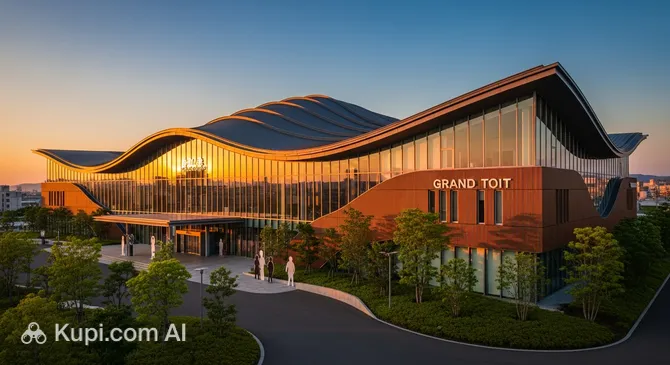
Grand Toit
Grand Toit. Иллюстрация. Источник: Kupi.com AI

This complex, officially known as the Shimane Arts Center, opened in 2005 and combined two key cultural institutions under its roof: the Iwami Art Museum and the Iwami Theater. The main architectural feature of the building, designed by Hiroshi Naito, is its cladding. Approximately 280,000 Sekisyu-kawara tiles—the region's traditional red ceramics—cover the walls and roof, creating a "chameleon" effect: depending on the lighting, the facade changes color from warm orange to deep emerald.

Inside Grand Toit, life pulses: here you can see masterpieces of world design and fashion alongside works by local artists inspired by the region's rich heritage. The complex's vast area (over 19,000 sq. m) and interactive features, such as the Orochi granite monument, turn an ordinary museum visit into an exciting journey into the world of Japanese art and tradition.

Contacts

To plan your visit to this cultural center, it is helpful to have current contact information on hand. You can always check the schedule of current exhibitions or book tickets for theatrical performances by phone or on the official website.

How to contactContact
Address5-15 Ariakechō, Masuda, Shimane 698-0022, Япония
Phone+81 856-31-1860
Websitewww.grandtoit.jp

What to Do

A visit to Grand Toit offers guests a rich cultural program. First and foremost, it is worth stopping by the Iwami Art Museum. It features an impressive collection dedicated to the history of fashion: from vintage dresses by world-renowned designers to rare magazines and photographs. In addition, the museum often hosts large-scale temporary exhibitions covering various styles—from classical painting to contemporary Japanese art.

The theatrical part of the complex deserves special attention. The Large Hall, with a seating capacity of 1,500, is the largest stage in the prefecture. Here you can see musicals, classical music concerts, and contemporary theatrical productions. If you are lucky enough to catch a chamber performance in the Small Hall, you will be able to fully appreciate the exceptional acoustics created by leading experts.

Be sure to set aside time for a walk around the building itself. This meditative activity allows you to see how glints of light play on the famous Sekisyu-kawara tiles. Don't forget to find the Orochi monument—a granite sculpture of a serpent with interactive elements that double as benches. It is a great place to rest for a bit and take atmospheric photos against the backdrop of one of the most beautiful architectural sites in modern Japan.

Getting There

The Grand Toit cultural complex is located at 5-15 Ariakechō in the city of Masuda. The site is quite easy to find as it is the architectural landmark of the area. If you are arriving in the city by train, a walk from Masuda railway station will take about 15–20 minutes, allowing you to get a feel for the atmosphere of this cozy Japanese town along the way.

For those traveling from larger hubs, a trip from Hiroshima is a convenient option. The journey by bus or car via the expressway takes approximately 2 hours. You can also use the JR Sanyo Line for rail connections to other prefectures. From Hiroshima Airport, the drive by car is also about two hours.

Within the city of Masuda itself, it is convenient to get around by local buses or taxis, which can be found directly at the station. For those who prefer private transport, there is a spacious parking lot on the complex grounds. When planning your route, we recommend using navigation apps to check the latest public transport schedules.

Ближайший город: Masuda

History & Facts

The history of Grand Toit is closely linked to the desire of the residents of Shimane Prefecture to create a unique space that would unite museum and theatrical arts. Construction work began in November 2002, and the grand opening of the complex took place on October 8, 2005. Since then, the center has become a true source of pride for the entire Iwami region.

The architectural design, created by the outstanding master Hiroshi Naito, received wide recognition in professional circles. The building has been honored with many prestigious awards, including the 48th BCS Award (2007) and the Shimane Landscape Design Grand Prix. These achievements highlight how harmoniously the modern building has integrated into the traditional Japanese landscape.

The use of Sekisyu-kawara tiles is of particular significance in the design. For centuries, these tiles have been a symbol of the Iwami region's prosperity due to their durability and characteristic reddish hue. At Grand Toit, this tradition received a new interpretation, blending the aesthetics of the past with the functionality of the future.

Another interesting element is the Orochi granite monument. It is dedicated to the mythical eight-headed serpent, a central character in the local Iwami Kagura ritual dances. The sculpture symbolizes creative energy which, like the ancient deity, inspires the contemporary artists and performers appearing within the complex walls.

Time Needed

To leisurely explore the architecture and main exhibitions of Grand Toit, most visitors need about 2–3 hours. This time is quite sufficient to see the art museum and stroll through the courtyard, enjoying the play of light on the red tiles of the walls.

If you plan to visit a temporary exhibition or study the fashion collection at the Iwami Art Museum in detail, it is worth adding another hour to your visit. For those attending a theatrical performance or a concert in the Large Hall, the visit may last half a day or an entire evening, depending on the event program.

For photography and architecture enthusiasts, we recommend allowing extra time to view the building from the outside at different times of the day, as the Sekisyu-kawara tiles change color in a wonderful way depending on the angle of the sunlight.

Working Hours

The Grand Toit cultural center is open to visitors daily except for Tuesday, which is the official day off. The main working hours of the complex are from 09:00 to 22:00, allowing you to enjoy its architecture even in the evening when the spectacular lighting is turned on.

Please note that the opening hours for museum exhibitions and theater box offices may differ from the building's general schedule. To ensure your visit goes perfectly, we recommend checking the current schedule for specific events and exhibition halls on the complex's official website in advance.

DayWorking hours
понедельник09:00–22:00
вторникЗакрыто
среда09:00–22:00
четверг09:00–22:00
пятница09:00–22:00
суббота09:00–22:00
воскресенье09:00–22:00

Nearby

Exploring the surroundings of Grand Toit will allow you to dive deeper into the rich history and culture of the Iwami region. The city of Masuda hides many interesting places—from ancient castle ruins to quiet memorial sites.

Many of these attractions are within walking distance or a few minutes' drive, making them an excellent addition to a visit to the art museum and theater.

NameDistance
Iwami Art Museum0.1 km
Tagosaku1.2 km
Manyo Park3.2 km
Goto Shoten4.2 km

Reached the end of the page?

That means the route is fully explored