Support

Kurume Bird Center

About

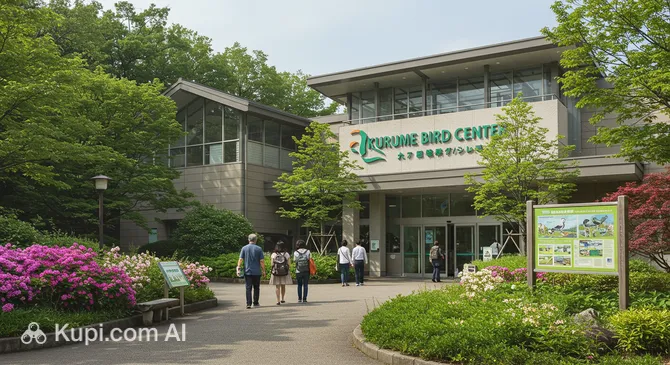
In the heart of Central Park in the city of Fukuoka, Japan, lies the Kurume Bird Center—a unique place where feathered inhabitants take center stage. This specialized zoo covers an area of about 30,000 square meters and is one of the few in the country dedicated primarily to ornithology.
Kurume Bird Center
Kurume Bird Center. Иллюстрация. Источник: Kupi.com AI

More than 420 individuals representing around 80 bird species have found a home here. Among the most striking residents are majestic Japanese cranes, pink flamingos, African penguins, and blue-winged kookaburras, which are rare for these latitudes. The center's special pride is its approximately 120 Indian peacocks, which are recognized as a national treasure in Japan.

In addition to birds, visitors can encounter charming mammals such as capybaras, wallabies, and squirrel monkeys. The center is fully accessible for travelers with reduced mobility and families with children, offering wheelchair rentals and special rest areas, making it an ideal spot for a peaceful and educational getaway in nature.

Contacts

To check for the latest event information or to plan a group visit, you can use the center's official communication channels.

How to contactContact
AddressJapan, 〒830-0003 Fukuoka, Kurume, Higashikushiharamachi, 1667 中央公園内
Phone+81 942-33-2895
Websitekurumekoen.org

What to Do

The main attraction at the center is bird watching in environments that closely mimic their natural habitats. You can see Indian peacocks roaming freely and proudly throughout the grounds. Under a massive central dome live flamingos and whooper swans, whose grace can be observed for hours.

For those who enjoy closer contact with nature, there is a petting zoo. Special feed dispensers are installed here, allowing you to feed the animals yourself under the supervision of staff. This always brings great joy to both children and adult visitors.

Family leisure is complemented by a small amusement park located next door. Children can ride the Ferris wheel or a bright carousel. If your visit falls during the hot period from mid-July to the end of August, be sure to stop by the municipal pool with its whirlpool to refresh yourself after your walk.

When planning your walk, remember that this is a corner of living nature—it is recommended to watch your step and be prepared for the specific scents typical of areas where birds gather. Don't forget to bring a camera: the exotic plumage of the local residents makes for excellent photography subjects.

Getting There

Reaching this scenic spot in Kurume is quite easy. If you are coming from Fukuoka, the most convenient way is by train: the trip to Nishitetsu Kurume station takes about 40 minutes. From the station, you can walk for 15–20 minutes while enjoying the city views, or take bus No. 23 to the "Seishonen Kagakukan Mae" (Youth Science Museum) stop, which is just a 5-minute walk from the entrance.

For those who prefer traveling by car, the route follows the Kyushu Expressway. Take the Kurume exit and head towards the city center. The facility provides a spacious parking lot with 200 spaces, making it convenient for those driving.

You can also easily reach the park by taxi from central Kurume—the ride is short and comfortable. The center's location within Central Park allows you to combine bird watching with a pleasant stroll through green alleys.

Ближайший город: Fukuoka

History & Facts

The city of Kurume, where the bird center is located, boasts a rich history. Established in its modern status in 1889, it served as an important strategic and economic hub for the region for a long time. It further confirmed its significance in 2008 by attaining the status of a core city of Japan.

Interestingly, these lands previously housed the administrative center of the Kurume Domain—the town of Mii. It was a prosperous domain with an impressive revenue of 210,000 koku of rice, which in feudal Japan was a sign of high status and wealth. The spirit of the past and the tradition of a careful attitude toward nature have been preserved here to this day.

The bird center itself became a continuation of these traditions, evolving into a modern space for biodiversity conservation. Special attention is given here to the Indian peacocks, which are considered a national treasure and have been delighting visitors with their beauty for many decades.

Time Needed

To leisurely walk around the main enclosures and observe the graceful flamingos and peacocks, you typically need about 1–2 hours. This time is quite sufficient to see the main inhabitants and visit the contact area.

If you are planning a trip with children, it is worth budgeting 2–3 hours for the visit. Extra time will be needed for resting at the playground and visiting the attractions in the adjacent amusement park. During the summer, a visit can stretch to half a day if you decide to cool off in the local municipal pool.

Working Hours

The Bird Center is open to visitors from Tuesday to Sunday from 9:00 AM to 5:00 PM. Monday is the traditional closing day. If Monday falls on a national holiday, the center closes on the following working day. Technical holidays are also scheduled during the New Year period from December 29 to January 1.

Please note seasonal changes: from mid-July through August, the pool on the grounds is open until 6:00 PM, and during this period, the center often operates without days off to accommodate everyone wishing to enjoy their summer break.

DayWorking hours
ПонедельникЗакрыто
Вторник9:00 – 17:00
Среда9:00 – 17:00
Четверг9:00 – 17:00
Пятница9:00 – 17:00
Суббота9:00 – 17:00
Воскресенье9:00 – 17:00

Nearby

Exploring the surrounding area after visiting the bird center will allow you to dive deeper into the atmosphere of the prefecture and find entertainment for every taste, from food markets to modern technology parks.

NameDistance
Kurume City Art Museum0.9 km
Nakatomi Memorial Medicine Museum8.8 km
Daikozenji Temple12.5 km
Yoshinogari Historical Park12.9 km
Tachiarai Peace Memorial Museum13.3 km
Yoshinogari Historical Park13.4 km
Kyushu National Museum22.1 km

Reached the end of the page?

That means the route is fully explored