Support

The Ken Domon Museum of Photography

About

Imagine a place where time stands still and the history of a whole nation comes to life. The Ken Domon Museum of Photography is a unique cultural space located in the picturesque city of Sakata. It made history as the first museum in a country like Japan to be entirely dedicated to the art of photography, and it remains the only museum in the world whose exhibition focuses on the work of a single master.
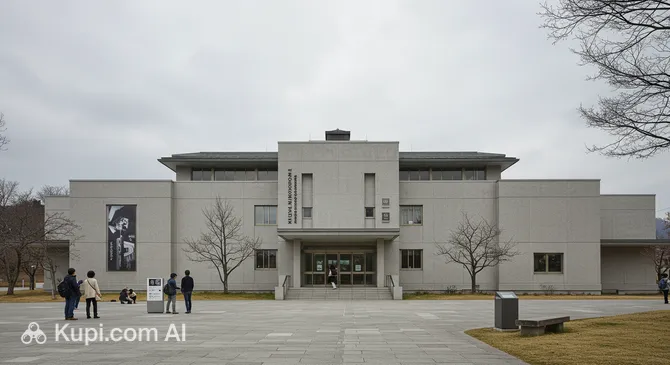
Ken Domon Museum of Photography
Ken Domon Museum of Photography. Иллюстрация. Источник: Kupi.com AI

The museum building, designed by the distinguished architect Yoshio Taniguchi, is a work of art in its own right. Located within the Iimoriyama forested park area, the museum complex harmonizes with the surrounding nature, offering visitors not only aesthetic pleasure from the photographs but also peaceful views of the lake. For its significance and flawless spatial organization, the museum was awarded two stars in the prestigious Michelin guide.

Inside, tens of thousands of works are preserved, covering Ken Domon's entire creative journey—from early reportage to monumental series dedicated to the Japanese cultural code. This is a must-visit spot for anyone who appreciates visual art and wants to see the authentic life of Japan through the lens of a legendary photographer.

Contacts

To confirm information about special exhibitions or to plan a group visit, you can use the official communication channels. The museum maintains an active online presence, providing detailed information on its website.

How to contactContact
Address2-chōme-13 Iimoriyama, Sakata, Yamagata 998-0055, Japan
Phone+81 234-31-0028
Websitewww.domonken-kinenkan.jp

What to Do

The main reason to visit the museum is the opportunity to see Domon's famous series of works that brought him international acclaim. A special place in the exhibition is held by frames from the cycle "A Pilgrimage to Ancient Temples", where the master captured the grandeur of Buddhist architecture and sculpture with incredible detail. Equally powerful are the works from the "Hiroshima" and "The Children of Chikuho" series, which strike viewers with their honest and humane perspective on post-war reality.

Visitors can trace how the photographer's style evolved, moving from dynamic photojournalism to deep artistic realism. Since the museum halls regularly feature a rotation of exhibits from a massive archive of 70,000 prints, every visit can reveal new facets of the master's work. In addition to the main hall, exhibitions of Ken Domon Award winners are often held here, allowing visitors to get acquainted with the works of talented contemporary photographers.

After immersing yourself in the world of photography, be sure to take a walk through the adjacent Iimoriyama Park. The museum's architecture is designed so that its windows offer meditative views, perfect for reflecting on what you have seen. This place is ideal for those seeking inspiration and wishing to understand the soul of Showa-era Japan.

Getting There

Reaching this cultural landmark is quite simple, despite its quiet park setting. If you are arriving from Tokyo, the fastest option is a flight with ANA from Haneda Airport to Shonai Airport (the flight takes about an hour). Regular buses run from the airport to the "Koeki Bunka Daigaku-mae" stop.

If you are traveling by rail, head for Sakata Station. From the station, you can reach the museum by city bus or taxi—the ride takes no more than 10–15 minutes. For those who prefer walking, the route from the city center is approximately 4 kilometers.

Travelers in rental cars will find it easy to locate using coordinates or the address: 2-13 Iimoriyama, Sakata. Parking for visitors is provided next to the building, making it a convenient stop on a driving tour of Yamagata Prefecture.

Ближайший город: Sakata

History & Facts

The history of this place is inextricably linked to the life of a great master. Ken Domon, born in Sakata in 1909, became one of his country's most influential photographers. In 1974, after becoming the first honorary citizen of his hometown, he donated his entire colossal legacy—approximately 70,000 negatives and prints—to Sakata.

In a gesture of gratitude, the city authorities decided to construct a specialized building. The museum, which opened on October 10, 1983, became Japan's first institution entirely dedicated to the art of photography and the only museum in the world to house the works of just one author.

The architectural appearance of the building deserves special mention. The project was designed by the renowned Yoshio Taniguchi, who managed to harmoniously integrate the museum's modern forms into the natural landscape of Iimoriyama Park. Since its opening, the museum has become not only a repository for Domon's work but also an important center where a prestigious award for contributions to photographic art is presented annually.

Time Needed

To leisurely browse the main exhibition and temporary displays, visitors usually need between 1.5 and 2 hours. The collection is extensive, and the photographs invite careful, thoughtful contemplation, as each of Ken Domon's works is filled with deep social and philosophical meaning.

If you are interested in architecture or plan to walk through the surrounding Iimoriyama Park, it is worth adding an extra 30–40 minutes to your schedule. This will allow you to enjoy the landscape design and take beautiful photos of the museum building itself from the pond side.

Working Hours

When planning your visit, please note that Monday is the museum's closing day. On all other days, the doors are open to all admirers of fine art.

Opening Hours:
• Tuesday — Sunday: 9:00 AM to 5:00 PM.
• Monday: Closed.

DayWorking hours
ПонедельникЗакрыто
Вторник9:00 – 17:00
Среда9:00 – 17:00
Четверг9:00 – 17:00
Пятница9:00 – 17:00
Суббота9:00 – 17:00
Воскресенье9:00 – 17:00

Nearby

A visit to the photography museum can easily be combined with exploring other attractions in Sakata. This port city is rich in historical locations that allow for a deeper immersion into the atmosphere of the Edo and Meiji periods.

NameDistance
Iimoriyama Park0.1 km
Sakata Museum of Art0.6 km
Sankyo Soko Rice Warehouses2.5 km
Komatsu Maguro2.7 km
Homma Residence3 km
Sanno Club3.1 km
Hiyoriyama Park3.1 km

Reached the end of the page?

That means the route is fully explored