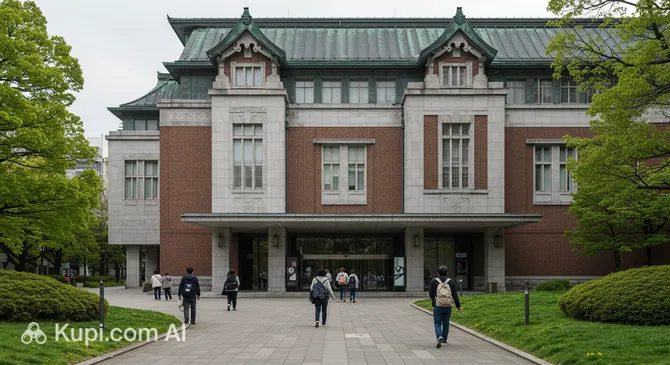
The Tokyo Metropolitan Art Museum is Japan's first public art museum, having opened its doors to visitors back in 1926. Located in the famous Ueno Park in the Taito district, it is one of the key cultural centers of Tokyo and the entire country. The museum is a large-scale institution where you can discover the rich heritage of Japanese art and works by international masters.
The museum's collections and exhibitions cover a wide range of styles—from classical calligraphy and sculpture to contemporary photography. It is an important exhibition space that regularly provides its galleries to various creative associations and art groups to showcase their work. In this way, the museum not only preserves masterpieces of the past but also actively participates in contemporary cultural life.
Tokyo Metropolitan Art Museum. Illustration.
Source: Kupi.com AI
Traveler photos:
In 2012, the museum reopened after a major renovation, gaining not only a refreshed look but also a new concept. It now positions itself as a "doorway to art" and a place for creative inspiration. The museum's management emphasizes that its main mission is to bring happiness to people through contact with beauty, making a visit not just educational, but a truly soul-stirring experience.
Contacts
To plan your visit, confirm opening hours, or learn about current exhibitions, it is recommended to consult official sources. The most up-to-date information is always available on the museum's website or by phone.
A visit to the Tokyo Metropolitan Art Museum is an immersion into the dynamic world of art. The museum is famous for its exhibition diversity, hosting about 300 different exhibitions annually. The displays cover a wide range of topics—from traditional Japanese art to works by foreign masters. A special feature of the museum is its sponsored projects, where you can see rare works from private collections that are usually hidden from the general public.
The museum actively develops educational and social initiatives, making art accessible to everyone. As part of the "Art as Communication" program, visitors are encouraged to look at creativity as a universal language that promotes mutual understanding. For young guests, a special program called "Museum Start Ueno" has been developed to support children in their artistic debuts. Additionally, the museum provides exhibition space for talented people with disabilities, hosting themed exhibitions with an important social focus.
For architecture enthusiasts, the museum offers something special—the "Architecture Tour." This tour is entirely dedicated to the museum building, designed by Kunio Maekawa, one of Japan's key modern architectural masters. Tour participants can study the architectural solutions in detail and understand the author's vision, viewing the building itself as one of the main exhibits. It is a wonderful opportunity to see how the museum's space complements the art presented within it.
Getting There
Getting to the Tokyo Metropolitan Art Museum is quite simple, as it is located in the famous Ueno Park—a major cultural and transport hub in Tokyo. The most convenient way is to use the Japanese capital's extensive public transport system. The museum is within walking distance of several train and subway stations, making it easily accessible from anywhere in the city.
The main landmark for visitors is Ueno Station. It is served by numerous lines, including the JR Yamanote loop line and the Ginza and Hibiya subway lines. From the "Park Gate" exit of JR Ueno Station, a stroll through the scenic park to the museum takes about 7 minutes. If you arrive by subway, the walk from Exit 7 is approximately 10 minutes. Keisei Ueno Station is also nearby, about a 10-minute walk away, which is particularly convenient for those arriving from Narita Airport.
For those who prefer a more comfortable way to travel, taxis are always available. This is a good option if you have a lot of luggage or are traveling with young children. However, it is worth noting that this will be significantly more expensive, and the museum itself does not have its own parking for visitors. Drivers are advised to use the paid parking lots located around Ueno Park.
Nearest city: Taito
History & Facts
The history of the Tokyo Metropolitan Art Museum began not with a government decree, but with a private initiative. Its creation was made possible by a generous donation from businessman Keitaro Sato. He dreamed of creating a cultural space in Japan accessible to all citizens, and it was his contribution that laid the foundation for the country's first public art museum. The original building, designed by architect Shinichiro Okada, was built in a style that combined Western and Japanese traditions and served as a symbol of a new cultural era for many years.
From its very inception, the museum took on a unique role—it became not just a repository for masterpieces, but the main exhibition platform for the entire art community. Dozens of creative associations and groups were given the opportunity to present their work to the general public. This feature turned the museum into a lively and dynamic center, reflecting current trends in art and fostering dialogue between artists and viewers. It was this function that largely determined its historical significance for Tokyo's cultural life.
The museum's architectural appearance also reflects its development. The building that served as a home for art for nearly half a century eventually gave way to a new complex. In 1975, a modern structure was erected, designed by Kunio Maekawa, a student of the legendary Le Corbusier. This step was more than just an update—it symbolized the museum's commitment to the spirit of the times and new requirements for exhibition spaces, solidifying its status as a leading cultural institution.
Time Needed
When planning a visit to the Tokyo Metropolitan Art Museum, you should allow 1-2 hours to explore the main exhibitions. This is usually enough time to get a general overview of the collections and view the most interesting works without rushing. The museum often hosts several exhibitions simultaneously, so the length of your visit may vary depending on their number and scale.
If you are deeply passionate about art or want to visit one of the large-scale special exhibitions that are the museum's hallmark, it is worth setting aside more time—up to 3-4 hours. These exhibitions often feature masterpieces from private collections and the world's leading museums, requiring a more thoughtful viewing. Additionally, consider time for visiting the museum shop and café to take a break and share your impressions. Since admission to the museum itself is free and fees are only charged for specific exhibitions, you can plan your itinerary flexibly.
Working Hours
The Tokyo Metropolitan Art Museum is open to visitors from 9:30 AM to 5:30 PM, with extended hours on Fridays until 8:00 PM, allowing you to enjoy art in the evening. The museum is closed on the first and third Monday of each month, so keep this schedule in mind when planning your visit. Additionally, ticket discounts are offered on certain days, such as Family Day and Senior Citizens' Day.
While advance booking is usually not required for entry to the museum itself, purchasing tickets in advance may be recommended or even mandatory for popular temporary exhibitions. To avoid queues and guarantee access, it is best to check the current requirements on the museum's official website. There, you can also find the most accurate information regarding holiday hours and any potential schedule changes.
Day
Opening hours
Monday
Closed
Tuesday
9:30 – 17:30
Wednesday
9:30 – 17:30
Thursday
9:30 – 17:30
Friday
9:30 – 17:30
Saturday
9:30 – 17:30
Sunday
9:30 – 17:30
Nearby
A visit to the Tokyo Metropolitan Art Museum is just the starting point for exploring the area's cultural wealth. Since the museum is located in the famous Ueno Park, its surroundings are already of great interest. A walk through the park after viewing the exhibitions allows you to enjoy nature, visit other museums, shrines, or even Japan's oldest zoo.
Stepping outside Ueno Park, you will find that the Taito district and adjacent parts of Tokyo are full of contrasts and interesting spots. Here, modern shopping centers stand alongside traditional markets, and fine restaurants sit next to cozy street cafes. Exploring the neighborhood will enrich your experience and provide a more complete picture of the Japanese capital's many facets.