Support

Manpuku-ji Temple

About

Manpuku-ji Temple (萬福寺) is an impressive Buddhist temple complex located in the city of Uji, Kyoto Prefecture, Japan. It serves as the head temple of the Japanese Obaku Zen school, one of the three main Zen schools in the country. This site is not just a religious center but also a unique cultural monument that attracts visitors with its originality.
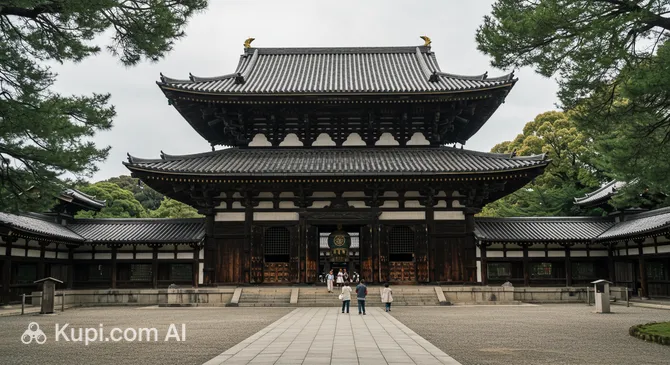
Manpuku-ji Temple. Illustration.
Source: Kupi.com AI

Traveler photos:

One of the main features of Manpuku-ji is its unique architectural style, which clearly demonstrates Chinese influence, particularly from the Ming era. This sets it apart significantly from most traditional Japanese temples, giving it a distinctive appearance and atmosphere. Visitors immediately sense this difference, immersing themselves in a completely different cultural space within the temple walls.

Interestingly, the layout of the temple grounds is designed in the symbolic shape of a dragon, and all its buildings are modeled after the Chinese Wanfu-si temple in Fujian Province. Manpuku-ji has a special atmosphere permeated with Chinese traditions: this is evident not only in the architecture but also in the rituals and ceremonies performed here, and even in the specific way the sutras are chanted. Visiting this temple is an exciting journey into history and culture, where Japanese and Chinese traditions are harmoniously intertwined.

Contacts

For the most up-to-date information on opening hours, ticket prices, or special events at Manpuku-ji Temple, we recommend checking the attraction's official website, if available, or visiting tourist information centers in the city of Uji. Usually, such significant cultural sites are easily accessible by public transport or taxi from the city center.

How to contactContact
AddressJapan, 〒611-0011 京都府宇治市五ケ庄三番割34
Phone number+81 774-32-3900
Websitewww.obakusan.or.jp

What to Do

A visit to Manpuku-ji Temple in Uji offers a unique experience of immersion in an atmosphere of Buddhism with a Chinese influence. While strolling through the picturesque temple grounds, visitors can enjoy its distinctive architecture in the Chinese Ming Dynasty style, which is a rarity for Japan. Particular attention is drawn to the Tenno-den Hall, which houses an impressive statue of the laughing Buddha—Hotei, one of the seven gods of luck—also atypical for Japanese temples.

One of the main highlights of Manpuku-ji is the opportunity to experience fucha ryori—refined Chinese-style vegetarian cuisine that originated right here. This is not just a meal, but a whole cultural tradition that allows for a deeper understanding of the temple's philosophy. Fucha dishes are prepared from seasonal vegetables and plant-based products, served in a specific sequence, and reflect the principles of harmony and simplicity.

Guests of the temple can also witness Buddhist services and rituals, which are held here regularly. A special feature of Manpuku-ji is the chanting of sutras in the specific manner characteristic of the Obaku school, adding authenticity to the experience. In addition to spiritual practices, you can find souvenir shops on the temple grounds selling traditional amulets and incense, as well as cozy teahouses where you can relax and enjoy a cup of Japanese tea.

Getting There

Getting to Manpuku-ji Temple, located in the picturesque city of Uji, is quite simple, especially if you are traveling from Kyoto or other nearby areas of Japan. The most convenient way is by train. The closest railway station to the temple is Obaku Station. Two major lines pass through this station: the JR Nara Line and the Keihan Uji Line, providing excellent connections to the region's main transportation hubs.

From Obaku Station to the entrance of the Manpuku-ji Temple grounds, it is a pleasant and short walk that takes about 5-10 minutes. The path is well-marked, and you will easily find your way. Additionally, the temple can be reached by bus or taxi from both central Uji and directly from Kyoto, if you prefer a more direct route from your accommodation.

For those planning to travel by car, there is visitor parking available near Manpuku-ji Temple, making this a very convenient option as well. The temple grounds and approaches are well-equipped with signs in Japanese and English, so navigating the area is straightforward. Regardless of your chosen mode of transport, the journey to this peaceful place promises to be comfortable.

Nearest city: Uji

History & Facts

Manpuku-ji Temple in Uji is more than just a Buddhist temple; it is a true island of Chinese culture in Japan. Its history dates back to 1661, when it was founded by the eminent Chinese monk Ingen Ryuki (also known as Yinyuan Longqi) along with his devoted disciple Muyan. Ingen arrived in Japan at the beginning of the Edo period, bringing the rich traditions of his homeland with him, which made Manpuku-ji a unique site.

What sets Manpuku-ji apart is its deep connection to the Obaku school of Zen Buddhism, a branch of Chinese origin. Master Ingen not only oversaw the construction of the temple in the Ming Dynasty style but also introduced rituals characteristic of Chinese Buddhism, culinary traditions (including the famous "fucha ryori" vegetarian cuisine), and a specific style of sutra chanting. This made the temple a center for spreading Chinese Buddhist culture in Japan at that time.

Even the temple's name and location carry the imprint of its Chinese heritage. "Manpuku-ji" was named after the famous Chinese temple Wanfu-si on Mount Huangbo in Fujian Province, where Ingen originated. The hill on which the Japanese temple was built was named Obaku-san (the Japanese reading of Huangbo-shan) in honor of Huangbo Xiyun, a great master of Chan Buddhism and the teacher of the Rinzai school's founder. This highlights the continuity and respect for the origins of the teachings.

Interestingly, for a long time, the temple's leadership remained in the hands of monks from China. The first fourteen abbots of Manpuku-ji were Chinese, which helped preserve authentic traditions and practices. It was only from the fifteenth abbot onward that this honorary role passed to the Japanese, but the Chinese influence has forever remained an integral part of the identity of this remarkable temple.

Time Needed

To fully enjoy a visit to Manpuku-ji Temple in Uji, it is recommended to set aside approximately 1.5–2 hours. This time is usually sufficient to see the main attractions of the temple complex and soak in its special atmosphere, based on general visitor recommendations.

During this period, you will be able to explore the temple grounds, visit the main halls and pavilions, and learn about the cultural characteristics of this unique site. This timeframe allows you to immerse yourself in the study of Manpuku-ji Temple without rushing and appreciate its architectural and historical details.

Of course, if you wish to pay more attention to the details, enjoy the tranquility, or delve deeper into the temple's history, your stay may last longer. However, for a general overview and a memorable experience, one and a half to two hours will be quite enough to get a sense of this significant site.

Working Hours

Manpuku-ji Temple in the city of Uji is happy to welcome guests daily. The temple doors are open to visitors from 9:00 AM to 4:30 PM. This allows visitors plenty of time to enjoy the atmosphere and beauty of this unique place.

Although no specific information is provided regarding the need for advance ticket booking or tour registration, it is always recommended to check the latest details on the temple's official website or at local tourist information centers before visiting. This will help avoid any surprises and allow you to plan your visit in the best possible way, especially if you are traveling during peak tourist seasons.

9:00 – 16:30

Nearby

A visit to Manpuku-ji Temple is undoubtedly a highlight, but exploring its surroundings can significantly enrich your travel experience in Uji. The city and its vicinity are home to many other interesting sites, each revealing the culture and history of Japan in its own way. A short walk or a brief ride from the temple will open up new facets of this amazing region.

Exploring nearby attractions will allow you to dive deeper into the atmosphere of Uji, famous for its tea traditions and ancient shrines. You will be able to get a more complete picture of the city's life, its natural beauty, and its cultural heritage, complementing the impressions left by the majestic Manpuku-ji Temple.

NameDistance
Chazuna Uji Tea Museum1.9 km
Mimuroto-ji Temple1.9 km
Mimuroto-ji Temple Hydrangea Garden1.9 km
Daikichiyama Observation Deck2.4 km
Ujigami Shrine2.5 km
Kyoto Uji Byodo-in Omotesando Café2.6 km
Torikiku2.6 km

Have you reached the end of the page?

So the route has been studied inside and out