Support

Grand Husseini Mosque

About

The Grand Husseini Mosque, also known as the Al-Husseini Mosque, is one of the oldest and most iconic spiritual centers in Amman. Located in the heart of the Old City, it serves not only as an important place of prayer but also as a true architectural gem of the Jordanian capital. This site attracts both worshipers and travelers wishing to experience the country's rich culture and history.
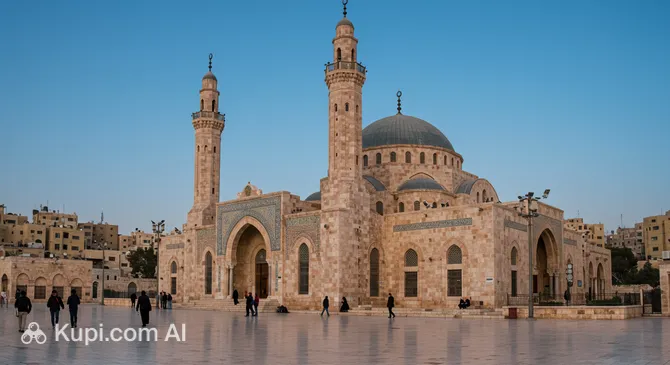
Grand Husseini Mosque. Illustration.
Source: Kupi.com AI

Traveler photos:

The mosque building is designed in an elegant Ottoman style. It is easily recognizable by its characteristic pink-and-white stone facade, which looks particularly beautiful in the sunlight. The mosque was rebuilt in 1924 on the site of an even older structure, believed to have been founded as early as 640 AD. This makes it not just a religious site, but a true monument that has witnessed many of the city's historical eras.

Today, the Grand Husseini Mosque is not only a place of worship but also an important landmark for residents and visitors alike. It is a focal point in a bustling district surrounded by traditional markets and historic streets. It is important to note that this mosque should not be confused with the more modern King Hussein bin Talal Mosque, which is located in a different part of Amman.

Contacts

The Grand Husseini Mosque is an active religious site located in the heart of Amman. To clarify current information regarding visitor rules and opening hours, you can reach out via the contacts listed below.

How to contactContact
AddressK. Talal St. 1, Amman, Jordan
Phone number+962 6 461 4101
Websitewww.trip.com

What to Do

A visit to the Grand Husseini Mosque is an opportunity to touch the spiritual and architectural history of Amman. Once here, you can experience traditional Islamic architecture from the Ottoman period. Take time to admire the exquisite details of the interior and appreciate the craftsmanship of the builders who used the region's characteristic pink-and-white stone. The mosque is a beautiful example of a religious structure where you can observe the harmony of forms and ornaments in a peaceful setting.

As the mosque is active, visitors can see local residents gathering for prayers and religious ceremonies, providing a deeper understanding of Jordanian culture. This site offers a unique experience of immersion into the city's daily life. It is important to remember the rules of conduct: maintain silence, be dressed in modest, covering clothing, and remove your shoes at the entrance.

The mosque's location in the center of the Old City makes it a convenient starting point for further exploration of the capital's historic part. After your visit, be sure to walk through the bustling surrounding streets, browse the colorful markets, and discover other attractions in central Amman, such as the Roman Theatre and the Citadel. This will help you form a complete impression of the heart of the Jordanian capital.

Getting There

Getting to the Grand Husseini Mosque is quite simple thanks to its central location in the heart of Amman's Old City. It is situated in the bustling Al-Balad district, making it accessible from any part of the Jordanian capital. The mosque is a well-known landmark, so finding it is easy whether you're exploring on foot or traveling by transport.

One of the most convenient ways is to use taxis or ride-hailing services, which are widely available in Amman. Simply tell the driver "Al-Husseini" or "the Grand Mosque downtown," and they will take you right there. A taxi ride allows you to reach the attraction comfortably, avoiding the difficulties of navigating the narrow streets of the center.

For a more budget-friendly journey, you can use public transport. Many city buses pass through the city center, from where the mosque is just a few minutes' walk away. This option also allows you to better experience the city's atmosphere. Furthermore, the mosque is within walking distance of other key attractions, such as the Roman Amphitheater and traditional markets (souks), making it easy to include in a walking tour of Amman's historic center.

Nearest city: Amman

History & Facts

The Grand Husseini Mosque has a rich history closely intertwined with the development of Amman as the capital of Jordan. One of the most significant facts is that the modern building was rebuilt in 1924 at the initiative of King Abdullah I (Abdullah bin Al-Hussein), the country's first ruler. The reconstruction took place on the site of a more ancient mosque that had existed there since early Islamic times. It was then that the characteristic pink-and-white stone was used for construction, which today gives the structure its recognizable and majestic appearance.

The personality of the mosque's founder adds to its historical value. King Abdullah I, who played a key role in forming the modern Jordanian state from territories that previously had no single center, paid great attention to the development of religious and state institutions. His reign from 1921 to 1951 laid the foundations of modern Jordan, and the reconstruction of the capital's main mosque became a symbol of strengthening the new nation and its spiritual roots.

Caring for religious sites became an important tradition of the ruling Hashemite dynasty. The restoration of the Grand Husseini Mosque is a clear example of this. This tradition continues today. For instance, in 2006, by the decision of King Abdullah II, the great-grandson of the mosque's founder, the grand new King Hussein bin Talal Mosque was built in Amman in memory of his father. This highlights the continuity of generations and the enduring importance of spiritual centers in the life of Jordanian society.

Time Needed

It is recommended to set aside approximately 30 to 60 minutes for a visit to the Grand Husseini Mosque. This is plenty of time to leisurely admire the building's elegant Ottoman-style architecture, appreciate the interior decor, and soak in the peaceful atmosphere of this significant historical and spiritual site. During this time, you can take photos of the facade and feel the rhythm of life that reigns around the mosque.

If you plan to do more than just glance at the mosque and want to explore its surroundings in more detail, you should allow for additional time. The Grand Husseini Mosque is located in the very heart of Amman's Old City, surrounded by colorful markets, shops, and other historical landmarks. To fully enjoy a walk through the lively streets and perhaps visit the nearby Roman Amphitheater or the Citadel, it is best to allocate at least half a day for the entire area.

Working Hours

The Grand Husseini Mosque is an active religious center, so while it is open to worshipers daily, there are certain rules for tourist visits. Non-Muslim visitors can generally enter during hours when prayers are not being held. The best times to visit are considered to be in the morning or afternoon. It is especially important to avoid the time of Friday noon prayers, as the mosque is most crowded then. There is no need to book tickets or register for a visit in advance.

It is important to remember that this is a sacred place, and a dress code must be followed for entry: clothing should be modest, covering shoulders and knees, and women should cover their heads. As the mosque is an active place of worship and due to potential restoration work, access hours for tourists may change. Therefore, before visiting, it is highly recommended to clarify the current information regarding rules and visiting times on-site or at local tourist centers to ensure your visit is as comfortable as possible.

4:00 – 22:00

Nearby

Visiting the Grand Husseini Mosque is a wonderful opportunity to experience the spiritual heart of Amman, but a tour of the city would be incomplete without exploring its surroundings. The area around the mosque, known as Al-Balad, is a living labyrinth of history where new discoveries await at every turn—from ancient ruins to modern art galleries and cozy cafes.

A stroll through this district will allow you to dive deeper into the daily life of the Jordanian capital and see how the past harmoniously intertwines with the present. Many of the city's key attractions are just a few minutes' walk from the mosque, making it an ideal starting point for a walking itinerary.

NameDistance
Old Signs of Amman Museum0.4 km
Amman Citadel0.5 km
Hashemite Plaza0.5 km
Temple of Hercules0.5 km
Umayyad Palace0.6 km
Amman Panorama Art Gallery0.6 km
Chestnut Restaurant & Pub2 km

Have you reached the end of the page?

So the route has been studied inside and out