Support

King Abdullah I Mosque

About

The King Abdullah I Mosque is one of the most recognizable and impressive landmarks in Amman, the capital of Jordan. Located in the Abdali district near the city center, it is a magnificent example of modern Islamic architecture. It is easily identified by its stunning blue dome, which rises majestically above the surrounding urban landscape.
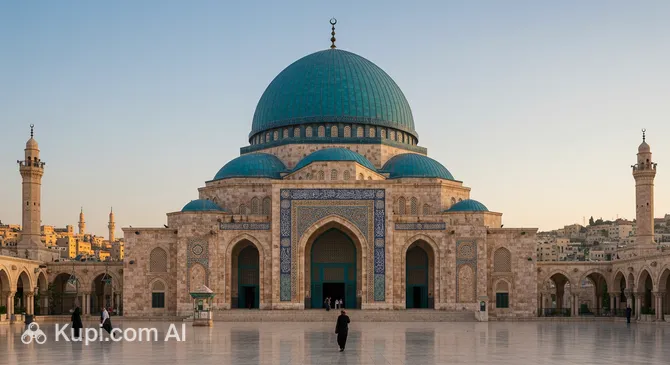
King Abdullah I Mosque. Illustration.
Source: Kupi.com AI

Traveler photos:

This grand dome, measuring 35 meters in diameter and 31 meters in height, crowns a spacious octagonal prayer hall. A unique feature of the hall is the complete absence of columns, creating an incredible sense of open space filled with light. The mosque was built in memory of Jordan's first king, Abdullah I, founder of the Hashemite dynasty, and continues to serve as an important spiritual and architectural symbol of the country.

What makes the King Abdullah I Mosque particularly attractive to travelers is that it is the only mosque in Amman that openly welcomes non-Muslim visitors. This provides a rare opportunity to experience Islamic culture and architecture from the inside, appreciating the beauty and tranquility of this sacred space. The mosque's interior can accommodate up to 3,000 worshippers at once, while the vast courtyard can hold over 10,000 people during major religious holidays and events.

Contacts

For the most up-to-date information on opening hours, visiting rules, and contact details for the King Abdullah I Mosque, it is recommended to check official Amman tourism resources or inquire locally. Such details are often available on the attraction's official website, if one exists, or at local tourist information centers in Jordan.

How to contactContact
AddressXW67+F4H, Amman, Jordan
Phone number+962 7 9806 2939

What to Do

A visit to the King Abdullah I Mosque offers tourists a unique opportunity to immerse themselves in the world of Islamic art and architecture. Inside, a wealth of detail awaits: admire the intricate Islamic patterns, calligraphic Quranic inscriptions, and rich artistic interior design. The grand central dome is a focal point, decorated with a gold star symbolizing the source of light and surrounded by the 99 Beautiful Names of Allah. Equally impressive is the massive chandelier consisting of 168 lanterns, each inscribed with the word "Allah."

In addition to the main prayer hall, the mosque features separate halls for women. An interesting addition to your visit is the Islamic Arts Museum, located within the complex. Here, you can explore a collection of artifacts detailing the region's history and culture, including personal items of King Abdullah I, ceramics, and coins. It is a wonderful chance to deepen your knowledge of Jordan's Islamic heritage.

Don't miss the chance to walk through the mosque's spacious courtyard. It is an excellent spot to take beautiful photos against the backdrop of the famous blue dome and feel the atmosphere of peace and serenity that prevails in this sacred place. It is important to remember that a specific dress code applies to non-Muslim visitors: women will be offered a special robe (abaya) at the entrance to cover their head and body as a sign of respect for local traditions.

Getting There

The King Abdullah I Mosque is conveniently located in the central part of Amman, in the Abdali district. Thanks to this central location, it is easily accessible from most parts of the city. As one of the most famous landmarks in the capital of Jordan, most taxi drivers know exactly how to get there.

One of the easiest ways to reach the mosque is by taxi or rental car. A trip from central Amman is both quick and comfortable. For those who prefer public transport, city bus and minibus stops are located near the mosque, making it highly accessible.

If you are staying in downtown Amman and enjoy walking, you can reach the King Abdullah I Mosque on foot. Such a walk allows you to get better acquainted with the city's atmosphere while enjoying views of its historic neighborhoods. For visitors arriving by private or rental car, parking is available near the mosque. You can also find cafes and souvenir shops nearby, perfect for a break or picking up a few mementos.

Nearest city: Amman

History & Facts

The initiative to build the King Abdullah I Mosque came from King Hussein bin Talal, who wished to commemorate his grandfather, King Abdullah I, one of the key figures in the history of Jordan. This was not just an architectural project, but a tribute to the nation's history and roots. The foundation stone of this grand structure was laid on June 5, 1982, marking the beginning of several years of construction.

The mosque was built in several stages. The first significant phase was completed in January 1986, when the building's main contours became visible. However, the full completion of all works and the official opening of the King Abdullah I Mosque did not take place until 1989. Since then, it has become not only an important religious center but also a striking symbol of Amman and all of Jordan, reflecting the country's cultural heritage.

The mosque's architectural design is a harmonious blend of traditional Islamic canons and modern design solutions, making it a unique example of craftsmanship and a point of national pride. The interior is striking in its elegance, featuring noble materials such as wood and marble. The red carpet is particularly noteworthy, carrying deep symbolic meaning as it represents the fertile lands of Jordan. The walls, the pulpit (minbar), and the mihrab are decorated with exquisite carvings and inlays, showcasing the high skill of the artisans.

The famous blue dome, which has become the mosque's signature feature, is also rich in symbolism. Its deep blue color represents the endless sky, while the elegant gold lines radiating across its surface symbolize rays of light emanating from a single center. This thoughtful detail gives the entire structure a sense of lightness and spiritual elevation, emphasizing its sacred meaning for believers and its cultural significance for all visitors.

Time Needed

To fully enjoy your visit to the King Abdullah I Mosque, it is recommended to set aside approximately 1-1.5 hours. This is usually enough time to leisurely explore the main elements of the complex, including the majestic main prayer hall with its famous dome, as well as the small but interesting Islamic Arts Museum located on the grounds.

By planning for about an hour and a half, you can not only appreciate the architectural features and interior decor but also stroll through the grounds. This will allow you to take memorable photos, soak in the peaceful atmosphere of this landmark in Amman, and quietly reflect on its cultural and spiritual significance without rushing.

Working Hours

The King Abdullah I Mosque is generally open to tourists throughout the year. However, it is important to note that access may be restricted during Friday prayers and on significant religious holidays. These times hold special importance for worshippers, and the mosque's visiting schedule may change accordingly.

Since the exact opening hours of the King Abdullah I Mosque can vary depending on the season and the Islamic calendar, it is highly recommended to verify current information immediately before your visit. The latest details can usually be found on the attraction's official website (if available) or by contacting local tourist information centers. Generally, no special booking or prior registration is required to visit the mosque, but it is always wise to check in advance, especially if you are visiting during peak season or as part of a large group.

3:20 – 22:00

Nearby

A visit to the majestic King Abdullah I Mosque is undoubtedly one of the highlights of a trip to Amman. However, to make your experience even more enriching, it is worth exploring the attractions located in the immediate vicinity. Discovering the surrounding area will allow you to dive deeper into the city's atmosphere and uncover other interesting corners of the Jordanian capital.

The district where the mosque is located and its surrounding areas offer various options for further exploration—from cultural sites to places for relaxation and shopping. A short walk or a quick ride can lead you to new discoveries that complement your visit to the main shrine. Below is a list of some attractions near the King Abdullah I Mosque, along with their approximate distances.

NameDistance
Grand Hyatt Amman0.7 km
Jubran Restaurant0.8 km
Abdali Boulevard0.8 km
The Boulevard Restaurant0.9 km
Chestnut Restaurant & Pub1 km
Haya Cultural Center1.6 km
Umayyad Palace2.1 km

Have you reached the end of the page?

So the route has been studied inside and out