Support

Habima Square

About

Habima Square is one of the most important cultural and public centers in the heart of Tel Aviv, Israel. More than just an open space, it is an iconic landmark named after the Habima National Theatre, which stands proudly here and is one of the city's key cultural institutions. The square attracts both locals and tourists with its lively atmosphere and cultural richness.
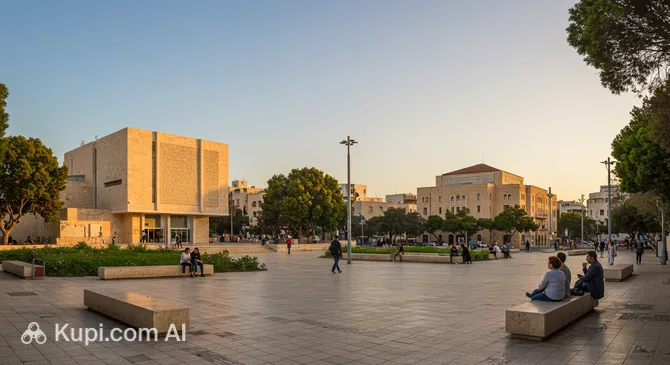
Habima Square. Illustration.
Source: Kupi.com AI

Traveler photos:

The design of Habima Square was part of the ambitious master plan for the development of Tel Aviv, created by the renowned Scottish urban planner Patrick Geddes. Today, it represents not only an architectural ensemble but also a popular meeting place, a spot for relaxation, and a venue for various events, serving as a kind of epicenter for the city's cultural life. Festivals, concerts, and public gatherings frequently take place here, making the square a living and dynamic space.

The square's location in an area famous for its International Style architecture adds a special charm. This style is characteristic of the so-called "White City"—the historic part of Tel Aviv that was added to the UNESCO World Heritage list for its uniqueness. A visit to Habima Square offers the opportunity not only to enjoy modern urban design but also to touch the rich history and vibrant modern culture of this dynamic Israeli metropolis.

Contacts

Habima Square is, first and foremost, an open public space with the Habima National Theatre at its heart. For up-to-date information on events, the theater's repertoire, or other organizational matters, it is recommended to visit the theater's official website.

How to contactContact
AddressTarsat Ave 2, Tel Aviv-Yafo, Israel

What to Do

A visit to Habima Square opens the doors to the cultural heart of Tel Aviv. The main magnet here is undoubtedly the Habima National Theatre. You can immerse yourself in the world of Israeli art by choosing from the numerous productions or cultural events that regularly take place on its stage. This is a wonderful opportunity to experience local culture and theatrical traditions.

Beyond theatrical experiences, Habima Square itself is a great place for leisurely walks and relaxation. Here, you can admire buildings designed in the International Style characteristic of Tel Aviv. Many of the structures surrounding the square are prime examples of modernist architecture from the 1930s and 1940s, making this spot particularly interesting for architecture and history enthusiasts.

The square is also part of the city's green zone, offering a pleasant respite from the urban hustle and bustle. You can simply sit on one of the benches, watching the city life go by, or enjoy the atmosphere of this cultural oasis. It is a place where you can not only see something interesting but also simply have a good time soaking up the spirit of modern Tel Aviv.

Getting There

Habima Square is located in the very heart of Tel Aviv, making it easily accessible from various parts of the city. Thanks to its central location and status as an important cultural hub, reaching the square is quite simple, regardless of the mode of transport you choose.

One of the most common ways to reach Habima Square is by public transport. Tel Aviv has an extensive bus network, and many routes pass directly by the square or have stops within walking distance. It is recommended to check current route numbers and schedules in advance using local transport apps or the official public transport websites of Tel Aviv.

If you prefer a faster and more private way to travel, a taxi is an excellent option. Taxis in Tel Aviv are easy to find anywhere in the city, and drivers are well-acquainted with the location of Habima Square as one of the central landmarks. A trip from most areas, especially the city center, will not take long. You can also use popular ride-hailing apps.

For those staying in the central part of Tel Aviv or who simply enjoy walking, reaching Habima Square on foot can be a very pleasant experience. This allows you to enjoy the city's architecture, especially if your route takes you through streets famous for their Bauhaus-style buildings, which make up the so-called "White City."

Nearest city: Tel Aviv

History & Facts

The concept for Habima Square is rooted in the visionary development plan for Tel Aviv designed by Scottish urban planner Patrick Geddes. According to his vision, Habima Square, along with Dizengoff Square, was meant to be the heart of the social and cultural life of the young city. Geddes' plan was highly progressive: it didn't just propose the creation of squares, but the formation of a cohesive urban environment with a four-level hierarchy of streets, cozy residential blocks with green courtyards, and a concentration of cultural sites centered around these two iconic squares.

A key role in the further implementation and adaptation of this ambitious vision was played by Yakov Ben-Sira (Yakov Shiffman), who was appointed city engineer in 1929. He didn't just follow Geddes' plan but creatively reworked it, extending the city limits to the north and connecting districts to the south and east. It was Ben-Sira who became an active proponent of the International Style in Tel Aviv's architecture, which fundamentally influenced the city's appearance, including the Habima Square area.

Yakov Ben-Sira's efforts bore impressive fruit. Thanks to his vision and persistence, Tel Aviv transformed into one of the world's largest centers of modernist architecture. The period from the early 1930s to the 1950s saw the construction of more than four thousand buildings in this style. This architectural heritage, of which the Habima Square ensemble is an integral part, ultimately brought Tel Aviv worldwide fame and its unique, internationally recognized status.

Time Needed

To simply see Habima Square, walk around, admire the architecture of the Habima National Theatre and surrounding buildings, and soak in the atmosphere, a typical visitor will need about 1-2 hours. This is enough time to take photos, relax on one of the benches, and enjoy this cultural space in the center of Tel Aviv.

However, if you plan to get to know this place more deeply, the time of your visit could increase significantly. For example, attending a performance or another event at the Habima Theatre will take several additional hours. Also, if you are interested in the Bauhaus architecture characteristic of the "White City," you may want to spend more time studying the buildings around the square and in the adjacent blocks. In this case, a stay in the Habima Square area could easily stretch to half a day or even more, especially if combined with a visit to nearby cafes or restaurants.

Thus, the minimum time for an introductory walk around Habima Square is about an hour, but for a fuller immersion into the cultural life and architectural features of this Tel Aviv district, it is worth planning more time depending on your interests.

Working Hours

Habima Square in Tel Aviv is an open public space, so it does not have strict opening hours. You can visit the square and walk through it at any time of day, all year round. The atmosphere of the square may change depending on the time of day and the events being held, but access is generally unrestricted.

If you are interested in the working hours of specific institutions located on the square, such as the Habima National Theatre, or if you plan to attend a particular event, it is recommended to check the information in advance on their official websites or at local tourist information centers. Attending theater performances usually requires advance ticket booking.

Open 24 hours

Nearby

Visiting Habima Square is undoubtedly a highlight, but Tel Aviv is full of other interesting places located just a stone's throw away. Exploring the surroundings will allow you to dive deeper into the city's atmosphere, discover hidden gems, and get a better sense of its cultural diversity and daily life.

A stroll through the nearby streets and neighborhoods can turn into a fascinating mini-journey that complements your impressions of the square itself. You can find cozy cafes, unique shops, other iconic landmarks, or simply enjoy the architecture and dynamic pace of this modern metropolis.

NameDistance
Habima Theatre0.1 km
Bellboy0.2 km
Beatbox Private Karaoke Rooms0.5 km
Rothschild Tel Aviv0.8 km
Nabi Yuna1 km
Bugrashov Beach1.4 km
Tel Aviv Beach1.4 km

Have you reached the end of the page?

So the route has been studied inside and out