Support

Gethsemane

About

Gethsemane is an iconic historical area at the foot of the Mount of Olives, located east of the Old City of Jerusalem. Its name, which comes from the Aramaic for "oil press," recalls the ancient olive groves and oil production that once flourished here. It is a place of rich history and deep spiritual significance, attracting pilgrims and tourists from around the world.

For Christians worldwide, Gethsemane has special significance. According to the New Testament, it was here that Jesus Christ spent his last night in prayer before his arrest. This place witnessed the betrayal of Judas and the beginning of the Passion of Christ, making it one of the most important pilgrimage sites in Israel.
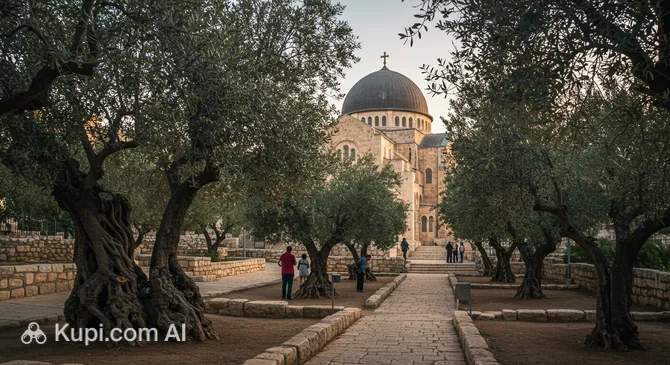
Gethsemane. Illustration.
Source: Kupi.com AI

Traveler photos:

Today, visitors can walk through the famous Garden of Gethsemane, where, according to tradition, eight olive trees that witnessed biblical events still grow, with ages potentially reaching two thousand years. There are also several prominent churches on the grounds. These include the Catholic Church of All Nations, built on the rock where Jesus prayed, the Orthodox Church of St. Mary Magdalene with its recognizable golden domes, and the ancient Tomb of the Virgin Mary.

In addition to its religious importance, Gethsemane offers visitors a peaceful atmosphere for reflection and a magnificent view of the Temple Mount and the Golden Gate of the Old City. This is a place where history, faith, and nature merge, leaving a deep impression on every guest.

Contacts

As an open-air historical and religious complex, Gethsemane does not have a single information service or phone number. The easiest way to get here is on foot from the Old City's Lions' Gate, walking through the Kidron Valley to the foot of the Mount of Olives. It is recommended to check the opening hours of individual churches on the grounds, such as the Church of All Nations, on their official websites in advance, as they may vary.

How to contactContact
AddressJerusalem
Phone number+972 2-626-6444

What to Do

A visit to Gethsemane is an opportunity to touch centuries of history. One of the main stops for visitors is the Catholic Church of All Nations, also known as the Basilica of the Agony. It was built between 1919 and 1924 on the very spot where, according to tradition, Jesus prayed on the night before his arrest. The dim lighting inside the church creates a special atmosphere, reminiscent of the nocturnal events, and the walls are decorated with mosaics depicting "The Agony in the Garden," "The Kiss of Judas," and "The Arrest of Christ."

The walk continues in the famous Garden of Gethsemane, where ancient olive trees grow—living witnesses to biblical times. Since 1681, this territory has been under the care of the Franciscans. Besides the garden, other important shrines are located within the complex that pilgrims and tourists can visit. These include the Church of Saint Mary Magdalene and the ancient Tomb of the Virgin Mary. Each of these places has its own unique atmosphere and history.

Gethsemane attracts not only pilgrims but also lovers of beautiful views. Its grounds offer one of the best panoramas of the Temple Mount and the famous Golden Gate of the Old City, making it attractive for photographers. It is an ideal spot to take memorable photos and reflect on history in a quiet setting while enjoying views of ancient Jerusalem.

Getting There

Gethsemane is located very close to the Old City of Jerusalem, at the foot of the Mount of Olives, making it very accessible. The simplest and most scenic way to reach it is on foot. To do this, exit the Old City through the Lions' Gate and descend into the Kidron Valley. The entire walk takes no more than 15–20 minutes, and you can enjoy views of the surrounding area along the way.

If you prefer public transportation, Gethsemane can be reached by city buses that run throughout Jerusalem. Stops are located near the Old City walls, including by the Lions' Gate. Additionally, you can always use a taxi, which provides a fast and comfortable way to reach your destination directly from your hotel or any other point in the city.

Another convenient option, especially for those who want to get the most information, is to join an organized tour. Many travel companies in Jerusalem offer programs that include a visit to Gethsemane as part of a route through the city's Christian holy sites. This will allow you not only to reach the landmark without any hassle but also to learn about its rich history from a professional guide.

Nearest city: Jerusalem

History & Facts

The history of Gethsemane is inextricably linked to the events described in the New Testament. According to the Gospels, it was a favorite place for Jesus Christ and his disciples to retreat for solitude and conversation. This well-known habit allowed Judas to easily lead guards to arrest his teacher. Here, in the Garden of Gethsemane, key moments of the Passion of Christ took place: the famous Agony in the Garden, the betrayal by Judas, and the subsequent arrest of Jesus, forever cementing this location's status as one of the most important shrines in the Christian world.

Over the centuries, this place has been a center of pilgrimage, which is reflected in its architecture. As early as the 4th century, during the reign of Emperor Constantine, his mother initiated the construction of the first Byzantine church on the spot where, according to tradition, Christ prayed. This temple was destroyed, and the Crusader church built on its ruins in the 12th century has also not survived to the present day. The modern Church of All Nations, built between 1919 and 1924, stands on the foundations of these ancient shrines, symbolizing the continuity of generations of believers.

Interestingly, the name of the valley where Gethsemane lies — the Valley of Jehoshaphat — has deep roots. It comes from the Hebrew expression "Yahweh-Shaphat," which translates as "The Lord judges," and refers to the prophecies of Joel. Since 1681, the Garden of Gethsemane has been under the care of the Franciscan Order, and in 1848, it was enclosed by a stone wall to preserve the ancient olive trees for future generations of pilgrims and visitors to Jerusalem.

In addition to the events related to the last days of Christ's earthly life, Gethsemane is also revered as the burial place of the Virgin Mary. The Tomb of the Virgin Mary located here is one of the greatest shrines in Christianity, attracting believers from all over the world. This fact gives Gethsemane an additional spiritual dimension, making it an important point on pilgrimage routes through the holy sites of Israel.

Time Needed

To fully enjoy the atmosphere of Gethsemane and see its main shrines, it is recommended to set aside about 2–3 hours for your visit. This will be enough time to walk unhurriedly through the ancient Garden of Gethsemane, carefully examine the mosaics and altar in the Church of All Nations, and descend into the Tomb of the Virgin Mary. This time buffer will allow you not only to take memorable photos but also to quietly reflect in this iconic place.

The duration of the visit can vary depending on your interests. For a brief overview of the main attractions, such as the garden and the exterior of the temples, one hour might be sufficient. However, if you plan to immerse yourself deeper in the spiritual atmosphere, participate in a service, or simply spend more time in solitude and prayer, it is worth planning half a day. The complex includes several significant sites, and a thoughtful exploration of each requires time.

Working Hours

The Garden of Gethsemane and the surrounding area are generally open to visitors throughout the day, from early morning until evening. However, individual churches have their own schedules. For example, the Church of All Nations (Basilica of the Agony) typically welcomes visitors from 8:00 to 12:00 and from 14:00 to 18:00 (summer) or until 17:00 (winter). The Tomb of the Virgin Mary is reportedly open from early morning until evening. These shrines are open to guests year-round.

It is important to remember that opening hours can change, especially during religious holidays or special events. Therefore, it is highly recommended to check current schedules on official websites or at local tourist information centers before visiting. Generally, no advance booking is required for individual visits to Gethsemane, as entry to the main grounds and churches is free.

Nearby

A visit to Gethsemane is just one part of an amazing journey through historical Jerusalem. Due to its location at the foot of the Mount of Olives, many other iconic sites are within walking distance, each holding its own unique history and atmosphere. Exploring the surrounding area will allow you to delve deeper into the multilayered heritage of this ancient city and better understand its cultural and spiritual significance.

Just a few minutes' walk from the Garden of Gethsemane, the streets of the Old City begin, where shrines of world religions are concentrated. This is a wonderful opportunity to complement your itinerary and see even more legendary attractions without spending much time on the road. Below is a list of interesting places located nearby.

NameDistance
Dome of the Rock0.4 km
Al-Aqsa Mosque0.5 km
Western Wall0.6 km
Church of the Holy Sepulchre1 km
Tower of David1.1 km
Zion Gate1.2 km
Jerusalem Ramparts Walk1.3 km

Have you reached the end of the page?

So the route has been studied inside and out