Support

Al-Aqsa Mosque

About

The Al-Aqsa Mosque, located on the Temple Mount in Jerusalem, is one of the greatest shrines in the Islamic world. Its name translates from Arabic as "the farthest mosque," highlighting its special status and historical significance for believers. In Islam, it is revered as the third most important site after the Sacred Mosque in Mecca and the Prophet's Mosque in Medina. This site attracts pilgrims and tourists from all over the world who wish to experience its centuries-old history and spirituality.
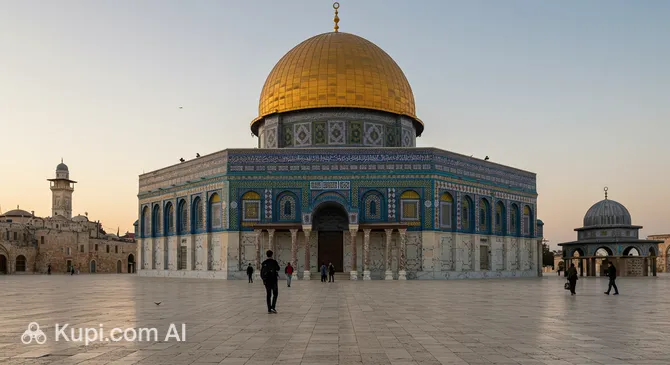
Al-Aqsa Mosque. Illustration.
Source: Kupi.com AI

Traveler photos:

The significance of the mosque is inextricably linked to the Prophet Muhammad's night journey from Mecca to Jerusalem (Isra) and his subsequent ascension to heaven (Miraj). Al-Aqsa was the first qibla—the direction Muslims faced during prayer—which testifies to its exceptional status. The entire complex on the Temple Mount, including the famous Dome of the Rock, is considered sacred territory.

The mosque's architectural design, which can accommodate up to 5,000 worshippers, took shape over many centuries and survived several reconstructions following earthquakes and other events. Today, the complex consists of seven spacious galleries connected by arcades, and its interiors are decorated with marble columns and elegant mosaics. Outside, the building is crowned by a lead dome, with a single minaret standing nearby, which is one of the sanctuary's architectural features.

Contacts

When planning a visit to Al-Aqsa Mosque, it is important to note that direct administrative contacts for tourists are not published. Instead, it is recommended to contact the city's official tourism services for the most up-to-date information.

Before your trip, we strongly advise checking the opening hours, as they may change depending on the season, religious holidays, and other events. Access for non-Muslim visitors is usually limited to specific time slots.

How to contactContact
AddressJerusalem

What to Do

Visiting Al-Aqsa Mosque allows guests to explore its unique architecture and feel the special atmosphere of this sacred place. Inside, you can see traditional rugs, carved arches, Islamic patterns, and the mihrab—a special niche indicating the direction of Mecca. The mosque's doors are open to tourists, but it is important to show respect for local traditions. Visitors must dress modestly, women should cover their heads, and shoes must be removed before entering the mosque.

The Islamic Museum is also located within the complex, helping visitors gain a deeper understanding of the history and cultural significance of this site for the Muslim world. A visit to the museum is typically included in the price of the ticket to the Temple Mount. The exhibition introduces important stages of the mosque's history and its role in Islam, and presents valuable manuscripts and other historical artifacts.

Walking through the inner courtyard, you can appreciate the scale of the entire architectural ensemble. In addition to the main building, the complex includes ancient arcades, gates, and ablution fountains. This is a wonderful opportunity to leisurely examine details that have formed over centuries and take photographs of the buildings' exterior. A visit here is not just a sightseeing tour, but a chance to connect with a centuries-old spiritual and cultural heritage.

Getting There

Al-Aqsa Mosque is located on the Temple Mount in the Old City of Jerusalem, and it can be reached in several ways. If you are already in the city, the easiest option is to use public transport, which will take you to one of the entrances to the Old City. From there, it is a pleasant walk through ancient streets to the Temple Mount. For those who prefer more comfort or are traveling with limited time, a taxi is a good alternative, as it can bring you as close as possible to the required entrance.

For tourists coming from other cities, it is convenient to reach Jerusalem by intercity buses or trains. Upon arrival in the city, you can transfer to local transport to reach the Old City. Travelers flying into Ben Gurion International Airport can also easily reach Jerusalem: buses and shuttle taxis run regularly from the airport, and the journey takes about an hour.

Nearest city: Jerusalem

History & Facts

The history of Al-Aqsa Mosque dates back to 636, when a small and modest house of prayer was built on the Temple Mount in Jerusalem. However, a more large-scale construction, which laid the foundations of the sanctuary in the territory of modern Israel, began at the end of the 7th century by order of Caliph Abd al-Malik ibn Marwan and was completed in 705. It was then that the mosque acquired its monumental features, becoming one of the key spiritual centers of the Islamic world.

Throughout its centuries-old history, the sanctuary has survived many trials. A powerful earthquake in 746 almost completely destroyed the building, after which it was restored over eight years. In 1033, the elements struck again, but the mosque was rebuilt in 1035. The structure we see today was fundamentally built at that time, although it has undergone many changes since then. Notably, during the Crusades, the building was seized and served as the headquarters of the Order of the Knights Templar for some time.

The architectural appearance of Al-Aqsa is the result of numerous reconstructions, each adding new elements. Over time, the famous lead dome, an elegant facade, a carved minbar (pulpit), and minarets appeared. The internal structure also underwent changes. The process of improvement continued into modern times: for instance, during the restoration of 1938–1943, new columns of Carrara marble were installed in the mosque, reflecting the continuous process of preserving this unique monument.

Time Needed

To fully explore Al-Aqsa Mosque and its surroundings, it is recommended to set aside 1 to 2 hours. This time is generally sufficient to leisurely view the sanctuary's main architectural elements, appreciate its rich interior, and feel the special atmosphere of the place. This timeframe can also include a visit to the Islamic Museum, located within the complex, for a deeper dive into the history and cultural significance of Al-Aqsa.

When planning your visit, consider not only the time for the tour itself but also for accompanying formalities. Extra time should be allowed for security procedures at the entrance and potential queues, especially during peak tourist seasons or religious holidays. Careful planning will allow you to get the most out of visiting this unique Jerusalem landmark.

Working Hours

Visiting Al-Aqsa Mosque for tourists is possible during strictly defined hours, which may vary depending on the season, day of the week, and religious holidays. Generally, access for non-Muslim visitors is open from Sunday to Thursday, during morning and afternoon hours, except during prayer times. It is important to remember that on Fridays and during Muslim holidays, the entrance is usually closed to tourists.

As the exact schedule can change without prior notice, it is highly recommended to verify the current opening hours the day before your planned visit. Special ticket reservations for entry into the territory are usually not required, but specific rules may apply for visiting the mosque itself. The most reliable information can be obtained from official Jerusalem tourist centers. When planning your visit, you should also account for potential queues at the entrance, especially during the tourist season.

Nearby

Visiting Al-Aqsa Mosque is just one part of the unique experience that Jerusalem offers. The Old City, where the sanctuary is located, is a true labyrinth of history, with new discoveries awaiting you at every turn. A stroll through its surroundings allows for a deeper immersion into the multifaceted atmosphere of this place, as other iconic landmarks of great significance to various cultures and religions are within walking distance.

Exploring nearby sites will enrich your journey, complementing the impressions of the majestic Al-Aqsa with new emotions and knowledge. Just a few minutes' walk away, you can touch other pages of Israel's rich history and see how the destinies of the world are closely intertwined here. Below is a list of key sites located very close by.

NameDistance
Western Wall0.1 km
Dome of the Rock0.2 km
Gethsemane0.5 km
Church of the Holy Sepulchre0.6 km
Zion Gate0.7 km
Tower of David0.7 km
Jerusalem Ramparts Walk0.8 km

Have you reached the end of the page?

So the route has been studied inside and out