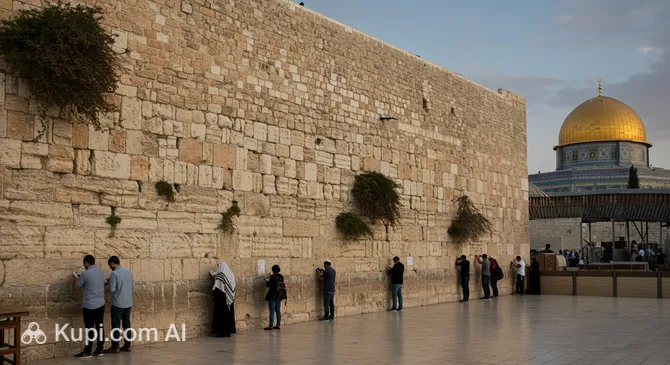
The Western Wall, known in Hebrew as "Ha-Kotel Ha-Ma'aravi," is one of the most significant and revered holy sites in Jerusalem, Israel. It is a surviving fragment of the ancient western retaining wall of the Temple Mount, which remained after the destruction of the Second Temple by the Romans in 70 AD. Located in the Old City, it serves not only as an outstanding historical monument but also as a vital place for believers from all over the world.
Traveler photos:
For many generations of Jewish people, the Western Wall has been the greatest holy site outside the Temple Mount itself, symbolizing an unbreakable link to the past, unshakable faith, and undying hope. Every day, thousands of people—pilgrims and tourists alike—come here to pray, leave notes with heartfelt requests in the crevices of the ancient stones, or simply touch centuries of history and feel the unique atmosphere of the place.
The visible part of the Western Wall accessible for prayer stretches approximately 57 meters in length and reaches about 30 meters in height, though the total length of the entire western wall is an impressive 485 meters. Architecturally, the wall is a unique layering of different historical eras: the lowest rows of massive stone blocks, considered the most sacred part, date back to the reign of Herod the Great. Above them are later masonry additions from the Roman, Byzantine, and subsequent periods, each telling its own part of the long and complex history of this ancient structure.