Support

Nyeri

About

Nyeri is a vibrant and picturesque city located in the heart of the central highlands. Serving as the administrative center of the county of the same name, it is an important transport and commercial hub, but for tourists, it is primarily interesting as a gateway to breathtaking natural wonders and a keeper of rich colonial heritage. Located in the central part of Kenya, the city is about 150 kilometers north of the capital and lies at the foot of the Aberdare Range, overlooking majestic Mount Kenya.
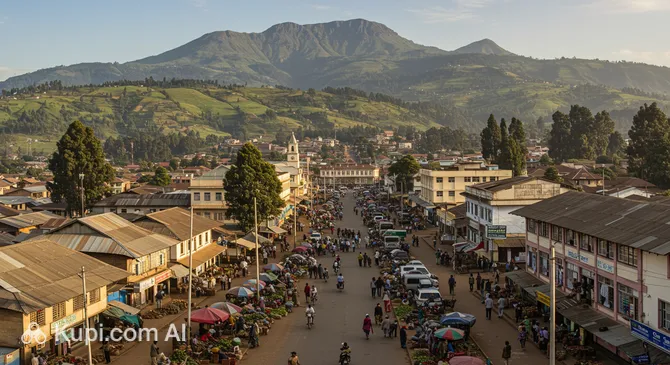
Nyeri. Illustration.
Source: Kupi.com AI

The city's geographical position at a significant altitude above sea level has given it a surprisingly mild and pleasant climate. Exhausting heat is rare here, and the air is always fresh and cool, making walks in the surrounding areas particularly comfortable. With a population of about 99,000, the city maintains a cozy atmosphere where modern life is intertwined with tradition. For those who want a deeper understanding of how this unique region was formed, the history of Nyeri, full of events from the colonial era and the struggle for independence, will be of great interest.

The city is known worldwide for two key features. First, it is a place of pilgrimage for scouts from all over the world, as Lord Robert Baden-Powell, the founder of the Scout movement, spent his last days and was buried here. Second, the region is famous for its coffee plantations: local coffee is considered one of the best in the world thanks to the volcanic soils. Additionally, its proximity to Aberdare National Park makes the city an ideal starting point for safaris and wildlife viewing.

A visit to Nyeri is an opportunity to see a "different" Kenya: green, hilly, and tranquil. Whether you come for the historical heritage, the delicious coffee, or the mountain scenery, this hospitable city is sure to leave warm memories in your heart.

Weather Overview

Due to its location in the highlands, Nyeri features a mild and temperate climate that remains comfortable throughout the year. You won't face the extreme heat characteristic of many other regions in equatorial Africa. Days are usually warm and sunny, while nights bring a refreshing coolness, so travelers are advised to always have warm clothes for evening walks.

Analyzing the statistics, several climatic periods can be identified. The warmest time of the year falls in January, February, and March, when the average daytime temperature reaches a maximum of 23.6°C. The period from June to August is considered the coolest: daytime figures drop to 18.9°C – 19.9°C, and at night the air cools down to 10.6°C – 10.7°C. Precipitation falls regularly, but its peak occurs during the "rainy seasons": up to 24 rainy days are recorded in April, and up to 25 in November, while the beginning of the year remains relatively dry (11–12 rainy days in January and February).

Expect moderately warm weather most of the year with pronounced wet seasons and cool, fresh nights. To choose the ideal time for a visit and prepare for your trip, study the detailed climate of Nyeri and the current forecast.

Average monthly temperature

Average monthly precipitation

Interesting Facts

Beyond its main attractions, Nyeri holds many fascinating secrets that connect this African corner with important moments in world history. Here are a few facts that will allow you to look at the city from a new perspective:
  • Birth of a Queen. The outskirts of Nyeri became the site of a world-scale event. In 1952, while staying at the famous Treetops Lodge near the city, British Princess Elizabeth learned of the passing of her father, King George VI. There is a famous saying that she "went up a tree a princess and came down a queen."

  • The Scout's Secret Sign. The founder of the Scout movement, Lord Baden-Powell, bequeathed to be buried right here, facing Mount Kenya. There are no long epitaphs on his tombstone, only a simple circle with a dot in the center. In the pathfinders' system of trail signs, this symbol means "I have gone home," marking the end of his life's journey.

  • Italian Memorial. The city is home to a unique mausoleum church built to house the remains of Italian soldiers captured in East Africa during World War II. Inside the temple is a marble crypt where the remains of about 700 people rest, making this place a rare monument of European history on African soil.

  • The Legend of the Rhino. The historical White Rhino Hotel was founded in 1910, when the city was just beginning to develop. A popular urban legend says that the establishment got its name after a rhinoceros was shot right at the site of the future construction, serving as a reminder of the region's wild past.

The White Rhino Hotel. Illustration.
Source: Kupi.com AI

Traveler photos:

How to Get There

When planning a trip to the central highlands of Kenya, it is important to think about logistics in advance, as direct access to the city has its own characteristics. To choose the best route, we recommend learning more about how to get to Nyeri, including land and air routes.

The nearest air hub to the city is Nanyuki Airport (IATA: NYK). It is important to consider that it is not located in Nyeri itself, but in the neighboring town of Nanyuki, about 41.8 km away. This is a small regional airfield that accepts domestic flights. The journey from here to the center of Nyeri by taxi or bus will take approximately 1 hour 25 minutes.

Most international tourists arrive in the country via Jomo Kenyatta International Airport (IATA: NBO). This is the region's largest aviation hub, located in the capital city of Nairobi, approximately 99 km from Nyeri. A car journey from this airport to your destination will take about 2 hours 50 minutes. An alternative in the capital is Wilson Airport (IATA: WIL), which serves domestic airlines; it is located at practically the same distance, and travel time will be similar.

For convenience, here is a summary of the main airports:

AirportPassenger trafficDistance
Nanyuki45 00042 km
Jomo Kenyatta International Airport8.2 mln99 km
Wilson Airport528 00099 km
Samburu15 000125 km
Mulika Lodge Airport15 000153 km

Main Attractions

Nyeri is a city that holds a wonderful combination of colonial history and natural beauty. As the administrative center and an important hub of the region, it offers several iconic sites that allow for a deeper understanding of Kenya's culture and past. A walk through local attractions will be a true journey through time.

One of the most revered locations is Lord Baden-Powell's Grave. The founder of the global Scout movement chose this corner of Kenya as his final resting place, and today, scouts and travelers from all over the planet visit his memorial in the Paxtu gardens. It is a quiet and peaceful place with a view of Mount Kenya, where you can learn about the life of the man who inspired millions and enjoy the atmosphere of tranquility.

An equally impressive architectural and historical monument is the Italian Memorial Church. This unique structure was built to house the remains of Italian soldiers who died in East Africa during World War II. The church features unusual architecture and hides a marble crypt inside with the names of hundreds of prisoners of war. A visit to this memorial leaves a strong emotional impression and opens little-known pages of the continent's military history.

History buffs should pay attention to the legendary White Rhino Hotel. This is not just a place to stay, but a real historical monument, founded in 1910 by the first European settlers. The building has retained its colonial charm and the atmosphere of that era. It is believed that here you can feel the spirit of old Kenya, relax on the terrace, and learn the legend of the rhinoceros that gave this establishment its name.

The White Rhino Hotel. Illustration.
Source: Kupi.com AI

Traveler photos:

For those who want to see wildlife without going far from civilization, an interesting point is the Solio Game Reserve, located in the vicinity of the city. This is a private sanctuary that plays a key role in the conservation of black and white rhinos. The concentration of these rare animals here is so high that a meeting with them is almost guaranteed, making it one of the best safari spots in the region.

Local Cuisine

The cuisine of Nyeri is a direct reflection of the generous nature of Kenya's central highlands. Thanks to fertile volcanic soils, the region is famous for an abundance of fresh vegetables, legumes, and herbs that form the basis of the local diet. Gastronomic traditions here are closely intertwined with the culture of the Kikuyu people: food is usually simple, very filling, and prepared from natural ingredients without excessive spices. This is an ideal place for those who appreciate the "pure" taste of farm products.

The main dish, considered the culinary signature of the region, is mukimo. This is a thick and nutritious mash of a characteristic green color, made from potatoes, corn kernels, peas, and pumpkin or nettle leaves. It is traditionally served as a side dish for meat stews. Equally popular is githeri — a simple mixture of boiled corn and beans. This dish is so loved by locals that it can be found both in school canteens and on the menus of the best establishments. Meat lovers should definitely order nyama choma — goat or beef roasted over an open fire, usually eaten with a pinch of salt and the spicy tomato and onion salad kachumbari.

Among drinks, chai (tea) is the king of the table. In Nyeri, surrounded by tea plantations, it is drunk strong, sweet, and with plenty of milk, often with added spices. Given that the region is also known for growing coffee, a cup of freshly brewed local Arabica will be a great start to the day. Among alcoholic beverages, the famous Kenyan Tusker beer is widely available. Those interested in ethnography may hear about muratina — a traditional homemade wine made from sugar cane and the fruit of the sausage tree, which plays an important role in Kikuyu cultural ceremonies.

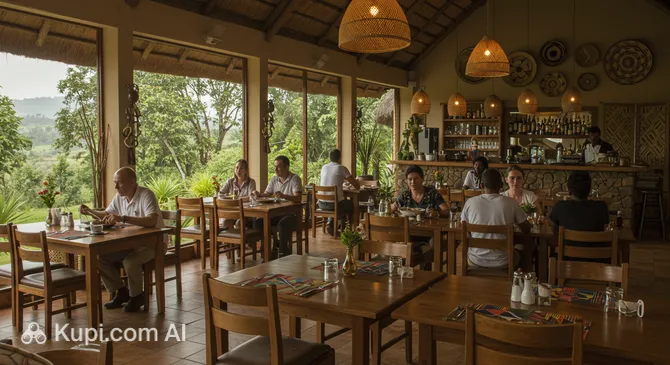
The food culture in the city is democratic and diverse. Locals often snack on the go: charcoal-roasted corn, sweet potatoes, and samosas are sold on the streets. For a full lunch or dinner, tourists usually choose hotel restaurants where high quality standards are maintained. An excellent example of such a place is the restaurant offered by the White Rhino Hotel. Here, in a historical atmosphere, you can try adapted versions of local delicacies or familiar European dishes while enjoying peace and comfort.

Travel Tips

Traveling to Nyeri is an immersion into the calm rhythm of the Kenyan highlands, where a cool climate is combined with warm hospitality. To ensure your trip goes as smoothly as possible and without organizational surprises, we have prepared a list of practical recommendations that will help you feel confident from the first minutes of your stay in the city.

  1. Clothing for changeable weather. Nyeri is located high above sea level, so evenings and nights can be truly cold (down to +10°C). Be sure to bring a warm fleece, a light jacket, and long trousers. During the day, a sun hat and comfortable closed shoes (sneakers or trekking boots) will come in handy, especially if you plan to visit coffee farms or national parks.
  2. Transport nuances. Although matatu shuttles run around the city, it is more convenient and safer for tourists to use taxis. We recommend installing local ride-hailing apps (for example, Wasili) to see a fixed price and avoid long negotiations. If you decide to use motorcycle taxi services (boda-boda) for short trips, always demand a protective helmet from the driver.
  3. Money and payments. The local currency is the Kenyan shilling. Large hotels and supermarkets accept cards, but in small shops and markets, you need cash. The real standard for payments is the M-Pesa mobile system — it is accepted literally everywhere. If you plan to stay longer, it makes sense to register in the system when buying a SIM card. Tips are not mandatory but are welcome: 50–100 shillings for a porter or 10% in a restaurant will be received with gratitude.
  4. Health and safety. Nyeri is a relatively safe city, but basic precautions are necessary: do not walk alone on unlit streets at night and watch your belongings in crowded places. Pharmacies (Chemists) in the center work well, but it is better to bring specific medications with you. Drink only bottled water, even for brushing your teeth.
  5. Communication and language. The official languages are English and Swahili, so the language barrier is practically non-existent: you will be understood everywhere. For internet access, buy a local SIM card (Safaricom or Airtel) immediately upon arrival, as Wi-Fi in public places is not always stable. Learn a few words in Swahili, for example, "Jambo" (Hello) or "Asante" (Thank you) — this immediately wins over the locals.
  6. Local etiquette. Residents of the region are very polite and value greeting rituals. Before asking for directions or making an order, be sure to say hello and ask how the person is doing. Do not show impatience or raise your voice — a more measured pace of life, called pole pole (slowly-slowly), is accepted here.
  7. Strict ban on plastic. Remember that the country has a very strict ban on the import and use of polyethylene bags. Violation can result in a huge fine. Use cloth shoppers or reusable bags for shopping and packing luggage.
  8. Coffee life hack. Being in the heart of a coffee region, do not miss the chance to buy beans directly from the source. Instead of expensive souvenir shops at the airport, visit the office of a local coffee cooperative or a company store at a factory on the outskirts of Nyeri. There you will find the freshest export-quality coffee (AA grade) at very affordable prices.

By following these simple tips, you can avoid minor troubles and focus on the main thing — the magnificent nature, rich history, and unique culture of Nyeri. We wish you a light and unforgettable journey!

Entertainment & Nightlife

Nightlife in Nyeri differs from the noisy bustle of the capital: a more measured, cozy, and friendly atmosphere prevails here. Evening entertainment is mainly centered around hotel restaurants and local pubs, where you can relax after a busy day spent on safari or in the mountains. As the sun sets, the city center and its surroundings come alive, offering guests the opportunity to immerse themselves in local culture through music, socializing, and gastronomy.

One of the most famous and prestigious places for evening relaxation is the legendary White Rhino Hotel. Its bar and restaurant are a magnet for both tourists and the local elite. Here you can settle comfortably on the terrace, order a glass of wine or a cold Kenyan Tusker beer, and enjoy dinner in a historical setting. On weekends, the atmosphere becomes more lively, with music often playing, ranging from relaxing jazz to rhythmic African beats.

The White Rhino Hotel. Illustration.
Source: Kupi.com AI

Traveler photos:

If you are looking for a place to start the evening or a more casual setting, head to the area where the Nyeri Shopping Centre is located. Around it and on the adjacent streets, you can find modern cafes and eateries open until late. For lovers of more active recreation, there are several nightclubs and sports bars in the city where young people gather to dance to a mix of international hits, Afrobeat, and Benga music. The dress code in most establishments is democratic (smart casual), but it is better to avoid beach or sportswear when visiting clubs.

When planning your night out, it is important to remember safety. Although Nyeri is considered a relatively quiet city, tourists are advised not to walk on foot after dark, especially outside of central well-lit streets. To move between venues or return to the hotel, it is best to call an official taxi or use verified ride-hailing apps. Prices in bars and clubs here are significantly lower than in Nairobi, making evening leisure very affordable.

During the day, the city's entertainment palette shifts towards quiet relaxation and sports. In addition to the historical museums already mentioned, a popular leisure activity is golf: the local club is famous for its picturesque courses. You can also visit local markets or simply stroll through green zones, enjoying the fresh mountain air before evening falls.

Parks & Museums

Nyeri is a city where history is closely intertwined with the magnificent nature of the central highlands. While there are not many classic urban amusement parks, the region compensates for this with its proximity to wildlife and unique museum complexes that tell of Kenya's colonial past. The cultural program here is often inseparable from outdoor walks.

Among the museum spaces, a special place is held by the Baden-Powell Museum (Paxtu). It is located on the grounds of the historic Outspan Hotel in the cottage where the founder of the Scout movement, Lord Robert Baden-Powell, spent his last years. The exhibition has preserved the furnishings of those years and the personal belongings of the "Chief Scout of the World." This place is steeped in an atmosphere of peace and serves as a point of attraction for scouts from all over the planet who wish to touch the roots of their organization.

For those who want to dive deeper into the history of the region, the Nyeri National Museum is open. It is housed in the building of the former Native Law Court, built in 1924, and is a national monument. The museum's collections are dedicated to the culture of the Kikuyu people, as well as the complex and dramatic history of the struggle for independence. Here you can see ethnographic artifacts, traditional weapons, and colonial-era documents.

Speaking of green zones, one cannot fail to mention the Gardens at Baden-Powell's Grave. This is not just a memorial, but a well-kept natural park where silence and tranquility reign. The territory, which is a national monument, is ideal for leisurely walks and reflection, and on a clear day, it offers a breathtaking view of the peaks of Mount Kenya.

The main natural treasure bordering the city is Aberdare National Park. Although it is a large-scale reserve rather than a city park, its proximity makes it the "green lungs" of the region. Here, travelers can expect dense misty forests, picturesque waterfalls, and moorlands. It is an ideal place for a day trip into nature to see elephants, buffaloes, and rare bongo antelopes in their natural habitat.

Among the architectural sights, the Italian Memorial Church stands out. This majestic building with unusual architecture hides a marble crypt inside, where the remains of Italian soldiers from World War II rest. A visit to this place leaves a strong impression due to the combination of solemn architecture and a touching story.

Insider Tip: If you have a little time, take a walk to Chania Falls, which is very close to the city, near the Paxtu Museum. This is a hidden gem where you can enjoy the sound of water and coolness surrounded by lush vegetation without going far into the savanna.

Getting Around

The public transport system in Nyeri, like in many other cities in the region, has its own unique features and differs significantly from the European one. You won't find a metro, trams, or trolleybuses here. The basis of movement consists of shuttle taxis, motorcycles, and walking, which gives the city a dynamic and colorful character. The transport network is arranged quite chaotically at first glance, but in fact, it obeys its own internal rules and covers all important areas of the city and suburbs.

The most popular and affordable way to get around is the matatu. These are minibuses, usually designed for 14 passengers, that run on specific routes. They are often brightly decorated and may play music loudly. Matatus do not have a strict schedule: they depart from end stops called "stages" only after the cabin is completely full. This is worth considering when planning your time, as the wait can take from 10 to 30 minutes. You can stop a matatu on the way by simply raising your hand, and to get off, it's enough to tell the conductor the name of the desired place.

For short-distance trips or places where shuttle buses do not go, locals and tourists use boda-boda — motorcycle taxis. This is the fastest way to bypass traffic jams and get "door to door." Boda-boda drivers are on duty at almost every corner. However, this type of transport requires caution: it is strongly recommended to ask the driver for a helmet before the trip and to hold on tight. An alternative to motorcycles are tuk-tuks — three-wheeled covered scooters that cost slightly more than a boda-boda but are cheaper than a regular taxi and are better suited for trips with luggage or purchases.

Classic taxis are also available in Nyeri. They can be found at special ranks near large hotels, shopping centers, and bus stations. Recently, mobile taxi apps (similar to Uber or Bolt, as well as local services like Wasili) have started operating in the city, making trips safer and more predictable in price. If you decide to use a regular taxi without a meter, be sure to agree on the cost of the trip in advance before getting into the car.

The fare payment system here is as simple as possible but requires small change. In public transport (matatus), payment is made to the conductor in cash (Kenyan shillings) during the trip. Tickets as such are rarely issued, and there are no travel cards. Taxis and boda-bodas also prefer cash; however, the M-Pesa mobile payment system is ubiquitous in Kenya. Almost any driver, from a taxi driver to a motorcycle owner, will happily accept payment by phone transfer, which is very convenient if you don't have change.

Nyeri's center is quite compact, so many attractions and shops are within walking distance of each other. Walking is a great way to feel the atmosphere of the city, but it is better to use a taxi after dark for safety reasons. If you are planning independent travel around the surrounding area, you can consider renting a car, but be prepared for left-hand traffic and the specific driving style of local residents.

Accommodation

Accommodation options in Nyeri are quite diverse and can satisfy the needs of both budget travelers and those looking for comfort and a historical atmosphere. The city is not a mass resort, so small, cozy establishments predominate here. Travelers can choose between affordable guesthouses, standard business hotels in the center, and more refined lodges on the outskirts, which often serve as a starting point for safaris.

When choosing a place to stay, it is important to consider the purpose of your visit. The central business district (CBD) and the area around the bus stations are ideal for those planning active movement by public transport and looking for budget lodging. It is always noisy and crowded here, but all shops and cafes are within walking distance. If you are looking for peace and beautiful views, you should pay attention to the Milimani district or suburban hotels located closer to the mountain slopes. In these zones, you can find hotels with spacious gardens and secured grounds where relaxation will be more effortless.

Accommodation prices in Nyeri are generally lower than in Nairobi or on the coast. A budget room can be found at a very democratic price, while the cost of a night in middle and high-class hotels remains moderate by international standards. For booking large and well-known hotels, it is convenient to use popular international online platforms. However, many small guesthouses and budget hotels may not have an online presence; in such cases, rooms are often taken upon arrival or booked by phone.

Travelers are advised to plan their accommodation in advance, especially if the trip falls on public holidays, Easter weekend, or the Christmas season, when many Kenyans travel from the capital to the regions. During the rest of the year, finding a free room is usually not difficult. It is also worth checking for the availability of hot water and a generator when booking budget housing, as electricity outages are possible in the region.

Nearby Cities

For those who want to explore the surroundings, Nyeri serves as an excellent starting point for day trips to several interesting nearby places. Its convenient location in the central part of the country allows travelers to easily reach iconic natural and urban attractions in Kenya.

Special attention should be given to Nakuru, located about 99 km from Nyeri. This city is known worldwide for Lake Nakuru National Park, which is home to thousands of flamingos that create the famous "pink shore," as well as rare rhinos. In addition to safaris, you can hike up to the Menengai Crater here — a huge volcanic caldera offering breathtaking views of the Great Rift Valley.

If you are interested in the rhythm of a large city, head to the capital — Nairobi. The trip will take a few hours but will allow you to visit unique places such as the Giraffe Centre, the David Sheldrick Elephant Orphanage, or the National Museum. This is a great opportunity to combine cultural leisure with shopping and visiting the country's best restaurants.

Also of interest is the city of Meru, located on the northeastern slopes of Mount Kenya. It is an important agricultural center surrounded by lush greenery and picturesque hills. A trip in this direction will allow you to see another side of life in the region and enjoy views of the majestic mountain from a new perspective.

CityPopulationDistance
Kerugoya14 05636 km
Muranga123 00039 km
Nanyuki31 57751 km
Embu41 09257 km
Makuyu12 54157 km

These nearby destinations provide insight into the diverse culture and landscapes of the region, making your stay in Nyeri even more rewarding.

Shopping & Souvenirs

Shopping in Nyeri is not a pursuit of world brands, but an opportunity to immerse yourself in the authentic atmosphere of the Kenyan province. The city, being an important trade hub of the region, offers travelers everything they need: from modern supermarkets to colorful street stalls. Here you can purchase both essential goods and unique local products that the central highlands of the country are famous for.

Main commercial life bustles in the central business district (CBD). The streets here are filled with small shops selling clothes, electronics, and household goods. A walk along Kimathi Way and the adjacent alleys will allow you to see the true rhythm of the city. These are great places to buy inexpensive textiles or just observe how locals conduct business.

For those used to a more comfortable and modern shopping format, the main attraction is the Nyeri Shopping Centre. This is one of the few large complexes in the city where a supermarket, boutiques, pharmacies, and cafes are gathered under one roof. Here you can calmly choose products, buy quality clothes, or souvenirs in a more civilized setting than on the noisy streets.

Nyeri Mall. Illustration.
Source: Kupi.com AI

Traveler photos:

Of particular interest to tourists are the local markets. The main Municipal Market is the heart of Nyeri's trade. It is worth coming here for the freshest fruits (mangoes, passion fruit, bananas) and vegetables grown on the fertile volcanic soils of the region. The atmosphere here is lively and noisy, and prices are significantly lower than in shops. This is an ideal place to practice bargaining and chat with farmers.

As souvenirs from Nyeri, you should definitely bring back local coffee and tea. This region is considered one of the best in the world for growing Arabica, so a bag of fresh coffee will be an excellent gift. Also, pay attention to handmade items: woven kiondo baskets, bright kitenge fabrics, and wooden carved figurines sold in souvenir shops and markets.

Most shops in the city open around 8:00–9:00 AM and work until 5:00–6:00 PM. Large supermarkets and shopping centers may be open until 8:00 or 9:00 PM. Regarding payment, large establishments accept bank cards (Visa, Mastercard), however, the most popular form of payment remains the M-Pesa mobile system. In markets and small kiosks, you will need cash Kenyan shillings, so it is better to exchange money in advance.

Reached the end of the page?

That means the route is fully explored