Support

Yeonmudae (Eastern Command Post)

About

Yeonmudae (East Command Post) is one of the iconic landmarks of Suwon, located in South Korea. This historical site is situated within the famous Hwaseong Fortress and is an important defensive structure that served as the eastern command point. Visitors are drawn to both its architectural appearance and its strategic location, which offers impressive panoramic views of the city and its surrounding landscapes.
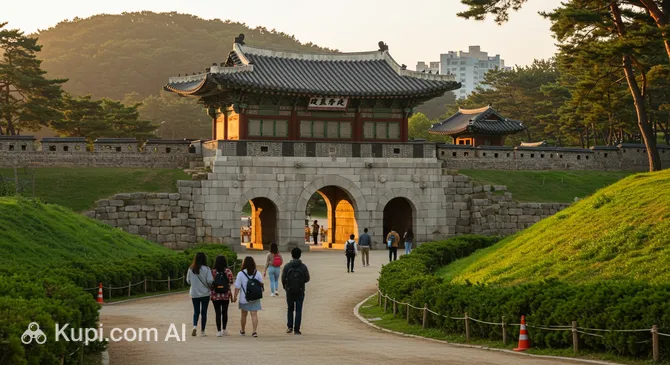
Yeonmudae (Eastern Command Post). Illustration.
Source: Kupi.com AI

Traveller photos:

The architecture of Yeonmudae reflects the military traditions of the Joseon era. The structure was designed to provide maximum visibility and control over the eastern sector of the fortress. Today, this place allows you to touch history and imagine how surveillance and defense management were conducted centuries ago.

Historically, Yeonmudae played a key role in the defense system of Hwaseong Fortress. It was from this post that monitoring of the approaches to the fortress was carried out and the actions of the defenders in the eastern direction were coordinated. Its strategic importance cannot be overstated, as it allowed for the effective management of troops and prompt responses to any threats.

Due to its rich historical and cultural heritage, Yeonmudae enjoys well-deserved popularity among tourists from all over the world. This site is particularly interesting for those fascinated by Korean history, military architecture, and Joseon-era fortifications. A visit to the East Command Post will be an educational and memorable experience for every guest of Suwon.

Contacts

To get up-to-date information on visiting Yeonmudae (East Command Post) in Suwon, including opening hours and available tours, it is recommended to check the city's official tourism portals or visit tourist information centers directly in Suwon. Usually, such historical sites do not have direct public phone lines, but information on how to reach the post is often available on tourist maps and in guidebooks for South Korea.

How to contactContact
Address20 Changnyong-daero 103beon-gil, Maehyang-dong, Paldal-gu, Suwon, Gyeonggi-do, South Korea
Phone+82 31-290-3600
Websitewww.swcf.or.kr

What to Do

A visit to Yeonmudae (East Command Post) in Suwon offers a unique opportunity to connect with history and enjoy magnificent views. One of the main activities here is a leisurely walk along the ancient fortress walls. They offer breathtaking panoramic views of Suwon and the picturesque surrounding landscapes, so don't forget your camera—the photos here are truly impressive.

For those who want to dive deeper into the history of this place, fascinating guided tours are often available. Guides talk about the military history of Hwaseong Fortress, of which Yeonmudae is a part, and the strategic importance of command posts in a complex defense system. This is a wonderful opportunity to learn more about South Korea's past and its military heritage.

Special attention should be paid to the architectural features of the command post itself. You can closely examine the massive stone walls, climb up to the observation platforms where surveillance once took place, and appreciate the traditional Korean decorative elements adorning the structure. In good weather, Yeonmudae becomes an ideal spot for a peaceful walk, allowing you not only to enjoy the beauty but also to soak in the spirit of history and the region's cultural heritage.

Getting There

Reaching Yeonmudae (East Command Post) in Suwon is quite easy using public transport. From the city center, you need to get to Suwon Station (Line 1). From there, city buses regularly depart for the famous Hwaseong Fortress, where Yeonmudae is located. The bus ride also allows you to enjoy views of the city.

After arriving at the main entrance of Hwaseong Fortress, you can reach the East Command Post on foot. The walk takes about 15-20 minutes, and there are signs throughout the complex to help you find your way. For those who prefer traveling by car, there are convenient parking areas near Hwaseong Fortress.

Another comfortable way to get to Yeonmudae is by taxi. You can simply tell the driver "Yeonmudae" or, for greater accuracy, "Hwaseong Fortress East Command Post." A taxi will drop you off as close as possible to the entrance of the fortress grounds, from where you can continue to the historical post.

Nearest city: Suwon

History & Facts

Yeonmudae, also known as the East Command Post, is an integral part of the majestic Hwaseong Fortress in Suwon. Its history dates back to the end of the 18th century, when the entire fortress was built by order of King Jeongjo of the Joseon dynasty. Originally, Hwaseong, and Yeonmudae within it, served not only as a powerful defensive line but also as a visible symbol of the city's strength and prosperity.

Within the defense structure of Hwaseong Fortress, Yeonmudae played a key role. It was one of the four main command posts designed for observing the surrounding area and coordinating the actions of the defenders. The primary task of the East Command Post was to ensure the security of the fortress's eastern direction, making it a strategically important site.

In addition to its purely military functions, Yeonmudae also served as a station for officers and the garrison command. It housed quarters for military leaders, and orders regarding the defense of the eastern sector were issued from here. Thanks to its excellent preservation, Yeonmudae stands today as a valuable monument to Korean military history and architecture, providing deeper insight into past defensive strategies and the craftsmanship of South Korea's architects.

Time Needed

When planning a visit to Yeonmudae (East Command Post) in Suwon, you should allow 1-2 hours to fully experience this historical landmark. This amount of time is generally enough to leisurely explore the command post itself, appreciate its architecture, and imagine its role in the defense system of Hwaseong Fortress.

This timeframe also includes the opportunity to walk along the adjacent section of the fortress wall, which offers interesting views. If you wish to explore other parts of Hwaseong Fortress in more detail or visit nearby pavilions and gates, additional time will naturally be required. However, for a focused visit specifically to Yeonmudae and its immediate surroundings, 1-2 hours will be quite sufficient.

Working Hours

Yeonmudae (East Command Post), being part of the famous Hwaseong Fortress in Suwon, is typically open to visitors during the same hours as the main complex. Generally, access to the fortress grounds and its sites, including Yeonmudae, is possible from 09:00 to 18:00. It's important to remember that these hours may change depending on the season, so it's worth checking the current schedule before your visit.

We strongly recommend checking the opening hours immediately before your trip on the official Hwaseong Fortress website or by contacting local tourist information centers. While advance booking is generally not required for a regular visit to Yeonmudae, it may be necessary for participating in special tours or events. Hwaseong Fortress and its sites, including Yeonmudae, are usually available for visiting year-round; however, it's always best to check the latest information to ensure your visit goes smoothly.

Open 24/7

Nearby

A visit to Yeonmudae (East Command Post) is undoubtedly a highlight, but exploring its surroundings can significantly enrich your experience of Suwon. It often happens that other remarkable places, which help provide a deeper understanding of the city's history and culture, are just a few minutes' walk or a short drive away.

By taking the time to explore nearby attractions, you can more fully feel the charm of Suwon and take home even more vivid memories of your trip through South Korea. Below is a list of some interesting sites located near Yeonmudae (East Command Post).

NameDistance
Changnyongmun Gate0.2 km
Flying Suwon0.3 km
Banghwasuryujeong Pavilion0.5 km
Hwahongmun Gate0.5 km
Suwon Hwaseong Museum0.7 km
Janganmun Gate0.8 km
Suwon Museum of Art0.9 km

Reached the bottom of the page?

Looks like you know this route inside out