Support

Seodaemun Prison History Hall

About

The Seodaemun Prison History Hall is an iconic historical site in Seoul, the capital of South Korea. Located in the Seodaemun District within the picturesque Independence Park, this museum occupies the buildings of a former prison built in the early 20th century. It serves not just as a reminder of the past, but as an important center for preserving the country's national memory and historical heritage.
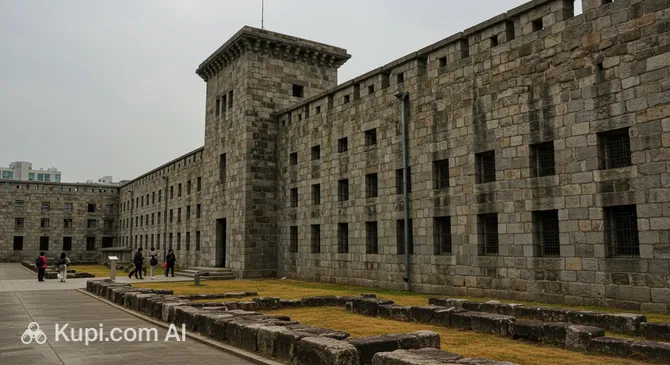
Seodaemun Prison History Hall. Illustration.
Source: Kupi.com AI

Traveler photos:

A visit to the Seodaemun Prison History Hall is an opportunity to touch the complex pages of South Korea's history. The prison buildings have been preserved to this day and stand as an important monument where stories of human resilience and the pursuit of freedom come to life. This site holds deep significance for understanding the country's path to independence.

The museum's exhibits provide a detailed look at the history of the Korean people's struggle for independence. Visitors can see reconstructed cells, learn about the prisoners' daily lives, and discover the personal stories of those whose fates were tied to this place. Museum displays include photographs, documents, and personal belongings, creating a poignant and memorable atmosphere.

The Seodaemun Prison History Hall is considered one of Seoul's most significant historical sites. It attracts both locals seeking a deeper understanding of their country's history and international tourists interested in South Korea's cultural and historical heritage. This place leaves a lasting impression and encourages reflection on the value of peace and independence.

Contacts

To get the most up-to-date information on opening hours, ticket prices, and current exhibitions at the Seodaemun Prison History Hall, we recommend checking official sources. Below are the contact details to help you plan your visit:

How to contactContact
Address251 Tongil-ro, Seodaemun-gu, Seoul, South Korea
Phone number+82 2-363-9750
Websitesphh.sscmc.or.kr

What to Do

Visitors to the Seodaemun Prison History Hall can take an educational walk through the preserved prison blocks. Here, you can see authentic cells where prisoners were held, watchtowers, the somber basement, as well as rooms used for interrogations and torture. These spaces leave a powerful impression and allow for a deeper understanding of the conditions the inmates faced.

An essential part of the exhibition are the memorial halls, where documentaries and archival materials are presented. They tell the story of the prison's construction, its operation during different historical periods, and the fates of the people connected to this site. These materials help visitors form a more complete picture of the Seodaemun Prison's significance in the history of South Korea.

The museum regularly hosts thematic exhibitions. These are often dedicated to artists whose work was linked to the independence movement or historical figures who played a key role in the Korean people's fight for freedom. Such exhibitions enrich the main display materials and offer new perspectives on the past.

In addition to the prison complex itself, visitors can see the Independence Gate and various monuments and memorials in the surrounding Independence Park. These landmarks symbolize the unwavering desire of the Korean people for freedom and national unity, complementing the overall atmosphere of the memorial complex.

Getting There

Getting to the Seodaemun Prison History Hall in Seoul is quite simple, as it is located within the city limits in the Seodaemun District, on the grounds of Independence Park. The most convenient and popular method for tourists is the subway, which is very well-developed in Seoul.

To reach the museum by subway, take Line 3 (orange line) and get off at 'Independence Park (Dongnimmun)' station. Use Exit 5. From the station, the entrance to the Seodaemun Prison History Hall is just a leisurely five-minute walk. Your path will lead through Independence Park itself, allowing you to look around and enjoy the greenery along the way.

In addition to the subway, you can reach the museum by city bus. Look for bus routes that stop at 'Independence Park' or directly at the 'Seodaemun Prison History Hall'. Of course, you can always use a taxi. Simply give the driver the name of the museum or, for greater accuracy and to avoid any language barrier, show them the address in Korean.

Nearest city: Seoul

History & Facts

The history of the Seodaemun Prison History Hall began on October 21, 1908, when it opened under the name Gyeongseong Prison. This took place during a challenging period toward the end of the Joseon Dynasty. In 1912, the prison received its current, better-known name—Seodaemun. From its very beginning, this somber institution was used to incarcerate Korean activists fighting for their country's independence.

During the years of the Japanese colonial administration, Seodaemun Prison gained an especially sinister reputation. It became the primary place of detention and, sadly, execution for many Korean patriots and freedom fighters. Thousands of people whose names are now symbols of resistance passed through its walls, and for many, it was their final earthly journey. This period left a deep scar on the national memory of South Korea.

After the liberation of Korea, Seodaemun Prison continued to function for its original purpose until 1987. However, in 1992, recognizing the historical significance of the site, Seodaemun Independence Park was established on its territory as a tribute to the victims and heroes. The logical next step was the opening of the museum in its modern form in 1998, known as the Seodaemun Prison History Hall. Today, seven carefully preserved historical buildings are open to visitors, including three prison blocks and even the execution site, allowing for a deeper sense of the atmosphere of the past.

Time Needed

When planning a visit to the Seodaemun Prison History Hall, it's worth setting aside enough time to explore all the exhibits and soak in the atmosphere of this significant site without rushing. On average, it is recommended to allow between 1.5 and 3 hours for a full tour of the museum and the surrounding Independence Park. This time is usually sufficient to see the main buildings, exhibition halls, and take a stroll through the park.

The duration of your visit will depend on your level of interest in history and the details of the exhibits. If you plan to carefully study all the materials presented, read the information boards, and watch the documentaries, it's better to aim for the upper end of the suggested time—about 2.5–3 hours. If you prefer a more general overview, 1.5–2 hours may be quite enough.

Don't forget to also account for time to walk through Independence Park, where other memorial sites are located, completing the overall impression of your visit to this historical complex in Seoul.

Working Hours

The Seodaemun Prison History Hall in Seoul typically welcomes visitors year-round, except for certain holidays and its regular day off. The museum's standard opening hours are from 9:30 AM to 6:00 PM. It is important to note that the last entry is usually allowed one hour before closing, which is until 5:00 PM.

The museum is closed on Mondays. Since the schedule can change, especially in connection with national holidays or special events, it is highly recommended to check the current opening hours on the official museum website or via contact numbers before planning your visit. Advance ticket booking is generally not required, but for large groups, it may be helpful to confirm this in advance.

DayOpening hours
MondayClosed
Tuesday9:30 – 17:00
Wednesday9:30 – 17:00
Thursday9:30 – 17:00
Friday9:30 – 17:00
Saturday9:30 – 17:00
Sunday9:30 – 17:00

Nearby

A visit to the Seodaemun Prison History Hall undoubtedly leaves a profound impression. However, to make your day in Seoul even more fulfilling, it is worth looking into the attractions located nearby. Exploring the surrounding area will allow you not only to expand your knowledge of South Korea's culture and history but also to see the city from different perspectives, complementing your main tour.

The district where the museum is located and its adjacent areas are rich in interesting sites—from historical monuments to modern cultural spaces. A short walk or a quick trip on public transport can lead you to new discoveries and make your journey even more memorable.

NameDistance
Bar Cham1.4 km
National Palace Museum of Korea1.7 km
Charles H1.7 km
Gwanghwamun Gate1.8 km
Four Seasons Hotel Seoul1.8 km
Deoksugung Palace1.9 km
Myeongdong Korean BBQ2.6 km

Have you reached the end of the page?

So the route has been studied inside and out