Support

Deoksugung Palace

About

Located in the heart of Seoul at a busy intersection, Deoksugung Palace is one of the capital's "Five Grand Palaces" of South Korea. It is more than just a historical monument; it is a unique place where two eras and two cultures meet. Its name translates to "Palace of Virtuous Longevity," reflecting a wish for Emperor Gojong's long life. Deoksugung Palace offers visitors a rare opportunity to see a harmonious blend of traditional Korean and Western architecture.

The palace's main feature, which distinguishes it from other royal residences, is the proximity of classic Korean pavilions to European-style buildings. In the early 20th century, neoclassical structures like Seokjojeon Hall were erected on the grounds, creating a striking architectural contrast. This symbiosis makes a walk through the palace especially interesting, allowing you to discover different facets of the country's history in a single visit.

The palace is also famous for its elegant stone-walled road, which has become one of the most romantic and recognizable spots in Seoul. This picturesque path, lined with trees, is a popular walking route for both tourists and locals. Although the complex is significantly smaller today than its original size, the remaining buildings preserve centuries of history and former grandeur.
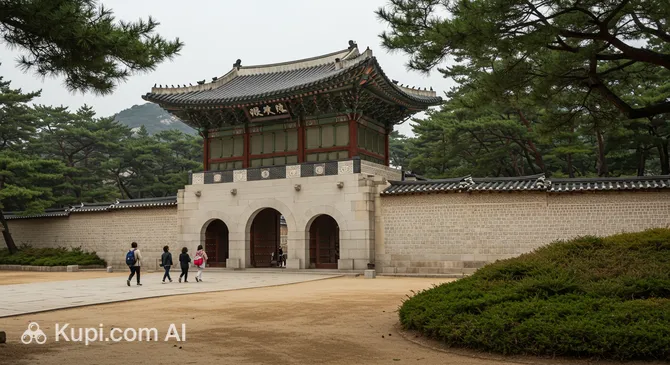
Deoksugung Palace. Illustration.
Source: Kupi.com AI

Traveler photos:

While only about a dozen of the original 180+ structures survive today, Deoksugung Palace remains a must-visit destination. Here, you can see the Junghwajeon Throne Hall, the Emperor's quarters, and other important pavilions, each telling its part of the fascinating story of the Korean Empire.

Contacts

To plan your visit to Deoksugung Palace, confirm opening hours, or obtain information about temporary exhibitions and events, it is recommended to use official sources. You can contact the palace complex representatives using the contact details provided below.

How to contactContact
Address99 Sejong-daero, Jung District, Seoul, South Korea
Phone number+82 2-771-9951
Websiteroyal.khs.go.kr

What to Do

A visit to Deoksugung Palace is, above all, a fascinating journey through different architectural eras. As you wander through the grounds, you can fully appreciate the unique blend of traditional Korean and Western styles. Of particular interest is Seokjojeon Hall—a monumental three-story neoclassical building designed by a British architect. Built in 1910 at the initiative of Emperor Gojong, it was one of the first stone structures of its kind in the country and symbolized a push for modernization. Traditional Joseon Dynasty buildings also remain within the complex, creating the unique atmosphere of a royal residence.

One of the highlights for visitors is the colorful Royal Guard Changing Ceremony, which takes place at the Daehanmun main gate. This is a historical reenactment that accurately recreates the Joseon Dynasty ritual. Guards in vibrant traditional costumes, the sound of drums, and precise commands create an unforgettable spectacle. The ceremony is held three times a day, and after it concludes, tourists have the opportunity to take photos with the guards. It is a wonderful chance to connect with the living history of South Korea.

Beyond architectural masterpieces and spectacular ceremonies, the palace grounds offer other activities. Take a walk along the famous stone wall surrounding the complex—it is one of the most picturesque and popular photo spots in Seoul. Inside some buildings, such as the West Wing of Seokjojeon, you'll find exhibitions from the National Museum of Modern and Contemporary Art, while the East Wing hosts an exhibition of palace treasures, allowing you to combine a historical walk with cultural enrichment.

Getting There

Getting to Deoksugung Palace is easy thanks to its prime location in the heart of Seoul. The palace is situated at a busy intersection, making it highly accessible for tourists exploring the central part of the capital of South Korea. Since there is no on-site parking, it is recommended to use public transport or a taxi for your visit.

The most convenient and fastest way to reach the palace is via the Seoul Subway. You should travel to City Hall Station, which serves as a transfer point for Lines 1 and 2. Depending on which line you are using, take Exit 2 or Exit 12—from either one, it is just a few minutes' walk to the palace's main gates.

Additionally, Deoksugung Palace can be reached by numerous city buses with routes passing through the city center. Bus stops are located in the immediate vicinity of City Hall Station, making this option just as convenient. If you prefer comfort, a taxi ride from any area in central Seoul will be quick and affordable.

Nearest city: Seoul

History & Facts

The history of Deoksugung Palace is quite unusual, as it was not always a primary royal residence. Originally, the site was the estate of Prince Wolsan, the elder brother of King Seongjong of the Joseon Dynasty. It was only during the Japanese invasions in the late 16th century, when other palaces in Seoul were destroyed, that the royal family was forced to seek a new refuge and temporarily settled here. This turning point in the history of South Korea became the starting point for the private residence's transformation into one of the country's most important palaces.

The palace only gained official status in 1611 when Emperor Gwanghaegun ascended the throne. He gave the complex its first official name—Gyeongungung Palace. However, over the following centuries, its status changed constantly: it would serve as the main residence for rulers, then become a secondary, temporary home once more. Its current name, Deoksugung, which poetically translates to the "Palace of Virtuous Longevity," was only given to the complex in 1907. This name was bestowed in honor of Emperor Gojong to wish him a long life.

Over the centuries, the palace has witnessed many key events in Korean history. It not only served as a haven during times of conflict but also became a place where major political decisions were made. For example, in 1897, Emperor Gojong returned here after staying at the Russian legation and proclaimed the establishment of the Korean Empire. It was during this period that Western-style buildings began to appear on the grounds, giving it the unique architectural character that we see today.

Time Needed

When planning a visit to Deoksugung Palace, you should allow for 1–2 hours. This is sufficient time for a full introduction to the complex. During this period, you can take a leisurely stroll through the picturesque grounds, see the key structures—including the unique Western-style Seokjojeon Hall—and fully experience the calm yet majestic atmosphere of this historic site.

If you want a deeper experience, you should extend your visit. For example, to see the colorful Royal Guard Changing Ceremony, you will need to time your visit to its schedule. Additionally, there are exhibitions on the palace grounds: Seokjojeon Hall houses displays from the National Museum of Modern and Contemporary Art as well as an exhibition of palace treasures, which may take extra time. Therefore, for a more detailed exploration of all aspects of the palace in Seoul, including the museums, it is better to set aside half a day.

Working Hours

When planning a visit to Deoksugung Palace, it is important to take its schedule into account to fully enjoy this historic site. The palace is open to visitors from Tuesday to Sunday, from 09:00 to 21:00. One of its appealing features is the evening operating hours, which allow for a stroll through the scenic grounds after sunset. Please note that the ticket offices stop selling tickets and the last entry is at 20:00, one hour before the complex closes. The official day off is Monday—the palace is closed to visitors on this day.

Generally, advance ticket booking is not required for a standard visit. However, the complex includes exhibition halls, such as Seokjojeon, which may have different operating hours than the main grounds. Some guided tours might also require advance registration. The palace is open year-round, but it is always recommended to check the official website for the latest information before your visit, as hours may change during national holidays or special events.

DayOpening hours
MondayClosed
Tuesday9:00 – 21:00
Wednesday9:00 – 21:00
Thursday9:00 – 21:00
Friday9:00 – 21:00
Saturday9:00 – 21:00
Sunday9:00 – 21:00

Nearby

A visit to Deoksugung Palace is just the starting point for exploring the rich history and culture of central Seoul. The palace surroundings are filled with interesting spots that will allow you to dive deeper into the city's atmosphere and add variety to your journey. A walk through the nearby streets will reveal both modern entertainment and other significant historical sites.

Thanks to the palace's convenient location, you can easily combine your sightseeing with visits to other attractions, restaurants, and cultural spaces. This is an excellent opportunity to create a packed full-day itinerary without spending much time on travel. Below is a list of places within walking distance that might interest you.

NameDistance
Charles H0.5 km
Four Seasons Hotel Seoul0.5 km
Myeongdong Korean BBQ0.8 km
Bound Bar1 km
Myeongdong Korean BBQ1 km
Gwanghwamun Gate1.1 km
National Palace Museum of Korea1.2 km

Have you reached the end of the page?

So the route has been studied inside and out