Support

Palgongsan Gatbawi

About

Palgongsan Gatbawi is a famous stone Buddha statue that rises majestically on Mount Palgongsan in Daegu, South Korea. The statue got its unusual and memorable name, "Gatbawi," which can be translated as "hat rock," thanks to a unique detail: a flat natural stone (called "bawi" in Korean) rests on the Buddha's head, remarkably resembling a traditional Korean hat called a "gat." This shrine is one of the most recognizable and revered landmarks not only in Daegu but in the entire country.
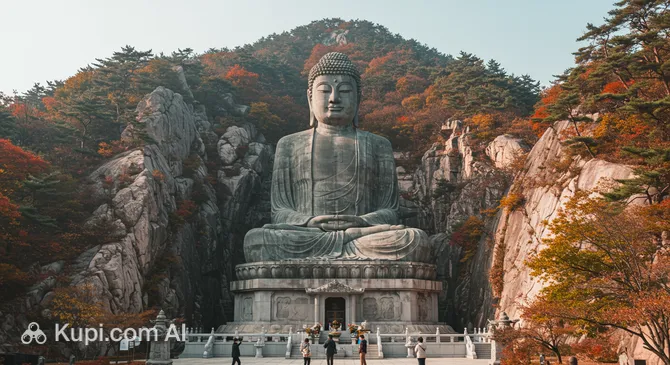
Palgongsan Gatbawi. Illustration.
Source: Kupi.com AI

Traveler photos:

Located on the summit of Gwanbong, one of the peaks of Mount Palgongsan, the Gatbawi statue is a major religious and cultural site that attracts pilgrims and curious travelers from all over the world. This place is steeped in an atmosphere of deep tranquility and spirituality. The area at the entrance to the site is divided: on the left is the Gatbawi rock itself with the Buddha statue, and on the right, you can see buildings belonging to the headquarters of Seonbonsa, a significant Buddhist center.

Visiting Palgongsan Gatbawi is more than just viewing an ancient statue; it is a unique opportunity to experience South Korea's centuries-old spiritual traditions and enjoy breathtaking panoramic views from the mountain peak. Many believers and pilgrims climb here because of the belief that prayers sincerely offered at the foot of Gatbawi have special power and are sure to come true. This makes the shrine an even more attractive place for those seeking peace, spiritual cleansing, or the fulfillment of cherished wishes.

Contacts

To get the most up-to-date information about visiting Palgongsan Gatbawi, including opening hours, directions to the site, and other useful details, you can use the official resources of the city of Daegu:

How to contactContact
Address229 Gatbawi-ro, Dong-gu, Daegu, South Korea

What to Do

The main reason visitors come to Palgongsan Gatbawi is the opportunity to take part in the ancient tradition of making wishes. According to belief, this Buddha statue grants sincere prayers, so it attracts not only pilgrims but also everyone interested in Buddhist culture or seeking a special spiritual experience. Many people come to Daegu and climb to the shrine at dawn on New Year's Day to make their most heartfelt wishes for the coming year and witness the first sunrise.

In addition to praying and contemplating the statue itself, a visit to Gatbawi can be turned into a longer exploration of the surroundings. Many tourists combine a visit to the shrine with a walk along the scenic trails of Mount Palgongsan. For example, you can start your journey from Gatbawi, climb to the mountain top, and then continue the route to the famous Donghwasa Temple. Such a route not only provides a natural experience but, according to some reports, can also make entry to Donghwasa Temple free.

In Donghwasa Temple itself, visitors can discover other significant cultural treasures of South Korea. Here you can see an impressive 17-meter Buddha statue, the ancient Geumdangam three-story stone tower, and other valuable relics that are national treasures. This is a great opportunity to dive deeper into the history and spiritual heritage of the region.

Getting There

To reach the famous Palgongsan Gatbawi statue, you first need to get to the foot of Mount Palgongsan, where it is located. From there, an exciting hike up a mountain trail leads directly to the shrine. The journey itself is part of the adventure, offering beautiful views and allowing you to prepare for your encounter with this iconic Daegu landmark.

From central Daegu, you can reach the foot of Mount Palgongsan by public transport. Several bus routes run in this direction, making it a convenient and economical option. After getting off at the correct stop at the base of the mountain, follow a well-equipped hiking trail that leads straight to the Gatbawi statue. The path is usually well-marked and frequently used by both locals and tourists.

If you prefer more comfort or are traveling by car, you can drive to the dedicated parking lot at the foot of Mount Palgongsan. From there, after leaving your car, you will continue to Palgongsan Gatbawi on foot along one of the scenic marked trails. A taxi from central Daegu can also take you to the start of the hiking route, which is a convenient option for small groups or those who value their time and comfort.

Nearest city: Daegu

History & Facts

The history of Palgongsan Gatbawi is inextricably linked with the rich Buddhist traditions of South Korea. This majestic Buddha statue, carved from stone, has served as an important site for pilgrimage and spiritual worship for many centuries. It is recognized as a significant historical and cultural monument that carefully preserves ancestral heritage and attracts believers and history buffs alike.

The most unique and recognizable feature of Gatbawi is the flat stone that crowns the Buddha's head like a hat ("gat" in Korean). This detail not only gave the shrine its name but also gave rise to many legends and traditions passed down through generations. One of the most common legends says that the statue was created in the 9th century by a monk named Uihyeon in memory of his mother. Other stories tell of miraculous healings and help received by believers who prayed to the Buddha at the foot of Gatbawi.

Mount Palgongsan itself, on whose slope the statue is located, also holds great cultural and historical significance for Daegu and the entire country. In addition to the famous Gatbawi, the mountain is known for other important religious sites. Among them, the ancient Donghwasa Temple stands out, housing numerous national cultural relics, including the impressive Geumdangam three-story stone pagoda. Together, these sites create a unique ensemble that immerses visitors in the atmosphere of ancient Korea.

Perhaps the most famous and intriguing fact associated with Palgongsan Gatbawi is the belief that the statue grants at least one wish to everyone who prays to it sincerely. This belief has led to a special tradition: many Koreans and tourists strive to visit Gatbawi at dawn on the first day of the New Year. They climb the mountain to make a heartfelt wish, watch the first sunrise of the new year, and receive blessings for luck and prosperity. This touching tradition continues to this day, making Palgongsan Gatbawi not just a landmark, but a place of living faith and hope.

Time Needed

For a full experience of Palgongsan Gatbawi, it is recommended to set aside approximately 2-3 hours. This time is generally enough to leisurely view the famous Buddha statue, enjoy the magnificent panoramic views from the mountain, and perhaps take a short walk through the nearby scenic surroundings. During this time, you can soak in the atmosphere of this holy place and take commemorative photos.

If your plans are more extensive and you want to combine a visit to Gatbawi with other significant sights on Mount Palgongsan, such as Donghwasa Temple, you should plan for a full day for such an excursion. This will allow you to explore all the sites of interest without rushing, enjoy nature, and delve deeper into the cultural and spiritual heritage of this wonderful corner of South Korea.

Working Hours

Unfortunately, exact information on specific opening hours for Palgongsan Gatbawi is currently unavailable. Since it is an open-air site located on a mountain, it is assumed that access is possible during daylight hours. However, to get the most up-to-date information on visiting hours and potential restrictions, it is highly recommended to check the official tourist resources of the city of Daegu.

Usually, for visiting natural and spiritual sites like Palgongsan Gatbawi, advance ticket booking or special registration is not required, especially for individual travelers. The site is most likely open for visits year-round, but it's worth keeping in mind that weather conditions on the mountain can affect the comfort and safety of the climb. Therefore, before planning a visit, it is always useful to check current conditions, recommendations, and any temporary restrictions on official websites or at tourist information centers in Daegu.

Nearby

Visiting Palgongsan Gatbawi will undoubtedly be one of the highlights of your trip to Daegu. However, to make your journey even more fulfilling and complete, it is worth paying attention to the attractions located nearby. Exploring the surrounding area will allow you to dive deeper into the culture and atmosphere of this amazing region of South Korea, revealing new facets of its history and modernity.

There are several interesting places near Palgongsan Gatbawi that can complement your itinerary. From natural beauty and other cultural sites to modern entertainment centers, the surrounding area offers a variety of options to continue your exploration of Daegu and its unique heritage.

NameDistance
Palgongsan Cable Car3.9 km
Palgongsan National Park (Eunhaesa District)5.3 km
Bullo-dong Ancient Tomb Park11 km
Esiapolis Outlets11.1 km
Outlet Mall Daegu13.1 km
Trampoline Park Daegu14.6 km
Daegu Aquarium15 km

Have you reached the end of the page?

So the route has been studied inside and out