Support

Gwangalli Beach

About

Gwangalli Beach (광안리해수욕장) is one of the most attractive holiday destinations in the city of Busan, located in South Korea. This popular beach, stretching in a sandy arc about 1.4-1.5 kilometers long and 25 to 110 meters wide, is located in the Suyeong-gu district. It is famous for its fine golden sand and remarkably clean, clear sea, which is maintained with great care.
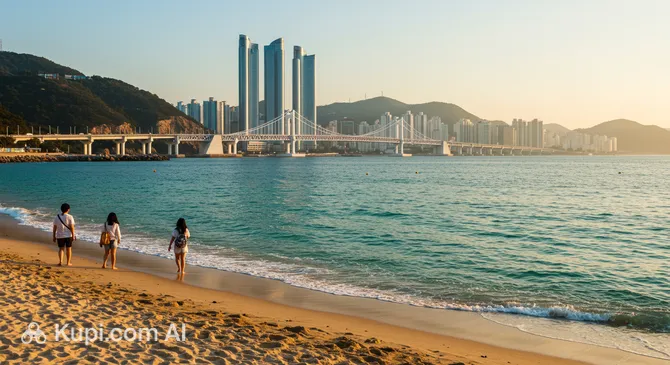
Gwangalli Beach. Illustration.
Source: Kupi.com AI

Traveler photos:

Gwangalli is considered more than just a beach; it is a true symbol of the Suyeong-gu district. It attracts both locals and numerous tourists with its scenic views and pleasant atmosphere. Notably, Gwangalli is known as one of Busan's less commercialized beaches, allowing for a more relaxed and authentic seaside experience.

Thanks to its beauty and popularity, Gwangalli Beach is almost never empty. It is one of Busan's top five attractions, making it a must-visit for anyone coming to this dynamic South Korean city. Here you can not only swim and sunbathe but also simply stroll along the shore, admiring the seascape and the famous Gwangan Bridge.

Contacts

Since Gwangalli Beach is a public space, it does not have traditional contact details such as a phone number or email address. For the most up-to-date information on beach conditions, available services, or upcoming events, it is recommended to contact the tourist information centers in Busan. You can also find useful information on the official tourism portals of South Korea.

How to contactContact
AddressGwangalli Beach, Busan, South Korea
Phone number+82 51-622-4251
Websitewww.suyeong.go.kr

What to Do

A wealth of exciting activities awaits visitors at Gwangalli Beach. During the swimming season, you can fully enjoy water activities: go water skiing or yachting, try windsurfing, or even participate in various competitions. The clean water and variety of options attract many vacationers looking to refresh themselves and stay active.

In addition to traditional beach relaxation, Gwangalli is famous as a venue for vibrant festivals. The Busan International Fireworks Festival in October is particularly popular, during which the sky lights up with grand light and laser shows, as well as spectacular fireworks. Other interesting events held at the beach include the "Gwangalli Eobang" fishing festival and the Busan Sea Festival, offering guests unique cultural experiences.

Along the Gwangalli Beach shoreline, you'll find many cozy cafes, restaurants, and coffee shops to suit every taste and budget. It is a lovely place for a pleasant lunch, a romantic date, or simply chatting with friends while enjoying the magnificent view of the beach, the sea, and the famous white Gwangan Bridge. The beach is attractive beyond the swimming season—locals and tourists come here year-round to walk (often with their pets), go for a run, or simply enjoy the relaxing atmosphere. For convenient travel along the beach, you can rent an electric scooter via a special app.

Getting There

To reach the famous Gwangalli Beach, your first step is to arrive in the city of Busan. Many travelers fly into South Korea via Busan International Airport (PUS), from where you can plan your further route to the coast.

The most convenient and recommended way to get directly to Gwangalli Beach from Busan is by using the subway. You will need to take the Green Line (Line 2) to Station No. 209 (Gwangan Station). After exiting the subway, the beach is just a few minutes' walk away. This makes the trip to the seaside fast, simple, and economical.

In addition to the subway, Gwangalli Beach can, of course, be reached by taxi from anywhere in Busan. This may be particularly convenient if you have a lot of luggage or are traveling in a large group. The city's well-developed transport infrastructure makes it easy to reach this popular holiday destination. An added bonus is that there are many accommodation options nearby—from budget guesthouses to comfortable hotels—making trip planning and your stay even more convenient.

Nearest city: Busan

History & Facts

While detailed historical records of Gwangalli Beach may not be widely known, it has long been established as one of the traditional and favorite holiday spots in Busan. Over time, the beach has not only maintained its popularity but has also become a recognizable symbol of the Suyeong-gu district. Gwangalli earned its fame through a combination of natural beauty, well-maintained grounds, and excellent infrastructure, making it attractive to both locals and tourists.

Gwangalli Beach is noteworthy for more than just swimming and sunbathing. It has evolved into an important venue for various cultural events and festivals, many of which have become an integral part of Busan's cultural life. This feature attracts visitors year-round, offering them something more than just a beach holiday and allowing them to dive deeper into the city's atmosphere.

One of the most spectacular and significant events that brought Gwangalli Beach widespread fame is the Busan International Fireworks Festival. This grand spectacle, traditionally held in October, attracts a massive audience. The festival is famous for its impressive light and laser shows, and, of course, the incredible fireworks that light up the night sky over the bay. It is this event that has largely helped Gwangalli become known far beyond the borders of South Korea.

Time Needed

To fully enjoy your holiday at Gwangalli Beach, it is recommended to set aside at least half a day. This will be enough time to swim, sunbathe, stroll along the shore, and perhaps have a bite to eat at one of the many cafes or restaurants overlooking the sea and the famous Gwangan Bridge.

If your plans include more active pastimes, such as water sports or attending one of the festivals frequently held at the beach, you will need more time. For instance, to participate in events like the Busan International Fireworks Festival, it is worth planning for an entire evening or even a full day to secure a good spot and enjoy the show.

Ultimately, the duration of your visit to Gwangalli Beach will depend on your interests and how you prefer to spend your time. Some might limit themselves to a couple of hours for a refreshing swim, while others will want to spend the whole day here, enjoying the variety of entertainment and the unique atmosphere of this popular spot in Busan.

Working Hours

Gwangalli Beach, like most public beaches, is likely accessible 24/7, and no prior booking or ticket purchase is required for entry. There are usually no officially set opening hours for the beach itself. However, please keep in mind that the operation of lifeguard services, equipment rentals, and nearby establishments may be limited to certain times, especially depending on the season.

While the beach is open year-round, the best times to visit Busan and, consequently, Gwangalli Beach are spring and autumn, when the weather is most comfortable. It can be quite cold in winter, and it often rains in summer. For the most accurate and up-to-date information regarding beach services, events, or potential restrictions, it is recommended to check the official tourism websites of Busan or South Korea, or contact local tourist information centers.

Open 24 hours

Nearby

A stay at Gwangalli Beach will undoubtedly provide you with many pleasant moments, but Busan is a city full of surprises and interesting places located very close by. Exploring the surrounding area will allow you to dive deeper into the atmosphere of this dynamic port city, discover new facets of its culture, and see other iconic landmarks.

Don't limit yourself to just the beach! A short walk or a quick ride from Gwangalli Beach can lead you to unique historical sites, modern entertainment centers, or other picturesque natural corners. Each such excursion will enrich your journey with new impressions and make it truly unforgettable. Below is a list of some nearby attractions:

NameDistance
Shinsegae Department Store, Centum City2 km
Hwangnyeongsan Beacon Mound3.3 km
Haeundae Beach3.8 km
Busan Aquarium3.9 km
Busan X the Sky4.7 km
Haeundae Blueline Park – Mipo Station4.9 km
Tae Tae Tae5.3 km

Have you reached the end of the page?

So the route has been studied inside and out