Support

Munakata Shrine

About

Munakata Shrine, or Munakata Taisha, is a unique complex of Shinto shrines located in Fukuoka Prefecture, Japan. It is one of the most revered religious sites in the country, playing a key role in Shinto tradition. Visiting this shrine is an opportunity to touch the ancient history and spirituality of Japan.
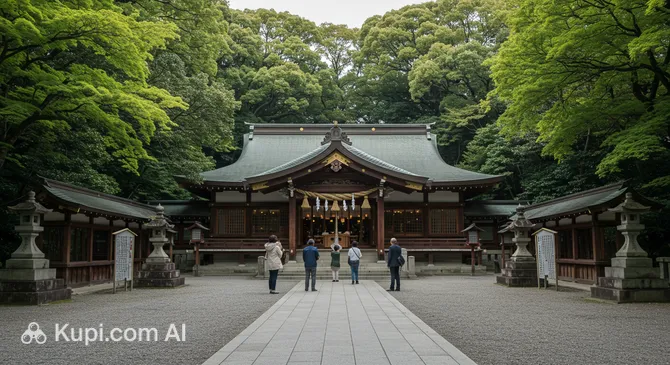
Munakata Shrine. Illustration.
Source: Kupi.com AI

Traveler photos:

The complex consists of three main shrines: Hetsu-miya, located on the mainland; Nakatsu-miya on Oshima Island; and Okitsu-miya on the sacred island of Okinoshima. Each is dedicated to the three Munakata goddesses, who are considered the protectors of sailors and maritime routes. These deities are deeply revered, and the shrine has long served as a center for prayers for safe voyages and bountiful catches.

Munakata Shrine is situated on the picturesque northwestern coast of Kyushu Island, near the city of Fukuoka. Its exceptional historical and cultural significance has been recognized globally: in 2017, Munakata Taisha and its associated sites were inscribed as a UNESCO World Heritage site. This destination attracts not only pilgrims but also tourists wishing to see ancient traditions and experience the special atmosphere of this sacred corner of Japan.

Contacts

To get the most up-to-date information on opening hours, tours, or special events at Munakata Shrine, it is recommended to check the official tourism portals of Fukuoka or the Japan National Tourism Organization. Since the shrine's direct contact details are often not publicly available, local tourism services can provide the most accurate information for planning your visit.

How to contactContact
Address2331 Tashima, Munakata, Fukuoka 811-3505, Japan
Phone number+81 940-62-1311
Websitewww.munakata-taisha.or.jp

What to Do

When visiting Munakata Shrine, you will have the opportunity to immerse yourself in the atmosphere of ancient Japan and witness living traditions. First and foremost, it is worth visiting Hetsu-miya—the main and most accessible of the three shrines in the complex. Here, you can admire exquisite traditional Japanese architecture, observe Shinto rituals, and, if you are lucky, catch one of the many festivals that regularly enliven the shrine grounds with their color and authenticity.

Of particular interest to curious travelers is the Shinpokan Museum, located on the shrine grounds. Its collection includes thousands of priceless artifacts discovered during archaeological excavations on the sacred island of Okinoshima and offered to the deities over many centuries. Among the exhibits, you can see unique items made of gold, bronze, glass, and ceramics, testifying to Japan's ancient trade and cultural links with the Korean Peninsula and continental Asia.

In addition to exploring the shrine buildings and museum collections, don't miss the chance to simply stroll through the picturesque grounds of Munakata Shrine. Well-maintained traditional Japanese gardens, ancient trees, and a peaceful atmosphere create the perfect conditions for quiet contemplation and reflection. It is a wonderful place to take a break from the hustle and bustle of Fukuoka, enjoy the silence, and feel the breath of history.

Getting There

Munakata Shrine is located approximately 40 kilometers northeast of central Fukuoka, making it relatively accessible for a day trip. The main and most visited part of the complex, Hetsu-miya, is situated on the mainland and can be reached in several ways.

The most convenient option is to use public transport. First, take the JR Kagoshima Main Line train to Higashi-Fukuma Station. The journey from central Fukuoka stations, such as Hakata, takes about 30-40 minutes. From Higashi-Fukuma Station to the Hetsu-miya shrine itself, you can take a local bus or a taxi. The bus or taxi ride usually takes 10-15 minutes.

If you plan to visit other parts of the shrine, such as Nakatsu-miya on Oshima Island, you will need additional transport. To do this, head to Konominato Port, where ferries depart regularly for Oshima Island. The ferry trip itself can be a pleasant part of your adventure, offering picturesque sea views.

As for the sacred island of Okinoshima, where Okitsu-miya is located, access is strictly restricted. The island is only open in exceptional cases, primarily for priests and special research groups, and requires prior permission. Therefore, for most tourists, experiencing this part of Munakata's heritage is only possible through the exhibits at the Shinpokan Museum at Hetsu-miya.

Nearest city: Fukuoka

History & Facts

The history of Munakata Shrine dates back to ancient times, making it one of Japan's oldest and most significant religious centers. As far back as the Jomon period, which spans approximately 14,000 to 300 BC, these sites were revered as sacred. In the 5th–8th centuries AD, the shrine played a key role in Japan's maritime contacts with mainland Asia, particularly Korea and China, serving as a spiritual guide for sailors and merchants embarking on dangerous voyages.

Unique evidence of the shrine's ancient history and international significance can be found in the archaeological discoveries on Okinoshima Island, one of the three main parts of the complex. Excavations have revealed more than 120,000 artifacts that were offered to the deities between the 4th and 9th centuries. These items, including gold, bronze, and glass objects, not only demonstrate the scale of the religious ceremonies held here but also confirm the region's active international links in antiquity. The value of these finds has been recognized globally, and Okinoshima, along with other sites of the shrine, is listed as a UNESCO World Heritage site.

Munakata Shrine is mentioned multiple times in ancient Japanese chronicles, such as the Kojiki and Nihon Shoki, highlighting its importance throughout the country's history. After the Meiji Restoration in the 19th century, the shrine was granted the highest state status, further solidifying its position. To this day, Okinoshima Island maintains its special sacred status and strict access rules: women are prohibited from visiting the island, and men must undergo a ritual purification in seawater before stepping onto its soil. These traditions underscore a continuity of religious worship that has lasted for centuries.

Time Needed

To fully enjoy the atmosphere and see the main sites of Munakata Shrine, it is recommended to set aside approximately 2 to 4 hours. This time is generally sufficient for a leisurely exploration of the main Hetsu-miya shrine on the mainland, its architecture, and the surrounding grounds, as well as to soak in the spirit of this significant site in Fukuoka.

If your plans include a deeper immersion—for instance, visiting all three parts of the shrine complex (considering their varying accessibility and the additional travel time needed for the island sites), a detailed tour of the local museum's exhibits, or a long walk through the scenic surroundings—then you may need significantly more time. In this case, to cover all the aspects that interest you without rushing, it is better to plan at least half a day or even more for your visit to Japan.

Working Hours

Munakata Shrine is generally open to visitors daily, from early morning until evening. However, exact opening hours may vary depending on the time of year, as well as due to special religious events or festivals. Usually, no prior booking is required to visit the main shrine grounds, but it may be necessary for participating in special ceremonies or tours.

Given the potential changes in schedule, it is highly recommended to check the current opening hours on the official Munakata Shrine website or contact tourism information centers in Fukuoka before your visit. This will help you plan your trip in the best possible way and avoid any inconvenience. Overall, the shrine is open to visitors year-round, allowing guests to experience its sacred sites in any season.

9:00 – 18:00

Nearby

A visit to Munakata Shrine is undoubtedly a profound and memorable experience. However, to make your trip to Fukuoka even more rewarding, it is worth exploring other interesting places nearby. Discovering the surrounding area will allow you to better understand the culture and nature of this region of Japan, complementing your impressions of the main shrine with new discoveries.

The outskirts of Fukuoka are rich in picturesque landscapes and cultural sites that can be a pleasant addition to your trip. Even a short excursion to nearby attractions can provide new emotions and broaden your horizons.

Near Munakata Shrine, you can also find the following interesting places:

NameDistance
Fukuma Beach7.7 km
Uminonakamichi Seaside Park23.3 km
Marine World Uminonakamichi23.5 km
Uminonakamichi Seaside Park Animal Forest24.3 km
Former Den'emon Ito Residence24.6 km
Fukuoka Anpanman Children's Museum28 km
Precious Ono Hakata28.2 km

Have you reached the end of the page?

So the route has been studied inside and out