Support

Jeju Five-Day Folk Market

About

The Jeju Five-Day Folk Market is one of the largest and oldest traditional trading spots on Jeju Island, located in Jeju City, South Korea. Its name reflects a unique feature: the market comes to life and opens its doors to visitors on days of the month ending in 2 and 7 (for example, the 2nd, 7th, 12th, 17th, 22nd, and 27th). This characteristic makes it not just a retail point, but a real cultural phenomenon.
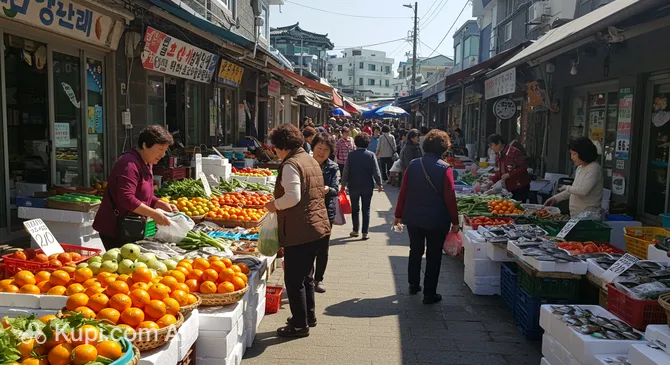
Jeju Five-Day Folk Market. Illustration.
Source: Kupi.com AI

Traveler photos:

In this bustling market, you can find an incredible variety of goods. There are rows of the freshest seafood just caught from the coastal waters, agricultural products including the famous Jeju tangerines, livestock, as well as clothing, shoes, household items, and handicrafts. The Jeju Five-Day Folk Market is an important place for both local residents doing their daily shopping and tourists seeking to immerse themselves in the authentic atmosphere of the island and purchase unique souvenirs.

Visiting the market is not just shopping, but a real adventure and an opportunity to touch the local culture. The noisy rows, the aromas of fresh produce and spices, the colorful vendors, and the lively trade create a unique atmosphere. Here you can not only buy fresh products at affordable prices but also try traditional Korean snacks prepared right on the spot. For travelers, this is a wonderful opportunity to observe the daily life of the islanders and take a piece of the real Jeju City with them.

Contacts

Unfortunately, direct contact details for the Jeju Five-Day Folk Market are not always easy to find. For the most up-to-date information on operating hours, especially due to its "five-day" schedule, or to clarify details, we recommend contacting local tourist information centers in Jeju City. Useful information can also be found on traveler online platforms or the official tourism websites of South Korea.

How to contactContact
Address26 Oiljangseo-gil, Cheju, Jeju-do, South Korea
Phone number+82 64-743-5985

What to Do

Visiting the Jeju Five-Day Folk Market is, first and foremost, a unique opportunity to plunge into the world of the freshest local products. Here you can purchase the famous fish and other seafood for which Jeju Island is so well known. In addition to seafood, the stalls offer a wide range of other goods: from clothing and household supplies to various equipment. This makes the market an attractive destination not only for food shopping but also for diverse retail therapy.

But the market is more than just trade. It is a living acquaintance with local culture and traditions. Walking through the rows, you can watch colorful vendors at work, learn about traditional selling methods, and perhaps even how local delicacies are prepared. Be sure to take the chance to try authentic Korean snacks and dishes prepared right there in front of your eyes. This is a true gastronomic adventure and an immersion into the daily life of the island.

For those looking for special gifts and souvenirs, the Jeju Five-Day Folk Market offers many interesting options. Pay attention to the famous Jeju tangerines—the sweet symbol of the island. Besides them, you can find other unique specialties and products from local artisans that will be a wonderful reminder of your trip to Jeju City and Jeju Island.

Getting There

Getting to the Jeju Five-Day Folk Market is quite simple, thanks to the island's well-developed transport system. One of the most popular and affordable ways is public transport. Jeju Island has an extensive network of bus routes connecting various parts of Jeju City and its surroundings. You can use local buses to get directly to the market or the nearest stop. This is not only an economical option but also an opportunity to observe the daily life of the islanders.

For those who prefer more comfort and flexibility, a taxi is an excellent option. In Jeju City, you can easily find a taxi or use popular mobile apps to call a car. A taxi ride will allow you to reach the Jeju Five-Day Folk Market quickly and without transfers, especially if you are traveling with luggage or in a group. It is also a convenient choice if you want to save time and not worry about finding parking.

Additionally, car sharing and rental services are available on Jeju Island. If you plan to actively explore the island and visit not only the market but also other attractions, renting a car may be the most convenient solution. This will give you complete freedom of movement and allow you to create your own itinerary. However, keep in mind that on market days, the surrounding streets can be busy, so think about parking in advance.

Nearest city: Jeju City

History & Facts

While the exact founding date of the Jeju Five-Day Folk Market and detailed historical chronicles may not be as widely known as those of some other ancient markets, its existence is inextricably linked to the rich trading traditions of Jeju Island. Markets of this type have historically played a key role in the daily life of local communities, serving not only as a place to exchange goods but also as an important social center where news was shared and connections were maintained.

On Jeju Island, traditional markets have deep roots and often became centers of economic activity during important historical periods. For example, some well-known trading areas, such as the Dongmun Market in Jeju City, were established after the liberation of Korea in 1945. These markets quickly turned into bustling hubs of commerce and social life, providing residents with everything they needed and contributing to the development of the local economy. They became symbols of the islanders' resourcefulness and vitality.

The Jeju Five-Day Folk Market, following this established tradition, continues to perform an important function as an integral part of the island's cultural landscape. Even if its own history is not as detailed as some of its older counterparts, it fits seamlessly into the region's trading customs. Its unique "five-day" schedule itself is an interesting feature, reflecting local customs and a rhythm of life that has developed over years and been passed down from generation to generation.

Over time, like many traditional markets, the Jeju Five-Day Folk Market has evolved from a simple place to buy essential goods into a popular attraction. It attracts not only locals but also numerous tourists wishing to experience the authentic atmosphere of the island, try local delicacies, and purchase unique souvenirs. It is a living testament to how historical trading traditions adapt and maintain their relevance and charm in the modern world, becoming a bridge between the past and the present.

Time Needed

When planning a visit to the Jeju Five-Day Folk Market, it is worth setting aside at least a few hours. This will allow you to stroll leisurely through the market rows, get acquainted with the variety of goods on display, and, of course, soak up the unique atmosphere of this colorful place. The market is quite large, and it takes time to get a full impression of it.

The specific amount of time you spend at the market will depend on your interests. If you just want to take a quick look and buy a few souvenirs, then 1-2 hours may be enough. However, if you plan to explore the range in detail, bargain with vendors, try local street food, and observe the lively trade, it is better to allocate half a day. Many visitors find that time flies by here, especially if you enjoy exploring local markets and immersing yourself in the culture.

Also, keep in mind that the market operates on a special schedule—on days ending in 2 and 7. On these days, it is particularly crowded and lively, which can both add to the experience and slow down movement slightly. In any case, there is no need to rush—enjoy every moment at this authentic market in Jeju City!

Working Hours

The Jeju Five-Day Folk Market operates on a special "five-day" schedule: it comes to life on days of the month ending in 2 and 7 (for example, the 2nd, 7th, 12th, 17th, 22nd, and 27th). Unfortunately, exact opening hours on these days are not always published. Generally, traditional markets in South Korea open early in the morning and stay open until the evening, but it is best to check this information.

To get the most up-to-date information on the operating hours of the Jeju Five-Day Folk Market, we strongly recommend checking the official tourism portals of Jeju City or contacting local tourist information centers directly before your visit. Typically, no advance booking or registration is required to enter such markets; admission is free.

DayOpening hours
Monday7:00 – 18:00
Tuesday7:00 – 18:00
Wednesday7:00 – 18:00
Thursday7:00 – 18:00
Friday7:00 – 18:00
Saturday7:00 – 18:00
SundayClosed

Nearby

Visiting the Jeju Five-Day Folk Market is undoubtedly a bright and memorable event. However, to make your trip to Jeju City even more rewarding and complete, it is worth paying attention to the attractions located nearby. Exploring the surroundings will allow you to dive deeper into the island's atmosphere, discover new interesting places, and get a more comprehensive view of the culture and life of South Korea.

Near the market, there are various sites that may interest travelers with a wide range of preferences—from natural beauty to unique dining establishments. This is a great opportunity to complement the impressions of the lively trade at the market with more leisurely walks or new discoveries.

NameDistance
Jeju Grand Resort1.4 km
Dodu Rainbow Coastal Road1.4 km
Iho Tewoo Beach2.1 km
Jungjong Jeju Black Pork BBQ2.6 km
Gwandeokjeong Pavilion4.6 km
Horse Meat Lab4.6 km
Tapdong Cinema Museum5 km

Have you reached the end of the page?

So the route has been studied inside and out