Support

Gwandeokjeong

About

The Gwandeokjeong Pavilion is a majestic historical building that is rightfully considered one of the main architectural treasures of Jeju City. Located on the picturesque Jeju Island in South Korea, this site is an important monument reflecting the region's centuries-old cultural heritage.
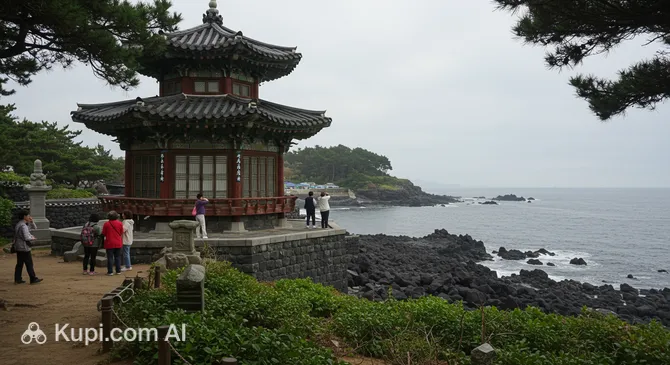
Gwandeokjeong Pavilion
Gwandeokjeong Pavilion. Иллюстрация. Источник: Kupi.com AI

This unique structure draws attention with its traditional Korean architecture, where every detail — from the curve of the roof to the painting on the beams — carries deep meaning. In the past, the pavilion played an important role in the administrative life of the island, and today it serves as a place of pilgrimage for tourists wishing to touch living history.

Gwandeokjeong stands out against the urban landscape with its monumentality and tranquility. For visitors, it is not just an open-air museum but a symbol of the resilience and identity of Jeju's culture, which has preserved its original appearance through the centuries.

Contacts

To plan your visit to the Gwandeokjeong Pavilion, it is helpful to check the available contact details and location in advance. Despite its deep historical status, this landmark is integrated into a modern informational environment for the convenience of travelers.

Below are the current contact details and the exact address of the structure in Jeju City.

How to contactContact
Address19 Gwandeok-ro, Cheju, Jeju-do, South Korea
Websitewww.diocesejeju.or.kr

What to Do

A visit to the Gwandeokjeong Pavilion in Jeju City is an opportunity to slow down and enjoy the aesthetics of antiquity. The main activity here is studying traditional architectural forms: pay attention to the intricate ornaments and the roof construction, which is a masterpiece of Korean architecture. A walk through the grounds will allow you to see every element of this historical site in detail.

This space is ideal for thoughtful contemplation and reflection in an atmosphere of silence, which is so rare in modern metropolises. Photographers will find inspiration here in the play of light and shadow under the pavilion's eaves, while history buffs in South Korea can learn more about how such administrative buildings functioned in past centuries simply by observing the preserved interior and exterior details.

Getting There

Getting to the Gwandeokjeong Pavilion is quite simple, as it is located in the heart of the historical center of Jeju City. The exact address of the landmark is 19 Gwandeok-ro, and the building is a prominent landmark for anyone walking through the central districts.

The most convenient way to travel around a country like South Korea is by public transport. You can reach the pavilion from the airport or other parts of the island by city buses, which run regularly on major routes. You can also always use a taxi by providing the address or GPS coordinates (126.521532, 33.513345).

If you are staying in the center, a walk is an excellent solution, as the pavilion is within walking distance of many popular hotels and shopping streets. The path to it will allow you to enjoy the atmosphere of the old city and get a better feel for the local character.

Ближайший город: Jeju City

History & Facts

The history of Jeju Island is full of legends and dates back to ancient times when it was known as the independent maritime state of Tamna. According to legend, in the 24th century BC, three divine founders — Ko, Yang, and Pu — emerged from the Samseonghyeol holes in the ground, marking the beginning of a unique civilization that developed separately from mainland South Korea.

In the 15th century, during the Joseon dynasty, the island lost its independence and came under strict centralized control. It was then that Jeju City became a place of exile for educated aristocrats and officials. This brought new cultural trends and classical architectural traditions, which harmoniously intertwined with local customs and were reflected in the buildings of that time, including the Gwandeokjeong Pavilion.

The natural origin of these places is no less amazing: the island was formed as a result of volcanic eruptions about two million years ago. The dominant feature of the landscape remains the majestic Hallasan volcano, standing 1,947 meters tall — the highest point in the country. The extinct volcano and hundreds of small craters create a unique landscape against which the centuries-old history of the pavilion unfolded.

Time Needed

To fully appreciate the architectural elegance of the Gwandeokjeong Pavilion, a typical visitor will need 1 to 2 hours. This is enough time to carefully examine the building, study the decorative elements, and take high-quality photos against the backdrop of this historical monument in Jeju City.

If you are planning more than just a quick look and want to immerse yourself in the atmosphere of South Korea's past or relax in the shade of the traditional eaves, you might want to set aside a little more time. Overall, a visit here easily fits into any sightseeing tour of the island, becoming a bright highlight in your day's program.

Working Hours

The Gwandeokjeong Pavilion is open to visitors throughout the week; however, the operating schedule varies depending on the day. On Mondays and Tuesdays, you can visit the attraction from 09:00 to 18:00.

From Wednesday to Sunday, the pavilion operates on an extended schedule — from 09:00 to 21:30. This is great news for those who want to see the historical building illuminated by evening lights, which gives the place a special, magical atmosphere.

DayWorking hours
Понедельник9:00 – 18:00
Вторник9:00 – 18:00
Среда9:00 – 21:30
Четверг9:00 – 21:30
Пятница9:00 – 21:30
Суббота9:00 – 21:30
Воскресенье9:00 – 21:30

Nearby

Exploring the surroundings of the Gwandeokjeong Pavilion significantly enriches your travel experience, opening up new facets of the island's culture and nature. In the immediate vicinity of the historical center of Jeju City, there are many theme parks and museums that will be of interest to both adults and children.

Below is a list of popular attractions that are easily accessible from the pavilion:

NameDistance
Horse Meat Lab0.3 km
Asalam Restaurant0.4 km
Tapdong Cinema Museum0.5 km
Dongmun Traditional Market0.5 km
Jeju National Museum2.5 km
Jungjong Jeju Black Pork BBQ3.2 km
Dodu Rainbow Coastal Road4.6 km

Reached the end of the page?

That means the route is fully explored