Support

Jeju Citrus Museum

About

The Jeju Citrus Museum is a unique exhibition space located on Jeju Island, in Jeju City, South Korea. This specialized museum is entirely dedicated to the rich history and culture of growing tangerines and other citrus crops for which this picturesque island is so famous. Visitors can immerse themselves in the world of fragrant fruits and learn about the important role they play in the life of the region.
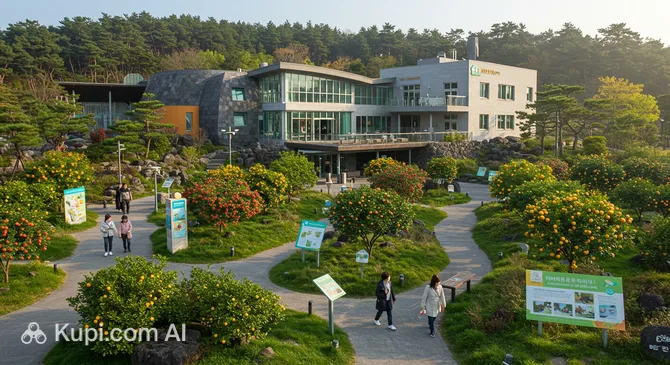
Jeju Citrus Museum. Illustration.
Source: Kupi.com AI

Traveler photos:

The museum complex is designed to the smallest detail to provide guests with an unforgettable experience. It includes a main building with fascinating exhibition halls featuring artifacts, documents, and interactive displays about citrus farming. Of particular note is the spacious greenhouse, which houses citrus plant specimens from all over the world, as well as the surrounding grounds where you can walk among actual tangerine trees.

The journey into the world of citrus begins even before reaching the museum—a picturesque alley lined with tangerine trees leads to the main building. Inside, visitors are greeted by an original chandelier shaped like tangerines, immediately setting the right mood. On the museum grounds, you can also find various citrus-themed objects; a special map is provided to help guests navigate them easily. This is a place where you can not only learn many new things but also enjoy the beauty and scents of nature.

Contacts

To get the most up-to-date information on opening hours, ticket prices, and available tours at the Jeju Citrus Museum, we recommend visiting the museum's official website, if available, or contacting tourist information centers in Jeju City. Useful information can also often be found on travel portals dedicated to South Korea.

How to contactContact
AddressSeogwipo-si, South Korea
Phone number+82 64-760-6400

What to Do

A visit to the Jeju Citrus Museum offers a fascinating immersion into the world of these sunny fruits. Guests can explore the rich collection in detail, which includes various items, photo and video materials, as well as historical documents. These exhibits tell the story of citrus cultivation on Jeju Island, the local traditions, and the culture associated with them. A special highlight is the mechanical tangerine—an unusual exhibit that never fails to pique visitors' interest. The exhibition halls also feature skillfully made replicas of tangerines in peculiar shapes, reminiscent of the times when these fruits were sent as tribute to Korean kings.

In addition to viewing the main exhibition, museum visitors have the opportunity to walk through a special greenhouse. Here, you can see and learn about different types of citrus collected from all over the world, broadening your understanding of the diversity of this plant genus. This is a wonderful opportunity to see how exotic varieties grow in conditions close to their natural habitat.

For young visitors, the museum provides educational programs, though it is worth noting that most materials are presented in Korean. After a busy tour and getting to know the world of citrus, guests can relax in the cozy on-site cafe. Here, you can enjoy freshly squeezed tangerine juice, as well as other drinks and dishes prepared using local citrus, making for a pleasant conclusion to your visit.

Getting There

The Jeju Citrus Museum is located in Seogwipo, which is administratively part of Jeju City, on the picturesque Jeju Island in South Korea. There are several ways to reach this unique destination. The most popular options are public transport or taxis running from the island's main tourist areas. A taxi ride from the central districts of Jeju City or Seogwipo will be the fastest but also the most expensive option.

For those who prefer organized trips, many tour companies on Jeju include a visit to the Citrus Museum in their excursion programs. Some of these tours are full-day and may include a convenient transfer directly from your hotel and back, making the trip as comfortable as possible and eliminating the need to navigate routes on your own.

If you plan to get to the museum on your own by public transport, it is recommended to check the current bus routes and schedules in advance. You can get this information at tourist information centers in Jeju City or Seogwipo. Please note that public transport schedules can change depending on the season, so fresh information will help you plan your trip effectively and avoid unnecessary waiting.

Nearest city: Jeju City

History & Facts

The Jeju Citrus Museum is more than just a collection of exhibits; it is a true chronicle of the centuries-old history of citrus crops on Jeju Island, where Jeju City is located. The history of growing these sunny fruits here dates back more than fifteen centuries! According to ancient Korean chronicles, fragrant tangerines and other citrus fruits from the island were regularly sent as tribute to Korean rulers as far back as the Three Kingdoms period. Interestingly, the ancient varieties, models of which can be seen in the museum, differed significantly from the ones we are used to today.

Ancient written sources have preserved mentions of various and sometimes very unusual varieties of citrus grown on the island. For example, there was the so-called "bottle tangerine," named for the characteristic bottle-like shape of its stem. The creation of the Citrus Museum was driven by a desire to preserve and present this important layer of Jeju Island's cultural and agricultural heritage to the general public, which is an integral part of South Korea's history.

Today, tangerine cultivation remains one of the leading agricultural industries on Jeju Island, and the citrus fruits themselves have become an unofficial symbol of this scenic region. The Citrus Museum plays a key role in what is known as "citrus education." It introduces visitors to the rich history, cultivation traditions, and significance of these amazing fruits for the island, offering a fascinating immersion into the world of citrus.

Time Needed

When planning a visit to the Jeju Citrus Museum, located in Jeju City, you should allow for 1-2 hours to fully explore its collection. This time is generally sufficient to view the main exhibition halls dedicated to the history and diversity of the citrus crops for which Jeju Island is so famous.

This time also includes a stroll through the museum's well-maintained grounds and a visit to the greenhouse, where you can see various types of citrus trees. If you would like to relax at the local cafe, enjoy some freshly squeezed tangerine juice, or try other citrus delicacies, you should add another 30-40 minutes to your total time.

Working Hours

The Jeju Citrus Museum in Jeju City is an interesting place to get to know one of the island's main agricultural crops. Unfortunately, exact information about the museum's opening hours is currently unavailable. We recommend checking the current schedule on the museum's official website or through local tourist information centers before your visit. Typically, such museums are open to visitors year-round, but hours may change depending on the season or holidays.

As for the need for advance ticket booking or tour reservations, it is also best to clarify this in advance, especially if you plan to visit during the peak tourist season. Some popular attractions may have limits on the number of visitors or offer special programs that require pre-registration. Checking this information will help you plan your visit to the Jeju Citrus Museum in the best possible way.

9:00 – 18:00

Nearby

Visiting the Jeju Citrus Museum is a wonderful opportunity to learn about the island's unique agricultural culture. However, to make your trip even more fulfilling and memorable, it's worth taking time to explore the surroundings. Near the museum, there are other interesting places that allow for a deeper dive into the nature and culture of Jeju City.

Exploring nearby attractions will not only broaden your horizons but also provide new experiences, completing the picture of your visit to this amazing corner of South Korea. Below is a list of some interesting sites located nearby.

NameDistance
Seogwipo Healing Forest8.5 km
Hallasan National Park11.9 km
Hallasan Summit12.1 km
Ecoland20.2 km
Nine Bridges20.3 km
Podo Museum21.3 km
Jeju Kart23.6 km

Have you reached the end of the page?

So the route has been studied inside and out