Support

Jeonju Hanok Village

About

Jeonju Hanok Village in Jeonju is one of the largest and most picturesque historical districts in South Korea, preserving over 800 traditional Korean houses. It is not just an attraction, but a real open-air museum that allows you to immerse yourself in the atmosphere of old Korea and see how the past harmoniously blends with the present. The village is recognized as an international "Slow City," where traditions, nature, and a relaxed pace of life are cherished.
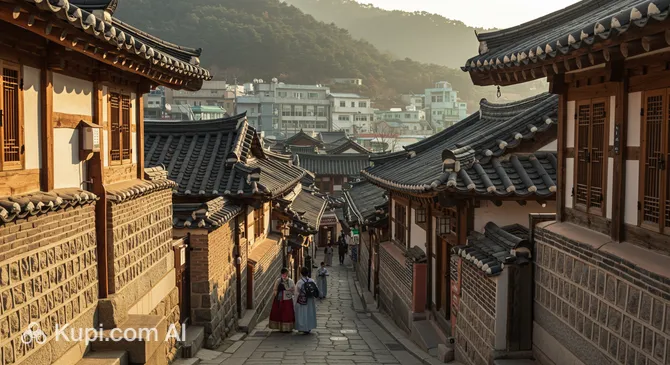
Jeonju Hanok Village. Illustration.
Source: Kupi.com AI

Traveler photos:

The heart of this place is the hanok, a traditional Korean house. These buildings are made of natural materials (wood, clay, and stone) and designed in complete harmony with the surrounding landscape. Wandering through the narrow streets, you will be charmed by the elegant tiled roofs with gracefully curved edges, cozy courtyards, and the unique architecture of each building. A special sense of comfort is added by ondol—a unique underfloor heating system that makes the homes comfortable throughout the year.

A visit to the village is more than just a walk. Here, you can try on a colorful national hanbok costume to take unforgettable photos against the backdrop of ancient houses. Tourists can attend craft workshops, such as making traditional fans or Korean paper (hanji), and sample famous local dishes, including bibimbap. For a complete cultural immersion, you can even stay overnight in one of the hanoks that have been converted into cozy guesthouses.

Contacts

To plan your visit, check current event schedules, or find the opening hours for specific workshops and museums within the Jeonju Hanok Village, we recommend using official sources. Essential visitor information is available on the attraction's website.

How to contactContact
Address99 Girin-daero, Wansan-gu, Jeonju, Jeonbuk State, South Korea
Phone number+82 63-282-1330

What to Do

To make your experience at the Hanok Village truly unforgettable, it’s worth going beyond the standard routes. Begin your walk from the hill where the Omokdae viewpoint is located. It offers a breathtaking panoramic view of the picturesque tiled roofs of hundreds of traditional houses. This site also holds historical significance: it was here that the founder of the Joseon Dynasty, King Taejo, celebrated his victory in an important battle. The view is especially beautiful at sunset when the village is bathed in warm evening lights.

Continue your exploration by visiting unique cultural sites. In the heart of the village stands the majestic Jeondong Catholic Cathedral, one of the most beautiful in the country. Its Romanesque-Byzantine architecture contrasts sharply with the surrounding hanoks, creating an impressive visual dialogue. The cathedral was built on the site where the first Korean Catholic martyrs were executed, making it not only an architectural gem but also an important pilgrimage site. Nearby is the Gyeonggijeon Shrine, where King Taejo's portrait is kept.

Hanok Village offers many opportunities for creative leisure and an in-depth look at traditional crafts. Stop by the Jeonju Korean Traditional Wine Museum to learn about ancient methods of producing rice wine and even sample some. Another interesting spot is the Hanji Museum, where you can explore the history of making famous Korean mulberry paper and join a workshop to create your own souvenirs. A walk through local galleries and craft shops will lead you to unique handmade items.

Getting There

Reaching Jeonju, home to the famous village, is quite easy from anywhere in South Korea thanks to a well-developed transportation system. The fastest and most convenient way is the KTX high-speed train, which whisks you from Seoul to Jeonju in just 1.5–2 hours. Comfortable intercity buses also run between major cities, including the capital, with travel times of around 2.5–3 hours.

Upon arrival at the Jeonju train or bus station, you can easily reach Hanok Village within minutes. Both taxis and numerous city public transport routes are at your service. The village is located in the very heart of the city, in the Pungnam-dong and Gyo-dong neighborhoods, making it effortless to reach. Its convenient location ensures accessibility for all travelers wishing to immerse themselves in the atmosphere of traditional Korea.

Nearest city: Jeonju

History & Facts

The history of Jeonju Hanok Village is closely intertwined with the Joseon Dynasty. It was during this period that neighborhoods of traditional houses began to form, built according to the principles of harmony with nature and local characteristics. While the concept of "hanok" dates back to prehistoric times, these elegant buildings acquired their modern, recognizable appearance at the end of the Joseon era, becoming a true symbol of Korean architecture.

In the 20th century, during a period of rapid industrialization and urban growth across the country, many historical districts were at risk of disappearing. However, the hanok quarter in Jeonju was carefully preserved and transformed into a living monument of national heritage. A major recognition of its uniqueness came in 2010 when the village was granted international "Slow City" (Cittaslow) status. This status highlights the commitment to preserving not only the architecture but also a relaxed, meaningful lifestyle centered on tradition and nature.

At the start of the 21st century, the village's popularity surged, making it one of the top tourist destinations on the map of South Korea. The numbers speak for themselves: while it saw about 3.17 million visitors in 2007, by 2014 that number had reached 7.89 million. This incredible growth in interest confirms that travelers from all over the world value the opportunity to experience the authentic culture and history offered by the Hanok Village.

Time Needed

To get a first impression of Jeonju Hanok Village in Jeonju, we recommend setting aside at least half a day for your visit. This will be enough for a leisurely stroll through the picturesque streets and to get acquainted with the main architecture and atmosphere of this unique place. You'll have time to take memorable photos, browse a few souvenir shops, and sample local delicacies, though it might not be enough for a deeper immersion.

To truly feel the spirit of this place and connect with its culture, it’s best to dedicate a whole day or even stay overnight. This approach allows you to visit local museums and craft workshops without rushing, as well as enjoy dinner in one of the traditional restaurants. Staying in a hanok offers a unique experience and the chance to see the village in a quiet, magical atmosphere after sunset, once most tourists have left.

Working Hours

One of the main advantages of Jeonju Hanok Village is its accessibility. The village itself is open for strolls 24/7, year-round, allowing you to enjoy its atmosphere at any time. You are free to wander its streets in the early morning or late evening when the main crowds of tourists subside. However, keep in mind that certain sites within its territory—museums, craft workshops, exhibition halls, and cultural centers—operate on their own schedules, typically from 9:00 AM to 6:00 PM. Their operating hours may vary depending on the season and day of the week, so it’s worth checking the details before your visit.

Admission to the village territory itself is free, and no prior booking is required for a walk. Tickets are only needed for visiting certain specific museums or participating in paid workshops. In most cases, these can be purchased on-site. If you plan to attend a specific event or workshop during peak tourist season, it’s recommended to check the conditions on the attraction's official website in advance to avoid any inconvenience.

Open 24 hours

Nearby

A visit to Hanok Village is just the beginning of your journey through Jeonju. Thanks to its central location, you can easily continue exploring the city, as many other points of interest are within walking distance. Exploring the surrounding area will allow you to see how traditional culture harmoniously blends with other historical eras and modern city life.

Venturing beyond the village will enrich your experience and reveal the many facets of Jeonju. Just a few minutes' walk away, you'll find ancient shrines, Catholic cathedrals, and bustling markets. Below is a list of nearby attractions to help you plan a full itinerary.

NameDistance
Jeonju Nanjang0.1 km
Gyeonggijeon Shrine0.3 km
Jeonil Super0.3 km
Jeonil Gap'o0.4 km
Haeyuldam0.5 km
Jeondong Cathedral0.5 km
Pungnammun Gate0.6 km

Have you reached the end of the page?

So the route has been studied inside and out