Support

Gyeonggijeon Shrine

About

Gyeonggijeon Shrine is an iconic historical and cultural landmark located in the heart of Jeonju, South Korea. This deeply revered site is situated within the famous Jeonju Hanok Village. The shrine is one of the most significant monuments of the Joseon Dynasty era, attracting visitors with its rich history and authentic atmosphere.
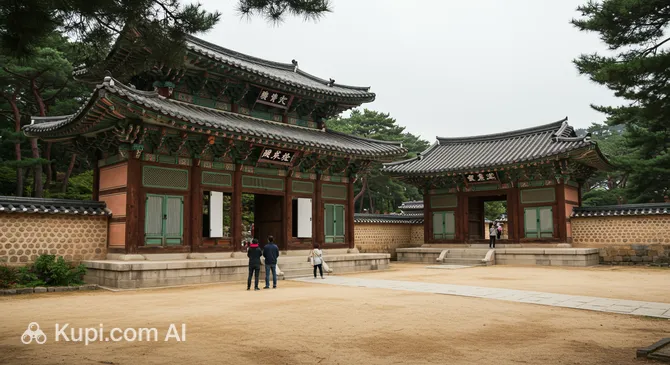
Gyeonggijeon Shrine. Illustration.
Source: Kupi.com AI

Traveler photos:

The primary value and reason for founding Gyeonggijeon Shrine was to house the official portrait of King Taejo (Yi Seong-gye), the founder of the great Joseon Dynasty. This makes the shrine not just an architectural ensemble but a key location for understanding Korean history and the culture associated with the dynasty's reign. A visit to Gyeonggijeon allows you to touch the origins of Korean statehood and learn more about the personality of its founder.

The architectural complex of Gyeonggijeon Shrine is impressive in its traditional beauty. It is surrounded by picturesque gardens, ancient gates, and elegant pavilions built according to the canons of Korean architecture. A walk through the grounds offers a sense of tranquility and allows you to enjoy the harmonious combination of architecture and nature. Every building and landscape element here carries its own meaning and reflects deep philosophical traditions.

Visitors to Gyeonggijeon Shrine can not only admire the historical buildings but also immerse themselves in the atmosphere of the past. Here, you can learn about unique ancestral worship rituals that were held and are sometimes still performed today. This place is ideal for those interested in the history of South Korea, its culture, and traditional architecture, offering a unique experience of connecting with the Joseon Dynasty heritage.

Contacts

To obtain the latest information regarding the operation of Gyeonggijeon Shrine, clarify visit details, or inquire about available tours, you can contact the site representatives. Below are the available contact details.

How to contactContact
Address44 Taejo-ro, Wansan-gu, Jeonju, Jeonbuk State, South Korea
Phone number+82 63-287-1330
Websitewww.heritage.go.kr

What to Do

A visit to Gyeonggijeon Shrine in Jeonju offers tourists a unique opportunity to immerse themselves in the history of South Korea. Guests can take a leisurely stroll through its well-maintained and picturesque grounds, admiring the beauty of traditional Korean buildings with their elegant roofs and ancient gates. The main pavilion attracts special attention, as it houses one of the few surviving official portraits of King Taejo, the founder of the Joseon Dynasty. This makes the shrine a valuable site for anyone interested in Korean history and art.

On the shrine grounds, visitors can not only explore the architectural structures but also gain a deeper insight into the culture of the Joseon era. The museum halls feature an exhibition detailing the lives of Korean monarchs and displaying rare artifacts from that time. It is a wonderful opportunity to learn more about the daily life, traditions, and governance of the country during the reign of this great dynasty.

Gyeonggijeon Shrine is not just a historical monument but a living cultural space. Various events are often held here, including reenactments of traditional Korean ceremonies and educational programs. Tourists can create unforgettable memories by trying on a Hanbok—traditional Korean clothing—and taking commemorative photos against the backdrop of authentic buildings and peaceful gardens. Such activities allow you to feel like a part of Korean culture and take home vibrant memories.

Getting There

Getting to Gyeonggijeon Shrine is quite simple, as it is located in the heart of Jeonju. This makes it easily accessible for tourists, especially if you are already in the city exploring other sights, such as the famous Jeonju Hanok Village, which is in the immediate vicinity.

If you are traveling within South Korea, particularly from Seoul, Jeonju can be comfortably reached by KTX high-speed train or intercity bus. The journey usually takes between 2.5 and 3 hours. Upon arrival at the Jeonju railway or bus station, you have several options to reach the shrine directly.

From the station, you can easily reach Gyeonggijeon Shrine by taxi—this is the fastest and most convenient way, especially if you have luggage. You can also use city buses that run regularly throughout Jeonju. The city has a well-developed tourist infrastructure, so finding the right route or stop won't be difficult. Signs in both Korean and English will help you find your way.

Nearest city: Jeonju

History & Facts

Gyeonggijeon Shrine, located in Jeonju, is one of the most important historical monuments in South Korea. Its history dates back to 1410, shortly after the founding of the powerful Joseon Dynasty. The shrine's construction was commissioned by King Taejo, the dynasty's founder. The primary purpose of Gyeonggijeon was not only to house the official portrait of King Taejo himself but also to conduct regular rituals in his honor, emphasizing the legitimacy and grandeur of the new ruling dynasty.

Over the centuries, Gyeonggijeon has played a key role as a religious and cultural center, not just for the residents of Jeonju but for the entire Korean people. The complex has been destroyed several times, notably by fires and natural wear over time, requiring extensive restoration work. Thanks to these efforts, the shrine has preserved its unique atmosphere, allowing visitors to immerse themselves in the Joseon era and feel the spirit of that time.

The original architectural elements of Gyeonggijeon, crafted in the traditional Korean style, are of particular value. Among them are the majestic main gate, elegant pavilions, and the massive walls surrounding the complex. Today, Gyeonggijeon Shrine is officially listed as a Cultural Heritage of Korea and is protected by the state, continuing to attract researchers, tourists, and everyone interested in the rich history and culture of South Korea.

Time Needed

When planning a visit to Gyeonggijeon Shrine in Jeonju, it is worth setting aside enough time to fully appreciate this historical site. For most visitors, a complete tour of the complex takes about 1.5–2 hours. This time is usually sufficient for a leisurely stroll through the grounds and an inspection of the main buildings.

This timeframe includes not only viewing the shrine grounds but also visiting the museum halls, where you can learn more about the site's history and its significance to South Korea. If any cultural events or demonstrations are taking place during your visit, you can also enjoy them within the recommended time. Of course, if you wish to explore every corner in more detail or simply soak in the atmosphere, you may want to spend a little more time here.

Working Hours

Gyeonggijeon Shrine in Jeonju is generally open to visitors daily. Standard operating hours are usually from 09:00 to 18:00, with the last entry allowed one hour before closing. This allows guests to enjoy the atmosphere of this historical site throughout the day.

It is important to remember that working hours may vary depending on the season or special events. Therefore, it is highly recommended to check the latest information on the shrine's official website or inquire at local tourist information centers before your visit. While special ticket booking is usually not required for individual visits, advance registration may be desirable for group tours or during major events.

9:00 – 18:00

Nearby

Visiting Gyeonggijeon Shrine in Jeonju is undoubtedly a highlight, but exploring its surroundings can make your trip even more rewarding and memorable. Often, it is the nearby sites that help provide a deeper understanding of the historical and cultural context of the main attraction, revealing new facets and details that might otherwise go unnoticed.

A stroll through the neighboring streets and attractions will allow you to more fully experience the atmosphere of Jeonju and see how Gyeonggijeon Shrine fits into the overall fabric of the city. This is a wonderful opportunity to expand your impressions and discover something new, complementing your main tour with interesting finds.

NameDistance
Jeondong Cathedral0.2 km
Pungnammun Gate0.3 km
Jeolla Provincial Government Office0.3 km
Jeonju Hanok Village0.3 km
Jeonju Nanjang0.4 km
Nambu Market0.4 km
Jeonju Gaeksa (Pungpaejigwan)0.5 km

Have you reached the end of the page?

So the route has been studied inside and out